TLDR
• Core Points: 3D-printed, conformable batteries funded by the US Air Force aim to expand design freedom in defense and aerospace hardware; an 18-month project, with a $1.25 million contract, seeks to validate printing technology for energy storage in small devices.
• Main Content: The project explores using additive manufacturing to produce batteries that fit nontraditional shapes and spaces, potentially reducing weight and increasing functionality for military and aerospace applications.
• Key Insights: Printed batteries could enable novel form factors, faster prototyping, and customized energy solutions, but face challenges in performance, reliability, and scalability.
• Considerations: Validation of safety, cycle life, environmental robustness, and integration with existing power management systems is essential for adoption.
• Recommended Actions: Stakeholders should support rigorous testing regimes, establish safety standards, and invest in scalable production methods for field-ready, conformable energy storage.
Content Overview
The energy storage sector is increasingly exploring the use of 3D printing to produce batteries with unprecedented form factors. A notable development in this space comes from a recent contract awarded by the US Air Force for $1.25 million to validate 3D-printing technology for batteries. The 18-month initiative seeks to prove that printed, conformable batteries can unlock new design freedoms for defense and aerospace hardware. By enabling batteries that conform to irregular surfaces and tight spaces, manufacturers could reduce weight, simplify assemblies, and accelerate product development cycles. This article delves into the aims, potential benefits, technical challenges, and broader implications of this emerging approach to energy storage.
3D printing, also known as additive manufacturing, has disrupted multiple industries by allowing rapid prototyping and custom geometries that are difficult or impossible to achieve with traditional manufacturing. In the context of batteries, 3D printing could enable customized electrode architectures, integrated packaging, and battery shapes that conform to the contours of complex devices—from drones and wearable equipment to compact sensor nodes on aircraft. The Air Force contract represents a clear vote of confidence in the feasibility of these concepts and a signal that next-generation power sources may increasingly prioritize form factor alongside energy density and safety.
The broader energy storage landscape continues to grapple with balancing energy density, safety, lifespan, and manufacturability. Conventional batteries are constrained by rigid form factors and standardized enclosures. By contrast, 3D-printed batteries promise design flexibility, potentially enabling new applications and reducing the need for mechanical integration work. Still, researchers must demonstrate that printed constructs can meet stringent military and aerospace requirements, including high reliability under extreme conditions, long cycle life, and robust performance in varying temperatures and vibration environments.
This project’s success could influence commercial sectors as well, where devices are shrinking and custom battery shapes are increasingly desirable. From medical implants to consumer wearables and Internet of Things devices, the ability to tailor battery geometry to a device’s exterior could simplify assembly, improve thermal management, and reduce waste. However, translating laboratory demonstrations into field-ready products requires addressing critical questions about materials, printing processes, quality control, safety testing, and scalable manufacturing.
In-Depth Analysis
The core premise behind 3D-printed batteries is to break free from conventional, rigid battery formats. In additive manufacturing, material deposition occurs layer by layer, allowing precise control of geometry and composition. For energy storage, this could mean printing electrodes, electrolytes, and even integrated current collectors in one continuous process or in compatible sequence. Such capabilities enable the creation of conformal batteries that can wrap around surfaces or nestle into tight spaces within mechanical assemblies.
The Air Force’s $1.25 million contract targets validation—an essential step before broader adoption. Validation typically encompasses multiple facets: material compatibility, electrochemical performance, mechanical integrity, and safety under conditions relevant to defense missions (temperature extremes, acceleration, vibration, humidity, and potential exposure to contaminants). An 18-month timeline suggests a staged program with milestones for materials development, prototype fabrication, bench testing, and potentially demonstration in a controlled environment.
Several technical considerations stand at the forefront:
Materials and chemistry: Selecting suitable active materials, binders, electrolytes, and separators that are compatible with additive manufacturing processes is critical. Some approaches explore solid-state or gel-based electrolytes to improve safety, while others look at traditional liquid electrolytes adapted for printing.
Printing methods: Techniques such as inkjet printing, micro-extrusion, fused deposition modeling (FDM), stereolithography (SLA), and other emerging processes each offer trade-offs in resolution, throughput, material compatibility, and mechanical properties. The choice of method influences achievable energy density, cycle life, and thermal management capabilities.
Structural design: Print-based approaches can engineer porosity, electrode thickness, and interfacial contact in ways that are challenging with conventional assembly. By optimizing microstructure, researchers aim to enhance ion transport, reduce internal resistance, and improve overall performance.
Safety and reliability: For defense applications, batteries must exhibit robust safety margins. This includes resistance to thermal runaway, mechanical abuse tolerance, and stable operation across a broad temperature range. Validation must demonstrate that printed batteries can meet or exceed these safety standards.
Manufacturing scalability: Demonstrating a process in a research or pilot setting is one thing; achieving scalable production is another. The transition from lab-scale prototypes to supply-grade components requires consistent material quality, repeatable printing processes, and streamlined post-processing.
System integration: The effectiveness of printed batteries depends on how easily they can be integrated into existing hardware and power management architectures. This includes connections to electronics, thermal interfaces, shielding, and control logic.
From a defense perspective, the potential benefits are compelling:
Design freedom: Conformable batteries enable novel device geometries that improve aerodynamics, reduce weight, or create more compact power solutions for small unmanned systems, compact avionics, or wearable gear.
Rapid prototyping: Additive manufacturing accelerates iterations, enabling engineers to test multiple battery geometries and performance targets in shorter timeframes.
Customization: Defense hardware often has bespoke form factors tailored to mission requirements. Printed batteries could provide tailored energy storage solutions without expensive tooling or complex supply chains.
However, there are meaningful hurdles:
Performance parity: Printed batteries must achieve energy density and power delivery that meet or surpass conventional cells for intended applications. In some cases, modest compromises in energy density may be acceptable if unlocks significant gains in form factor or reliability.
Longevity and durability: Devices used in aerospace environments experience cyclic loading, vibrations, and pronounced temperature swings. Printed batteries must maintain performance across thousands to tens of thousands of cycles, including under off-nominal conditions.
End-to-end validation: The project’s success depends not only on the battery cells themselves but on how well they integrate with charging circuits, thermal management, and system-level safety protections.

*圖片來源:Unsplash*
- Regulatory and standards alignment: Military and aerospace suppliers operate under stringent standards. Developing and aligning with appropriate standards will be essential to deployment beyond demonstration projects.
Beyond the Air Force program, the broader market trend favors energy storage solutions that can be tailored to specific devices. 3D printing enables rapid customization without exclusive reliance on standardized battery sizes. In consumer electronics, for instance, manufacturers increasingly seek to optimize internal layouts and thermal paths, while in medical devices, patient-specific geometries could translate into better fit and performance. The convergence of materials science and additive manufacturing will thus shape the next era of battery design, where geometry is as important as chemistry.
Nevertheless, it is important to temper optimism with realism. Printing high-performance batteries at scale remains challenging. Issues such as electrolyte stability during printing, cross-contamination between materials, residual solvents, and filament or ink rheology can influence final performance. The industry must invest in robust quality assurance, advanced metrology, and non-destructive testing to ensure reliability across production lots.
The contract’s 18-month horizon implies a realistic timetable for staged deliverables: initial material development and small-scale prototypes, followed by larger, more functional demonstrations and perhaps integration tests. A successful validation would likely lead to subsequent funding rounds, private-sector partnerships, and field trials in relevant platforms. Even if full commercialization is several years away, early wins could stimulate interest from aerospace manufacturers and defense contractors seeking to explore new power architectures.
In addition to defense-oriented implications, the technology has potential cross-industry impact. Consumer electronics, robotics, and Internet of Things (IoT) devices often face power constraints in small form factors. If 3D-printed batteries can deliver reliable cycles, safe operation, and favorable thermal characteristics in compact packages, they could enable new product categories or slimmer devices with longer battery life. The environmental angle should also be considered: additive manufacturing can reduce waste by using only the material necessary for the battery, though the recycling and end-of-life handling of printed batteries will require development to address potential unique material compositions.
Ultimately, the success of 3D-printed batteries hinges on a confluence of materials science breakthroughs, printing process refinements, and rigorous system-level validation. The Air Force contract signals strategic interest in reshaping how energy storage is conceived for small devices, particularly where conventional batteries impose design constraints. If the project achieves its objectives, it could set the stage for broader adoption of conformable, tailor-made energy storage solutions in both military and civilian sectors.
Perspectives and Impact
The pursuit of 3D-printed batteries reflects a broader shift in how engineers approach power solutions. Instead of merely selecting from existing battery formats, designers seek to embed energy storage into the very geometry of a device. This paradigm shift could reduce assembly steps, lower overall weight, and enable power systems that conform to curved surfaces or irregular geometries that traditional cells cannot easily accommodate.
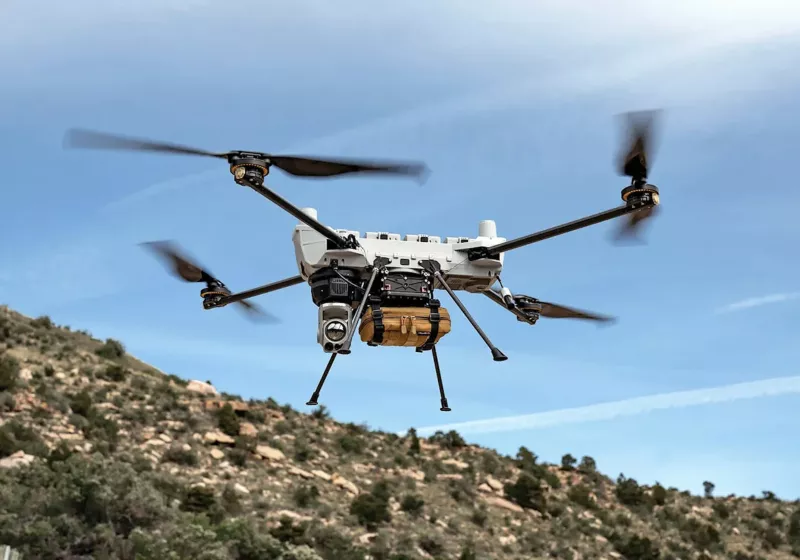
From a defense perspective, conformable batteries could enable smaller UAVs with longer endurance, more compact avionics suites, or wearable battlefield equipment with integrated power sources that conform to body contours. In aerospace, where weight and aerodynamics directly influence performance and efficiency, the ability to integrate batteries into structural or exterior components could yield meaningful gains. Moreover, the ability to prototype battery geometries rapidly can shorten development cycles for mission-critical hardware, allowing engineers to test energy storage in configurations that were previously impractical or impossible.
Industry stakeholders along the supply chain—materials developers, printer manufacturers, and system integrators—stand to benefit from a validated pathway that demonstrates safety, reliability, and performance in printed batteries. If the Air Force program demonstrates robust outcomes, it could catalyze further investment in additive manufacturing-based power solutions, prompting collaboration across public agencies, academic institutions, and private defense contractors.
There are potential societal and economic implications as well. Advances in 3D-printed batteries can spur new manufacturing ecosystems that emphasize customization and on-demand production. Regional electronics hubs could attract high-skill jobs centered on specialized battery design, materials engineering, and additive manufacturing processes. However, this evolution also raises questions about standardization, safety, and environmental impact—areas that policymakers and industry groups will need to address as the technology moves toward broader use.
In the longer term, continued progress could influence how power systems are designed in far-reaching applications, from space exploration hardware to next-generation medical devices. As energy storage becomes more intimately integrated into the form and function of devices, designers will need to consider not only energy capacity but also how the battery interacts with thermal management, vibration, radiation exposure, and other mission-critical factors. The research community will likely pursue complementary innovations, including advanced solid electrolytes, safer chemistries, and hybrid approaches that blend conventional and printed components to optimize performance and safety.
Yet, skepticism remains warranted. The history of innovative energy storage concepts shows that early demonstrations often require substantial maturation before achieving commercial viability. Scaling from printed proof-of-concept cells to full-scale production involves addressing manufacturability, supply chain stability, and cost considerations. Safety concerns must be thoroughly vetted to ensure that new battery formats do not introduce new failure modes or hazards in demanding environments.
The Air Force project will contribute to a growing portfolio of work exploring how additive manufacturing can reshape power systems. As researchers publish results, others will monitor performance metrics, such as energy density, charge/discharge rates, cycle life, self-heating tendencies, and environmental resilience. The resulting knowledge will help define the criteria by which future printed batteries are judged, guiding investment decisions and informing standards development for defense and civilian applications.
In sum, the push toward 3D-printed, conformable batteries embodies a broader ambition to harmonize form and function in energy storage. If validated, this technology could unlock a new class of power solutions that align more closely with the geometry of modern devices, enabling lighter, more compact, and potentially more capable hardware across multiple sectors.
Key Takeaways
Main Points:
– The US Air Force awarded $1.25 million to validate 3D-printed, conformable batteries in an 18-month program.
– The initiative aspires to demonstrate how printed energy storage can offer greater design freedom for defense and aerospace hardware.
– Success depends on achieving reliable performance, safety, and scalable manufacturing suitable for demanding environments.
Areas of Concern:
– Ensuring long cycle life and safety under extreme conditions.
– Demonstrating scalable, repeatable manufacturing processes.
– Integrating printed batteries with existing power management and system architectures.
Summary and Recommendations
The 3D-printed battery initiative represents a strategic exploration of how additive manufacturing can redefine energy storage for small devices, particularly in defense and aerospace contexts. By aiming to produce conformable batteries that can fit nontraditional geometries, the project seeks to reduce weight, enhance design flexibility, and streamline assembly processes. Achieving these goals requires overcoming material, process, and system integration challenges. Critical areas include selecting suitable chemistries compatible with printing, ensuring safety under harsh operating conditions, validating lifecycle performance, and establishing scalable manufacturing methods.
For stakeholders, a prudent path forward involves maintaining rigorous testing regimens that emphasize safety, reliability, and environmental robustness. Collaboration across academia, industry, and government agencies can accelerate the development of standards and best practices. Additionally, pursuing field demonstrations and pilot programs can help translate laboratory successes into deployable solutions, while ongoing assessments of cost, manufacturability, and supply chain stability will inform the technology’s commercial viability.
If the project yields positive validation outcomes, it could catalyze broader adoption of printed energy storage across multiple sectors, including consumer electronics, robotics, and IoT, where tailored battery geometries offer tangible advantages. However, given the early-stage nature of such technology, continued investment, cautious optimism, and a focus on safety and scalability will be essential to realize its full potential.
References
- Original: https://www.techspot.com/news/111230-3d-printed-batteries-aim-reshape-energy-storage-small.html
- Additional context on additive manufacturing and energy storage concepts (to be added by the user):
- [1] Industry perspectives on 3D-printed batteries and conformal energy storage
- [2] Standards and safety considerations for printed energy storage systems
- [3] Recent research articles on materials and printing methods for battery components

*圖片來源:Unsplash*