TLDR
• Core Points: A Seattle-based architect, Gino Palileo, turns his lifelong fascination with Washington’s ferries into precise 3D-printed models, drawing from his childhood experiences and local maritime culture.
• Main Content: Palileo’s journey from the Philippines to Seattle, his early work at a waterfront ice cream shop, and how watching the green-and-white ferries inspired a passion that now drives his 3D-printing practice.
• Key Insights: 3D printing offers a tangible link between memory and craft, enabling optimization, replication, and exploration of vessel design on a scale accessible to enthusiasts and professionals.
• Considerations: Model accuracy depends on available data and images; the activity intersects with broader conversations about maritime heritage, local industry, and sustainable hobbyist manufacturing.
• Recommended Actions: Readers should explore local ferry histories, consider 3D-printing as a method for preserving maritime heritage, and support artists who bring technical hobbies into urban life.
Content Overview
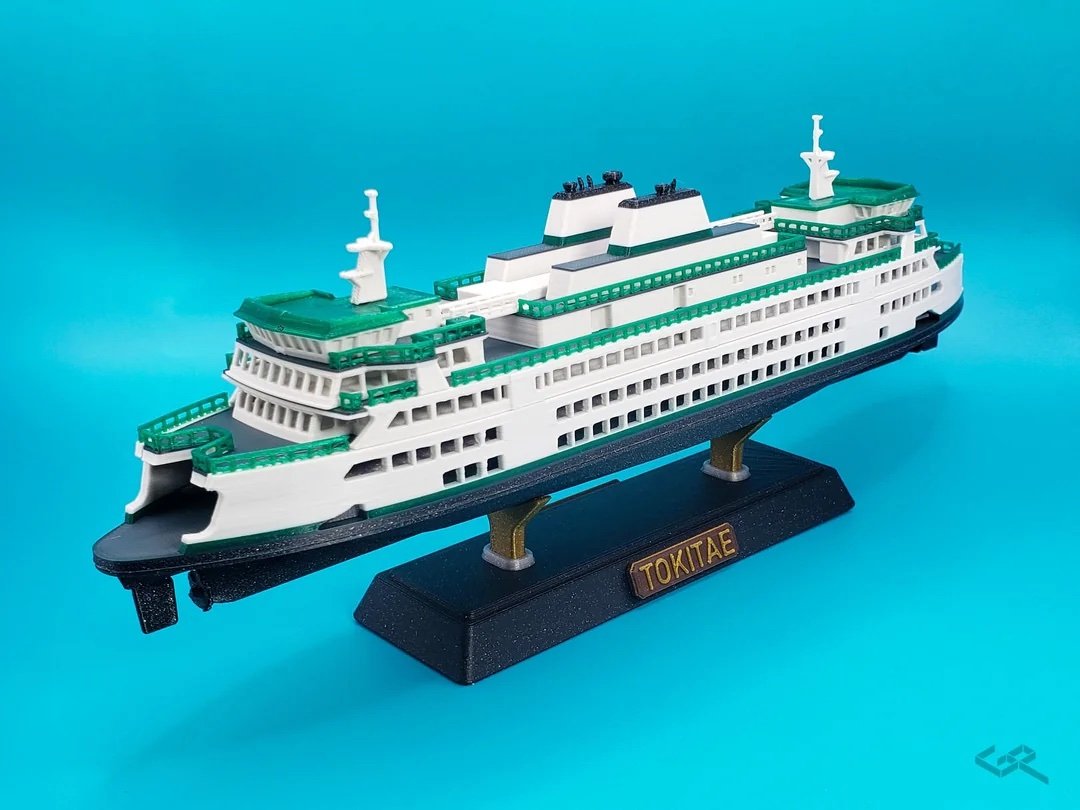
Gino Palileo, a Seattle-based architect, has found a new medium to channel a lifelong affection for the Washington state ferries: highly detailed 3D-printed replicas. His fascination began in the Pacific Northwest, but its roots extend back to his childhood in the Philippines. When Palileo moved to Seattle in 2015, he started working at an ice cream shop housed at the city’s waterfront ferry terminal. The ferry system—characterized by its distinctive green-and-white hulls—was not only a backdrop to his daily routine but a source of enduring inspiration. Over time, he shaped this interest into a dedicated practice focused on accurately reproducing ferries through 3D printing. His work merges architectural precision with a maritime muse, offering a fresh way to engage with the vessels that have long defined Seattle’s waterfront culture.
Palileo’s story highlights how specific local icons—like the state’s ferries—can influence professionals to explore new techniques and forms of expression. By leveraging modern fabrication technologies, he converts photographic references, drawings, and firsthand observations into three-dimensional models that can be touched, examined, and shared. This approach resonates with broader trends in design and hobbyist communities: the democratization of high-precision fabrication and the revival of interest in regional nautical history.
In interviews and features, Palileo explains that his 3D prints are more than decorations. They serve as educational tools, design explorations, and preservements of memory, enabling both enthusiasts and fellow architects to analyze form, proportion, and function in a tactile way. He emphasizes that the models are built with careful attention to scale, detail, and accuracy, often including elements such as the ferries’ distinctive funnel shapes, deck layouts, and hull contours. The project also creates a dialogue about how we remember and interpret the vessels that shape a city’s identity, turning everyday encounters with ferries into a lasting, shareable craft.
This initiative sits at the intersection of architecture, engineering, and maritime heritage. Palileo’s work demonstrates how digital-to-physical fabrication can bridge professional practice and personal passion, inviting others to participate in a hands-on exploration of a region’s naval landscape. By documenting the process—from initial sketches and digital modeling to precise printing and finishing—he also contributes to a growing community of model makers who value fidelity and storytelling as much as aesthetics.
In-Depth Analysis
Palileo’s foray into 3D printing ferries reflects a broader shift toward tactile, project-based learning and hobbyist fabrication within urban design communities. The ferries, a recognizable symbol of Puget Sound’s transportation network, have long appeared in daily life for Seattle residents and visitors alike. The distinctive green-and-white livery and the vessels’ sturdy, utilitarian profiles carry a sense of reliability and regional character that many maritime enthusiasts seek to understand and reproduce. For Palileo, replicating these ships is more than a technical exercise; it is an exercise in memory, place, and architectural craft.
From his early life in the Philippines to his move to Seattle, Palileo’s trajectory underscores how personal experience informs professional practice. The ice cream shop setting at the waterfront—an intersection of tourism, transit, and everyday commerce—exposed him to ferries as both infrastructure and icon. This exposure seeded a lifelong curiosity about how ships are designed, built, and operated, as well as how they appear in miniature forms once translated into tangible objects.
The 3D-printed ferries are created through a meticulous process. Palileo begins with research: collecting photographs, diagrams, and any available technical data about each vessel. He then builds digital models that reflect the hull lines, superstructure, and key distinguishing features. Precision is essential; even small deviations in scale or shape can affect the model’s likeness and its ability to convey the ferry’s character. After digital modeling comes the printing phase, where material choice—often resin or high-strength thermoplastics—affects the finished model’s durability and level of detail. Post-processing steps such as sanding, assembly, painting, and weathering complete the transformation from digital file to printed artifact.
The handmade finish is not merely cosmetic. Palileo pays attention to the visual language of the ferries: the color scheme, the placement of windows and portholes, the arrangement of lifeboats, and the arrangement of decks and car ramps. He sometimes undertakes scale refinements that allow viewers to appreciate structural cues that might be less obvious on full-size vessels. The result is a set of models that function as educational references, conversation pieces, and historical records that capture the appearance and essence of Seattle’s ferry fleet at particular moments in time.
Beyond the technical craft, the work prompts reflection on the broader cultural and economic implications of the region’s maritime infrastructure. Ferries are integral to the Puget Sound transportation network, supporting commuting, tourism, and regional trade. They intersect with environmental considerations, energy transitions, and maintenance budgets for a public service that ferries millions of passengers each year. Palileo’s models can be used as tools for outreach and education in maritime history, engineering design, and urban planning, offering a compact, accessible way to discuss how vessels are designed, maintained, and integrated into a city’s daily life.
Another layer to Palileo’s project is its potential as a community-building device. By producing and sharing accurately rendered models, he creates opportunities for collaboration with fellow model makers, designers, and maritime enthusiasts. Workshops, exhibitions, and online showcases could expand the audience for his work, inviting others to contribute their own references and build a more comprehensive archive of Washington’s ferries. This participatory dimension aligns with broader efforts to preserve regional heritage in an era of rapid technological change, where physical artifacts—like a hand-painted or 3D-printed replica—can evoke a shared memory more vividly than a photograph alone.
From a design perspective, the project highlights how 3D printing enables rapid iteration and experimentation. Palileo can test different hull shapes, deck arrangements, and color schemes in a way that would be costly or time-consuming with traditional methods. If he is exploring historical variants, he can compare photographic evidence against three-dimensional renditions to better understand how design decisions affected stability, capacity, and performance. The iterative capability supports both historical fidelity and speculative exploration, encouraging designers and engineers to reflect on the evolution of ferry design over time.
The work also raises practical considerations for hobbyists and professionals considering similar projects. Access to accurate references is a common challenge; owners of digital and physical archives, naval historians, and museum collections can serve as essential resources. Verification of details—such as the exact dimensions, window placements, and deck configurations—can be difficult when official schematics are not readily available to the public. Collaboration with local historical societies, maritime museums, or the ferry operator could help expand the catalog of reference material and improve model fidelity.
Sustainability and conservation are additional angles to consider. 3D printing reduces the need for mass-produced, single-use figurines and can be a lower-widelity alternative to traditional manufacturing for hobbyists. However, material choices and energy use during printing should be weighed against the cultural value of preserving maritime history in a physical, shareable form. Palileo’s approach demonstrates how individuals can contribute to heritage preservation by leveraging modern fabrication technologies to capture regional icons in enduring, craft-like objects.
Palileo’s narrative also offers a case study in the personal dimension of urban design practice. Architects often balance professional responsibilities with personal projects that reveal distinct interests and strengths. Palileo’s ferries project exemplifies how a practitioner can diversify creative output while staying connected to local context. The 3D prints function as both objects of appreciation and as potential teaching tools, enabling students and practitioners to analyze scale, proportion, and silhouette in a way that complements traditional interpretations of architectural drawing and modeling.
Looking forward, there are several directions Palileo might pursue. Expanding the catalog of models to include a wider range of vessels—such as the older ferries or regional boats operating in Puget Sound—could broaden the scope of his work. Incorporating interactive elements, such as augmented reality overlays that compare the model to historical images, might enrich the educational value and engage a broader audience. Collaborative projects with schools, universities, or maritime museums could turn the prints into a structured learning resource, pairing physical artifacts with digital content and archival materials.
The project also invites consideration of how art and craft intersect with public memory. In cities with strong maritime traditions, the everyday presence of ferries can become a defining feature of the local identity. By translating these vessels into tactile models, Palileo helps to preserve and celebrate that identity in a form that can be shared with future generations. The work suggests that even familiar, utilitarian infrastructure can inspire creative inquiry when approached with curiosity and technical skill.

*圖片來源:Unsplash*
In sum, Gino Palileo’s detailed 3D prints of Washington ferries offer more than decorative scale models. They represent a fusion of architecture, maritime history, and hands-on fabrication that honors a personal connection to Seattle’s waterfront while contributing to the broader discourse on heritage preservation, design education, and community engagement. His journey—from a waterfront ice cream shop employee to a practitioner who manufactures precise, collectible representations of iconic vessels—illustrates how place-based inspiration can translate into meaningful, enduring craft.
Perspectives and Impact
The significance of Palileo’s work lies not only in the quality and accuracy of the models but also in what they symbolize for the local community and design field. For Seattle residents and maritime enthusiasts, the ferries are more than transportation; they are a recurring presence that embodies regional resilience and accessibility. By producing precise 3D representations, Palileo provides a new way to connect with that presence—one that can be held, examined, and discussed. He democratizes an aspect of naval engineering that is often siloed within professional circles, inviting non-specialists to engage with technical aspects of ship design through a tangible medium.
Education is a vital potential outcome of these prints. Students of architecture, industrial design, or maritime history can study hull lines, deck arrangements, and superstructure from a physical model, complementing theoretical coursework with a hands-on reference. The tactile nature of 3D-printed models supports kinesthetic learners and can make complex concepts more approachable. In a city like Seattle, where the ferries are a constant feature of daily life, the models can serve as conversation starters in classrooms, museums, and public spaces, fostering awareness of local engineering heritage and the role of public transit in urban planning.
The project also has implications for cultural preservation. In an era of rapid modernization and shifting transportation patterns, preserving a visual and tactile record of the ferry fleet can help communities remember how their landscapes have evolved. Models can be included in exhibits that narrate the history of Puget Sound maritime operations, the design evolution of ferries, and the ways in which technology has shaped the movement of people and goods across the water. By making these artifacts accessible, Palileo contributes to a broader cultural memory that links contemporary urban life with its nautical roots.
Industry professionals may view the initiative as a bridge between practice and hobby. Architects, engineers, and model makers often work with digital tools and physical prototypes. Palileo’s work demonstrates how personal passion projects can inform professional practice by expanding the range of reference materials and methods available for understanding vessel design. The meticulous approach to modeling—emphasizing accuracy, proportion, and detail—could inspire similar projects that document other regional fleets or historic ships, thereby enriching the repository of accessible, high-fidelity models.
Additionally, the method underscores the potential of 3D printing as a tool for heritage and public-facing design discourse. Model making can enhance public engagement with infrastructure, making abstract engineering concepts tangible. Municipal agencies and transit authorities could collaborate with designers and artists to commission or curate similar models for public display, education, and outreach. Such collaborations would reinforce the city’s identity while providing a platform for discussing future ferry design, sustainability goals, and maintenance challenges in a visually engaging format.
Future research and development in this area could explore the integration of historical data with modern modeling techniques. For example, historians could provide archival materials that document design changes over time, while engineers could supply structural insights to refine hull representations. The result would be a rigorous, multi-perspective collection of models that tell a comprehensive story of the region’s maritime fleet—past, present, and potential futures.
Palileo’s work also invites reflection on the personal dimension of design work. The act of translating memory into three-dimensional form acknowledges the emotional resonance of public infrastructure and the ways in which people form attachments to everyday objects. It suggests that design practice can be deeply personal while remaining professional, rigorous, and constructive. The result is work that resonates across audiences: fellow designers who recognize the craft, maritime enthusiasts who appreciate fidelity, and general audiences who find beauty in a thoughtfully rendered object.
As technology evolves, new possibilities loom. Advances in 3D scanning could enable even more accurate reproductions by capturing exact geometries from existing vessels. Improvements in printing materials might allow for more faithful color reproduction and durable finishes. Integrating sensors or flexible components could broaden the scope of what a model can demonstrate, such as articulated ramps, movable car decks, or interactive lighting. Each enhancement would bring Palileo’s models closer to a holistic, immersive representation of the ships.
In the end, Palileo’s ferries are more than miniature ships. They are bridges between memory and modern fabrication, between personal passion and public culture, and between Seattle’s waterfront and a global tradition of ship modeling. They remind us that the objects we encounter daily can also be subjects of careful study, preservation, and artistic expression. As such, they contribute to ongoing conversations about how cities remember their maritime roots and how individuals can contribute meaningfully to that memory through craft, technology, and storytelling.
Key Takeaways
Main Points:
– A Seattle architect, Gino Palileo, creates precise 3D-printed models of Washington ferries inspired by his upbringing and local maritime culture.
– The project blends architectural craft with maritime heritage, using digital modeling and careful finishing to achieve fidelity.
– The models serve educational, commemorative, and community-building roles, prompting conversations about preservation, design, and urban identity.
Areas of Concern:
– Access to comprehensive, verifiable references for exact vessel details can be a challenge.
– Balancing historical fidelity with artistic interpretation requires careful judgment.
– Sustainability considerations related to printing materials and energy use should be weighed in long-term practice.
Summary and Recommendations
Gino Palileo’s focused 3D-printed ferries illuminate how personal history and local infrastructure can converge in a contemporary design practice. By transforming familiar vessels into tangible, high-fidelity models, Palileo makes maritime heritage more accessible and engaging to a broad audience. His work demonstrates the value of cross-disciplinary approaches—where architecture, engineering, and model making intersect—to preserve regional identity and foster educational opportunities.
For readers and practitioners interested in similar endeavors, several recommendations emerge:
– Explore local maritime histories and iconic vessels as potential subjects for physical modeling to foster community engagement and preservation.
– Leverage 3D printing as a flexible tool for exploring design ideas, documenting heritage, and creating tangible references for educational use.
– Seek collaborations with historical societies, museums, or transit authorities to access verifiable references and expand model catalogs.
– Consider integrating digital and physical storytelling methods, such as AR overlays or interactive displays, to enrich the audience experience.
By embracing these approaches, individuals and institutions can continue the important work of preserving and interpreting a city’s maritime heritage while expanding the ways we learn from and interact with it.
References
- Original: https://www.geekwire.com/2026/ship-shapes-seattle-architect-makes-detailed-3d-prints-of-the-washington-ferries-he-grew-up-loving/
- Related sources for further context:
- Puget Sound Maritime History Resources (local museum and archival collections)
- Seattle Waterfront and Ferry System design documentation and modernization plans
- 3D printing in architectural practice: techniques, materials, and case studies
Forbidden:
– No thinking process or “Thinking…” markers
– Article must start with “## TLDR”

*圖片來源:Unsplash*