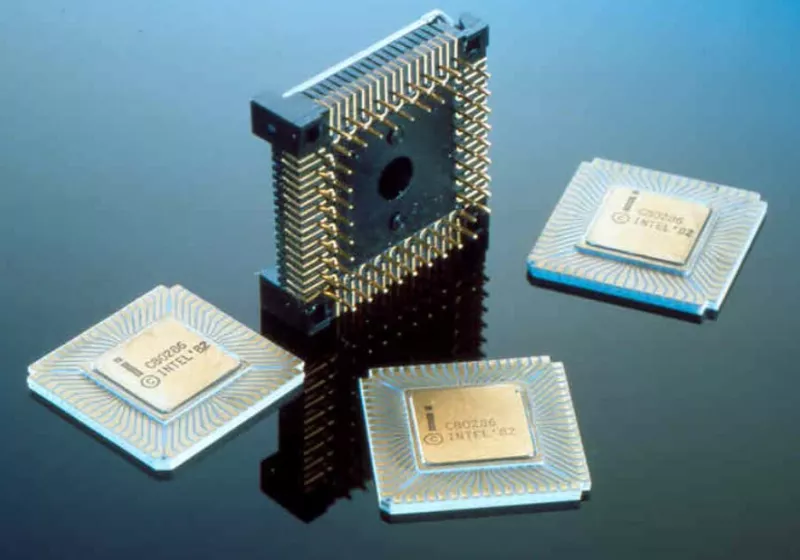
TLDR
• Core Points: The Intel 80286, released February 1, 1982, marked a major leap in personal computing with a 16-bit architecture that doubled performance over its predecessor and introduced features for advanced computing tasks.
• Main Content: The 80286 session broadened the capabilities of PC software, improved protection and multitasking, and established a foundation for future x86 enhancements.
• Key Insights: The 80286’s architectural decisions influenced later processors, shaping operating systems, memory management, and the trajectory of the PC industry.
• Considerations: While faster and more capable than the 8086, the 80286 also faced competition from emerging CPU designs and required software adaptations to fully exploit its features.
• Recommended Actions: For historians and engineers, assess the 80286’s impact on software ecosystems and legacy systems; for enthusiasts, explore retro hardware or emulation to experience early 16-bit computing.
Content Overview
In the early 1980s, Intel sought to extend the success of its 8086 line by introducing a more powerful successor capable of handling increasingly demanding software workloads. On February 1, 1982, Intel announced the 80286, a 16-bit microprocessor designed to deliver significantly higher performance and expanded system capabilities. The 80286, often referred to simply as the 286, quickly assumed a pivotal role in the evolution of personal computing, marking a shift from basic 16-bit processing toward more sophisticated multitasking and protected-mode operation that would underpin later PC operating systems and applications.
The 80286’s release came at a time when personal computers were becoming more common in business environments and were beginning to transition from hobbyist devices to essential productivity tools. The 16-bit design offered a substantial improvement in instruction throughput, memory addressing, and overall system responsiveness. Its architecture also introduced features intended to support more complex software environments, including enhanced memory management and protection mechanisms. In practice, this meant that legitimate operating systems and application software could run with greater reliability and efficiency, laying groundwork for more advanced computing paradigms.
This article revisits the 80286’s significance, tracing its technical innovations, market impact, and long-term influence on the trajectory of the x86 ecosystem. It also situates the 286 within the broader context of early-1980s computing, where hardware advances were closely tied to software development cycles and the evolving needs of business users, educators, and developers who relied on increasingly capable personal computers.
In-Depth Analysis
The 80286 represents a deliberate step forward from Intel’s earlier 8086/8088 lineage. While the 8086 introduced the 16-bit data path and a new addressing scheme that could access up to 1 MB of memory (via 20-bit addressing), the 80286 extended these capabilities with architectural refinements that delivered faster performance and better support for more demanding software environments. One of the defining features of the 286 was its improved instruction throughput, driven by enhancements in the internal microarchitecture and higher clock rates available at the time. The result was a system that could execute complex programs more quickly and provide a more responsive experience for users working with data-intensive tasks, engineering software, and early graphical applications.
Another cornerstone of the 80286 design was its protective memory model, which introduced an infrastructure for hardware-assisted memory protection and privilege levels. This protected mode could help prevent a faulty or malicious program from inadvertently overwriting critical system data, a limitation that had plagued earlier 16-bit x86 implementations. While the protected mode was initially more challenging to program and required software developers and operating system designers to adapt, it eventually enabled more robust multitasking environments. This capability became a cornerstone for how subsequent x86 CPUs managed memory and process isolation, influencing the stability and reliability of later PC operating systems.
From a software ecosystem perspective, the 80286 enabled more sophisticated operating systems and application suites. When paired with an operating system that could fully exploit its protected mode features, the 286 allowed for better multitasking and memory management. This facilitated more complex software arrangements, such as business applications that could run concurrently and more memory-intensive tools used for engineering, design, and data analysis. The result was a broader appeal for business users who required more powerful computing resources, expanding the market for IBM-compatible PCs and driving adoption of the 286-based platforms.
Hardware improvements in the 80286 also had practical implications for clock speed, instruction execution efficiency, and memory management overhead. While the processor could deliver higher performance relative to the 8086, maximizing its potential depended on the surrounding system architecture, including the motherboard, bus design, and memory subsystems. The 286 benefited from faster peripheral interfaces and an improved overall system bandwidth that supported more ambitious software workloads, even as system designers navigated the complexities of transitioning software to protected-mode operation.
In the decades since its introduction, the 80286 has held a mixed, yet enduring legacy. It is often remembered for enabling a bridge between the simpler, single-tasking environments of early PCs and the more robust, multitasking-centric designs that would later become standard. Its protected-mode capabilities presaged the operating systems and hardware protection strategies that would define the evolution of x86 computing. The 286’s influence is visible in the way later processors—such as the 80386 and beyond—implemented more advanced memory management units, paging, and more sophisticated privilege levels, building on the ideas first introduced in the 286 era.
From a market perspective, the 286’s timing helped Intel solidify its leadership in the burgeoning PC market, providing a compelling option for manufacturers seeking performance improvements without a drastic shift in software compatibility. The broader ecosystem, including software developers, system integrators, and hardware vendors, gradually aligned to exploit the 286’s capabilities. Over time, developers would design software and operating systems that relied on the 286’s protected mode and enhanced memory management, paving the way for more versatile and resilient personal computing platforms.
Looking at historical context, the 80286’s release is part of a broader narrative about how computer architectures evolved to meet the demands of increasingly capable software. The 1980s saw a rapid expansion of business software, graphical interfaces, and data processing tasks that required faster CPUs and more sophisticated system software. The 286 sits at a critical juncture in this arc, providing a practical upgrade path that balanced backward compatibility with forward-looking architectural improvements. While it faced competition from other processor families and evolving software standards, the 286’s innovations helped establish the x86 architecture as a durable and adaptable platform for decades to come.
In retrospect, the 80286’s contribution to the field extends beyond raw speed. By introducing protected-mode operation and improved memory handling, it influenced how operating systems approached process isolation, system stability, and the management of resources in a multi-tasking environment. These ideas would be refined and expanded in subsequent generations, ultimately enabling modern computing paradigms that rely on robust protection, virtualization-ready architectures, and scalable memory architectures. The 286’s legacy therefore resides not only in its performance gains, but in its role as a catalyst for architectural evolution within the x86 family.

*圖片來源:Unsplash*
Perspectives and Impact
The 80286’s introduction marked a defining moment in the history of the x86 lineage. It reinforced the idea that Intel’s architectural innovations could deliver meaningful, tangible improvements in everyday computing tasks, while simultaneously enabling more complex software ecosystems. For software developers, the 286 presented both opportunities and challenges: opportunities to design software that could exploit faster execution and improved data handling, and challenges associated with protected mode programming and the need to accommodate a broader range of system configurations. As operating systems adapted to exploit the 286’s capabilities, developers began to rethink how applications could be structured to take advantage of multitasking, memory protection, and secure execution contexts.
The protected-mode concept, while initially daunting for developers, established a framework for more stable and reliable computing. It allowed the operating system to enforce boundaries between applications and the core system, reducing the risk of system crashes caused by software running at elevated privilege levels or accessing memory improperly. This architectural shift contributed to a more resilient computing environment, particularly in business settings where uptime and data integrity were paramount. Over time, this concept became a foundational element of modern multi-user, multi-tasking operating systems on x86 hardware.
From a hardware innovation perspective, the 80286 helped set expectations for future processors in terms of performance-per-watt, memory bandwidth, and architectural extensibility. It demonstrated that the x86 instruction set could evolve toward more sophisticated memory management and protection schemes without abandoning backward compatibility—an increasingly important consideration as software libraries and applications grew more complex and resource-intensive. In the long run, the 286’s design principles influenced the development of paging and virtual memory features that would be refined in later generations, enabling more efficient memory utilization, larger address spaces, and better support for large-scale software systems.
The 80286 also had a notable impact on the PC market landscape. By delivering a meaningful performance uplift over the 8086 and enabling more capable software environments, the 286 helped drive the adoption of IBM-compatible PCs in business and educational settings. It reinforced Intel’s role as a leading supplier of computing engines and contributed to the rapid expansion of a robust ecosystem that included motherboard designers, peripheral vendors, and software developers. The result was a virtuous cycle: faster CPUs spurred more sophisticated software, which in turn justified higher-performance hardware offerings, fueling continued investment and innovation in the PC industry.
Looking forward, the 80286’s legacy influenced the trajectory of subsequent x86 processors, especially in areas of memory protection, segmentation, and the development of mode switching between real and protected modes. These architectural ideas would be refined and extended in the 80386 and later generations, enabling more advanced operating systems and enabling features such as virtual memory, task switching, and enhanced security models. The 286 thus stands as a crucial step in the broader evolution of personal computing, bridging the era of simple, single-tasking PCs with the modern, multitasking, protected-memory platforms that define today’s computing landscape.
In summary, the 80286’s 44-year milestone is a reminder of how a single hardware upgrade can catalyze meaningful shifts in software design, system architecture, and market dynamics. It underscores the importance of architectural foresight—recognizing not only what a processor can do today, but how its innovations can shape the capabilities of software and the expectations of users for years to come. As historians and technologists reflect on this era, the 80286 remains a testament to the enduring value of thoughtful design in computer architecture and the enduring influence of the x86 family on modern computing.
Key Takeaways
Main Points:
– The 80286, released February 1, 1982, provided a substantial performance and feature upgrade over the 8086, including enhanced memory capabilities and protection features.
– Protected mode introduced foundational ideas for memory protection and multitasking, influencing future operating systems and hardware design.
– The 286 helped solidify Intel’s leadership in the PC market and contributed to the expansion of the x86 ecosystem.
Areas of Concern:
– Protected mode programming complexity posed initial challenges for developers and system integrators.
– Transition paths required careful hardware and software alignment to fully exploit memory management features.
– Early implementations could be limited by system design and software support, delaying potential gains.
Summary and Recommendations
The Intel 80286 represents a pivotal evolution in the x86 line, delivering meaningful improvements in speed, memory addressing, and security-oriented features through protected mode. Its introduction accelerated the shift toward multitasking operating environments and larger, more capable software ecosystems in the early 1980s. While real-world gains depended on software and hardware integration, the 286 established essential architectural concepts that would be refined in later generations, ultimately shaping the course of personal computing for decades.
For historians, the 80286 offers a rich case study of how processor design choices—such as protected memory and privilege levels—can influence software architecture, operating system design, and market dynamics. For engineers and enthusiasts, exploring the 286-era hardware or emulation can provide valuable insights into the challenges and opportunities of early 16-bit computing, as well as the roots of modern memory management and system protection strategies.
In conclusion, the 80286’s 44-year milestone underscores its enduring significance in the annals of computing. It bridged a gap between simple 16-bit processors and the more sophisticated, multitasking-capable CPUs that would define later decades, leaving a lasting imprint on the x86 family and the broader evolution of personal computing.
References
- Original: https://www.techspot.com/news/111167-intel-80286-cpu-celebrates-44-years-x86-history.html
- Additional references:
- Intel 80286 Processor Product Overview (historical technical documentation)
- IBM PC/XT architecture and the role of the 80286 in early business computing
- Early operating systems and protected mode concepts (historical analyses)

*圖片來源:Unsplash*