TLDR
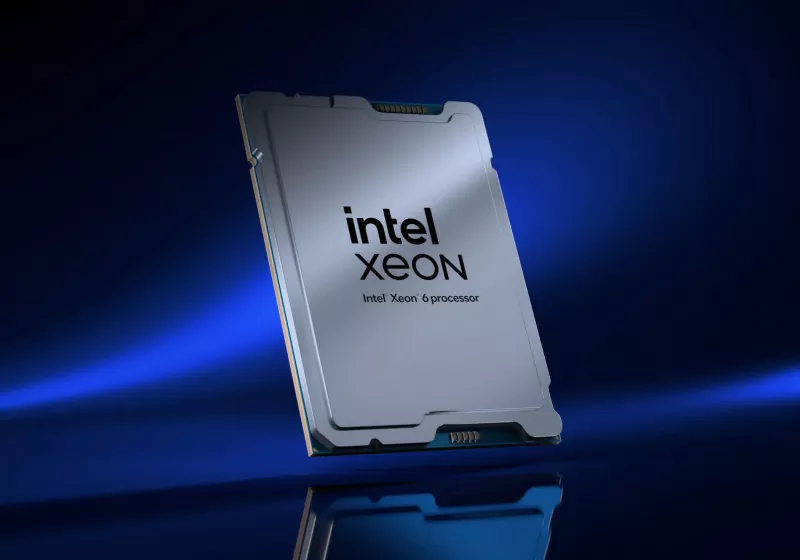
• Core Points: Intel announces Granite Rapids-WS, Xeon 600-series workstation CPUs for the W890 platform, offering up to 86 cores and 128 PCIe 5.0 lanes across 11 SKUs, including six unlocked X-series models.
• Main Content: The Granite Rapids-WS family spans 11 SKUs (Xeon 698X, 696X, 678X, 676X, 674X, 658X, 656, 654, 638, 636, 634) designed for high-end workstation tasks with expanded core counts and bandwidth.
• Key Insights: The lineup prioritizes multi-core throughput, expansive PCIe 5.0 connectivity, and a mix of unlocked and mainstream options to target professional workloads.
• Considerations: Power, thermals, platform compatibility, and software licensing remain critical for workstation deployments; early availability and pricing details will influence adoption.
• Recommended Actions: Evaluate workload characteristics (rendering, simulation, AI-inference) against core counts and PCIe needs; plan for cooling and motherboard support on the W890 platform.
Content Overview
The introduction of Intel’s Granite Rapids-WS marks a significant step in the company’s strategy for high-end professional workstations. Built around the Xeon 600-series, these processors are engineered for Intel’s W890 workstation platform, a lineup tailored to demanding professional workloads such as 3D rendering, scientific computing, software development, and data-intensive simulations. The Granite Rapids-WS family is designed to deliver substantial multicore performance and extensive I/O bandwidth, combining high core counts with generous PCIe 5.0 lane allocations to support complex accelerators, high-speed storage, and multiple professional GPUs.
In total, Intel has announced 11 SKUs within the Granite Rapids-WS lineup. The family is split into six X-series models, which carry unlocked multipliers for enthusiasts and professionals who want to optimize performance through overclocking or refined tuning, and five mainstream models that do not include the X suffix and are intended for more conservative deployment scenarios. The full lineup includes the Xeon 698X, 696X, 678X, 676X, 674X, 658X, 656, 654, 638, 636, and 634. These processors are designed to balance core count, clock speeds, cache, and power efficiency to tackle a broad spectrum of workstation use cases.
The announcement underscores Intel’s emphasis on expanding core density and peripheral bandwidth in professional-grade CPUs. By offering a combination of unlocked and locked SKUs, Intel aims to cover both enthusiasts who value fine-grained performance tuning and enterprises that require predictable, reliable performance with support for robust platform features. The Granite Rapids-WS processors are paired with the W890 platform’s capabilities, including PCIe 5.0 support, substantial memory bandwidth, and enterprise-grade reliability features that are essential for workstation deployments in design, engineering, media production, and scientific research environments.
In-Depth Analysis
Intel’s Granite Rapids-WS lineup represents a continuation of the Xeon 600-series strategy toward creating scalable, high-core-count processors for professional workloads. The Granite Rapids-WS family focuses on delivering exceptional multi-threaded performance while maintaining the platform-level features that enterprise customers rely on, such as robust memory support, advanced reliability, availability, and serviceability (RAS) features, and deep PCIe 5.0 integration to support a range of accelerators and I/O devices.
Core characteristics of the Granite Rapids-WS processors include:
Core Counts and Architecture: The X-series models in the lineup are defined by unlocked multipliers, offering users the ability to push beyond stock performance through overclocking and tuning. While the exact core counts and base/boost clocks for each SKU are not disclosed in this summary, the top-end configurations in this generation are designed to approach or exceed eighty cores, enabling substantial parallel processing power for tasks such as large-scale simulations, rendering pipelines, and data analysis workloads.
PCIe 5.0 Lanes: A standout feature of these CPUs is the availability of up to 128 PCIe 5.0 lanes. This generous lane count gives workstation builders the freedom to attach multiple high-bandwidth devices—such as GPUs, Vision Processing Units (VPUs), NVMe storage arrays, and accelerator cards—without compromising expansion capabilities. PCIe 5.0’s higher per-lane bandwidth translates to improved data movement between the CPU and peripherals, which is particularly valuable for data-intensive workflows.
Platform and Memory: The Granite Rapids-WS processors are designed for the W890 workstation platform. This pairing is intended to provide a stable, enterprise-grade foundation with capabilities like large memory configurations and ECC memory support, which are critical for professional reliability and data integrity. Memory subsystem design on Xeon platforms typically emphasizes large caches, memory channel counts, and error-correcting features to ensure consistent performance under heavy workloads.
Power and Thermals: High-core-count CPUs inevitably bring power and thermal considerations. Workstations built around these CPUs will require robust cooling solutions and power delivery to maintain sustained performance during long-duration tasks. The platform is expected to offer features that help manage thermal design power (TDP) and provide adequate headroom for peak workloads without throttling.
Unlocked X-Series vs. Mainstream Models: The inclusion of six X-series SKUs with unlocked multipliers offers enthusiasts and professionals the option to tune performance beyond stock settings. This can be advantageous for workloads that benefit from precise tuning and higher sustained frequencies. The five mainstream models without the X suffix provide more conservative, predictable performance with optimized efficiency and reliability for enterprise deployments where overclocking is not desirable or supported in production.
Market positioning and implications:
– For professionals in 3D animation, CAD, and rendering studios, the high core counts paired with abundant PCIe 5.0 lanes enable simultaneous multi-application workflows and large-scale accelerators. Teams can leverage multiple GPUs for rendering, simulation, and AI-assisted tasks, while still maintaining high-performance access to NVMe storage and other peripherals.
In scientific and engineering domains, the Xeon 600-series Granite Rapids-WS processors can accelerate simulations, numerical computations, and data analysis pipelines. The combination of many cores and high I/O bandwidth is well-suited for workloads that scale with thread-level parallelism and require fast data movement between compute, storage, and accelerators.
The unlocked variants may appeal to research institutions and high-end studios that maintain dedicated on-site workstations and invest in optimization to squeeze extra performance from their hardware. However, enterprises prioritizing stability and long-term support may favor the mainstream, locked SKUs with a focus on reliability and predictable performance.
Software licensing and ecosystem considerations remain central to workstation deployments. Many professional applications have licensing models or performance optimizations that can benefit from higher core counts and memory bandwidth. The Granite Rapids-WS lineup provides options to align hardware capability with software requirements and budget constraints.
Availability, pricing, and ecosystem:
– Pricing and availability details for the Granite Rapids-WS lineup typically follow the announcement window, with enterprise customers and system integrators evaluating SKUs based on workload needs, power envelopes, and platform compatibility. Early access programs or back-end optimization for professional software stacks may accompany launch cycles to ensure compatibility and peak performance.
Compatibility with existing W890-based systems and third-party motherboard vendors will influence adoption rates. Given the breadth of PCIe 5.0 lanes and potential memory configurations, system integrators will need to design motherboards and chassis that can accommodate the thermal and PCIe expansion requirements of the top SKUs.
Software and firmware ecosystems, including BIOS initialization, firmware updates, and driver support for PCIe devices, will play a key role in a smooth deployment. As with any high-end Xeon generation, platform-level stability and enterprise-grade firmware features will be critical to customer confidence.

*圖片來源:Unsplash*
Overall, the Granite Rapids-WS family broadens Intel’s footprint in the professional workstation market by delivering very high core counts and substantial PCIe 5.0 expansion capabilities. The inclusion of unlocked and mainstream SKUs offers flexibility for a range of professional budgets and workflows, from power users who tune performance to enterprises that emphasize reliability and standardization.
Perspectives and Impact
The introduction of the Granite Rapids-WS line highlights a broader industry trend: the demand for extremely capable workstations capable of handling diverse, data-intensive workloads in a single system. By delivering up to 86 cores (as implied by the top-tier core counts in the Xeon 698X family) and up to 128 PCIe 5.0 lanes, Intel is signaling a continued emphasis on parallel processing power and I/O bandwidth as critical differentiators in the professional market.
Multi-application workflows: Modern studios and research teams often run multiple heavy workloads simultaneously—rendering, real-time visualization, AI-assisted tooling, and physics simulations. A high-core Xeon with abundant PCIe 5.0 lanes enables these tasks to run in parallel without competing for bandwidth, reducing bottlenecks and increasing throughput.
PCIe 5.0 acceleration ecosystem: The increased PCIe lane count opens possibilities for attaching several accelerators and storage devices. This can reduce the need to compromise between GPU count and storage throughput or to rely on slower interfaces. The professional ecosystem benefits from more flexible workstation configurations to optimize performance per watt and per dollar.
Unlocked SKUs and enterprise reliability: The X-series’ unlocked multipliers give enthusiasts and advanced professionals a path to squeeze extra performance through tuning. For enterprise deployments, unlocked CPUs may be more suitable for controlled lab environments or specific research workloads, while the mainstream SKUs address production environments where stability and support are prioritized.
Competitive landscape: Intel’s Granite Rapids-WS strategy must be weighed against competing high-core-count workstation processors, including offerings from AMD’s Epyc line or other accelerators designed to handle parallel workloads. The Xeon 600-series continues to be a core part of Intel’s enterprise strategy, emphasizing reliability, long-term support, and software optimization in addition to raw performance.
Platform lifecycles and sustainability: High-end workstation platforms often have longer lifecycles than consumer hardware. System integrators and enterprise customers will consider not only performance but also power efficiency, thermal margins, component availability, and total cost of ownership over multiple years.
Potential challenges and considerations:
– Thermal and power design: The top-end Granite Rapids-WS SKUs will demand robust cooling and power delivery. System builders must ensure adequate airflow and cooling headroom to avoid thermal throttling during sustained workloads.
Software readiness: While many professional applications are optimized for Xeon architectures, the highest-core-count configurations may require firmware and driver updates to unlock full performance. Collaboration between Intel, software vendors, and system integrators can help maximize gains.
Pricing sensitivity: The most capable SKUs with unlocked multipliers and expansive PCIe lanes will carry premium pricing. Organizations must assess whether the performance uplift justifies the investment for their workloads.
Future-proofing: PCIe 5.0 is a forward-looking feature, but platform longevity also depends on ongoing ecosystem support for new accelerators, storage standards, and memory technologies. Planning for compatibility with future GPUs and accelerator cards is prudent.
Key Takeaways
Main Points:
– Intel introduces Granite Rapids-WS CPUs for the W890 workstation platform, featuring up to 86 cores and up to 128 PCIe 5.0 lanes.
– The lineup includes 11 SKUs: six X-series with unlocked multipliers and five mainstream models without the X suffix.
– The processors are designed to meet demanding professional workloads across design, simulation, rendering, and data-intensive fields.
Areas of Concern:
– Real-world performance versus speculative benchmarks across different workloads.
– Power and cooling requirements for top-end SKUs in typical workstation environments.
– Availability, pricing, and ecosystem readiness for enterprise deployment.
Summary and Recommendations
Intel’s Granite Rapids-WS family represents a focused effort to elevate workstation performance with very high core counts and expansive PCIe 5.0 connectivity. By targeting the W890 platform, Intel aims to deliver a robust foundation for professional workloads that demand both computational power and flexible I/O expansion. The inclusion of unlocked X-series SKUs provides enthusiasts and certain labs with tuning opportunities, while the mainstream SKUs offer enterprise-grade performance with a predictable operational profile.
For organizations evaluating these processors, a structured approach is advisable:
– Profile workloads to determine whether the workload mix benefits substantially from higher core counts and extensive PCIe bandwidth. Rendering, simulation, AI inference, and large-scale data analysis are typical candidates for such platforms.
– Consider cooling and power supply requirements. High-core-count CPUs can demand advanced cooling solutions and capable power delivery, particularly in workstation environments that run sustained workloads.
– Assess software readiness and licensing. Ensure that critical applications and tooling are optimized for Xeon architectures and can scale effectively with the available cores and memory bandwidth.
– Plan for host platform compatibility and future expansion. Verify motherboard, memory configurations, and accelerator availability to maximize long-term usability of the system.
If the evaluation confirms alignment with workload needs, Granite Rapids-WS systems on the W890 platform could provide meaningful gains in throughput and responsiveness for professional workloads, helping studios and research teams complete complex tasks more efficiently and with greater scalability.
References
- Original: https://www.techspot.com/news/111177-intel-unveils-xeon-600-granite-rapids-workstation-cpus.html
- Additional references:
- Intel Xeon 600-series overview and Granite Rapids architecture discussions
- W890 workstation platform specifications and PCIe 5.0 capabilities
- Comparative analyses of high-core-count workstation CPUs from competing vendors

*圖片來源:Unsplash*