TLDR
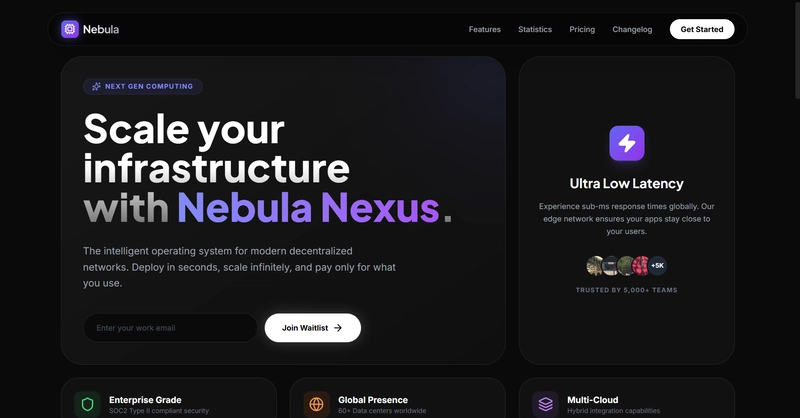
• Core Points: Rebuilding a landing page with React revealed the benefits of component-based structure, better organization, and responsive design; Tailwind CSS accelerated styling, and a mobile-first approach improved usability.
• Main Content: The project evolved from plain HTML/CSS to a modular React implementation with reusable components, a cleaner folder layout, optimized assets, and a focus on mobile-first responsiveness.
• Key Insights: Componentization and scalable layouts matter for maintainability; tooling choices (Tailwind CSS) can speed up styling; performance and accessibility considerations emerge when reimagining layouts in React.
• Considerations: Balancing initial setup time with long-term gains; ensuring accessible design and SEO with dynamic content; maintaining consistency across breakpoints.
• Recommended Actions: Plan a component hierarchy early, adopt a utility-first CSS approach, optimize assets, and test mobile-first breakpoints throughout development.
Content Overview
The article recounts the author’s decision to modernize an older landing page by migrating from static HTML and CSS to a React-based architecture. The motivation was not merely to adopt a new framework but to create a scalable layout that could evolve as the site grows. The author anticipated a straightforward refactor but quickly discovered the advantages of structuring the UI as reusable components. This shift encouraged a rethink of code organization, asset management, and styling strategy, ultimately leading to a more maintainable and responsive product.
The transformation involved several concrete changes. First, sections of the page were converted into reusable React components. This modularization reduced redundancy and simplified future updates, as common patterns could be updated in one place rather than across multiple HTML files. Second, the project’s folder structure was reorganized to better reflect component boundaries and logical groupings, enabling faster navigation and easier collaboration. Third, images were optimized to improve page load times and overall performance, an important consideration for a landing page where users form first impressions quickly. Fourth, Tailwind CSS was adopted to speed up styling and enforce a consistent design system without writing extensive custom CSS. Finally, the team emphasized a mobile-first approach, ensuring that layouts and interactions remain functional and aesthetically pleasing on smaller screens before scaling to larger devices.
The author notes that React’s architecture naturally encourages certain practices that enhance scalability and maintainability. As components become reusable building blocks, developers can compose complex UIs from smaller, well-defined parts. This reduces duplication and fosters consistency across the site. The move to a utility-first styling solution like Tailwind also played a significant role, offering granular control over design directly within markup and enabling rapid iteration. However, the shift is not without challenges; balancing the initial overhead of learning and setting up a React project with the long-term gains requires careful planning and discipline.
Throughout the narrative, the emphasis remains on practical outcomes: a cleaner codebase, improved performance through asset optimization, and a design that prioritizes mobile users without sacrificing desktop experiences. The article also implicitly acknowledges that migrating to React is as much about process as it is about technology. Establishing a clear component hierarchy, consistent styling conventions, and a robust testing strategy are essential components of a successful transition.
In-Depth Analysis
The core argument for migrating to React centers on longevity and scalability. With plain HTML and CSS, a landing page can function well but becomes tedious to maintain as features accumulate. By converting sections into React components, the developer gains the ability to reuse patterns across pages and to compose complex layouts from a standardized set of parts. This modularity reduces duplication, makes updates safer, and simplifies onboarding for new contributors who can align with established component contracts.
Folder structure often correlates with long-term health of a project. The author’s reorganization into a more intentional layout likely separated concerns such as components, assets, styles, and utilities. A thoughtful directory scheme supports easier maintenance, clearer responsibilities, and more predictable paths for future enhancements. In parallel, asset optimization—compressing images, choosing appropriate formats, and enabling progressive loading—contributes to faster page rendering. For landing pages, where user attention spans are short, efficient asset handling can significantly impact conversion and engagement metrics.
Styling with Tailwind CSS afforded faster iterations and consistency. Rather than writing bespoke CSS for each component, Tailwind provides a design system built from utility classes. This approach can speed development, reduce CSS bloat, and promote uniform spacing, typography, and color application. The trade-off is the need to internalize the utility-first mindset and to manage the potential for class name proliferation. The article suggests this shift paid off in productivity and maintainability, especially when combined with a mobile-first strategy.
A mobile-first workflow begins with designing interfaces for the smallest viable screen. This constraint forces prioritization of essential content and interactions, leading to cleaner, more purposeful layouts. As the viewport expands, additional components and features can progressively enhance the experience without breaking the core functionality. Adopting this approach helps ensure that critical information remains accessible and legible on smartphones, where a substantial portion of landing page traffic originates.
React’s philosophy also invites consideration of performance, accessibility, and SEO. Component boundaries can improve render efficiency through selective updates and memoization, though careful planning is needed to avoid unnecessary re-renders. Accessibility should be integrated from the outset; semantic markup and ARIA attributes must be considered alongside interactive elements. SEO implications exist when content is generated or fetched client-side, so ensuring that critical content remains visible to search engines requires thoughtful server-side rendering strategies or progressive enhancement techniques. While the article does not delve into these issues in depth, they are important factors for a production-grade landing page.
Beyond technical aspects, the author’s experience highlights the cultural and collaborative benefits of adopting modern tooling. A shared component library and consistent styling conventions can reduce friction among team members and improve velocity. The shift also invites ongoing refactoring as new requirements emerge, underscoring the importance of maintainable code and adaptable design systems.

*圖片來源:Unsplash*
The narrative acknowledges that the journey is ongoing. Rebuilding a landing page is not a one-time event but a step in an iterative process of improvement. Each change—whether in architecture, styling, or performance optimization—contributes to a more robust foundation for future development, enabling quicker experiments, A/B testing, and rapid deployment of updates to the live site.
Perspectives and Impact
The move to React for a landing page carries implications for teams and projects with similar needs. For developers, the experience reinforces the value of componentization, modular design, and a disciplined approach to project structure. It demonstrates that even fairly simple pages can benefit from modern tooling when the goals include scalability, maintainability, and faster iteration cycles.
From a product perspective, the changes aim to deliver a more reliable, faster, and more user-friendly experience. Performance improvements from image optimization and streamlined styling can contribute to lower bounce rates and higher engagement. The mobile-first focus aligns with prevailing usage patterns, ensuring that the most common user interactions are prioritized and well-supported on a range of devices.
The broader impact suggests that teams considering a modernization effort should weigh the long-term benefits of reusable components against the initial overhead of adopting a framework like React. For smaller projects, the return on investment may hinge on future growth, ongoing feature development, and the value placed on developer efficiency. For larger applications, the modular architecture is likely to pay dividends through easier maintenance, testability, and the ability to scale the UI in a controlled, predictable manner.
Future implications include the potential integration of additional tooling and best practices. Incorporating automated testing, code quality checks, and performance monitoring would further strengthen the page’s reliability. Exploring server-side rendering options or static site generation could enhance SEO and perceived speed, particularly for content-heavy landing pages. As new React ecosystem tools emerge, there may be opportunities to refine the component library, streamline data handling, and optimize accessibility further.
In summary, the author’s exploration demonstrates practical benefits of adopting React for a previously static landing page. The experience underscores how deliberate choices around componentization, project structure, asset optimization, styling strategy, and responsive design can collectively improve maintainability, performance, and user experience. The lessons learned are broadly applicable to similar modernization projects, offering a roadmap for teams aiming to migrate from static pages to scalable, component-driven interfaces.
Key Takeaways
Main Points:
– Component-based architecture enables reuse and easier maintenance.
– A well-organized folder structure supports collaboration and scalability.
– Asset optimization and a mobile-first approach improve performance and usability.
– Tailwind CSS accelerates styling and enforces design consistency.
– Planning for accessibility, performance, and SEO is essential in React projects.
Areas of Concern:
– Initial setup and learning curve for React and Tailwind.
– Potential class name clutter with utility-first CSS if not managed carefully.
– Ensuring server-side considerations for SEO with client-rendered content.
Summary and Recommendations
For teams or individuals contemplating a modernization of a landing page, the experience described highlights several concrete steps and benefits. Start by outlining a clear component hierarchy that mirrors the page’s structure, enabling reusable parts and consistent behavior across sections. Reorganize the project folders to reflect this architecture, separating components, assets, styles, and utilities for easier navigation and collaboration. Adopt an asset optimization workflow to reduce load times, including image compression and appropriate formats. Consider a utility-first styling approach, like Tailwind CSS, to speed up development while maintaining a cohesive design system. Emphasize mobile-first design to ensure a solid foundation on small screens, expanding gracefully to larger viewports.
Additionally, plan for accessibility and performance from the outset. Use semantic HTML, ensure keyboard navigability, and consider server-side rendering or static generation strategies if SEO is a concern. Finally, treat the modernization as an ongoing process: iterate based on user feedback, test across devices, and continuously refine both the UI and the underlying architecture to support future growth.
References
- Original: https://dev.to/rasheddevx/i-rebuilt-my-landing-page-using-react-heres-what-i-learned-3joe
- Additional references:
- React—Official Documentation: https://react.dev/
- Tailwind CSS—Official Documentation: https://tailwindcss.com/docs
- Mozilla Developer Network (MDN) — Accessibility: https://developer.mozilla.org/en-US/docs/Learn/Accessibility
- Lighthouse Documentation — Performance and SEO considerations: https://web.dev/measure/

*圖片來源:Unsplash*