TLDR
• Core Points: Nvidia confirms 6x DLSS frame generation and dynamic multi-frame generation for RTX 50 series starting in April, demonstrated in Munich.
• Main Content: The news session clarified launch timing and usage scope for advanced motion clarity features on upcoming RTX 50 GPUs.
• Key Insights: These features aim to significantly boost frame rates and perceived smoothness in supported titles, with configurable modes.
• Considerations: Availability timing may depend on driver updates, game support, and potential power/thermals on high-end GPUs.
• Recommended Actions: Prepare system drivers, verify game compatibility, and enable feature presets when drivers and titles roll out.
Content Overview
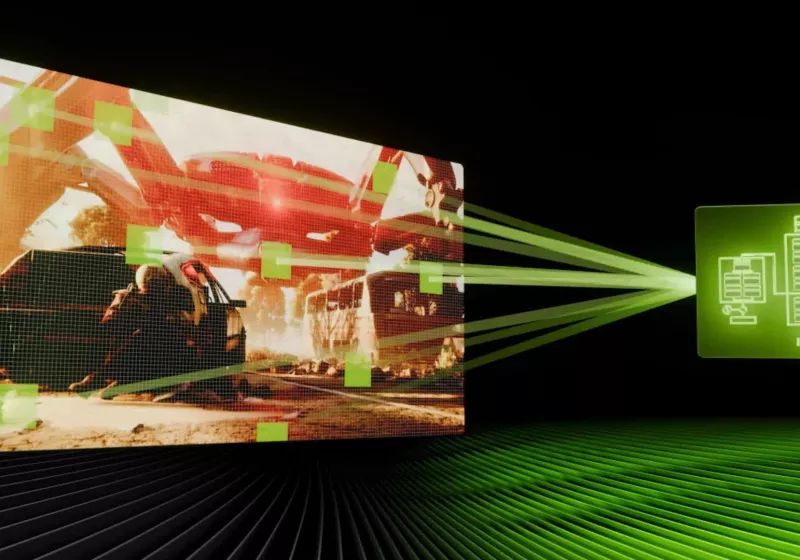
Nvidia, the leading GPU manufacturer, used a briefing in Munich to disclose details about its forthcoming motion clarity enhancements for the RTX 50 series. The company confirmed to TechSpot and other outlets that both 6x DLSS frame generation and dynamic multi-frame generation will become accessible to RTX 50 series owners starting in April. These features represent a continuation and expansion of Nvidia’s Deep Learning Super Sampling (DLSS) technology, which uses AI to upscale lower-resolution frames to higher resolutions with the goal of delivering higher frame rates without sacrificing image quality.
DLSS has evolved through multiple iterations, with DLSS 3 introducing frame generation mechanisms that render additional frames using AI. The 6x designation implies that, under certain conditions, up to six frames can be generated or predicated to appear within a given sequence, potentially delivering substantial perceptual gains in responsiveness and smoothness in supported titles. Dynamic multi-frame generation refers to adaptive strategies that adjust how many frames are generated or interpolated in real-time, depending on scene complexity, motion vectors, and performance headroom. Nvidia’s explanation in Munich underscores the company’s emphasis on motion clarity as a core differentiator for the RTX 50 lineup, as it competes in an increasingly demanding market for high-refresh-rate gaming experiences.
The April timeline places these capabilities on a precise schedule, suggesting that Nvidia plans to push a combination of driver updates, firmware enhancements, and game-ready support to enable the new modes. For gamers, this means a period of anticipation as both the software stack and the ecosystem—game engines, developers, and publishers—align to deliver optimized experiences. The Munich briefing did not reveal every technical nuance or the exact set of titles that will showcase the 6x DLSS frame generation, but it did reaffirm Nvidia’s commitment to expanding the practical utility of AI-assisted upscaling and frame interpolation for real-time rendering.
In the broader context of console- and PC-gaming competition, motion clarity technologies are increasingly critical as players seek smoother gameplay without sacrificing image fidelity. Nvidia’s DLSS 3, and its successors, has been instrumental in enabling higher frame rates on ray-traced and traditional rendering paths. The introduction of more aggressive frame generation, including six interpolated frames per second sequence in certain scenarios, represents a significant step in reducing perceptible latency and stutter, particularly in fast-paced, action-oriented titles. The dynamic aspect of these modes is equally important, as it allows the system to modulate generation activity to balance brain-perceived smoothness with power usage, thermals, and available GPU horsepower.
This article synthesizes what Nvidia publicly stated during the Munich discussion, synthesizes context from prior DLSS releases, and outlines expectations for April’s rollout while noting practical considerations and potential implications for gamers, developers, and the broader PC gaming ecosystem.
In-Depth Analysis
Nvidia’s position on motion clarity centers on leveraging artificial intelligence and machine learning to enhance real-time rendering. DLSS 3, introduced previously, relies on a combination of upscaling and generation to boost perceived frame rates. The 6x DLSS frame generation concept introduces a more ambitious approach: in scenarios where the GPU can spare cycles, up to six additional frames can be generated to fill perceived gaps in motion, potentially increasing the cadence of frames presented to the display. This approach can reduce perceived motion blur and improve responsiveness, particularly in high-refresh-rate displays and fast-action scenes.
The dynamic multi-frame generation feature adds a layer of adaptability. Rather than applying a one-size-fits-all number of interpolated frames, the system evaluates real-time variables such as frame-to-frame changes, input latency, and GPU headroom to determine the optimal number of generated frames. This can help maintain a balance between smoothness and power efficiency, preventing situations where aggressive generation would cause overheating, excessive power draw, or inconsistent frame pacing.
From a technical standpoint, implementing 6x generation requires careful orchestration between the GPU’s rasterization pipeline, AI inference hardware (such as tensor cores), and the compositor that merges generated frames with the actual rendered frames. The latency implications must be controlled so that generated frames contribute to perceived smoothness without introducing noticeable input-to-output delay. Nvidia’s ecosystem strategy also hinges on robust driver support, developer documentation, and game-level integration to maximize compatibility and performance gains across a diverse library of titles.
The April launch window implies a multi-faceted rollout plan:
– Driver updates: Ensuring that RTX 50 GPUs can access the new generation and dynamic modes with minimal configuration.
– Firmware and software stacks: Aligning GPU firmware with DLSS’s software layer to enable stable real-time generation.
– Game-ready support: Working with developers to optimize titles for motion clarity modes, including benchmarking and testing to prevent artifacts or inconsistencies in various scenes.
– User controls: Providing accessible options within Nvidia’s control panel to select between motion clarity presets, including potential “Low/Medium/High” or “Auto” configurations that determine how aggressively frames are generated.
For consumers, the April window signals a period of opportunity and anticipation. It is reasonable to expect a staged availability, where some regions and early adopters gain access first, followed by broader rollout as the software stack stabilizes. Users should anticipate possible driver version requirements and potential early-adopter caveats, such as minor compatibility issues in less common titles or edge-case scenes that might not scale as effectively as others.
The broader implications extend beyond RTX 50 series owners. Downstream effects include the potential pressure on game developers to integrate motion clarity optimizations, as more players gain access to these features. This could influence how developers design frame budgets, motion vectors, and temporal stabilization techniques. Additionally, the media landscape—where frame generation and upscaling are increasingly visible—may see more pronounced differences between proprietary AI-driven enhancement technologies and traditional rendering approaches.
However, as with any new technology, there are considerations and caveats. The quality and stability of AI-generated frames can vary depending on the scene, the game engine, and the underlying hardware configuration. In some cases, generated frames may introduce artifacts or inconsistencies in lighting, shading, or motion, particularly in complex scenes or where there are rapid changes in camera or character motion. Users should remain mindful of possible visual anomalies during early adoption and be prepared to toggle generation modes based on comfort with artifact presence or perceived latency.
From a developer perspective, achieving optimal results with 6x DLSS frame generation and dynamic modes likely requires providing metadata, calibration data, and shader-based optimizations in game engines. Collaboration between Nvidia and game studios can help ensure that titles scale effectively across different GPUs and that the motion clarity features work harmoniously with ray tracing, global illumination, and other advanced rendering techniques. The pace at which studios adopt and integrate these capabilities depends on the perceived value in terms of performance uplift and overall player experience.
In summary, Nvidia’s forthcoming 6x DLSS frame generation and dynamic multi-frame generation features are positioned to push the envelope of motion clarity for RTX 50 series GPUs. The April rollout signals a concrete timeline for consumer access, while the ongoing collaboration with developers and the refinement of drivers will determine how broadly and how smoothly these capabilities manifest in the wild. For enthusiasts seeking the smoothest possible gaming experiences, these features may offer meaningful gains in perceived fluency, provided the ecosystem supports efficient use of AI-assisted frame generation in a wide array of titles.
Perspectives and Impact
The introduction of 6x DLSS frame generation and dynamic modes reflects Nvidia’s continued emphasis on motion clarity as a differentiator in a competitive GPU market. Historically, higher frame rates have delivered smoother visuals and reduced latency, but achieving that without incurring prohibitive power consumption has been a challenge. DLSS 3 addressed this balance by introducing frame generation, allowing GPUs to render fewer actual frames while still delivering a high cadence of frames to the display. The extension to six generated frames per sequence represents a bold evolution in the approach, aiming to amplify perceived smoothness without a linear increase in GPU workload.
If effective, these features could alter how players evaluate performance. A title that previously required extremely powerful hardware to maintain 144 Hz or 240 Hz with traditional rendering paths might become more accessible in terms of perceived smoothness due to motion clarity enhancements. This can broaden the audience for high-refresh-rate gaming and streamline the experience on RTX 50 series GPUs.

*圖片來源:Unsplash*
From a market perspective, Nvidia’s move could spur competitive responses from AMD, Intel, or other graphics vendors who may pursue their own versions of motion clarity improvements. The broader ecosystem—consisting of monitor manufacturers, developers, and game publishers—will need to adapt to a future where AI-assisted frame generation is a routine parameter in tuning for performance and quality. This could lead to broader adoption of dynamic rendering techniques, with consumers benefiting from more adaptable settings that optimize visuals and responsiveness for diverse hardware configurations.
In the context of game development, the maturation of motion clarity features may influence how studios approach frame budgets and latency targets. With dynamic generation, developers could design experiences that feel smoother on a wider range of hardware, reducing the need for players to resort to extreme performance settings to achieve a comparable level of smoothness. Conversely, there is a risk of inconsistency across titles if implementation differs significantly among developers, underscoring the need for interoperable standards and robust tooling.
The rollout strategy—centered on April availability—also highlights the importance of software readiness. NVIDIA will need to ensure that drivers provide a stable and intuitive experience, with clear instructions on enabling and configuring motion clarity modes. The involvement of hardware reviewers and outlets, like HardwareLuxx and TechSpot, will help manage expectations and provide early feedback on real-world performance and potential caveats. Public perception of AI-generated frames will partly hinge on visible artifact prevalence, latency behavior, and the perceived “feel” of smoothness in various gameplay scenarios.
There are necessary caveats for early adopters. While six-frame interpolation can yield impressive gains, it may also introduce artifacts in certain scenes, particularly those with rapid scene changes, complex lighting, or unusual motion patterns. Users should monitor performance and experience as the feature becomes widely available, testing across a representative set of titles to determine whether the benefit outweighs any observed drawbacks. Nvidia and developers alike will likely refine the implementation over time, addressing edge-case issues and enhancing stability through subsequent driver updates and game patches.
Moreover, the impact on energy consumption and thermals cannot be overlooked. Generating additional frames—especially at high resolutions and with ray tracing enabled—adds to GPU power draw and heat production. While dynamic modes aim to optimize this balance, users on laptops or compact desktops should verify that their cooling solutions remain adequate under sustained gaming workloads. Desktop users may experience higher power usage during extended play sessions in motion clarity-enabled scenarios, which should factor into system planning and expectations.
On the user experience front, there is potential for a streamlined control experience. Nvidia could offer presets or auto modes that adjust generation behavior based on detected game type, frame target, and on-screen latency indicators. This would help players enjoy motion clarity benefits without deep customization. However, it will be important for Nvidia to maintain transparency about when and how many frames are being generated, so players can assess whether the feature meets their preferences for input latency, artifact mitigation, and overall visual fidelity.
In a broader sense, these advances underscore the ongoing convergence of AI and real-time rendering in gaming. As AI tools become more integrated into the graphics pipeline, developers may lean more on AI-assisted techniques to achieve smoother and more visually stable experiences, particularly as games push toward higher framerates and more complex lighting. The success of this initiative will hinge on a combination of hardware capability, software optimization, and careful tuning by developers to ensure broad compatibility and consistent performance.
Key stakeholders in this evolution include console counterparts, PC hardware enthusiasts, monitor manufacturers, and game studios. While consoles typically lean on fixed hardware configurations, PC platforms offer a wider variability in hardware, which makes adaptive features like dynamic motion clarity particularly valuable. Monitor technology, including high-refresh-rate IPS, OLED, and mini-LED panels, will also influence how effectively generated frames translate into perceived smoothness, making the alignment of GPU capabilities with display capabilities a central consideration.
Future implications may include refinements to DLSS that further optimize frame generation, better artifact handling, and deeper integration with engine-level rendering pipelines. Nvidia could also explore collaboration with game developers to optimize physics, animation, and post-processing effects to harmonize with generated frames, ensuring that the overall player experience maintains coherence and visual fidelity.
Overall, Nvidia’s announcement signals a substantial advancement in motion clarity technology for the RTX 50 series. If the April release proceeds as planned, gamers can anticipate a broader set of tools to achieve high-smoothness experiences with AI-assisted frame generation and adaptive modes. The success of the rollout will depend on stable software support, positive real-world performance across a broad title spectrum, and careful management of power and thermal implications in diverse gaming setups.
Key Takeaways
Main Points:
– Nvidia confirms 6x DLSS frame generation and dynamic multi-frame generation for RTX 50 series, launching in April.
– Features focus on enhanced motion clarity through AI-assisted frame generation and adaptive framing strategies.
– Rollout will involve drivers, firmware, and game-ready support with consumer access expected in the near term.
Areas of Concern:
– Potential artifacts or latency variability in certain scenes.
– Dependence on driver and game support; staggered rollout could affect early adopters.
– Increased power consumption and thermal load in peak gaming scenarios.
Summary and Recommendations
Nvidia’s planned introduction of 6x DLSS frame generation and dynamic multi-frame generation for the RTX 50 series represents a strategic advance in motion clarity technology. By enabling a higher number of generated frames and adaptive generation based on real-time conditions, Nvidia aims to deliver noticeable improvements in perceived smoothness and responsiveness across a range of titles, particularly on high-refresh-rate displays. The April launch window signals a concrete timeline for enthusiasts to access and test these features, though practical results will depend on driver maturity, game integration, and hardware cooling capabilities.
For consumers considering upgrading or preparing for this launch, the following recommendations are prudent:
– Monitor official Nvidia communications for driver version requirements and setup instructions.
– Plan to test motion clarity features across a representative library of titles to evaluate artifact prevalence and latency perception.
– Ensure cooling solutions are adequate for sustained gaming sessions, particularly with high-power DLSS-enabled workloads.
– Keep an eye on developer updates and game patches that optimize titles for motion clarity modes.
– Consider enabling auto or preset configurations initially, adjusting based on personal preference for smoothness versus input latency and artifact presence.
In short, Nvidia’s April-enabled 6x DLSS frame generation and dynamic modes have the potential to elevate gaming visuals and responsiveness for RTX 50 series users. As with any major feature rollout, the real-world experience will hinge on careful software integration, robust driver support, and thoughtful collaboration with the broader gaming ecosystem.
References
- Original: techspot.com
- Additional context on DLSS 3 and motion clarity advancements: Nvidia official announcements and technical briefings
- Industry analysis on AI-assisted upscaling and frame generation implications for gaming performance and power efficiency

*圖片來源:Unsplash*