TLDR
• Core Points: Apple reportedly considering allowing non-Siri AI assistants (e.g., ChatGPT, Gemini) to operate within CarPlay, expanding beyond the current Siri-only interface.
• Main Content: The change would let drivers access external chatbots for tasks like restaurant suggestions and quick research via voice, modifying CarPlay’s landscape.
• Key Insights: Opening CarPlay to external AI would mark a strategic shift for Apple, prioritizing broader AI integration and user choice while raising safety and privacy considerations.
• Considerations: Implementation would require oversight of third-party AI prompts, data handling in vehicles, and potential developer coordination.
• Recommended Actions: Apple should establish clear safety guidelines, latency and reliability targets, and privacy protections before rollout; communicate transparently with users and automakers.
Product Review Table (Optional)
(Not applicable — this article is about software platform changes, not hardware products.)
Content Overview
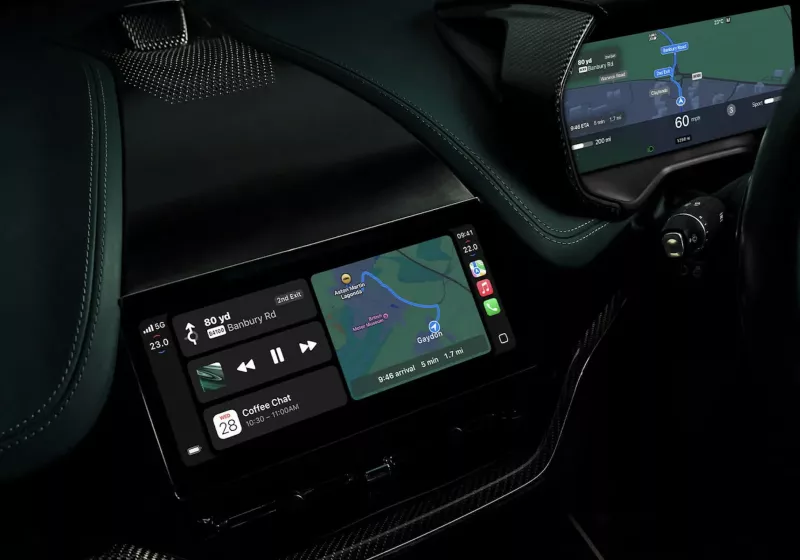
Apple’s CarPlay platform has, since its inception, operated largely within a controlled environment centered on Apple’s voice assistant, Siri. CarPlay provides a driver-focused interface that mirrors iPhone functionality on the car’s display, enabling navigation, messaging, music, and compatible apps. For years, Apple has restricted CarPlay to Siri-powered interactions, ensuring a consistent user experience and predictable privacy and safety standards while driving.
Recent industry chatter and multiple industry insiders have indicated that Apple is weighing a notable shift: opening CarPlay to external AI models, including leading large language models and conversational agents like OpenAI’s ChatGPT and Google’s Gemini. If realized, this move would represent a meaningful departure from CarPlay’s current model and could reshape how drivers interact with AI while behind the wheel.
This potential evolution would align CarPlay with broader, ongoing trends in consumer tech, where AI assistants are embedded across devices, services, and platforms. By allowing third-party AI assistants to operate within CarPlay, Apple could enable a wider set of use cases—from real-time restaurant recommendations and travel planning to quick, spoken information retrieval—without requiring users to switch between apps or devices.
However, the proposal must balance several priorities unique to the automotive context: maintaining driver attention and safety, preserving privacy and data security, ensuring consistent performance in varying vehicle environments, and coordinating with automakers and developers to deliver a seamless experience. The success of such an initiative would hinge on robust safety safeguards, clear user consent, and reliable, low-latency experiences suitable for in-vehicle use.
In the following sections, we explore the potential implications of opening CarPlay to external AI assistants, the technical and safety considerations involved, and the possible impacts on users, developers, and the auto industry at large.
In-Depth Analysis
At its core, CarPlay is designed to bring iPhone functionality into a car’s infotainment system with a focus on safety, simplicity, and familiarity. Siri has been the default and, in many cases, the sole voice assistant accessible through CarPlay. This limitation has kept CarPlay tightly integrated with Apple’s ecosystem, ensuring a consistent experience across vehicles and regions. Yet, as AI capabilities have grown far more sophisticated and widely deployed, the incentive to broaden the scope of CarPlay’s AI interactions is compelling. Here’s what such a shift could entail.
1) Expanding user options and experience
– The primary motivation behind opening CarPlay to external AI assistants would be to expand the range of conversational tools available to drivers. Users could choose among different AI models based on preferences for language style, knowledge domains, or specialized functions. This could improve on-car information retrieval, travel planning, and spontaneous conversation while driving, all accessible through voice prompts or minimal touch input.
– A broader AI ecosystem could enable more natural dialogue in complex queries, such as “What’s a good nearby restaurant with outdoor seating and gluten-free options?” or “Show me a quick, evidence-based summary of today’s top news.”
2) Technical and integration challenges
– Supporting external AI assistants would require robust integration frameworks that ensure consistent behavior across diverse vehicle hardware and software stacks. Apple would need to define standardized voice capture, latency targets, context management, and prompt handling to minimize confusion and maintain a stable user experience.
– There are questions about how session data, prompts, and results would flow between the car, the AI service, and possibly the iPhone or iCloud. Apple would need to implement strict controls over data that leaves the vehicle, and provide clear indications when an AI service is processing sensitive information.
– Safety considerations are paramount. The AI systems would need safeguards to avoid unsafe recommendations or disallowed content in driving contexts. There may be a need for contextual filters, driver attention monitoring cues, and prompts that limit the AI’s ability to issue dangerous instructions.
3) Privacy, security, and data governance
– Opening CarPlay to third-party AI models raises privacy concerns related to voice data, vehicle telemetry, location information, and user preferences. Apple would have to enforce privacy standards, offer clear opt-in/opt-out options, and provide transparent data flow disclosures.
– Security considerations include protecting against adversarial prompts, data exfiltration via voice channels, and ensuring that voice data cannot be exploited to harvest vehicle credentials or personal information.
– Apple’s stance on privacy and on-device processing would influence how aggressively the company can pursue external AI integrations. If processing can occur on-device or with minimal data leaving the vehicle, it could ease privacy concerns; otherwise, cloud-based processing would demand stronger safeguards.
4) Developer and automotive ecosystem implications
– For developers, open CarPlay to AI assistants would open new channels for voice-based experiences within cars. Developers would need to adapt their apps or services to be compatible with CarPlay’s new AI interfaces, including guidance on prompts, contextual awareness, and safety constraints.
– Automakers would play a crucial role in the rollout. They would need to coordinate with Apple to ensure device compatibility, consistent user interfaces, and safe integration with vehicle infotainment controls. Differences in hardware (display size, processor power, microphone quality) could influence how well external AI assistants perform across different car models.
5) Competitive and market context
– Apple’s potential expansion would reflect broader competitiveness in the AI-enabled assistant space. If successful, CarPlay could become a more versatile platform for in-vehicle AI, enabling a more personalized and efficient driving experience.
– Rival platforms may pursue similar strategies, raising questions about interoperability, standardization, and safety norms across the automotive technology landscape.

*圖片來源:Unsplash*
6) Safety and user experience considerations
– A primary concern is ensuring that AI interactions do not distract drivers or undermine road safety. Apple and its partners would likely need to implement strict UI guidelines that minimize the cognitive load on drivers, favor hands-free operation, and provide clear, concise responses aligned with driving conditions.
– The design would need to accommodate different languages and dialects, as well as the varying levels of connectivity in vehicles, from urban centers with robust networks to rural areas with limited coverage.
7) Timelines and rollout possibilities
– As with any major platform expansion, timelines are uncertain and contingent on regulatory, safety, and business considerations. A measured, phased approach could begin with limited beta testing in select markets or among certain car models, gradually expanding if safety, reliability, and user acceptance prove satisfactory.
Perspectives and Impact
The potential expansion of CarPlay to external AI assistants would carry wide-ranging implications. For Apple, it would represent a strategic broadening of the CarPlay ecosystem, potentially strengthening customer retention by offering more versatile, AI-powered experiences within the car. It could also position Apple as a facilitator of a more open in-vehicle AI environment, balancing its own Siri ecosystem with third-party AI capabilities.
For users, the change could translate into more natural and efficient interactions behind the wheel. Instead of toggling through apps or relying solely on Siri, drivers could choose the AI assistant that best fits their needs, whether for quick research, travel planning, or conversational engagement. This could reduce the time needed to find information or complete tasks, contributing to a more streamlined driving experience.
Automakers and developers stand to gain from a more expansive AI toolkit embedded in CarPlay. Automakers could offer differentiating features through partner AI services, while developers could bring novel voice-enabled experiences into the car environment. However, collaboration will be essential to align on safety, privacy, and user experience standards. Without a consistent framework, users might encounter inconsistent prompts, varied response quality, or divergent privacy practices across vehicles and regions.
Regulatory considerations will also factor into the rollout. In-vehicle voice assistants must comply with laws governing data collection, voice recording, and safety-related disclosures. Jurisdictional differences across countries may influence what data can be collected and how it can be used, as well as how quickly new AI capabilities can be deployed in different markets.
Looking ahead, if Apple pursues this direction, it could influence how other tech and automaker ecosystems approach AI integration. The model could set a precedent for balance: leveraging powerful AI capabilities while maintaining a strong emphasis on safety, privacy, and user trust. The industry might see a wave of similar integrations, with platforms competing to offer the most reliable, safe, and privacy-conscious in-car AI experiences.
Key Takeaways
Main Points:
– Apple is reportedly considering enabling CarPlay to support external AI assistants, expanding beyond Siri.
– The change would enable voice-driven access to chatbots for tasks like restaurant suggestions and quick information retrieval.
– Safety, privacy, and seamless cross-device integration are central to how this potential update would be implemented.
Areas of Concern:
– Ensuring driver safety through minimized distraction and robust UI guidelines.
– Data privacy and security in the context of in-vehicle AI and potential data sharing with third-party services.
– Coordination among Apple, automakers, and developers to deliver a consistent experience across models and regions.
Summary and Recommendations
If Apple proceeds with opening CarPlay to external AI assistants such as ChatGPT and Gemini, it could mark a significant shift in how drivers interact with AI on the road. The potential benefits include greater flexibility, faster access to information, and a more personalized driving experience. However, achieving success will depend on meticulous attention to safety, privacy, and reliability. Apple would need to establish clear safety standards for in-car AI prompts, implement strong privacy protections and transparent data practices, and provide developers and automakers with a robust integration framework. A staged rollout, starting with select partners and markets, would allow Apple to assess performance, user acceptance, and safety outcomes before broadening access.
Ultimately, the decision to expand CarPlay’s AI ecosystem will reflect a balance between giving users more powerful tools and preserving the safety and trust that drivers rely on every day. Transparent communication about data usage, predictable performance, and straightforward opt-in controls will be essential to building user confidence as the platform evolves.
References
- Original: https://www.techspot.com/news/111234-apple-may-soon-open-carplay-chatgpt-gemini-other.html
- Additional context: Industry discussions on in-car AI integration and safety considerations (general guidance and industry standards)

*圖片來源:Unsplash*