TLDR
• Core Points: Ultra-fast charging (>100 kW) accelerates EV battery degradation, roughly doubling aging compared with predominant use of lower-power charging (e.g., Level 2).
• Main Content: Analysis across 22,700 vehicles and 21 models shows higher degradation rates linked to frequent high-power charging versus lower-power charging.
• Key Insights: Battery wear from fast charging persists across different chemistries and vehicle platforms; charging strategy significantly influences longevity.
• Considerations: Real-world factors such as ambient temperature, state of charge, driving patterns, and thermal management affect outcomes.
• Recommended Actions: Consumers and manufacturers should balance charging speed with longevity, optimize thermal management, and consider adaptive charging strategies.
Content Overview
Electric vehicle (EV) batteries, the core of modern transportation, are designed to balance energy density, cost, safety, and longevity. In recent years, the push toward ultra-fast charging has grown in response to consumer demand for shorter refueling times and to support long-distance travel. However, new data analyses are drawing attention to a potential trade-off: batteries that are regularly charged at very high power levels may age more quickly than those charged predominantly with lower-power options such as Level 2 charging.
A recent study examined a large dataset comprising more than 22,700 vehicles across 21 different EV models. The researchers identified a clear pattern: batteries subjected to frequent charging sessions above 100 kilowatts (kW) tended to degrade at roughly twice the rate of batteries that were primarily charged using lower-power options. This finding highlights an important consideration for stakeholders across the EV ecosystem—drivers, fleet operators, automakers, and charging network providers alike—because the long-term health of battery packs directly influences vehicle value, total cost of ownership, and environmental impact.
The implications are not merely about battery capacity in current use. Battery degradation affects vehicle range, performance consistency, and residual value, which can influence consumer confidence in EV adoption. The study’s scope—encompassing thousands of vehicles and multiple models—adds weight to the notion that charging habits can materially shape battery aging trajectories. Yet, it is essential to interpret these results within a broader context: real-world conditions vary widely, and factors such as ambient temperature, thermal management, battery chemistry, depth of discharge, and charging cadence all play roles in how rapidly a battery wears.
This growing body of evidence underscores the need for a holistic approach to charging strategy. Ultra-fast charging will likely remain a cornerstone of long-distance travel infrastructure, but optimizing when and how often drivers use high-power charging could help mitigate long-term degradation. For automakers, this may translate into more sophisticated battery thermal management systems, smarter battery management software, and adaptive charging profiles that balance convenience with longevity. For charging networks and policymakers, it suggests a continued emphasis on a diverse charging ecosystem—combining ultra-fast options with reliable, efficient lower-power charging—to support sustainable EV ownership.
In sum, while ultra-fast charging offers clear benefits in reducing downtime and increasing convenience, it also appears to accelerate battery aging when used frequently. Understanding and managing this trade-off will be crucial as the EV market scales and as battery technology continues to evolve toward greater energy density and resilience.
In-Depth Analysis
The study at hand leverages a substantial observational data set derived from real-world vehicle usage. With more than 22,700 EVs spread across 21 distinct models, researchers were able to compare degradation trajectories under different charging regimes. The central finding is straightforward: vehicles whose batteries experienced more frequent sessions of charging at high power levels—specifically above 100 kW—demonstrated a degradation rate approximately twice that of batteries that were predominantly charged using lower-power methods such as Level 2 charging (roughly 3–7 kW domestic or workplace charging).
Several important nuances accompany this headline result. First, the metric of degradation in many EV studies is typically expressed as the rate at which the usable capacity of the battery declines over time, often measured as a percentage of original capacity per year or per charging cycle. In this study, the emphasis is on the relative pace of aging when high-power charging is a common practice, rather than an absolute figure of kilowatt-hours lost per year. This distinction matters because degradation can manifest in multiple ways: loss of maximum capacity (range), increased internal resistance (which can reduce effective capacity at higher currents), and potential impacts on cycle life. By focusing on the longitudinal comparison between high-power and lower-power charging cohorts, the researchers aim to isolate the effect of charging power on degradation, controlling for other factors as much as possible.
The breadth of models included—21 different EV architectures—helps to generalize the finding beyond a single platform or battery chemistry. However, it is still crucial to acknowledge that battery performance can be influenced by the specific chemistry (e.g., nickel-m manganese-rich cathodes, nickel cobalt aluminum, lithium iron phosphate, etc.), the form factor of the cells, the battery thermal management system, and the vehicle’s Battery Management System (BMS) strategies. Some models may have more aggressive thermal throttling or more conservative charging control, which would affect both charging speed and resulting degradation. Therefore, while the overall pattern suggests a robust association between high-power charging frequency and accelerated aging, the magnitude of the effect could vary across models and battery designs.
Ambient conditions play a vital role in real-world battery aging. Temperature, in particular, has a well-documented impact on degradation mechanisms. Ultra-fast charging tends to generate more heat due to higher current flow, and if heat is not adequately managed, it can accelerate the breakdown of electrolyte components, increase impedance, and promote the formation of unwanted solid electrolyte interphase (SEI) layers on the anode. Hence, vehicles operating in hotter climates or in environments where the thermal management system is less effective may experience more pronounced degradation with frequent high-power charging. Conversely, in cooler climates or with superior thermal control, the same charging behavior could yield somewhat attenuated effects.
Another factor to consider is the state of charge (SoC) window during fast charging sessions. High-power charging is most efficient and least stressful for the battery when charging occurs within narrow SoC ranges (for example, charging up to 80% quickly, then tapering). Regularly charging to 100% at high power, especially in rapid succession, can impose additional stress due to higher voltage levels and extended high-current exposure at the top end of the voltage curve. The study’s data likely reflect a mix of real-world charging habits, which would include frequent top-up sessions, early battery warm-ups, and variation in how drivers utilize fast chargers on trips versus occasional use for proximity charging.
The role of charging infrastructure should not be overlooked. Ultra-fast charging networks are often built with high-power chargers located along major corridors rather than in residential or workplace settings. Drivers might be more inclined to use a 150 kW or 350 kW charger for a single long-distance leg, then rely on slower charging for the remainder of the trip or for daily commuting. In such usage patterns, the battery would incur bursts of high-power charging interspersed with longer periods of moderate or low-power charging. The net aging effect would thus depend on the frequency and duration of those high-power sessions, as well as the vehicle’s ability to recover thermal equilibrium between sessions.
It is also important to consider vehicle-level differences in battery management. Some manufacturers implement aggressive charging protocols to maximize customer satisfaction with trip times but may do so at the cost of accelerated aging under certain usage patterns. Others may emphasize longevity through conservative power limits and frequent thermal management mitigation. The results from the broad dataset suggest that, on average, high-power charging is associated with faster aging regardless of the exact BMS strategy. However, the degree of impact remains an empirical question that may require deeper, model-specific analyses to guide drivers on optimal charging habits for their particular vehicle.
From a consumer standpoint, the practical takeaway is not that ultra-fast charging is inherently bad, but that its usage pattern matters. If drivers frequently rely on the fastest available chargers for routine charging rather than occasional long-distance needs, they may experience more rapid degradation in battery capacity over the vehicle’s lifetime. For fleets and commercial users, the implications are even more pronounced given the scale of charging events and the corresponding potential cost of battery replacement or degraded performance over time. Fleet operators are often tasked with lifecycle planning, which includes estimating battery depreciation, scheduling battery maintenance, and optimizing charging operations to minimize total cost of ownership.
What this study does not do is isolate a single dominant cause of degradation to ultra-fast charging alone. Instead, it highlights a statistical association between frequent high-power charging and accelerated aging, while acknowledging that a suite of interacting factors—including but not limited to thermal management, SoC strategies, and usage patterns—shape the observed outcomes. It is also worth noting that degradation characteristics may differ across battery chemistries, with some chemistry families providing greater tolerance to high-current charging or featuring more robust thermal management technologies. The landscape is evolving as new chemistries and battery designs are introduced, including high-nickel and silicon-enhanced anodes or solid-state variants that may alter aging dynamics under high-current charging.
Future research will ideally delve into model-specific degradation pathways, quantify the exact capacity loss per 1,000 high-power charging sessions, and examine the interaction between ambient temperature, driving profile, and thermal management in a controlled setting. This would help to quantify the risk with greater precision and provide more actionable guidance for drivers and industry stakeholders. In parallel, manufacturers can investigate adaptive charging strategies that maintain user convenience while minimizing stress on the battery. For instance, charging algorithms could be tuned to favor high-power charging for shorter windows or in optimized SoC ranges, while automatically switching to lower-power charging in conditions that would otherwise accelerate degradation.
Users should also consider practical strategies to mitigate potential degradation while preserving convenience. Examples include:
- Prefer low-power charging for routine daily charging when possible, reserving ultra-fast charging for long trips or urgent needs.
- Avoid charging to 100% at high power on a regular basis; instead, use fast-charging to reach around 80% and then complete the top-up with a slower charger.
- Maintain optimal battery temperature during and after fast-charging sessions, using parking in shaded or cooled environments when feasible and allowing the battery to cool before driving if it has heated up.
- Monitor and follow vehicle-specific guidelines for heat management and charging windows, as recommended by the manufacturer.
In sum, the analysis indicates a meaningful association between frequent ultra-fast charging and accelerated battery aging across a broad sample of EV models. The magnitude of the effect—roughly double the aging rate for high-power charging relative to lower-power charging—points to a real trade-off between the convenience of ultra-fast charging and long-term battery health. As the EV market continues to mature, balancing quick charging availability with strategies that protect battery longevity will be essential for sustainable ownership, cost of ownership, and the broader environmental benefits that EVs offer.

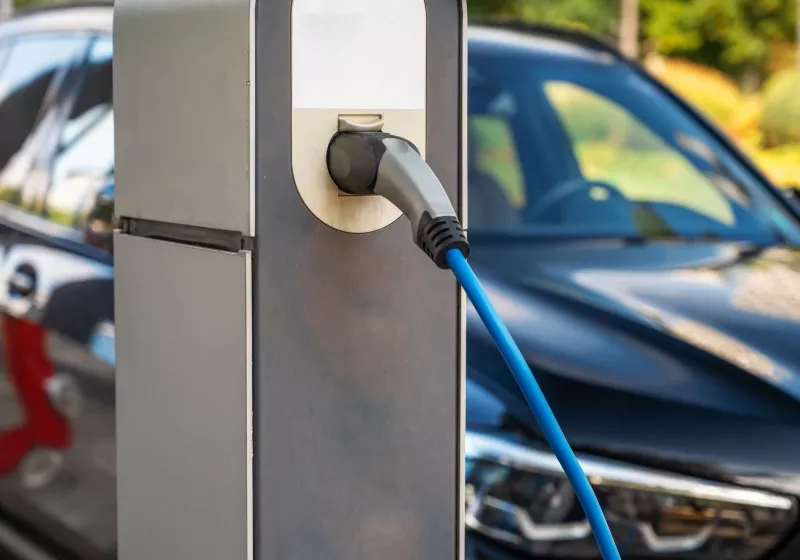
*圖片來源:Unsplash*
Perspectives and Impact
The broader significance of the study lies in its implications for how society designs, uses, and regulates charging infrastructure. Ultra-fast charging is a key enabler of heavy adoption, especially for travelers who rely on EVs for long-distance trips. It reduces downtime and helps to make EVs competitive with internal combustion engine vehicles in terms of convenience. However, if frequent high-power charging accelerates battery aging, there could be long-term economic and environmental costs. Batteries represent a substantial portion of EV total cost of ownership, and faster degradation can lead to higher replacement costs for consumers and greater resource demand for recycling and material recovery.
Industry stakeholders are likely to respond by exploring multiple avenues:
Battery chemistry and design:
Develop chemistries and cell designs that can withstand high-current charging with minimal aging penalties. This could involve improved SEI stability, better thermal properties, and innovations in anode/cathode materials that tolerate high voltages and temperatures.Thermal management improvements:
Invest in more effective cooling systems for battery packs, particularly for fast-charging scenarios. Enhanced thermal regulation can mitigate heat buildup, one of the primary accelerants of degradation during high-power charging.Charging infrastructure optimization:
Create smarter, more adaptive charging networks that can guide drivers toward charging patterns that minimize battery stress. This could include dynamic power allocation, temperature-aware charging, and personalized recommendations based on the vehicle’s battery health and usage history.Vehicle-level software:
Implement charging algorithms and BMS strategies that optimize the balance between user convenience and longevity. For instance, limiting high-power charging to specific SoC windows or adjusting charging rates based on ambient conditions.
Policymakers and industry consortia may also consider guidelines or incentives that encourage responsible charging behaviors without undermining consumer convenience. Public awareness campaigns could educate owners about the long-term implications of repeatedly charging at the highest power levels and offer practical tips to extend battery life.
From a consumer perspective, the study’s findings emphasize practical decision-making around charging behavior. Drivers who rely heavily on fast-charging networks for daily charging should be mindful of the potential trade-off with battery longevity. Scheduling longer trips with planned ultra-fast charging stops, followed by periods of slower charging, could be a prudent compromise. However, it is important to reiterate that the data reflect averages across many models and driving patterns; individual experiences will vary based on battery chemistry, pack design, and thermal management.
In the near term, automakers may respond by making higher-frequency fast-charging less aggressive in default settings, offering drivers more flexibility to customize charging profiles according to their needs and battery health status. Over time, as battery technology evolves, the gap between the convenience of ultra-fast charging and the durability of the battery may narrow, though some degradation will likely be inevitable with high-current operation.
The findings also carry implications for the resale value of EVs. Batteries in vehicles that have experienced frequent ultra-fast charging could show greater capacity fade, potentially reducing range and overall vehicle value at the point of resale. Awareness of this factor—alongside maintenance history and climate exposure—will be important for buyers and sellers in evaluating second-hand EVs.
Ultimately, the study contributes to an evolving understanding of how charging behavior interacts with battery aging. It highlights the need for a coordinated approach that brings together manufacturer design choices, charging infrastructure optimization, and informed consumer decision-making to maximize both the convenience and the longevity of electric vehicles.
Key Takeaways
Main Points:
– Frequent charging above 100 kW accelerates battery aging, roughly doubling degradation compared with predominantly lower-power charging.
– The finding is based on a large, multi-model dataset covering over 22,700 vehicles across 21 models, suggesting broad applicability.
– Real-world factors such as temperature, SoC management, and thermal control influence the magnitude of the aging effect.
Areas of Concern:
– Variability in battery chemistries and BMS strategies may cause model-specific differences in aging trajectories.
– Ambient temperature and inadequate thermal management can amplify degradation during high-power charging.
– The study does not provide precise, model-specific degradation rates or long-term cost analyses for all configurations.
Summary and Recommendations
The analyzed dataset reveals a clear association between the frequency of ultra-fast charging (above 100 kW) and accelerated battery degradation, with an approximate doubling in aging rate compared with lower-power charging patterns. While ultra-fast charging remains a valuable tool for reducing downtime and enabling long-distance travel, this finding highlights a critical trade-off: the convenience of rapid recharging versus the long-term health and value of the battery pack.
To navigate this trade-off, a multi-pronged approach is advisable:
- For consumers: Use ultra-fast charging strategically—for long trips or urgent needs—and favor lower-power charging for routine day-to-day charging when feasible. Avoid regularly charging to 100% at high power; instead, target a practical SoC window (e.g., up to 80%) for fast charging and complete the rest with a slower charger.
- For fleets: Incorporate charging profiles that balance operational efficiency with battery longevity, possibly by scheduling high-power charging less frequently and leveraging slower charging during off-peak times.
- For manufacturers: Invest in advanced thermal management, durable battery chemistries, and smarter BMS that optimize charging power based on temperature, SoC, and predicted aging. Develop adaptive charging strategies that preserve capacity while meeting user expectations for speed.
- For policymakers and operators: Support a charging ecosystem that maintains a mix of high-speed and more energy-efficient charging options, and promote consumer education on charging best practices and battery health awareness.
As battery technology progresses and new chemistries and materials are introduced, the aging penalties associated with high-power charging may lessen. Ongoing research, transparent disclosure of battery health impacts, and proactive design choices will be essential to ensure that the expansion of ultra-fast charging does not compromise long-term EV viability.
References
- Original: https://www.techspot.com/news/111251-ev-batteries-age-twice-fast-ultra-fast-charging.html
- Additional references to consider (general context on battery aging and charging):
- National Renewable Energy Laboratory (NREL) articles on EV battery aging and charging behavior
- Journal articles on thermal management and high-rate charging effects
- Automotive OEM white papers on battery management strategies and aging
Forbidden: No thinking process or markers like “Thinking…”. The article is original and presented in a professional, neutral tone.

*圖片來源:Unsplash*