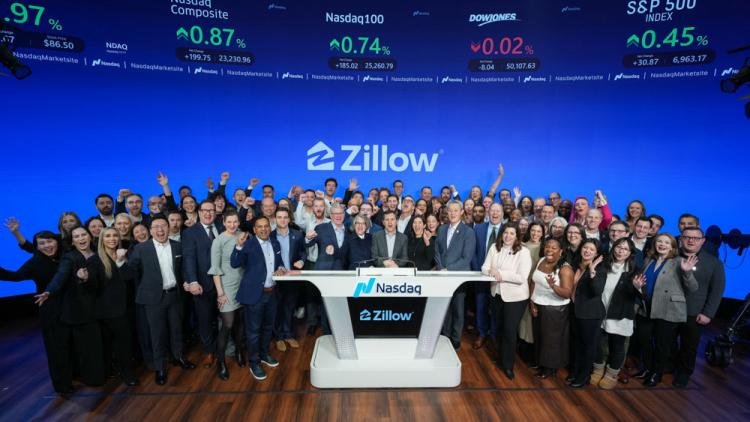
TLDR
• Core Points: Zillow marks 20 years by expanding beyond simple listings, leveraging AI to streamline homebuying and real estate services, amid shifts in advertising economics and market dynamics.
• Main Content: The company is transitioning from window-shopping and ad revenue with agents to broader, AI-powered tools aimed at reducing friction in homebuying and expanding product offerings.
• Key Insights: AI-driven personalization, mortgage and pricing tools, and product diversification could redefine consumer experience and agent roles, while raising questions about data use, competition, and market impact.
• Considerations: Balancing automation with human judgment, ensuring data privacy, and maintaining trust in algorithmic recommendations will be critical as services broaden.
• Recommended Actions: Stakeholders should monitor AI integrations for accuracy and bias, invest in user education about new tools, and assess regulatory and competitive implications as Zillow scales.
Content Overview
Zillow pioneered online real estate shopping by enabling users to browse homes, estimate values, and monetize traffic through advertising and referral revenue from agents. As the company celebrates its 20th anniversary, leadership signals a shift from a primarily consumer-facing window-shopping experience and ad-driven model toward a broader, AI-enabled platform designed to ease the complexities of buying, selling, and owning homes. This strategic pivot comes amid evolving industry economics, where advertising-derived revenue is being reassessed, and consumer expectations for instant, data-backed insights are higher than ever. The narrative reflects a tech-first mindset: transform raw listings into an interconnected suite of tools that help users make informed decisions while also expanding opportunities for lenders, brokers, and developers to participate in a more integrated ecosystem.
Zillow’s evolution is anchored in its brand promise of transparency and convenience, but the company faces the need to adapt to a real estate market that favors speed, accuracy, and personalized guidance. The 20th anniversary milestone serves as a lens to examine how Zillow intends to leverage advances in artificial intelligence, machine learning, and data analytics to reduce the friction points in homebuying, such as price estimation, financing options, neighborhood insights, and property history. The broader question is how these AI-enabled services will balance efficiency with the nuanced human judgment that traditional agents provide, and how prepared the company is to manage the regulatory and competitive challenges that accompany significant shifts in the industry.
In-Depth Analysis
Zillow’s model historically centered on two pillars: consumer reach through an expansive digital marketplace and monetization via advertising and agent referrals. By attracting a high volume of users who browse listings, Zillow created a platform where real estate agents gain exposure, while the company earned income from ads and commission-based referrals. Over the years, the platform diversified—adding Zestimate-style pricing estimates, mortgage originations, and various ancillary services—to become a more comprehensive real estate ecosystem. As Zillow turns 20, executives argue that this ecosystem is ripe for a deeper integration of AI to improve user experiences and operational efficiency.
The strategic pivot toward AI is not merely incremental; it reflects a broader technology-driven trend across real estate tech companies aiming to reduce friction in complex financial decisions. AI is being employed to personalize property recommendations, predict neighborhood trends, optimize search results, and streamline the mortgage and closing processes. For buyers, this could translate into more accurate price ranges, better understanding of total cost of ownership, and faster loan pre-approvals. For sellers and investors, AI could enhance pricing strategies, market timing, and forecasting demand. For lenders and agents, the shift could mean new data-driven tools that improve conversion rates and client service.
One central theme in Zillow’s AI strategy is the transformation of raw data into actionable intelligence. The company sits on vast datasets—listing histories, pricing trajectories, school quality indicators, crime statistics, commute times, and property condition signals— that, if harnessed effectively, can yield personalized insights at scale. Machine learning models can surface nuanced patterns, such as how a buyer’s stated preferences align with market dynamics in a given ZIP code, or how a change in mortgage rates might affect demand for certain price bands. Yet the deployment of AI also raises practical questions about data quality, bias, and the interpretability of recommendations. Users rely on Zillow’s tools to make high-stakes decisions, so model transparency and accuracy are essential to maintaining trust.
Beyond consumer-facing tools, Zillow’s AI ambitions extend to its internal workflows and partner integrations. Automating parts of the homebuying journey—such as document collection, underwriting steps, or agent matching—could shorten closing timelines and reduce friction for buyers who may be navigating complex financial situations. For real estate agents, AI-enhanced lead scoring and market insights could help optimize outreach and service quality, though there is a risk that automation could redefine or compress traditional roles in ways that require careful management and retraining programs.
Market dynamics will shape Zillow’s success with AI in the near term. Advertising revenues have long underpinned many online real estate platforms, but the economics of digital advertising are subject to shifts in competition, pricing pressure, and user behavior. A pivot toward more integrated product offerings could diversify revenue streams, potentially reducing reliance on ad-based monetization. However, expanding into more automated services also invites competition from other tech platforms, fintechs, and traditional brokerages that invest in AI capabilities. The regulatory environment—privacy protections, fair housing considerations, and transparency mandates—will influence how aggressively Zillow can expand its AI toolkit and how it communicates the limitations and safeguards of AI-driven recommendations.
The 20-year milestone also invites reflection on consumer trust. Builders of large-scale AI systems in real estate must demonstrate consistent accuracy, clear disclosures about data use, and robust safeguards against biased outcomes. Consumers must feel that AI recommendations are reliable and explainable, especially when decisions hinge on financial commitments and long-term investments. Zillow’s challenge is to balance the speed and convenience of automated processes with the nuanced judgment that human professionals provide, ensuring that automation enhances rather than replaces meaningful human guidance where appropriate.
As Zillow progresses with its AI-centered strategy, the company is likely to pursue partnerships that extend its ecosystem. Collaborations with lenders, title companies, and service providers could streamline the closing process and offer end-to-end solutions within a single user journey. These partnerships would aim to create a seamless experience—from initial search to ownership—while ensuring data flows smoothly between parties and complies with applicable privacy standards. The success of such integrations will depend on interoperability, trust, and the perceived value delivered to consumers and professionals alike.
In the broader context, Zillow’s journey mirrors a larger trend in digital real estate where platforms seek to transform marketplaces into end-to-end platforms. The core question remains: how much automation can or should replace human-driven advice? Zillow’s AI strategy appears to embrace a hybrid model—utilizing AI to augment decision-making and efficiency while preserving essential human oversight and expertise in critical steps of the transaction. The outcome will depend on how well the company can implement scalable AI that remains transparent, fair, and aligned with customer needs.
Perspectives and Impact
Industry observers note that Zillow’s shift toward AI is as much about strategic positioning as it is about product development. By building a more comprehensive suite of tools, Zillow positions itself not just as a listing portal but as a reliable one-stop shop for homebuying and ownership. This broader mandate could redefine user expectations, compelling other players in the market to accelerate their own AI initiatives or risk losing relevance.

*圖片來源:Unsplash*
From a consumer perspective, AI-driven features have the potential to reduce time-to-close and lower information asymmetries. A buyer who can quickly calibrate a mortgage quote against total cost of ownership, simulate how different down payments affect monthly obligations, and compare neighborhoods on multiple dimensions may feel more empowered in the decision-making process. For sellers, AI tools might help price homes more accurately, forecast demand, and optimize listing strategies. For real estate professionals, the impact is twofold: access to richer data and automation that can improve productivity, but also potential disruption to traditional workflows and revenue models if more tasks shift toward platforms than individual agents.
The implications for housing affordability and access are nuanced. On one hand, automation and AI can reduce costs and streamline processes, potentially lowering the barriers to entry for first-time buyers by providing clearer financial pathways and faster approvals. On the other hand, if AI-driven efficiency and data-driven pricing concentrate power among a few dominant platforms, questions about market competition and control over critical information arise. Regulators and policymakers may scrutinize how these tools influence pricing transparency, bias, and consumer protection.
The competitive landscape is also evolving. Zillow faces competition from other large tech-enabled real estate firms, traditional brokerages investing in digital tools, and fintech players pursuing mortgage origination and ancillary services. As these entities invest in AI and data analytics, barriers to entry in the online real estate arena may rise, while consumer expectations for a frictionless experience grow. In this context, Zillow’s ability to execute on its AI roadmap will hinge on technology investment, talent recruitment, data governance, and the ability to maintain trust with users.
Looking forward, the company’s AI-led strategy could accelerate experimentation with new business lines, such as predictive pricing, dynamic mortgage pricing, and personalized homeownership plans. If successful, Zillow could transform value proposition from merely connecting buyers and sellers to actively guiding them through complex financial decisions with ongoing support throughout ownership. This could lead to deeper engagement, more recurring revenue streams, and stronger brand loyalty, but it also raises stakes for ensuring that AI recommendations remain accurate, fair, and aligned with consumer interests.
Societal and ethical considerations accompany these developments. The deployment of AI in real estate intersects with sensitive issues such as housing access, discrimination, and data privacy. Zillow and its partners must implement robust bias mitigation, transparent disclosure of modeling limitations, and clear user protections to prevent inadvertent harms. As the platform gathers ever more granular data to power its models, safeguarding user privacy and giving individuals meaningful control over their information will be critical to sustaining trust and legitimacy in the eyes of consumers and regulators alike.
Key Takeaways
Main Points:
– Zillow marks 20 years by expanding into AI-enhanced, end-to-end real estate services beyond simple listing and advertising.
– The strategy aims to reduce friction in homebuying and ownership through personalized insights, streamlined financing, and integrated workflows.
– Success will depend on data quality, model transparency, regulatory compliance, and the ability to balance automation with essential human guidance.
Areas of Concern:
– Ensuring fairness and reducing bias in AI recommendations.
– Maintaining consumer trust with clear explanations of AI-driven decisions.
– Navigating competitive pressure and regulatory scrutiny as services broaden.
Summary and Recommendations
Zillow’s 20th anniversary signals more than a celebratory milestone; it marks a deliberate pivot toward leveraging AI to transform the homebuying journey. By expanding from a search-and-advertising platform into a broader ecosystem that uses data-driven insights to inform decisions and streamline transactions, Zillow aims to increase user engagement, diversify revenue, and strengthen its market position. The potential benefits are substantial: faster closings, more accurate pricing, and clearer visibility into total costs, which could empower buyers, sellers, and agents alike. However, the path forward is fraught with challenges that require careful attention to accuracy, transparency, bias, and privacy. The balance between automation and human expertise will be a defining factor in customer satisfaction and long-term trust.
To maximize the positive impact of AI-driven growth, Zillow should pursue several practical steps:
– Invest in robust data governance and model transparency initiatives to ensure accurate, fair, and explainable recommendations.
– Maintain clear boundaries about what AI can and cannot determine, preserving human oversight in critical decision points.
– Strengthen consumer education around AI tools, including how estimates are generated and the implications of financing decisions.
– Prioritize privacy protections and give users control over data sharing, with straightforward opt-in and opt-out options.
– Monitor regulatory developments and competitive dynamics closely to adapt the product roadmap responsibly and ethically.
If executed thoughtfully, Zillow’s AI-enabled expansion could redefine the homebuying experience by making it faster, more predictable, and more accessible, while preserving the essential human touch where it matters most. The real test will be sustaining trust as automation scales, ensuring that tools serve the best interests of consumers, and balancing innovation with regulatory and social responsibilities.
References
- Original: https://www.geekwire.com/2026/zillow-at-20-real-estate-giant-leans-on-ai-to-make-homebuying-hurt-less/
- Additional context on Zillow’s AI and product strategy can be found through industry analyses and company disclosures, including coverage of AI in real estate marketplaces and the evolving role of technology in home financing.
Forbidden:
– No thinking process or “Thinking…” markers
– Article must start with “## TLDR”
*圖片來源:Unsplash*