TLDR
• Core Points: Researchers report a terahertz antenna design addressing efficient transmission at terahertz bands, a key bottleneck for 6G aiming at roughly 1 Tbps data rates.
• Main Content: The work, published in Nature Photonics, analyzes fundamental challenges in generating, guiding, and receiving terahertz signals and proposes a practical antenna approach to overcome them.
• Key Insights: Efficient terahertz transceivers require advanced materials, precise impedance matching, and novel waveguiding structures to minimize loss and dispersion.
• Considerations: Real-world deployment must address integration with existing networks, thermal management, manufacturing scalability, and regulatory spectrum considerations.
• Recommended Actions: Stakeholders should pursue cross-disciplinary development combining materials science, nanofabrication, and RF system design; fund pilot deployments to validate performance in real environments.
Content Overview
The race toward 6G promises transformative wireless capabilities, with terahertz frequencies offering the theoretical bandwidth to support data rates approaching one terabit per second. However, exploiting terahertz (THz) bands for practical communications has proven exceptionally challenging. Signal propagation at these frequencies suffers from high atmospheric absorption, severe path loss, and significant material and fabrication inefficiencies. This article synthesizes insights from a Nature Photonics report that outlines a breakthrough in terahertz antenna design aimed at bridging the gap between theory and real-world viability for 6G networks.
The core motivation behind pursuing THz-enabled 6G is straightforward: as demand for ultra-high-speed wireless services grows—from immersive extended reality experiences to large-scale sensor networks and ultra-responsive cloud access—the bandwidth available in lower bands grows increasingly congested. Terahertz waves, spanning roughly from 0.1 THz to 10 THz, offer enormous spectral resources. If engineers can develop antennas and transceivers that can generate, transmit, and receive THz signals efficiently, peak data rates could approach or even reach the terabit-per-second scale under favorable conditions. Yet achieving that objective requires solving a suite of intertwined technical problems, including efficient radiating elements, low-loss signal routing, compact integration with electronics, and robust performance under practical environmental conditions.
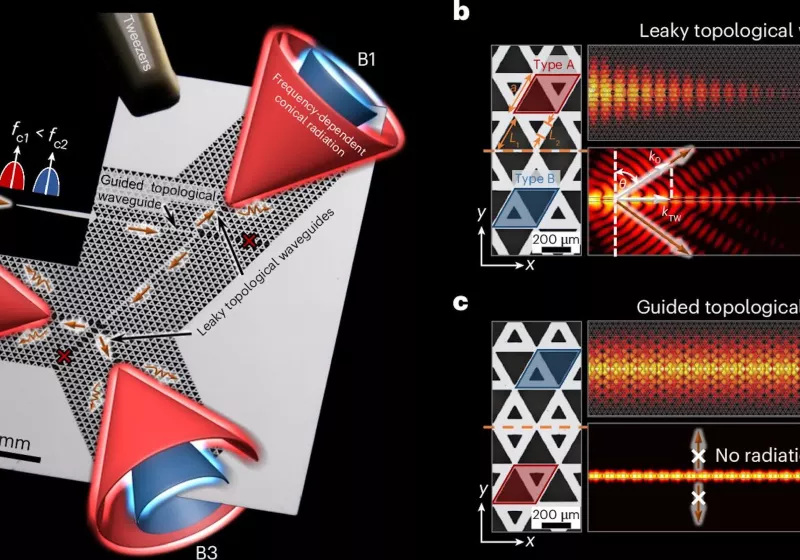
The reported advancement in Nature Photonics centers on a fundamental problem: the efficient generation, propagation, and detection of terahertz signals within a compact and scalable antenna system. The research team explored how to tailor the antenna geometry, materials, and surrounding structures to minimize losses while preserving the high-frequency integrity required for THz communications. The overarching aim is to deliver not only higher raw data rates in idealized laboratory settings but also reliable performance in real-world environments, where factors such as humidity, temperature, and surface roughness can significantly influence THz propagation.
In addition to presenting a specific antenna solution, the study situates its contribution within the broader context of 6G technology development. A key takeaway is that THz communications demand a holistic approach. Incremental improvements in one area—such as a marginally more efficient radiating element—may be insufficient if other subsystems—like impedance matching, channel modeling, or on-chip integration—remain suboptimal. The Nature Photonics work thus emphasizes an integrated design philosophy that coordinates advances across materials science, nanofabrication, electromagnetics, and system architecture.
The article also discusses practical considerations for translating a laboratory breakthrough into a field-ready technology. These considerations span manufacturing scalability, yield, and cost; the need for reproducible performance across large arrays or phased arrays used in base stations; and the eventual regulatory and standardization pathways that govern THz spectrum use. The authors acknowledge that even with a highly efficient antenna, the performance gains at the system level depend on complementary advances in amplifiers, detectors, and supporting electronics that can operate reliably at THz frequencies with manageable power consumption and thermal profiles.
Overall, the reported advancement signals a meaningful step toward resolving some of the most persistent hurdles in THz wireless communications. By addressing fundamental antenna efficiency and integration challenges, researchers hope to bring THz-based 6G closer to practical implementation, enabling unprecedented data rates while informing the design principles that will guide future investigations.
In-Depth Analysis
Terahertz communications sit at the intersection of photonics and radio-frequency engineering. The high-frequency band offers orders of magnitude more spectral opportunities than current 5G channels, but it also introduces stringent design constraints. The Nature Photonics article presents a detailed examination of these constraints and proposes a novel antenna concept designed to operate effectively at THz frequencies.
Key challenges in THz antenna design include:
Radiative efficiency: At THz frequencies, even tiny fabrication imperfections or material losses can degrade performance dramatically. The proposed antenna concept seeks to maximize radiation efficiency by selecting materials with favorable electromagnetic properties at THz and by crafting geometries that reduce ohmic and dielectric losses.
Impedance matching and bandwidth: Efficient energy transfer between the antenna and the feeding circuitry requires careful impedance alignment. The THz regime also tends to demand broad operational bandwidth, which means the antenna must maintain good performance across a wide frequency span without introducing excessive dispersion.
Mode control and confinement: THz devices often utilize waveguiding structures prone to mode leakage and unwanted resonances. The new design emphasizes mode control techniques that minimize leakage while sustaining strong confinement of the desired signal mode, thereby enhancing signal integrity.
Integration with electronics: A practical THz transceiver requires seamless integration with on-chip or near-chip electronics for amplification, detection, and processing. The proposed approach considers packaging and interconnect strategies to minimize parasitics and thermal issues that are particularly problematic at high frequencies.
Thermal management and power efficiency: High-frequency operation can lead to elevated power densities. Efficient thermal management becomes an intrinsic part of maintaining stable performance and preventing detrimental drift in antenna characteristics.
Environmental sensitivity: THz waves interact strongly with atmospheric constituents, including water vapor, leading to attenuation over modest distances. Although this is partly a propagation issue rather than a purely hardware one, the antenna design must consider expected link budgets and potential compensation techniques.
The Nature Photonics study advances the field by presenting a concrete design that navigates these competing requirements. While the article does not imply an immediate deployment in commercial networks, it outlines a path toward more practicable THz antennas that can be manufactured at scale and integrated into future base stations or user equipment.
From a materials perspective, the authors likely explore substrates and conductive materials that remain stable and exhibit favorable conductivity and dielectric properties at THz frequencies. The micro- and nano-scale features of the antenna play a decisive role in how efficiently the device can radiate and couple energy into the surrounding medium. The design may leverage advances in nanofabrication, enabling high-precision structuring that minimizes surface roughness and scattering losses, both of which become increasingly significant at shorter wavelengths.
On the system level, achieving one-terabit-per-second data rates is not solely about the antenna. The transceiver chain must be capable of delivering and processing such volumes of data. That includes high-order modulation schemes, wide instantaneous bandwidth, and efficient error correction. The Nature Photonics work underscores the necessity of co-design: antenna, electronics, and signal processing must be developed in concert to maximize end-to-end performance under realistic constraints such as power budget and environmental variability.
Another important theme is resilience to real-world conditions. The laboratory setting can isolate, optimize, and demonstrate peak performance, but a practical network must sustain reliable links with variable channel conditions. The proposed antenna concept helps address fundamental loss pathways, but it must be complemented by robust channel coding, adaptive modulation, and advanced beamforming techniques to maintain high data rates in diverse environments.
In addition to technical specifics, the article situates the breakthrough within a broader ecosystem of 6G research. It acknowledges the multi-year horizon and the need for cross-disciplinary collaboration among physicists, materials scientists, electrical engineers, and industry stakeholders. The research community recognizes that breakthroughs in THz components—like this antenna design—are foundational but represent one of many interdependent pieces required to realize terabit-per-second wireless communication.
The article also touches on the regulatory and standardization context surrounding THz use. Spectrum allocation for THz bands remains an ongoing conversation among researchers, policymakers, and standards bodies. The progression from a novel design concept to a widely adopted technology will depend on establishing interoperable interfaces, agreed-upon performance metrics, and scalable manufacturing methodologies.

*圖片來源:Unsplash*
Looking ahead, several practical research directions are likely to accompany this line of work. These include refining the fabrication process to improve yield and repeatability, integrating the THz antenna with complementary active components to build full transceiver modules, and testing performance across a range of environmental conditions to characterize link robustness. Field trials and pilot deployments would be essential for validating laboratory results in real-world network topologies, including urban canyons, indoor environments, and long-range line-of-sight links.
Overall, the Nature Photonics publication contributes a valuable design proposition to the THz communications toolkit. While the one-terabit-per-second promise remains contingent on further advances across the system stack, this antenna innovation addresses a core efficiency constraint, offering a credible pathway toward higher data-rate capabilities in 6G networks once paired with complementary advances in electronics, signal processing, and network infrastructure.
Perspectives and Impact
If validated and refined, this terahertz antenna approach could influence several facets of 6G development and beyond:
Network architecture: Higher spectral efficiency in THz bands could enable ultra-dense cellular architectures, with small cells densely deployed to maintain favorable link budgets. This would require sophisticated beamforming, fast beam tracking, and dynamic resource allocation to sustain high-throughput connections.
Device capabilities: End-user devices and terminals would need to accommodate THz front-ends, including compact, power-efficient transceivers, thermal management solutions, and compact antennas that fit within the form factors demanded by mobile and IoT devices. The success of such antennas would push the industry toward more integrated photonic-electronic solutions.
Applications: Realizing terabit-per-second links could unlock new applications that demand extreme bandwidth, such as immersive holographic communications, real-time high-resolution remote rendering, and ultra-fast cloud backhaul for data-intensive services.
Ecosystem requirements: A robust THz-enabled network would necessitate standardization efforts that define performance benchmarks, interoperability requirements, and certification processes for THz components and subsystems. It would also incentivize investments in infrastructure capable of supporting THz links, including backhaul and fronthaul networks.
Research directions: The reported work highlights the importance of multidisciplinary collaboration. Future research may focus on discovering materials with favorable THz properties, developing scalable nano-fabrication techniques, improving thermal management at the chip-to-antenna interface, and exploring novel metamaterial or plasmonic approaches to further enhance efficiency and control.
However, the path to commercialization is complex. Several potential obstacles could influence the pace of adoption, including:
Manufacturing and cost: Producing THz antennas at scale with tight tolerances can be expensive. Ensuring consistent performance across large volumes will require robust fabrication processes and quality control.
Power consumption and heat: THz operation can impose challenging power budgets. Efficient transceiver design and thermal solutions will be essential to prevent performance degradation or device failure.
Environmental limitations: Atmospheric attenuation and humidity can significantly affect THz link viability, limiting practical range. Adaptive network strategies and site planning will be necessary to maintain reliable performance.
Regulatory and spectrum policy: The allocation of THz bands for commercial use remains under discussion. Widespread deployment will depend on regulatory decisions and the development of standardized measurement and testing procedures.
Despite these hurdles, the proposed antenna concept represents a meaningful advancement in the broader effort to harness THz frequencies for next-generation wireless communication. It provides a concrete design direction that researchers and engineers can explore, optimize, and eventually integrate into broader THz-capable transceiver systems. If subsequent work validates the scalability and performance of this approach, it could become a cornerstone technology enabling 6G networks to deliver unprecedented data rates in tandem with advances in computing, storage, and network infrastructure.
Key Takeaways
Main Points:
– Terahertz frequencies offer substantial bandwidth potential for 6G but pose severe technical challenges for practical antennas and transceivers.
– A Nature Photonics study proposes a concrete THz antenna design aimed at improving efficiency, integration, and performance at high frequencies.
– Realizing terabit-per-second THz wireless links will require holistic progress across materials, fabrication, electronics, and network infrastructure, not just a single component improvement.
Areas of Concern:
– Scaling the proposed design to mass production with consistent performance.
– Integrating THz antennas with power-efficient, high-bandwidth electronics and robust thermal management.
– Navigating environmental factors and regulatory frameworks that influence THz link viability.
Summary and Recommendations
The emergence of a high-performance terahertz antenna represents a meaningful step toward unlocking the dramatic data-rate potential of 6G networks. While one terabit per second is a theoretical upper bound under favorable conditions, achieving practical, reliable THz communication will depend on a concerted, cross-disciplinary effort that spans materials science, nanofabrication, RF engineering, and system-level design. The Nature Photonics work contributes a concrete architectural direction that addresses key efficiency and integration challenges, strengthening the foundation for future THz-enabled transceivers.
To move from promising prototype to deployable technology, stakeholders should pursue the following, in parallel:
– Invest in cross-disciplinary research programs that combine advanced materials with precision manufacturing to produce repeatable THz antennas at scale.
– Develop and test complete THz transceiver modules that integrate the antenna with amplifiers, detectors, and digital signal processing, optimizing for power, heat, and size.
– Conduct real-world field trials across diverse environments to quantify link budgets, reliability, and performance under realistic weather and obstacle conditions.
– Engage with standards bodies and regulators early to align on spectrum usage, performance metrics, and interoperability requirements that will accelerate commercialization.
By pursuing these paths, the research community and industry can translate the laboratory-level gains in THz antenna efficiency into practical capabilities that may eventually deliver the ultra-high-speed wireless experiences envisioned for 6G and beyond.
References
- Original: https://www.techspot.com/news/111265-how-new-terahertz-antenna-could-unlock-one-terabit.html
- Additional references for context and related THz technology developments:
- Nature Photonics article on terahertz antenna design breakthroughs and their implications for 6G
- IEEE Communications Magazine coverage of THz communications challenges and potential solutions
- Industry white papers on terahertz transceiver integration, materials for low-loss THz operation, and standards discussions for THz spectrum usage

*圖片來源:Unsplash*