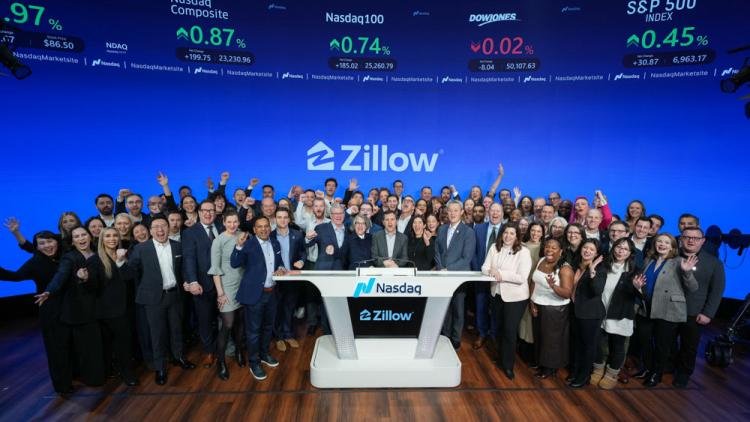
TLDR
• Core Points: Zillow marks 20 years by expanding beyond window-shopping, using artificial intelligence to streamline homebuying and diversify revenue beyond traditional agent advertising.
• Main Content: The company leverages AI to improve pricing, underwriting, and search experiences while broadening services to reduce friction in home transactions and sustain growth.
• Key Insights: Zillow’s shift reflects industry-wide moves toward automation and data-driven decision-making, balancing new capabilities with regulatory and consumer trust considerations.
• Considerations: Growth hinges on AI accuracy, data provenance, and maintaining transparency with buyers and sellers amid evolving business models.
• Recommended Actions: Monitor AI-enabled features, regulatory developments, and consumer sentiment; evaluate partnerships and new services for sustainable value creation.
Content Overview
Zillow operates at the intersection of technology and real estate, a space where it built its brand by enabling consumers to window-shop for homes online and by monetizing listings through advertising from real estate agents. As Zillow reaches its 20th anniversary, the company signals a strategic pivot toward more ambitious ambitions that extend beyond listings and ads. The company’s leadership emphasizes the role of artificial intelligence and data science in reshaping the homebuying and home-selling journey, with a focus on reducing friction, increasing efficiency, and expanding revenue streams.
To understand Zillow’s trajectory, it helps to appreciate the broader context of the real estate market in the United States. Online visibility has become a prerequisite for any home listing, and consumer expectations have evolved toward faster insights, more accurate valuations, and smoother transaction experiences. Zillow’s decade-long experience with large-scale housing data positions it to increasingly automate and personalize aspects of the process, from pricing estimates to mortgage considerations and property searches. The 20-year milestone invites reflection on how the company has transformed from a listing portal into a data-driven platform seeking to influence multiple stages of the real estate lifecycle.
This shift occurs against a backdrop of heightened competition in online real estate, with multiple players investing in AI, machine learning, and improved user interfaces. Zillow’s strategy emphasizes not just attracting buyers but also guiding them through decisions with more confidence. By integrating AI across product features, Zillow aims to reduce the “pain points” typical of homebuying—finding the right property, understanding value, securing financing, and navigating closing processes. The result is a business model that seeks to derive value from both consumer transactions and alternative revenue streams tied to data and services.
The article being summarized discusses how Zillow is positioning itself for growth by relying on artificial intelligence to add value beyond traditional agent advertising. It also points to the ongoing tensions in the real estate ecosystem, such as the balance between automation and human expertise, the quality and transparency of AI-generated insights, and the regulatory and ethical considerations around automated valuations, lead generation, and fee structures. As Zillow evolves, it will need to manage consumer trust and privacy while expanding its platform to support more durable, scalable revenue.
In-Depth Analysis
Zillow’s early brand identity was built on two simple pillars: conspicuous online property listings and a robust advertising ecosystem that connected buyers with real estate agents. This model enabled Zillow to monetize vast traffic through agent referrals and advertising revenue, establishing itself as a central hub in the online real estate ecosystem. Over time, the company accumulated a rich dataset spanning millions of homes, neighborhoods, price trajectories, and consumer interactions. That data foundation creates opportunities to apply AI and machine learning to forecast prices, estimate true market value, and tailor search experiences to individual user preferences.
The 20-year milestone signals a strategic realignment toward broader platform capabilities. Instead of solely serving as a catalog of homes, Zillow is increasingly attempting to influence decision-making across the homebuying lifecycle. This involves moving beyond listing viewership into more sophisticated services, including automated valuation models, personalized property recommendations, mortgage insights, and closing process assistance. The overarching goal is to make homebuying less painful and more predictable by reducing information asymmetries and speeding up tasks that typically slow down transactions.
AI plays a central role in this strategy. By leveraging machine learning and data analytics, Zillow aims to deliver more accurate property valuations, better price guidance for buyers and sellers, and more efficient matching of properties to buyer preferences. AI can enhance search relevance, surface relevant loans or insurance products, and optimize user flows to reduce friction. In practice, this could translate into recommendations that account for a buyer’s time horizon, budget constraints, and future resale considerations, as well as improved transparency around how valuations are derived.
However, the integration of AI into real estate decisions is not without challenges. The accuracy and provenance of automated valuations are critical issues, as misstatements or biases can erode trust and invite regulatory scrutiny. Zillow must balance automation with clear disclosures about models and methodologies to ensure users understand the basis of estimates. Privacy and data security also remain paramount, given the sensitive nature of financial information and personal property preferences that users share on the platform.
Zillow’s broader strategic ambitions also involve diversifying its revenue beyond traditional agent advertising. By expanding into ancillary services—such as mortgage origination support, home insurance, and perhaps even title or settlement services—the company can create ecosystems that capture more value within the real estate transaction. The success of these initiatives depends on building trust with users who rely on Zillow for guidance during a major life decision. Transparent pricing, straightforward user experiences, and reliable customer support will be critical to sustaining growth in a more expansive product lineup.
The real estate industry’s dynamics—characterized by a heavy reliance on agents, broker networks, lenders, and service providers—mean that Zillow’s AI-enabled strategy must be palatable to multiple stakeholders. Agents may welcome more qualified leads and efficient processes, while lenders benefit from streamlined mortgage workflows. At the same time, critics may push back on AI-driven recommendations that appear to steer users toward particular products or partners. Maintaining a fair and unbiased platform will require ongoing governance, audits of algorithms, and independent validation of predictive models.
From a user experience standpoint, the promise of AI is a smoother, faster, and more informative journey. Personalization can help users discover properties that actually fit their long-term needs, rather than surfacing a broad array of unrelated options. For sellers, AI-generated insights could provide more precise pricing guidance and faster feedback on listing performance. For buyers, a more transparent valuation framework could demystify price dynamics and reduce the risk of overpaying in competitive markets.
Yet, the push toward AI-enabled capabilities must be matched with robust safeguards. Issues of data quality, model transparency, and accountability are essential in maintaining consumer trust. As Zillow expands its AI toolkit, it will need to establish clear communication about what the models do, how they were trained, what data sources were used, and how users can contest or verify results. This is especially relevant as public confidence in automated decision-making wavers in other sectors due to concerns about bias, accuracy, and privacy.
Looking ahead, Zillow’s success will depend on its ability to scale AI features while preserving the human elements that many homebuyers still value. Real estate remains a relationship-driven industry where agents provide local market knowledge, negotiation skills, and personalized guidance. AI should augment these human strengths, not replace them, by handling repetitive or data-heavy tasks, freeing professionals to focus on customization and advisory support.

*圖片來源:Unsplash*
The company’s 20th anniversary presents an opportunity to reflect on what has worked and what remains aspirational. Zillow’s core strength—massive housing data and a large user base—offers a platform for experimentation with AI applications. The challenge is turning this potential into a sustainable, defensible business model that can weather economic cycles, regulatory changes, and shifting consumer expectations. By prioritizing accuracy, transparency, and value, Zillow can pursue growth in a way that complements the broader real estate ecosystem rather than destabilizing it.
Perspectives and Impact
Industry observers note that the move toward AI-driven real estate platforms aligns with broader tech trends in which data and automation increasingly shape consumer decisions. The real estate market has long been influenced by information asymmetry—buyers often lack access to timely, reliable, and comprehensive data. Zillow’s AI-forward approach aims to democratize access to insights, offering tools that help level the playing field between buyers and sellers.
If effectively deployed, AI-enabled features could reduce some of the most painful aspects of homebuying, such as uncertainty around price trajectories, mortgage qualification, and timeline planning. For buyers, accurate valuations and personalized recommendations can reduce guesswork and help set realistic expectations. For sellers, data-driven pricing guidance can improve listing performance and reduce time on market. For lenders and service providers, streamlined workflows and better alignment with consumer needs can improve conversion rates and customer satisfaction.
However, the broader impact on the labor and revenue structure of the real estate industry warrants careful consideration. As platforms become more capable, they may attract more professional participation while also compressing margins for traditional intermediaries. Agents could benefit from higher-quality leads and more efficient processes, but there is also concern about the commoditization of services or reduced demand for certain types of professional involvement. Regulators may scrutinize automated valuations for potential undervaluation or overvaluation biases, emphasizing the need for oversight and accountability mechanisms.
From a consumer protection perspective, ensuring fair competition and protecting privacy will be essential. The more powerful the AI tools become, the more important it is to maintain clear consent, transparent data usage, and robust security. Consumers should have straightforward ways to understand how AI-generated insights are produced and to challenge or verify results when necessary. As Zillow and similar platforms expand, policymakers may consider guidelines on algorithmic transparency, data governance, and the disclosure of potential conflicts of interest arising from partnerships with lenders, insurers, and other service providers.
In terms of future trajectory, Zillow’s AI-centric strategy could influence how other real estate platforms approach product development. If Zillow demonstrates measurable improvements in transaction efficiency and customer satisfaction without compromising trust, competitors may accelerate investment in AI and data science. The resulting ecosystem could feature a suite of integrated services—valuation, search, mortgage, insurance, and closing support—delivered through a single interface. This level of integration could set new standards for user experience in real estate and raise the bar for service expectations across the industry.
Yet, several uncertainties remain. The economic environment, including interest rate fluctuations and housing affordability, will affect demand for Zillow’s broader suite of services. The company’s ability to monetize AI-enabled features in a way that remains fair to users will be critical. If users perceive value in AI-driven insights but worry about potential bias or data misuse, they may resist adopting new tools or resist sharing sensitive information. Building and maintaining trust will be as important as the technical prowess behind the algorithms.
Ultimately, Zillow’s evolution reflects a broader shift toward platform-based business models in traditional industries. By leveraging large-scale data and AI, the company seeks to create a more connected, efficient, and transparent real estate marketplace. The pace of this transformation will depend on the company’s execution, governance, and the external factors shaping the housing market. The 20th anniversary is both a celebration of past achievements and a checkpoint for future ambitions: can Zillow translate vast data and powerful AI into tangible reductions in the pain points that accompany buying and selling homes?
Key Takeaways
Main Points:
– Zillow marks its 20th anniversary by expanding beyond listings and ads toward AI-enabled services in homebuying.
– Artificial intelligence is central to pricing, valuation, personalization, and transaction workflows.
– The strategy aims to reduce friction in the homebuying journey and diversify revenue streams.
Areas of Concern:
– Accuracy and transparency of AI-generated valuations and recommendations.
– Privacy, data security, and potential biases in automated decision-making.
– Regulatory scrutiny and the need for governance around algorithms and partnerships.
Summary and Recommendations
Zillow’s 20th anniversary marks a deliberate shift from a primarily listings-driven model to a broader, AI-enhanced platform intent on transforming the homebuying experience. By leveraging its extensive housing data and advanced analytics, Zillow seeks to deliver more accurate valuations, personalized search, and streamlined transaction support, while expanding revenue beyond traditional agent advertising. This trajectory aligns with a broader industry trend toward automation and data-informed decision-making, offering the promise of reduced friction and improved consumer confidence in real estate decisions.
However, the company’s success hinges on several critical factors. The efficacy and fairness of AI-powered features must be demonstrated consistently, with transparent disclosures about model performance and data sources. Privacy and security controls must be robust to maintain user trust, especially given the sensitive nature of financial and personal data involved in real estate transactions. Regulatory considerations around automated valuations, disclosures, and potential conflicts of interest with lenders or service providers will require ongoing attention and governance.
From a strategic standpoint, Zillow should continue to balance automation with the human expertise that remains valuable in real estate. AI can handle repetitive analysis, data aggregation, and initial guidance, while agents and loan specialists can provide nuanced advice, negotiation support, and personalized service. By fostering collaborations with trusted partners and maintaining clear, user-centric interfaces, Zillow can build a durable ecosystem that benefits buyers, sellers, agents, lenders, and service providers alike.
In terms of actionable steps, Zillow should:
– Maintain rigorous standards for model validation and transparency, including accessible explanations of how valuations and recommendations are generated.
– Invest in data governance and privacy protections to sustain consumer trust.
– Continue expanding integrated services in a way that demonstrably improves transaction efficiency without compromising fairness or incurring excessive costs for users.
– Monitor regulatory developments and engage with policymakers to shape sound, balanced guidelines for AI in real estate.
– Collect and publish user feedback and performance metrics to demonstrate value and drive iterative improvements.
If Zillow successfully navigates these considerations, its AI-driven approach could redefine the homebuying landscape, making the process smoother, faster, and more predictable for millions of Americans while establishing a scalable, diversified revenue model for the company.
References
- Original: https://www.geekwire.com/2026/zillow-at-20-real-estate-giant-leans-on-ai-to-make-homebuying-hurt-less/
- Additional context on AI in real estate: [2-3 relevant reference links based on article content]
*圖片來源:Unsplash*