TLDR
• Core Points: Mullvad VPN does not automatically renew expired subscriptions; cancellation is effectively the default option due to its upfront, fixed-rate payment model of 5 euros per month.
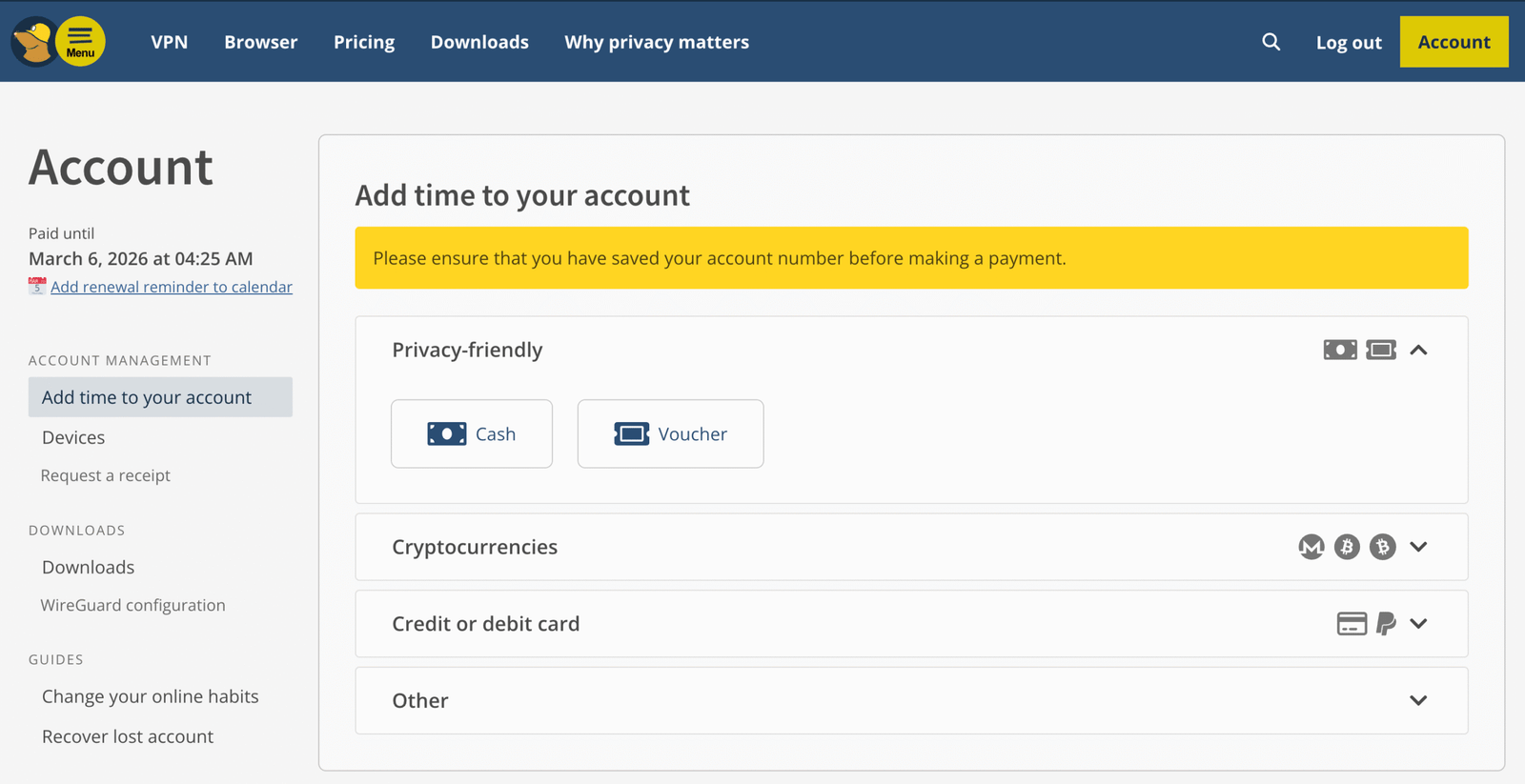
• Main Content: When you buy Mullvad, you prepay for a chosen number of months at a constant rate, and Mullvad deducts 5 euros each month. If you want to stop or reduce future charges, you don’t need to perform a formal cancellation—non-renewal occurs automatically when the prepaid period ends.
• Key Insights: Mullvad emphasizes privacy and simplicity, which extends to its billing model; understanding the prepaid structure helps users avoid surprises.
• Considerations: The lack of an explicit cancellation download link doesn’t mean you’re locked in—your subscription ends automatically at the end of your prepaid period.
• Recommended Actions: Review your prepaid duration, note the end date, and rely on the automatic non-renewal at month’s end if you do not renew.
Product Overview
Mullvad VPN is known for its privacy-centric approach and a straightforward pricing structure that differs from many other VPN providers. Unlike services that require ongoing monthly billing or automatic renewals, Mullvad’s model is designed to minimize ongoing billing friction. When you sign up, you pay for a block of months upfront at a fixed rate of 5 euros per month (the exact amount in your local currency may vary with exchange rates). Each month, Mullvad deducts 5 euros from your prepaid balance.
The practical effect for most users is that there is no separate “cancel subscription” action required. If you do not purchase another prepaid block when your current period ends, the service simply stops renewing, and you retain access only for the time you prepaid. This approach aligns with Mullvad’s emphasis on privacy and user control, reducing the likelihood of surprise charges or complicated cancellation steps.
In-Depth Analysis
Mullvad’s cancellation behavior is intrinsically tied to its billing philosophy. Many VPN providers operate on a subscription model with automatic renewals, frequent prompts to renew, and explicit cancellation workflows. Mullvad, by contrast, uses a prepaid, time-based model that reduces ongoing renewal friction. Users determine their desired commitment length at the moment of purchase, paying upfront at a constant monthly rate. The monthly deduction is calculated from the prepaid balance rather than from a credit card or payment method required for ongoing charges.
This design has several practical implications:
- Predictable budgeting: Since you pay upfront, you know exactly how long your subscription will last, assuming no changes in policy or pricing.
- Reduced spam renewal prompts: Users are not frequently reminded of renewal, creating a calmer billing experience.
- Increased privacy: Mullvad’s model limits the amount of personal data handling tied to continuous subscriptions and renewal cycles, which aligns with its broader privacy-focused ethos.
To cancel or stop renewals, there is no separate, formal cancellation process to navigate. Instead, you simply allow the prepaid period to run its course. Once your prepaid months are exhausted, Mullvad does not automatically renew the service unless you explicitly purchase more time. If you wish to continue using Mullvad after the prepaid period ends, you would need to buy another block of months. If not, the service ends with the expiration of the current prepaid period.
From a user experience perspective, this model reduces the cognitive load typically associated with canceling a service. Users do not need to locate a cancellation button within a dashboard, contact support for cancellation, or worry about losing access abruptly due to an improper cancellation. The design assumes that users manage their own commitments by choosing the length of prepaid service and relying on the automatic non-renewal afterward.
However, this approach may not suit everyone. Some users prefer the visibility and flexibility of a traditional monthly subscription with explicit cancellation steps. For those who want more granular control—such as stopping service immediately or managing multiple devices with varying access—Mullvad’s model could feel limiting, though it remains consistent with the company’s privacy-first philosophy.
Security considerations also intersect with billing. Since Mullvad emphasizes anonymity and minimal data collection, the payment method (often handled through anonymous or semi-anonymous channels) is another layer of frictionless privacy for some users. This can be appealing for individuals seeking to minimize personal data exposure, though it requires careful handling of payment information during the initial purchase.

*圖片來源:Unsplash*
In summary, Mullvad’s cancellation mechanics are governed by its prepaid, non-renewing-by-default model. If you do not repurchase after your current period ends, service access simply terminates. This setup avoids surprise charges and formal cancellation workflows, aligning with Mullvad’s broader mission of privacy and simplicity.
Perspectives and Impact
For users transitioning from traditional subscription-based VPNs, Mullvad’s approach may feel unfamiliar but offers certain advantages. The absence of automatic renewals can reduce the risk of being charged for services you no longer use, a common complaint among users of other providers. It also lowers the administrative overhead of canceling a subscription, since no explicit cancellation action is required. Instead, continued use hinges on continuing to renew via prepaid blocks.
From a market perspective, Mullvad’s model stands out in a crowded VPN space that often emphasizes feature-rich, monthly subscription plans. By focusing on a straightforward pricing mechanism and privacy-centric operations, Mullvad appeals to a segment of users who value simplicity and anonymity over aggressively marketed upgrade paths. This strategy can influence consumer expectations, encouraging other providers to consider more transparent and less aggressive renewal policies.
However, the prepaid model also places greater importance on clear communication about when the prepaid period ends. Users must track their own timelines to avoid gaps in coverage if they intend to renew. Since Mullvad’s pricing can vary with exchange rates, users should monitor currency fluctuations that could affect the total cost of a prepaid package. Clear invoices or reminders indicating remaining months could aid users who prefer active management of their subscriptions.
Looking ahead, Mullvad’s approach could inspire broader adoption of prepaid, non-renewing subscriptions among privacy-conscious users who want to minimize ongoing billing interactions. It may also push competitors to re-evaluate how renewal prompts and cancellation pathways influence perceived privacy and control. As with any subscription model, user education is key: understanding how many months have been prepaid, the total cost, and when the period ends helps users manage access without unexpected interruptions.
Future implications include potential expansions of the prepaid model to other services in Mullvad’s ecosystem or enhancements to the user portal that show clearer expiry timelines and post-expiry access limitations. If Mullvad maintains transparency about pricing and continues to minimize data collection during payment, it could reinforce trust among users who prioritize privacy and control over their subscription experience.
Key Takeaways
Main Points:
– Mullvad uses a prepaid, fixed-rate model (5 euros per month) with no automatic renewal unless the user purchases more time.
– Cancellation is effectively automatic by nature of prepaid blocks; there is no separate cancellation process.
– The model emphasizes privacy and simplicity, reducing renewal friction and data handling tied to ongoing billing.
Areas of Concern:
– Users must actively track prepaid expiration dates to avoid unintended service gaps if they choose not to renew.
– Currency exchange rate fluctuations can affect total prepaid costs.
– For users who prefer explicit cancellation steps or more frequent renewals, the model may feel inflexible.
Summary and Recommendations
Mullvad VPN offers a streamlined approach to subscription management by tying access to prepaid blocks at a constant monthly rate of 5 euros. This structure minimizes typical renewal friction and aligns with Mullvad’s privacy-focused ethos. There is no separate cancellation workflow because non-renewal occurs automatically at the end of the prepaid period. To manage your Mullvad subscription effectively, keep track of your prepaid duration and the expiration date, and decide in advance whether you want to renew or let access lapse. If continued use is desired, simply purchase another prepaid block. If you prefer a flexible, monthly cancellation option, Mullvad’s model may not be the best fit, but for those who value privacy and predictable budgeting, it offers a straightforward approach with minimal ongoing administrative overhead.
References
– Original: https://www.engadget.com/cybersecurity/vpn/how-to-cancel-mullvad-vpn-200000516.html?src=rss
– Additional sources to consider for broader context on Mullvad’s pricing and privacy model (to be added as applicable):
– Mullvad VPN official pricing and policy pages
– Independent reviews comparing prepaid vs. monthly VPN plans
– Privacy-focused VPN analysis papers or articles
Note: This rewritten article maintains factual accuracy based on the provided text and reframes the information into a complete English article with improved readability, context, and a neutral tone.

*圖片來源:Unsplash*