TLDR
• Core Points: Anthropic expands Claude’s free tier to include file creation, external service access, and productivity features, aligning with OpenAI’s upcoming ad-supported ChatGPT model.
• Main Content: Free Claude users can now create and edit office documents and PDFs, in addition to existing capabilities, signaling competitive pressure as AI platforms diversify monetization.
• Key Insights: Expanding functionality on free tiers may attract more users and data signals, while broader access raises questions about safety, moderation, and revenue strategy.
• Considerations: Implications for user experience, data handling, licensing of external tools, and long-term sustainability of a free tier.
• Recommended Actions: Users and businesses should monitor policy updates, data privacy terms, and potential shifts in service quality or access.
Content Overview
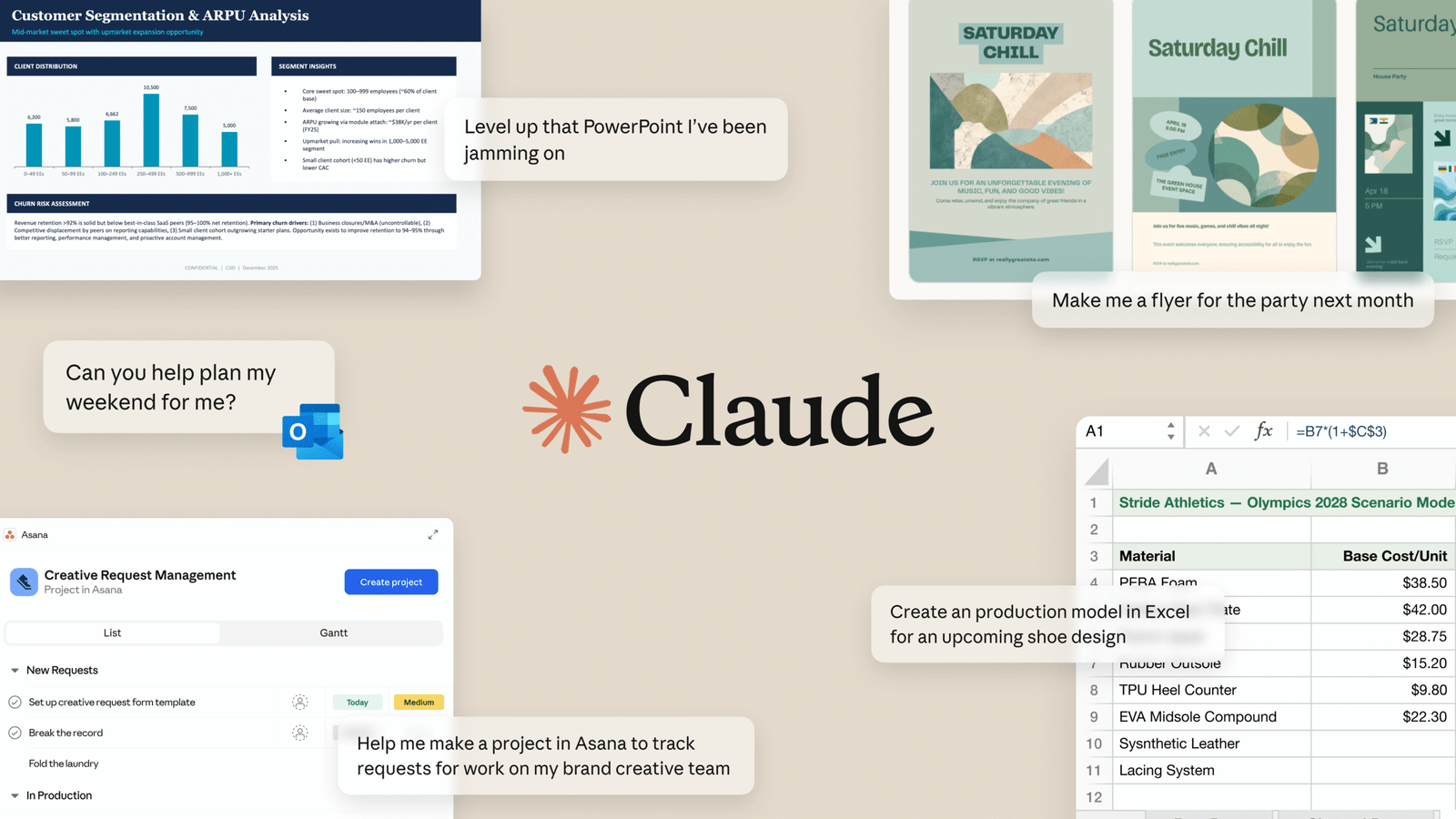
Anthropic is widening the capabilities available to users on Claude’s free tier, introducing features previously limited to paid subscribers. The move appears to be a strategic response to the broader industry trend of monetizing AI tools through ad-supported or freemium models, such as OpenAI’s anticipated ads embedded within ChatGPT. As of Wednesday, Claude free-tier users can not only discuss and brainstorm with the model but also perform practical tasks that enhance productivity. These enhancements include the ability to create files, connect to external services, and utilize various Claude “skills.” Notably, Claude’s file creation features—first rolled out to paid users in September—have now been extended to free users, enabling them to generate and edit standard document formats such as Excel spreadsheets, PowerPoint presentations, Word documents, and PDFs.
The expansion signals Anthropic’s intent to increase engagement with Claude by offering tangible, workflow-oriented capabilities at no cost, potentially drawing in new users who want a robust AI assistant without immediate financial commitment. The changes may also influence how organizations evaluate AI assistants, as free-tier access becomes more capable of handling day-to-day office tasks, data handling, and collaborative workflows.
As the AI landscape evolves, free-tier enhancements like these could shape user expectations and competitive dynamics. While detailed pricing and feature caveats for Claude’s free tier are not fully disclosed in this brief report, the upgrade aligns with broader market movements toward more generous initial access, coupled with monetization strategies that may include ads, premium features, or enterprise options.
In-Depth Analysis
Anthropic’s decision to bolster Claude’s free tier with file-related capabilities addresses a key friction point for potential users: the ability to translate AI assistance into concrete outputs. By enabling free users to create, edit, and manage documents and spreadsheets, Claude becomes a more viable tool for everyday tasks, from brainstorming and drafting to data organization and presentation preparation. This move broadens the utility of Claude beyond conversational AI into a practical productivity assistant.
From a product management perspective, expanding free-tier functionality can have several strategic benefits:
– Increase adoption: More users may test Claude’s capabilities without committing to a paid plan, leading to a larger user base and a longer tail of engagement.
– Data and feedback: A wider user pool can yield diverse prompts and use cases, helping Anthropic refine models and safety controls based on real-world interactions.
– Competitive positioning: As OpenAI prepares to integrate ads into ChatGPT, Anthropic’s free-tier enhancements help maintain parity in terms of practical tools, potentially dampening the perceived advantage of revenue-focused changes in rival platforms.
However, this expansion also introduces considerations:
– Safety and moderation: Broadening file creation and external service connections raises questions about data handling, content policy enforcement, and potential leakage of sensitive information through connected tools. Anthropic will need robust safeguards, transparent terms, and clear opt-in controls to manage privacy and security risks.
– Reliability and performance: Free-tier users accessing file creation and external integrations may demand higher performance guarantees. Ensuring consistent latency, file fidelity, and compatibility with widely used formats will be crucial to maintain user trust.
– Monetization and user experience: If OpenAI’s ChatGPT strategy includes ads, similar revenue pressures could emerge for Claude. Anthropic must balance free access with sustainable monetization models that do not undermine user experience or perceived value.
– Ecosystem integration: Allowing connections to external services implies a growing ecosystem of integrations. Governance around third-party access, data permissions, and integration quality will become increasingly important.
Contextually, the broader AI market has been experimenting with various monetization approaches. OpenAI’s anticipated ad strategy for ChatGPT aims to diversify revenue while keeping core access affordable. Competitors like Anthropic appear to be leaning into feature-rich free tiers as a differentiator, betting that robust capabilities will drive long-term user loyalty and eventual conversion to paid plans or premium offerings.
The practical implications for organizations and individuals are significant. For teams relying on AI to draft documents, summarize data, or generate presentations, a free-tier CLAUDE with enhanced file capabilities could streamline workflows, reduce manual handling, and accelerate content production. Yet, this comes with a caution: extensive use of AI-generated content and reliance on external integrations can complicate governance, data ownership, and compliance—particularly in regulated sectors.
Looking ahead, several questions will shape Claude’s trajectory:
– How will Claude handle sensitive data within generated files or emails, and what controls exist to prevent unintended data exposure?
– Will there be tiered pricing for advanced file-types, larger file sizes, or enterprise-grade security features?
– How will Anthropic manage the balance between free access and monetization, and what role will ads or premium features play in Claude’s business model?
– What safeguards will be implemented as more external services are connected, to mitigate misuse or data leakage?
Beyond immediate product changes, the move reflects an ongoing arms race among AI providers to deliver practical, real-world value at scale. As Free-tier capabilities converge with paid feature sets, users can expect ongoing experimentation and refinement that prioritizes both utility and safety.
Perspectives and Impact
Industry observers may view Anthropic’s free-tier enhancement as a strategic play to preserve competitiveness in a market where AI tools are increasingly integrated into everyday workflows. By equipping Claude with the ability to create and edit files across common formats, Anthropic lowers the barrier to entry for first-time users who need tangible outputs from an AI assistant. This could also influence organizational procurement decisions, as teams evaluate providers not only on model performance but also on ease of use, feature breadth, and the cost implications of free access.

*圖片來源:Unsplash*
From a safety and policy standpoint, expanding capabilities to external service connections necessitates rigorous governance. Users must have clear insights into how data is handled when connected to third-party services, what happens to generated content, and what controls exist to limit or audit sharing of information. Anthropic’s implementation will likely require detailed privacy terms, data retention policies, and user-friendly privacy controls that empower individuals and organizations to opt in or out of specific data flows.
For users, the expanded free tier could enable faster experimentation and adoption of Claude for routine tasks, potentially accelerating digital transformation initiatives. However, relying on AI-generated outputs for critical business functions should be balanced with human oversight and robust validation, particularly when dealing with accuracy, format fidelity, and compliance requirements. As AI platforms broaden their feature sets, users and admins should prioritize governance playbooks that address data sensitivity, version control, and auditability.
In the broader AI economy, the trend toward free-tier enrichment signals ongoing ambition among providers to become indispensable parts of daily workflows. If Claude’s enhanced free tier proves popular, Anthropic could see improved retention and greater exposure to upsell opportunities—such as premium skills, increased storage, higher file-size limits, or enterprise-grade security features. Conversely, market expectations may push competitors to accelerate similar enhancements or adjust monetization strategies to maintain competitive balance.
The potential advertising component associated with OpenAI’s ChatGPT strategy adds a dimension of comparative risk and opportunity. Should ads become the norm in consumer AI interfaces, users may gravitate toward platforms that emphasize privacy, user control, and transparent data practices. Anthropic’s emphasis on safety and responsible AI could serve as a differentiator in an ad-influenced ecosystem, reinforcing trust while expanding functional capabilities for free users.
Future developments to watch include the trajectory of Claude’s file-management capabilities, the depth and breadth of supported formats, the ease of collaboration features, and the robustness of external service integrations. The impact on developers and third-party tools will also be consequential, as more integrations create ecosystems where AI-assisted workflows are commonplace—potentially altering how documents are created, edited, and shared in professional settings.
Key Takeaways
Main Points:
– Anthropic expands Claude’s free tier to include file creation and editing across Excel, PowerPoint, Word, and PDF formats.
– Free users gain enhanced capabilities previously limited to paid subscribers, including connections to external services and access to Claude “skills.”
– The move aligns with broader market dynamics as AI platforms explore varied monetization models, including ad-supported experiences.
Areas of Concern:
– Data privacy and safety implications from external service integrations.
– Ensuring reliability, security, and compliance for free-tier users handling sensitive information.
– Unclear long-term monetization strategy and potential impact on paid plans.
Summary and Recommendations
Anthropic’s expansion of Claude’s free tier to support file creation, editing, and external service connections marks a notable shift in how AI assistants are presented to a broad user base. By transforming Claude into a more capable productivity tool without requiring payment, Anthropic aims to boost adoption, gather wider user feedback, and position Claude competitively against OpenAI’s evolving ChatGPT offerings. This strategy can drive higher engagement and data signals that inform model improvements and safety mechanisms. However, it also introduces considerations around data privacy, governance, and sustainability of a free model in a landscape moving toward mixed monetization strategies.
For users and organizations, the development warrants careful attention to data handling policies, especially when interacting with external services through Claude. It is advisable to review terms of service, privacy notices, and any available controls that govern data sharing and retention. When integrating Claude into workflows, teams should implement governance practices that address version control, document authenticity, and compliance with relevant regulations. As the market evolves, continuing to compare the total cost of ownership, feature depth, and risk exposure across providers will be essential.
In the near term, expect continued enhancements to free-tier capabilities across AI platforms, as companies balance generous access with sustainable monetization. Stakeholders should remain vigilant for policy updates, changes to feature availability, and shifts in service terms that could affect how AI-assisted productivity tools are used within organizations.
References
- Original: https://www.engadget.com/ai/anthropic-beefs-up-claudes-free-tier-as-openai-prepares-to-stuff-ads-into-chatgpts-194100939.html?src=rss
- Additional context on AI monetization strategies and free-tier dynamics (to be consulted for broader background):
- OpenAI’s roadmap and ads integration discussions
- Anthropic official announcements and product updates
- Industry analyses on freemium models in AI services

*圖片來源:Unsplash*