TLDR
• Core Points: OpenAI’s Sam Altman publicly labels Anthropic’s new Super Bowl ads as dishonest and authoritarian, signaling heightened competition-driven rhetoric in AI advertising.
• Main Content: Altman’s extended post on X targets Anthropic’s messaging, framing it as misleading and centralized under authoritarian control.
• Key Insights: Public disputes over AI ethics, governance, and safety language reflect industry tensions as competitors vie for trust and market share.
• Considerations: The exchange highlights how ad campaigns can shape public perception of AI safety and corporate philosophy.
• Recommended Actions: Stakeholders should monitor how such rhetoric influences regulation, consumer trust, and collaborative safety standards.
Content Overview
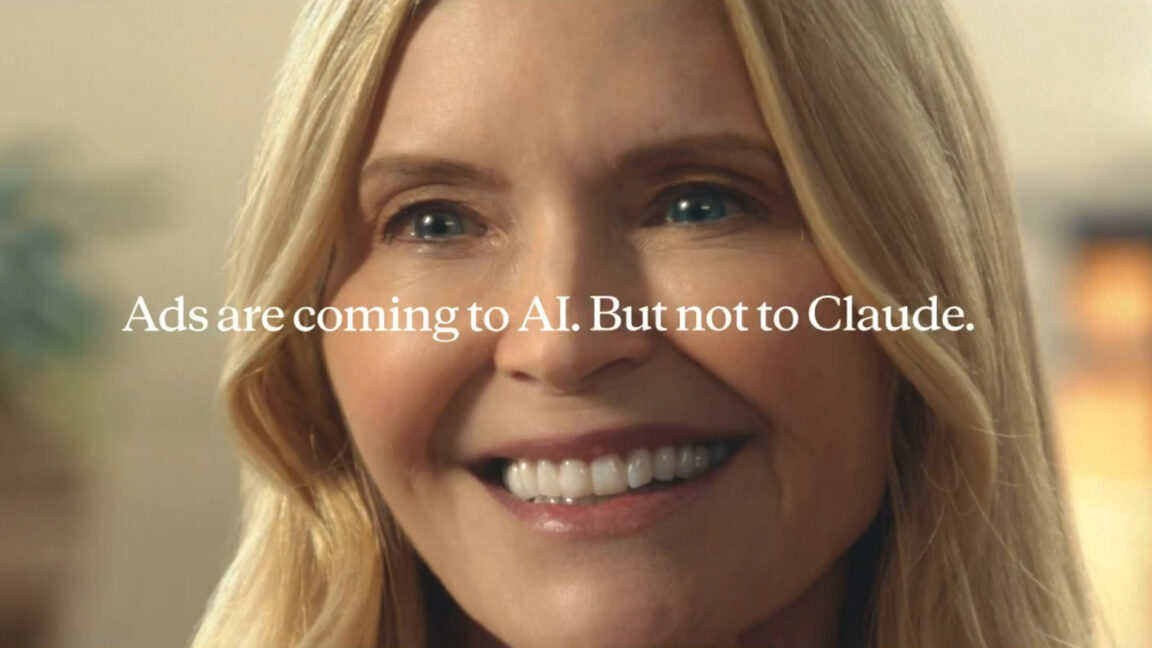
The AI industry remains in a high-stakes phase of public competition, with major players increasingly using broad-brush messaging about safety, ethics, and governance to differentiate themselves. Anthropic, a notable competitor known for its safety-centric stance, released a new set of Super Bowl television commercials aimed at highlighting its approach to AI alignment and public accountability. In response, OpenAI CEO Sam Altman issued a detailed critique of Anthropic’s campaign on social media, describing the ads as dishonest and authoritarian. The exchange underscores how major tech firms are leveraging advertising to influence public perception of AI risk, governance, and industry norms while navigating ongoing regulatory scrutiny and evolving public expectations.
Anthropic’s ad strategy appears to emphasize responsible AI development and the imposition of guardrails, positioning the company as a steward of safety. OpenAI’s rebuttal, conveyed through Altman’s comments, challenges that framing, arguing that certain safety narratives could become tools for centralized control or misrepresentation of capabilities and incentives. The public disagreement reflects broader tensions in the AI ecosystem about who should set safety standards, how aggressively those standards should be enforced, and how companies communicate risk and accountability to users and policymakers.
This dynamic occurs at a moment when the AI landscape is characterized by rapid technical advances, escalating discourse around ethics and governance, and scrutiny from governments and broader civil society. While corporate advertising can influence consumer perception, it also intersects with regulatory developments, investor sentiment, and the reputational calculus of tech leaders who must balance credibility with competitive positioning.
The exchange also raises practical questions about advertising ethics in technology: How accurately and transparently are safety features, limitations, and risks portrayed? To what extent should ads imply endorsement of particular governance models or policy outcomes? And how might such campaigns affect public understanding of AI capabilities, including concerns about enabling misuse or creating dependencies on powerful systems?
As Anthropic and OpenAI continue to compete for talent, customers, and research influence, observers watch for how their public statements and marketing narratives shape the ongoing discourse around AI safety, governance, and the future direction of the field. The conversation may also influence industry norms and potential collaboration paths for safety research, standard-setting, and responsible deployment practices.
In-Depth Analysis
The public clash between OpenAI and Anthropic, intensified by the visibility of a Super Bowl ad campaign, illustrates how AI governance narratives have become central to market competition. Anthropic’s ads reportedly frame their platform as a more cautious, safety-first alternative in a field crowded with accelerative progress and ambitious deployment timelines. The messaging likely emphasizes risk mitigation, model alignment, and human oversight as central tenets of their product philosophy. In contrast, OpenAI’s response—articulated by Sam Altman in a lengthy post on X (formerly Twitter)—accuses Anthropic of promoting a dishonest and authoritarian worldview.
From a communications standpoint, the choice of using a high-visibility advertising opportunity, such as a Super Bowl slot, signals an intent to widen audiences beyond tech insiders to the general public. The appeal to broad audiences can be a double-edged sword: it broadens awareness of safety narratives but also invites scrutiny over the accuracy and implications of those narratives. Anticipating regulatory responses, policymakers often scrutinize both corporate safety claims and the rhetoric surrounding control, governance, and potential overreach in AI systems. OpenAI’s sharp rebuke could be interpreted as a defensive move to preserve its own messaging about openness, safety commitments, and innovation timelines, even as the company navigates debates over data use, model behavior, and alignment incentives.
The public dialogue also touches on the broader debate about how much governance should be centralized or decentralized in AI development. Proponents of strong, centralized governance argue for uniform safety standards and accountability mechanisms to prevent misuse and ensure user protection. Detractors warn that overly prescriptive frameworks could slow innovation and reduce competitive incentives. The exchange between OpenAI and Anthropic thus contributes to the ongoing discourse about balancing rapid technological advancement with safeguards, transparency, and practical safety outcomes.
Industry observers may also consider the strategic implications of such exchanges. Public disagreements among leading AI firms can influence investor confidence, talent mobility, and collaboration opportunities in areas like safety research, standard-setting, and joint policy initiatives. The rhetoric used in Altman’s post—describing rival approaches as dishonest and authoritarian—may reflect competitive calculus as firms vie to position themselves as the more ethical or responsible steward of AI. It may also signal concerns about potential misrepresentation of capabilities or safety measures in marketing materials, which could attract regulatory attention or consumer skepticism if perceived as exaggerated or misleading.
Beyond marketing and governance, the dispute has implications for the public’s understanding of AI risk and the expectations surrounding future AI deployments. Consumers and policymakers alike rely on communications from leading tech companies to gauge what kinds of safeguards exist, what the limitations are, and what kind of oversight is in place. When rival campaigns make competing claims about safety protocols or governance, it can create confusion about what to expect from different AI services and how to compare them effectively. Clear, verifiable disclosures become essential to maintaining trust in an environment where misinformation or overstatement could have real-world consequences.
The episode also raises considerations about the role of social media in shaping corporate narratives. Altman’s decision to publish a lengthy critique on X demonstrates how executives can directly address industry opponents without intermediary channels. While this approach can increase transparency and responsiveness, it also invites ongoing public debate and potential escalation, as rival camps may respond with additional messaging across similar platforms or through other media. This dynamic reflects a broader shift in corporate communications, where leadership voices actively participate in public discourse rather than relying solely on formal press releases or PR campaigns.
In evaluating the potential impact, one should consider whether such exchanges translate into measurable shifts in user trust, brand perception, or policy sentiment. If audiences interpret Anthropic’s ads as signaling a stringent safety regime, while OpenAI emphasizes a balance between innovation and governance, the competition could accelerate the visibility of safety debates but might also create confusion about the practical implications for end users. The industry’s trajectory will depend on how consistently companies align their marketing narratives with actual product practices, safety testing procedures, and transparency about model capabilities and limits.
Another layer involves the relationship between corporate narratives and research agendas. If ads emphasize alignment and guardrails, researchers in the field may experience either increased funding, strategic encouragement for safety-centric projects, or possible pushback if governance proposals appear too restrictive for experimentation. Conversely, companies that stress rapid deployment and flexible governance may attract practitioners who prioritize speed and scalability, potentially widening the gap between safety-focused and deployment-focused research communities. These shifts could influence collaboration opportunities, talent pipelines, and the allocation of resources toward different lines of inquiry within AI safety and policy research.
As the discourse evolves, it will be critical to watch for how third-party evaluators—academic researchers, non-profit think tanks, and regulatory bodies—interpret and critique these narratives. Independent assessments of safety claims, alignment criteria, and governance frameworks can help ground public conversations in verifiable criteria, reducing the risk of misleading marketing or inflated assurances. In the long run, the AI industry may benefit from a shared ecosystem of evaluation metrics, reporting standards, and cooperative safety initiatives that transcend individual company campaigns, even as competitive dynamics persist.
*圖片來源:media_content*
Perspectives and Impact
Industry Dynamics: The OpenAI-Anthropic exchange underscores a marketplace where safety rhetoric and governance philosophy are not just theoretical concerns but critical differentiators in consumer perception and investor confidence. As AI products become more integrated into daily life and critical operations, stakeholders expect credible assurances about safety, reliability, and controllability. The competition to articulate these assurances can spur greater transparency, but it also risks polarization if campaigns rely on partisan framing rather than substantive demonstrations of safety practices.
Regulatory Landscape: Policymakers and regulators are increasingly attentive to AI governance claims. The juxtaposition of competing narratives can stimulate clearer policy expectations, prompting higher standards for what constitutes verifiable safety evidence, risk assessment procedures, and accountability mechanisms. Transparent reporting about model capabilities, failure modes, incident response, and user protections will be essential to grounding regulatory debates in measurable, auditable data.
Public Perception: High-profile ads and executive statements shape lay understanding of what AI companies stand for. When campaigns portray one company as more responsible or safer than another, audiences may form perceptions based on branding rather than concrete technical disclosures. This makes it especially important for companies to supplement marketing with accessible, accurate information about how models are trained, tested, and guarded against misuse.
Research and Collaboration: Debates about governance and safety can influence collaboration patterns in research communities. A heightened focus on alignment and guardrails could boost funding for safety-oriented research, ethics reviews, and governance studies. Conversely, aggressive deployment narratives may attract researchers prioritizing scale and performance, potentially widening the gap between safety-centric and capability-centric research agendas.
Long-Term Implications: If advertising-driven rhetoric continues to shape expectations around AI safety, there could be a future risk of misalignment between public messaging and actual safety outcomes. To mitigate this, the industry may benefit from standardized, independent safety audits, transparent disclosure practices, and cross-company initiatives that establish common baselines for evaluating and reporting model safety, reliability, and governance practices.
Corporate Communication Best Practices: For executives and communications teams, the episode highlights the importance of calibrating strong competitive messaging with responsible disclosure and accuracy. Clear definitions of safety terms, concrete examples of how guardrails function, and independent validation can help build trust and reduce misperceptions in a heated competitive environment.
Future Trajectory: The ongoing rivalry is likely to continue shaping how AI safety and governance are discussed in public forums. Expect more high-profile campaigns, executive commentary, and industry-led initiatives aimed at defining norms for transparency, accountability, and collaboration. The balance between competitive advantage and responsible stewardship will remain a central tension as AI systems become more capable and pervasive.
Key Takeaways
Main Points:
– OpenAI and Anthropic publicly clash over safety-focused advertising and governance framing.
– Advertising campaigns become strategic tools in shaping public perception of AI risk and control.
– The discourse has implications for regulation, trust, and future collaboration within the AI safety community.
Areas of Concern:
– Potential for misinformation or overstatement in public safety claims.
– Risk of consumer confusion due to competing narratives about governance and capabilities.
– Possibility of reduced collaboration if rhetoric fosters adversarial relationships rather than shared standards.
Summary and Recommendations
The rivalry between OpenAI and Anthropic, intensified by high-visibility advertising and direct executive commentary, illustrates how the AI industry is navigating governance, safety, and public trust in real time. While competitive messaging can drive attention to important safety themes and push for clearer standards, it also risks polarization and confusion if claims are not transparently backed by verifiable evidence.
To foster a healthier discourse and advance responsible AI deployment, the following actions are recommended:
– Promote independent safety reviews and standardized reporting of model capabilities, limitations, and guardrail efficacy.
– Encourage cross-company collaboration on governance frameworks, interoperability standards, and shared best practices for risk assessment.
– Increase transparency around data governance, training methodologies, and incident response protocols so audiences can assess safety claims beyond marketing.
– Engage with policymakers, researchers, and civil society to align on core safety principles, measurement criteria, and accountability mechanisms that transcend individual brands.
– Monitor and address consumer understanding, ensuring communications are accurate, accessible, and free from overstated assurances.
By focusing on verifiable safety outcomes and collaborative governance, the AI industry can transform competitive rhetoric into meaningful progress that benefits users, regulators, and the broader ecosystem.
References
- Original: https://arstechnica.com/information-technology/2026/02/openai-is-hoppin-mad-about-anthropics-new-super-bowl-tv-ads/
- Additional references:
- Public statements by Sam Altman on X regarding Anthropic’s advertising and governance claims
- Industry analyses of AI safety rhetoric and advertising ethics
- Reports on AI governance standards and regulatory discussions in major tech policy forums

*圖片來源:Unsplash*