TLDR
• Core Points: Aurora completes a 1,000-mile autonomous trucking route, highlighting progress in driverless freight with roughly 15 hours of continuous driving, well under federal hours-of-service limits.
• Main Content: The milestone showcases autonomous trucking capabilities, regulatory contexts, and the path toward broader adoption and safety considerations.
• Key Insights: Progress in autonomy is real but hinges on safety, reliability, and integration with existing logistics networks and regulations.
• Considerations: Technical robustness, public-road testing policies, cybersecurity, and labor market implications require ongoing attention.
• Recommended Actions: Stakeholders should pursue comprehensive safety validation, transparent reporting, and collaboration with regulators to accelerate responsible deployment.
Content Overview
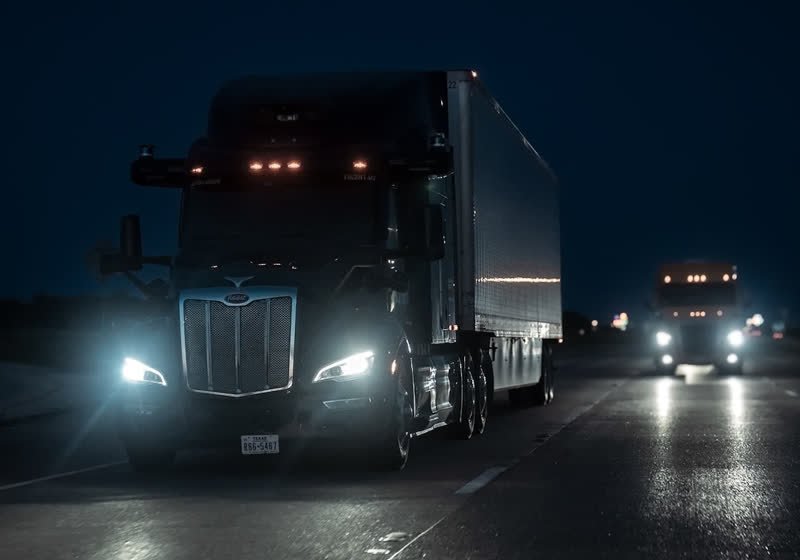
The transportation sector is closely watching advances in autonomous trucking as technology firms push the boundaries of driverless freight. Aurora, a company focused on autonomous trucking solutions, recently demonstrated a milestone by completing a 1,000-mile route with its autonomous trucks. The route, which took roughly 15 hours to traverse, represents a significant demonstration of endurance and reliability for self-driving freight under real-world conditions. The achievement underscores the potential for long-haul autonomous operations to reshape supply chains by offering around-the-clock efficiency, reduced driver fatigue risks, and greater predictability in delivery timelines.
To put this milestone in context, current federal regulations governing trucking hours-of-service (HOS) place limits on driver working time. The rules restrict drivers to 11 hours of driving within a 14-hour work window, require a 30-minute break after eight hours on duty, and mandate a minimum 10-hour rest period before the next shift. These rules are designed to balance safety with the realities of long-haul freight, ensuring that human operators obtain sufficient rest and reducing the likelihood of fatigue-related incidents. The Aurora demonstration does not imply a relaxation of these regulations; rather, it highlights the potential for autonomous systems to operate within and alongside the existing regulatory framework.
The 1,000-mile route serves as a proof of concept for multiple facets of autonomous trucking. Beyond raw distance and travel time, such a mission tests perception, decision-making, and control when confronted with varied traffic patterns, weather conditions, and dynamic roadside environments. It also offers insight into how autonomous fleets might integrate with existing carrier networks, loading and unloading procedures, and maintenance cycles. While the technical achievement is noteworthy, experts emphasize that a single long-distance run is just one data point in a broader validation program. Robust performance across diverse geographies, traffic densities, and seasonal conditions is essential before widespread deployment becomes common practice.
Aurora’s milestone also invites reflection on safety, cybersecurity, and redundancy. Autonomous trucking systems rely on a layered approach to safety, combining sensor fusion, machine learning, geofenced maps, remote monitoring, and fail-safes. Real-world deployments must account for scenarios that challenge perception or decision-making, such as construction zones, erratic human drivers, and adverse weather. Additionally, as fleets become more connected, cybersecurity becomes increasingly important to protect against tampering or spoofing that could compromise vehicle control or data integrity. The 1,000-mile demonstration thus serves not only as a demonstration of capability but also as a call for rigorous verification, transparent reporting of incidents or anomalies, and ongoing collaboration with regulators, shippers, and trucking operators.
From an industry perspective, the milestone carries implications for labor, economics, and infrastructure. Autonomous freight could alter the demand for long-haul driving jobs while potentially enabling more efficient utilization of assets and reduced per-mile costs. However, wide-scale adoption hinges on delivering reliable service, smoothing regulatory pathways, and addressing public acceptance concerns. Infrastructure readiness, such as highway design, rest areas, and support networks for maintenance, also plays a role in the practical rollout of driverless freight at scale. The Aurora achievement contributes to the broader conversation about how autonomous technology may integrate with national supply chains, potentially reshaping logistics strategies over the coming years.
In summary, Aurora’s 1,000-mile autonomous route marks a meaningful milestone in the evolution of driverless freight. It demonstrates technical capability, resilience over extended distances, and progress toward integrating autonomous systems into the freight ecosystem. At the same time, it underscores the importance of safety, regulatory clarity, and system robustness as the industry advances toward broader deployment. As technology matures, stakeholders across the supply chain will be watching closely to see how autonomous trucking evolves from proof-of-concept trials to routine operations that can complement human drivers and enhance transportation efficiency.
In-Depth Analysis
Aurora’s 1,000-mile route represents more than a single long haul; it is a staged signal of progress in autonomous trucking technology and its feasibility for long-distance freight operations. The execution of such a journey involves several layers of technology and operational planning designed to ensure safe and reliable performance without direct human intervention for extended periods.
Technical Architecture and Autonomy Stack
At the core of driverless freight capabilities are autonomous driving stacks that fuse perception, mapping, localization, planning, and control. Perception relies on an array of sensors, including LiDAR, radar, cameras, and potentially thermal imaging, to detect road geometry, other vehicles, pedestrians, and infrastructure. Localization combines precise map data with real-time sensor input to determine the vehicle’s exact position on a route. Planning components chart a path around obstacles, optimize for fuel efficiency and safety, and adapt to changing traffic conditions. Control translates the planned trajectory into throttle, braking, and steering commands.
The durability of such a stack is tested through diverse driving environments. A 1,000-mile mission likely traversed multiple road types, urban and rural corridors, and varying traffic dynamics, providing data on how well sensor fusion handles occlusions, weather variability, and unexpected events. The ability to maintain stable performance across these conditions contributes to the overall confidence in deploying autonomous trucks on longer routes without human intervention.
Redundancy, Safety, and Failover
Safety architectures in autonomous trucks emphasize redundancy and cross-checking among subsystems. Critical functions—such as braking, steering, adaptive cruise control, and emergency interventions—often include backup sensors and software paths to ensure continued operation in case of a partial failure. Remote monitoring and control centers can provide additional oversight, enabling operators to intervene if a scenario arises that falls outside predefined safety envelopes. The balance between on-board autonomy and remote supervision remains a topic of ongoing development, with path planning and decision-making often designed to allow for graceful degradation rather than abrupt disengagement.

*圖片來源:Unsplash*
Regulatory Context and Hours-of-Service
The regulatory framework governing trucking in the United States shapes how autonomous freight can be integrated with existing fleets. While self-driving technology promises to improve uptime and asset utilization, it does not erase the day-to-day realities of road safety and driver fatigue. For human operators, the Federal hours-of-service rules require 11 hours of driving within a 14-hour on-duty window, a 30-minute break after eight hours of continuous duty, and a mandatory 10-hour rest before the next shift. Autonomous operations can potentially operate around the clock, but the broader ecosystem—including dispatch, insurance, and liability—must align with regulatory expectations, especially if a vehicle operates with remote human oversight or in mixed autonomy scenarios where some segments are automated and others require manual intervention.
Operational Integration and Fleet Management
From a logistics standpoint, a 1,000-mile autonomous route tests not only vehicle capability but also fleet management processes. This includes route planning that accounts for charging or fuel stops, rest opportunities for human drivers when needed, maintenance windows, and data collection for performance analytics. Even in a predominantly autonomous system, human oversight may be required for certain tasks such as loading/unloading coordination, compliance documentation, or handling exceptions that arise due to regulatory or contractual constraints. The demonstration offers a data-driven basis to evaluate total cost of ownership, reliability, and throughput against traditional driver-assisted models.
Safety and Public Acceptance
Public perception of autonomous freight will influence adoption timelines. Demonstrations that emphasize safety metrics, fail-safes, and transparent incident reporting are essential to building trust among shippers, carriers, regulators, and the traveling public. Independent validation, third-party audits, and standardized testing protocols can help create a credible picture of system performance. Addressing concerns about cybersecurity, data privacy, and potential job displacement will be critical to sustaining momentum.
Economic and Labor Implications
Autonomous trucking has the potential to reshape labor markets for long-haul driving. While the technology may reduce the demand for human drivers on certain routes, it could also create new roles in fleet operations, maintenance, software updates, and remote monitoring. The net effect on employment will depend on policy decisions, labor market transitions, and the pace at which autonomous freight becomes a staple in supply chains. Additionally, the efficiency gains from driverless freight could lower transportation costs, influence pricing models, and alter the competitive landscape among trucking firms.
Future Roadmap and Validation
A single milestone, while important, is part of a broader validation program. Ongoing testing across multiple routes, weather conditions, and traffic densities will be essential to demonstrate reliability and repeatability. Collaboration among technology developers, logistics providers, regulators, and insurers will shape the criteria for scaling up operations. Lessons learned from repeated deployments can inform improvements in perception algorithms, decision policies, and human-machine interface design to ensure that autonomous trucks can operate in close coordination with human drivers and other road users.
Environmental Considerations
Autonomous fleets may contribute to environmental benefits through optimized routing, platooning, and more consistent driving patterns that reduce fuel consumption and emissions. However, these advantages depend on how autonomous systems are deployed, including decisions about charging infrastructure for electric heavy-duty trucks, maintenance practices, and the energy mix of the grid serving charging stations. A holistic view considers lifecycle environmental impacts, including manufacturing, operation, and end-of-life recycling of sensors and batteries.
Safety Metrics and Transparency
To build confidence, companies pursuing autonomous freight should publish standardized safety metrics, such as disengagement rates, incident reports, and reliability statistics across different geographies and conditions. Transparent telemetry sharing, while balancing competitive and privacy considerations, can help the broader industry benchmark progress and identify areas needing improvement. Independent third-party verification and participation in recognized safety programs can further enhance credibility.
Perspectives and Impact
The milestone advances the narrative around driverless freight by providing a tangible example of endurance on a real-world route. It highlights both the technical progress achieved and the practical questions that remain as the industry contemplates broader deployment. Stakeholders are watching how autonomous trucking evolves in relation to the existing truck driving profession, the regulatory environment, and the broader logistics ecosystem.
From a strategic perspective, autonomous freight can enable new business models. For shippers, it could translate into more predictable delivery windows and improved supply chain resilience. For carriers, it may unlock higher asset utilization and the ability to offer expanded service commitments. For technology firms, sustained milestones support market validation and investment, while for policymakers, they underscore the need for clear guidelines that ensure safety and fair competition.
Longer-term implications include the potential for regional corridors with concentrated autonomous activity, where infrastructure, regulations, and urban planning align to support high-volume, repetitive routes. As technology advances, the industry may see more sophisticated platooning, where multiple autonomous trucks coordinate driving to optimize aerodynamics and fuel efficiency. The social and economic effects will unfold gradually as deployment scales and as stakeholders navigate retraining, policy adaptation, and community engagement.
Key Takeaways
Main Points:
– Aurora achieved a 1,000-mile autonomous trucking milestone, demonstrating long-distance autonomy in real-world conditions.
– The route operates within the context of existing hours-of-service regulations and broader regulatory, safety, and integration considerations.
– Ongoing validation, safety assurance, and regulatory collaboration are essential for broader adoption.
Areas of Concern:
– Ensuring consistent safety across diverse geographies and weather conditions.
– Cybersecurity and resilience of autonomous systems against malicious threats.
– Labor market impacts and the need for transition strategies for workers.
Summary and Recommendations
Aurora’s 1,000-mile autonomous route marks a meaningful step forward in driverless freight, illustrating that autonomous systems can handle extended journeys with minimal or no human intervention in real-world settings. While this achievement is promising, it is not a standalone solution. The broader path to widespread deployment requires rigorous, ongoing validation across many routes and scenarios, robust safety and cybersecurity measures, and transparent reporting practices that foster trust among regulators, shippers, carriers, and the public.
An actionable approach for stakeholders includes continuing collaborative trials that incorporate third-party audits and standardized safety metrics. Regulators should prioritize clear guidance that accommodates evolving autonomous technologies while ensuring safety and accountability. Carriers and shippers should evaluate not only technical performance but also the operational and economic implications, including how to integrate autonomous assets with existing fleets, maintenance regimes, and labor considerations. By pursuing a measured, transparent, and collaborative strategy, the industry can work toward scalable, safe, and efficient driverless freight that complements human drivers and strengthens supply chain resilience.
References
- Original: https://www.techspot.com/news/111323-aurora-sets-new-milestone-1000-mile-driverless-freight.html
- Related topics and context:
- U.S. Federal Motor Carrier Safety Administration Hours of Service Regulations (HOS)
- National Transportation Safety Board (NTSB) safety and oversight in autonomous trucking
- Industry analyses on autonomous freight economics and workforce impact

*圖片來源:Unsplash*