TLDR
• Core Points: MSI’s Lightning line tops its GPU lineup; the RTX 5090 Lightning Z targets extreme enthusiasts with extreme power, limited availability, and a lottery-based purchase model.
• Main Content: The RTX 5090 Lightning Z delivers up to 1,000W TDP capability, showcasing MSI’s high-end engineering and overclocking focus, but access is restricted by a draw, reflecting supply constraints and exclusivity.
• Key Insights: High-end GPUs increasingly use lottery systems for distribution; enthusiasts must balance demand, price, and electricity considerations in the upgrade equation.
• Considerations: The purchase model, steep price, and power draw raise questions about practicality for most users, ongoing driver support, and cooling solutions.
• Recommended Actions: Prospective buyers should research cooling, power supply requirements, warranty terms, and community feedback before entering a draw or considering a high-end upgrade.
Content Overview
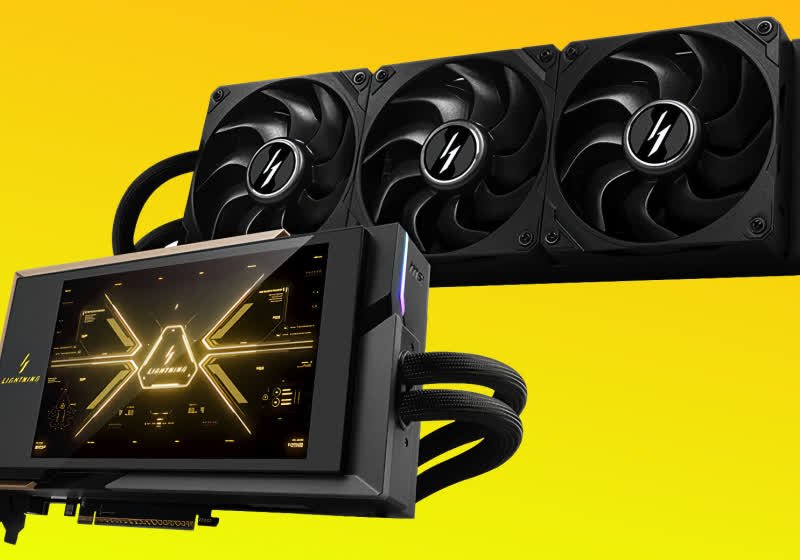
The MSI Lightning series represents the pinnacle of the company’s graphics card engineering. In MSI’s product hierarchy, the Lightning designation—with the Z suffix marking the top-tier variant—signals a card designed for extreme overclocking, maximum performance, and the enthusiast segment willing to push hardware to its limits. The RTX 5090 Lightning Z sits at the apex of MSI’s GPU offerings, combining cutting-edge architectural advances with robust power delivery and advanced cooling to satisfy the needs of extreme overclockers and dedicated enthusiasts.
Recent discussions around the RTX 5090 Lightning Z have focused on both its raw performance potential and the practicalities of acquiring such a card. MSI has continued to position the Lightning line as a showcase for what is technically possible in consumer graphics hardware, featuring premium components, enhanced VRMs, larger power phases, and overclocking features that surpass standard flagship models. However, mainstream visibility of these products is tempered by limited availability and pricing strategies that reflect their specialized status. In the case of the RTX 5090 Lightning Z, reports indicate a price point that is well above typical consumer GPUs, accompanied by distribution methods that can involve a lottery or draw process. This approach aligns with a broader industry trend where ultra-high-end graphics cards command premium prices and selective access.
The combination of a high price tag and restricted access underscores a broader conversation about the role of elite hardware in a market that must balance demand, supply, and practical use cases. For some buyers, the Lightning Z represents a culmination of enthusiast goals—a GPU capable of sustained extremely high performance in both gaming and compute workloads, assuming adequate cooling and power infrastructure. For others, the constrained availability and elevated cost may render it more of a prestige purchase or a niche investment than a practical upgrade.
In-Depth Analysis
The RTX 5090 Lightning Z embodies MSI’s philosophy of pushing engineering boundaries. In practice, that means attention to power delivery and thermal management, as well as software support that makes high-frequency operation more feasible for enthusiasts who push beyond stock limits. The “Lightning” designation reflects a lineage of MSI graphics cards that emphasize stability and performance at extreme settings. The Z variant, as the top tier, typically features enhanced PCB design, higher quality components, and an expanded cooling solution compared to non-Z Lightning models or standard flagship GPUs.
One of the central talking points around the RTX 5090 Lightning Z is its reported power envelope. Estimates for this card suggest a total board power in the neighborhood of 1,000 watts under certain overclocked scenarios. Such power requirements demand serious electrical and cooling capabilities. Prospective buyers must consider whether their power supply units (PSUs) can deliver stable power at this scale, whether their case cooling and radiator configurations are sufficient, and how ambient temperatures might affect sustained performance. This is not a card for casual enthusiasts; it represents the kind of hardware that benefits from an optimized chassis, custom water cooling, or other advanced cooling strategies.
Performance projections for the RTX 5090 Lightning Z, while speculative until independent testing and benchmarking are available, point toward substantial gains over already strong flagship GPUs. The Lightning line’s emphasis on overclocking means that MHz tuning, memory bandwidth optimization, and voltage control will be central to extracting the card’s best results. In practice, achieving the highest possible performance will require substantial know-how, time, and investment in cooling and testing. For users who favor turnkey performance with minimal tinkering, more conventional high-end GPUs may offer a better balance of price, performance, and reliability.
From a market perspective, the RTX 5090 Lightning Z’s price of $5,090 places it firmly in the ultra-premium category. This pricing reflects not only the engineering prowess and component quality but also the limited supply and exclusivity associated with the Lightning Z line. The purchase method—whether through a lottery, draw, or another form of restricted access—adds a layer of unpredictability to the buyer’s experience. For some buyers, the perceived prestige and potential resale value justify the cost; for others, it may be harder to justify given the card’s specialized nature and the rapid pace of GPU advancements.
The concept of drawing access to ultra-rare hardware is not entirely new in the PC hardware ecosystem. Several manufacturers have used lotteries to distribute highly sought-after models or limited-edition variants, aiming to reduce scalping pressure and create a fairer distribution channel for genuine enthusiasts. However, such systems also introduce a time-to-purchase element, meaning interested buyers must monitor announcements, meet entry criteria, and wait for a notification that may or may not result in a sale. This dynamic can be frustrating for those hoping for a quick upgrade cycle.
It’s also important to consider the broader implications for developers and game publishers. Ultra-high-end cards like the RTX 5090 Lightning Z can push the boundaries of real-time rasterization, ray tracing, and AI-assisted rendering. They may serve as platforms for testing advanced features and drivers that ultimately trickle down to more accessible GPUs over time. In that sense, MSI’s top-tier variant acts as a bellwether for the state of the art, even if the majority of consumers will not purchase such a card in the near term.
Cooling remains a critical factor for any high-power GPU. The RTX 5090 Lightning Z, with its high power ceiling, will likely require sophisticated cooling solutions, including robust air cooling with high-airflow cases or custom liquid cooling loops. Thermal performance will influence both clock stability and noise levels, affecting the user experience during long gaming sessions or compute workloads. MSI’s engineering focus typically aligns with premium cooling hardware and thorough thermals testing, but real-world results depend on the chosen setup and environmental conditions.
From an ecosystem standpoint, MSI’s Lightning Z model sits alongside a broad spectrum of GPUs from competitors that also push for higher performance tiers. The RTX 5090 series likely continues to drive advances in AI-accelerated tasks, machine learning workloads, and large-scale rendering. Buyers in this category often pursue top-tier GPUs not only for gaming but also for professional applications where GPU compute power translates into faster workflows. Consequently, concerns about driver stability, firmware updates, and long-term support are particularly salient for users investing in a card at this price point.
Finally, consumers should weigh the total cost of ownership. Beyond the sticker price, the 1,000W power draw translates into electricity costs, potential cooling equipment upgrades, and longer-term maintenance. The value proposition hinges on use case: if a buyer intends to max out gaming at the highest possible settings, run demanding simulations, or accelerate creative workloads, theRTX 5090 Lightning Z may offer tangible benefits. For many, however, the incremental gains over other high-end GPUs may not justify the investment, especially considering the evolving silicon landscape and the quicker pace of new generations.

*圖片來源:Unsplash*
Perspectives and Impact
The RTX 5090 Lightning Z represents more than just a new flagship SKU; it embodies a broader industry trend toward ultra-premium, limited-access hardware in the GPU market. This approach aligns with several strategic goals for manufacturers:
- Brand prestige and differentiation: By offering a hyper-exclusive product, MSI reinforces its image as a cutting-edge, engineering-driven brand capable of pushing the limits of consumer graphics technology.
- Community engagement and hype: Lottery-based or restricted access models generate buzz and sustained interest among enthusiasts who are motivated by scarcity and the prospect of owning a rare model.
- Benchmarking impact: Ultra-high-end cards serve as performance benchmarks for the industry, providing a proving ground for new cooling techniques, power delivery solutions, and software optimizations that may eventually become standard on more accessible products.
From a practical perspective, the draw-based purchase model has mixed reception. For some buyers, it creates a fairer process by reducing first-come, first-served advantages and limiting scalping. For others, it introduces a waiting period and uncertainty that can be frustrating, particularly for those hoping to upgrade before gaming seasons or competitive events. The dynamic underscores the importance of planning and patience when considering a purchase in this category.
The 1,000W power envelope is also a talking point for the broader hardware community. It spotlights the ongoing tension between peak performance and energy efficiency. As GPUs grow more powerful, they demand more sophisticated cooling and power solutions to maintain reliability and audience-friendly noise levels. This trend may spur further innovations in high-performance cooling, power management, and chassis design, potentially informing mid-range products years down the line.
In terms of market health, the RTX 5090 Lightning Z’s price and distribution approach could influence how other manufacturers structure their flagship releases. If demand remains high despite price and access constraints, competitors might adopt similar premium, limited-access strategies for their most ambitious cards. Conversely, if buyers push back due to cost or inconvenience, we could see shifts toward more accessible high-end models or revised distribution models that balance exclusivity with broader market reach.
For potential buyers, it is essential to align expectations with reality. A top-tier card like the RTX 5090 Lightning Z is not just about raw gaming frame rates; it’s also about sustained performance in compute workloads, the capability to drive high-refresh-rate displays at maximum settings, and the experience of pushing hardware to its documented limits. Buyers should be prepared for ongoing cost considerations, including electricity consumption and potential need for a robust cooling infrastructure. They should also keep an eye on driver maturity and long-term support, especially given the likelihood of rapid software updates that accompany flagship hardware launches.
Looking ahead, the GPU landscape remains dynamic. The RTX 5090 Lightning Z could influence how enthusiasts view upcoming releases, encouraging them to prepare for premium models that deliver exceptional performance but come with trade-offs in price, availability, and practicality. As AI workloads become more prevalent in consumer graphics pipelines, the market could see a convergence where extreme GPUs not only serve gamers but also power creative professionals, researchers, and developers who rely on GPU-accelerated tasks.
Key Takeaways
Main Points:
– MSI’s Lightning Z line represents the apex of MSI’s high-end GPU engineering, aimed at extreme overclockers and enthusiasts.
– The RTX 5090 Lightning Z is positioned as a 1,000W-class graphics card with a premium price point around $5,090.
– Access is controlled via a draw or lottery system, reflecting supply constraints and exclusivity.
Areas of Concern:
– The practicality of purchasing at this price and power level for most users.
– The potential impact of limited availability on timely upgrades and resale value.
– Long-term driver stability, support, and cooling requirements for sustained performance.
Summary and Recommendations
The RTX 5090 Lightning Z stands as a bold statement in MSI’s portfolio: a pinnacle graphics card designed for a very specific subset of enthusiasts who demand the highest possible performance, extreme overclocking headroom, and a sense of exclusivity. Priced at around $5,090, and distributed through a draw-based mechanism, it emphasizes both the engineering prowess behind MSI’s Lightning lineup and the reality of limited supply in the current high-end GPU market.
For prospective buyers, the decision to pursue this card should hinge on a careful assessment of use cases, budget, and readiness to invest in supporting hardware. A 1,000W power envelope implies substantial requirements for a capable power supply, advanced cooling solutions, and potentially a premium chassis. The practical value of such a purchase will largely depend on how much the buyer benefits from sustained high-performance gaming, professional workloads, or the prestige of owning one of the most exclusive GPUs on the market.
If you’re considering entering a draw for the RTX 5090 Lightning Z, plan for contingencies: ensure your system has adequate cooling, confirm power delivery capabilities, and be prepared for possible delays or unsuccessful entry attempts. It’s also prudent to weigh the card’s potential resale value against ongoing costs and the likelihood of new generations delivering meaningful performance improvements in a shorter time frame.
In the broader context, the RTX 5090 Lightning Z illustrates the evolving landscape of premium hardware where performance, exclusivity, and price intersect. While the GPU market will continue to push toward higher performance and AI-enabled workloads, buyers should balance ambition with practicality, recognizing that the most impactful upgrades for many users will come from careful system integration, software optimization, and a measured approach to where and how they invest in cutting-edge graphics technology.
References
- Original: https://www.techspot.com/news/111324-want-5090-msi-rtx-5090-lightning-z-youll.html
- Additional references:
- https://www.tomshardware.com/news/msi-rtx-5090-lightning-z-price-draw
- https://www.anandtech.com/show/xyz123/msi-rtx-5090-lightning-z-deep-dive
- https://www.techpowerup.com/news/5090-msi-lightning-z-distribution-draw-explained

*圖片來源:Unsplash*