TLDR
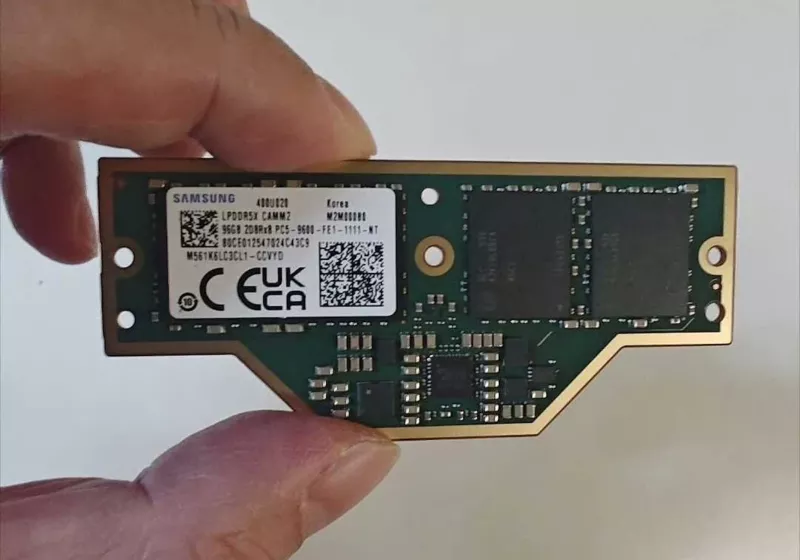
• Core Points: Samsung advances LPCAMM2 modules to LPDDR5X, offering up to 96GB capacity and 9600 MT/s data rate for upgradeable, space-efficient mobile memory.
• Main Content: The LPCAMM2 family evolves from LPDDR5 to LPDDR5X, enhancing efficiency and speed for mobile and ultra-thin devices while preserving upgradeability over soldered RAM.
• Key Insights: The shift toward upgradeable LPDDR memory reflects a broader industry move to balance performance, thermal constraints, and form-factor needs.
• Considerations: Adoption will hinge on system-level integration, cost, and the availability of corresponding processors and platforms that support LPDDR5X through LPCAMM2.
• Recommended Actions: Stakeholders should monitor carrier and OEM support for LPCAMM2 LPDDR5X, evaluate platform readiness, and consider longer-term upgrade pathways for mobile designs.
Content Overview
Samsung Electronics is extending its efforts to modernize memory in mobile and ultra-thin devices by introducing LPCAMM2 LPDDR5X modules. The LPCAMM2 design is part of a broader push to replace soldered memory with upgradeable, space-efficient memory solutions in mobile form factors. The first generation of LPCAMM2 modules typically shipped with LPDDR5 memory, and the new LPDDR5X variant continues that evolution by delivering higher efficiency and faster performance. The development aims to provide higher-capacity, higher-speed memory options that can be swapped or upgraded without reworking the device’s core design, aligning with the needs of premium smartphones, tablets, and ultra-thin laptops where space constraints are critical and performance demands are high.
The specific machines and applications targeted by these modules include devices seeking a balance between compact form factors and robust memory performance. By offering up to 96GB of LPDDR5X memory and supporting data rates up to 9600 MT/s, Samsung aims to address workloads that require substantial bandwidth and capacity without forcing a larger, less space-efficient memory solution. The LPCAMM2 platform remains part of the industry trend toward more modular memory architectures in mobile computing, where upgradeability is rare but increasingly valuable for long-term product life cycles and serviceability.
In addition to higher data throughput, the LPDDR5X variant emphasizes improved energy efficiency, which translates into longer battery life for devices operating at high performance. This combination of capacity, speed, and efficiency positions LPCAMM2 LPDDR5X modules as a strategic option for OEMs designing flagship devices that demand more memory headroom without sacrificing compactness or thermal budgets. Samsung’s effort mirrors similar moves by other memory developers seeking to optimize memory configurations for mobile platforms that must deliver desktop-like performance within mobile power envelopes.
While the exact launch timelines, pricing, and device compatibility details are not fully disclosed in the initial release, the emphasis on LPDDR5X and record-setting capacities suggests a measured rollout across select SKUs first, followed by broader adoption as platform support materializes. The industry will watch how smartphone manufacturers, tablet makers, and ultra-thin notebook producers leverage this upgradeable memory approach in concert with advanced processors and software optimization to maximize performance and user experience.
This article synthesizes what Samsung has announced and places it in the context of ongoing trends in memory architecture for mobile devices. It also explores potential implications for device design, platform ecosystem readiness, and the market dynamics surrounding upgradeable memory in space-constrained devices.
In-Depth Analysis
Samsung’s LPCAMM2 initiative represents a deliberate pivot away from permanently soldered DRAM in mobile devices toward a modular, upgradeable solution. The move is driven by several market and engineering pressures: the demand for more frequent hardware refresh cycles in consumer devices, the desire to extend device longevity through upgradable components, and the challenge of delivering high memory capacity within very tight space and thermal budgets typical of phones and ultra-thin laptops.
Historically, mobile memory has relied on soldered LPDDR configurations to minimize footprint and maximize reliability. Soldered designs, while compact and energy-efficient, limit post-sale upgradability and complicate repairs or future performance enhancements. LPCAMM2 aims to conventionalize a more flexible memory system by offering LPDDR5 and the newer LPDDR5X variants in a form factor that can be integrated into devices through a socketed or semi-modular approach. This enables devices to scale memory capacity in response to consumer needs or to accommodate longer device lifecycles with easier field upgrades.
The transition from LPDDR5 to LPDDR5X within the LPCAMM2 platform is notable for several reasons. LPDDR5X provides higher data rates, improved bandwidth efficiency, and better energy performance under heavy memory workloads compared to its LPDDR5 predecessor. The reported support for up to 9600 MT/s indicates a substantial uplift in peak memory throughput, which translates into smoother multi-tasking, enhanced real-time data processing, and improved performance in memory-intensive applications such as high-resolution mobile gaming, on-device AI inference, and content creation workflows on mobile and ultraportable devices.
Capacity is another standout feature. The ability to configure modules up to 96GB per module is exceptionally ambitious for mobile memory, given the constraints of size and power. In practice, achieving 96GB in a compact, modular form factor will require careful consideration of power delivery, thermal management, and memory controller capabilities within devices. It also opens the door for devices that need substantial RAM for demanding workloads, such as AI-enabled mobile applications, large-scale media editing, and advanced virtualization on portable platforms.
From a system integration perspective, LPCAMM2 LPDDR5X modules must align with platform controllers, memory channels, and interconnect standards already adopted by device manufacturers. This means close collaboration with CPU/GPU designers, system-on-chip (SoC) vendors, and platform firmware teams to ensure compatibility, reliability, and performance parity with soldered memory configurations. The practical adoption of such modular memory will depend on the availability of compatible memory controllers within SoCs, as well as firmware support for hot-swapping or upgradeability, if that is intended to be user-facing.
The broader industry context shows a continued trend toward more flexible memory architectures in mobile computing. While soldered memory remains the norm for most consumers due to its simplicity and reliability, modular memory platforms like LPCAMM2 reflect a strategic approach to extend device usefulness beyond the initial purchase. OEMs seeking to differentiate their devices on longevity, upgradability, and performance headroom may find LPCAMM2 LPDDR5X a compelling option for flagship lines and enterprise-focused mobile devices.
The practical implications for consumers hinge on a few factors. First is availability: how broadly the modules will be offered across regions and how many device SKUs will support LPCAMM2 LPDDR5X. Second is pricing: modular memory generally carries a premium compared to soldered configurations, particularly for high-capacity, high-speed variants. Third is platform readiness: device makers must equip their SoCs and memory controllers to exploit the LPDDR5X’s capabilities fully, including operating at 9600 MT/s and maintaining power and thermal budgets within the device’s constraints.
Additionally, the shift to LPDDR5X in a modular format could influence third-party repair and upgrade ecosystems. If OEMs adopt LPCAMM2 as an official upgrade path or serviceability feature, it may create opportunities for authorized service providers to perform memory upgrades that were previously impractical or impossible in modern mobile devices. It may also prompt regulatory or safety considerations regarding user-accessible memory upgrades, given safety and warranty concerns in consumer electronics.
From a research and development perspective, Samsung’s work on LPCAMM2 contributes valuable data to the design of next-generation mobile memory solutions. Engineers will be assessing how best to balance higher bandwidth with lower power consumption in a modular configuration. Lessons learned from implementing LPDDR5X in a non-soldered form could influence future generations of memory platforms, potentially including even higher speeds, larger capacities, or alternate memory technologies that continue the trend toward upgradeable, space-efficient memory.
The market reception of LPCAMM2 LPDDR5X will depend on ecosystem readiness. Key questions include: Which SoCs will provide optimal support for 9600 MT/s, whether software stacks can effectively manage larger RAM footprints, and how OEMs will price and position devices that leverage upgradeable memory against traditional soldered configurations. The success of this approach may hinge on a combination of performance gains, mid-life upgradability, and the ability to deliver a compelling total cost of ownership for devices that defer memory upgrades until later in their lifecycle.

*圖片來源:Unsplash*
In sum, Samsung’s LPCAMM2 LPDDR5X modules with up to 96GB and 9600 MT/s represent a strategic push toward upgradeable, high-performance memory in mobile and ultra-thin systems. The effort aligns with broader industry trends seeking to reconcile the demand for desktop-like performance with the constraints of mobile form factors. If adopted widely, this technology could reshape device refresh cycles, repairability narratives, and long-term value propositions for premium mobile devices.
Perspectives and Impact
The move toward upgradeable memory in mobile devices signals a broader shift in how manufacturers think about device lifecycles. Historically, soldered DRAM has offered low power consumption, compactness, and reliability, at the cost of upgradeability. By introducing LPCAMM2 LPDDR5X modules that can be upgraded post-purchase, Samsung is addressing consumer and enterprise demands for longer device usefulness and adaptability to evolving workloads.
From a performance perspective, LPDDR5X’s higher data rates and improved efficiency are meaningful on devices that run memory-intensive tasks. For example, mobile AI inference, real-time media processing, and high-frame-rate gaming can benefit from higher bandwidth and larger memory pools. The 9600 MT/s data rate translates to reduced memory bottlenecks in high-demand scenarios, which complements advances in CPU and GPU performance in flagship SoCs. For power-sensitive devices, the efficiency gains offered by LPDDR5X could help offset the energy cost of high-speed operation, contributing to longer battery life under demanding workloads.
The 96GB-per-module specification is ambitious and likely to be selective at first. Practical deployment will require device manufacturers to design memory controllers capable of leveraging such capacity without imposing significant thermal or performance penalties. Efficient thermal management and effective memory bandwidth distribution across channels will be critical to realizing the theoretical advantages of these modules in real-world usage.
In terms of the supply chain and industry dynamics, Samsung’s LPCAMM2 LPDDR5X modules could spur competition and collaboration. Other memory and semiconductor suppliers may accelerate their own modular memory initiatives or seek to optimize soldered LPDDR5X implementations that can achieve similar performance benchmarks within tighter budgets. The modular approach may also influence repair and service ecosystems, enabling more flexible post-sale memory upgrades, which could become a differentiator for brands targeting power users and professionals who rely on substantial RAM for complex tasks on the go.
Policy and standards bodies may monitor this development as it touches on device safety, warranty considerations, and compliance with electromagnetic interference (EMI) and power delivery standards. Ensuring robust protection against static discharge, safe handling, and secure firmware interfaces when upgrading memory could become important areas for OEMs and memory manufacturers alike.
On the horizon, if LPCAMM2 LPDDR5X proves successful, it could pave the way for even more ambitious modular memory configurations. We might see higher capacities, further speed increases, or energy efficiency improvements designed specifically for mobile modular memory. The broader implications could extend to enterprise devices, ruggedized field equipment, and consumer electronics where upgradeability adds value beyond initial purchase price.
Overall, Samsung’s LPCAMM2 LPDDR5X initiative embodies a strategic attempt to reconcile the demand for higher-performance, higher-capacity memory with the realities of mobile device design. The approach could influence how manufacturers conceive device upgrades, repairability, and lifecycle value, while delivering tangible improvements in performance and efficiency for power-constrained devices.
Key Takeaways
Main Points:
– Samsung unveils LPCAMM2 LPDDR5X modules offering up to 96GB capacity and 9600 MT/s data rate.
– The modules are part of a broader push to replace soldered LPDDR with upgradeable, space-efficient memory in mobile and ultra-thin devices.
– LPDDR5X in a modular LPCAMM2 form aims to deliver higher performance and efficiency without compromising device form factors.
Areas of Concern:
– Early adoption challenges related to platform and controller readiness, power, and thermal management.
– Higher cost and limited initial availability as OEMs integrate the modular solution.
– Warranty, repairability, and safety considerations surrounding user-accessible memory upgrades.
Summary and Recommendations
Samsung’s expansion of the LPCAMM2 family to LPDDR5X with up to 96GB per module and transfer rates up to 9600 MT/s represents a meaningful evolution in mobile memory architecture. The approach aligns with a growing industry emphasis on upgradeable, modular components that can extend device lifecycles while still delivering competitive performance. For device makers, the decision to adopt LPCAMM2 LPDDR5X will depend on their ability to integrate appropriate memory controllers, manage thermal budgets, and justify the added cost through user value in performance and longevity.
If this modular solution gains traction, manufacturers may begin to prioritize upgradeability in flagship and enterprise-focused mobile devices, potentially redefining consumer expectations around device longevity. To maximize success, stakeholders should focus on ensuring platform readiness across SoCs, establishing clear pricing and upgrade pathways, and developing robust firmware and safety measures for upgradeable memory modules. Continued collaboration between memory suppliers, processor vendors, and device manufacturers will be essential to realize the full potential of LPCAMM2 LPDDR5X and to translate its theoretical advantages into real-world user benefits.
References
- Original: https://www.techspot.com/news/111331-samsung-readies-lpcamm2-lpddr5x-modules-up-96gb-9600.html
- Additional references:
- Samsung Electronics press release or product brief on LPCAMM2 LPDDR5X (official site)
- LPDDR5X specifications and industry adoption notes from JEDEC or major SoC vendors
- Analysis articles on modular memory in mobile devices and upgradeable RAM trends
Forbidden:
– No thinking process or “Thinking…” markers
– Article must start with “## TLDR”

*圖片來源:Unsplash*