TLDR
• Core Points: A comprehensive, year-long framework for junk journaling prompts, techniques, and creative ideas designed to inspire mindful, hands-on creativity in 2026.
• Main Content: A structured, month-by-month approach to journaling that blends practical prompts with resourceful materials and reflective practices.
• Key Insights: Emphasis on accessibility, personalization, and sustainable creativity; journaling as a therapeutic, exploratory practice.
• Considerations: Beginners can start small; seasoned journalers can adapt prompts to evolving interests and supplies.
• Recommended Actions: Gather basic supplies, set a regular journaling routine, and experiment with prompts across themes such as memory, texture, and storytelling.
Content Overview
Junk journaling has gained popularity as a tactile, slower form of creative expression that combines memories, ephemera, and personal notes into one handmade book. The year-long guide offers a curated progression of prompts and ideas aimed at helping new participants establish a sustainable practice while also challenging seasoned journalers to expand their repertoire. By blending everyday materials—scraps of paper, lace, receipts, photos, and natural objects—this approach emphasizes resourcefulness and personal storytelling. The guide is designed to be inclusive and adaptable, allowing participants to interpret prompts through their own aesthetic, materials, and time constraints. The structure favors consistency without sacrificing spontaneity, encouraging a habit of regular journaling that can fit into busy schedules.
The central objective is to transform ordinary artifacts and everyday experiences into meaningful narrative fragments. Each month introduces a focus area—such as gratitude, travel memories, or sensory details—and pairs it with prompts that invite reflection, experimentation, and playful composition. The guidance prioritizes accessibility: minimal tools are required, and substitutions are encouraged for any materials that aren’t readily available. The overarching promise is that anyone can cultivate a richer inner dialogue and a more tangible creative practice through junk journaling, regardless of prior art experience.
In-Depth Analysis
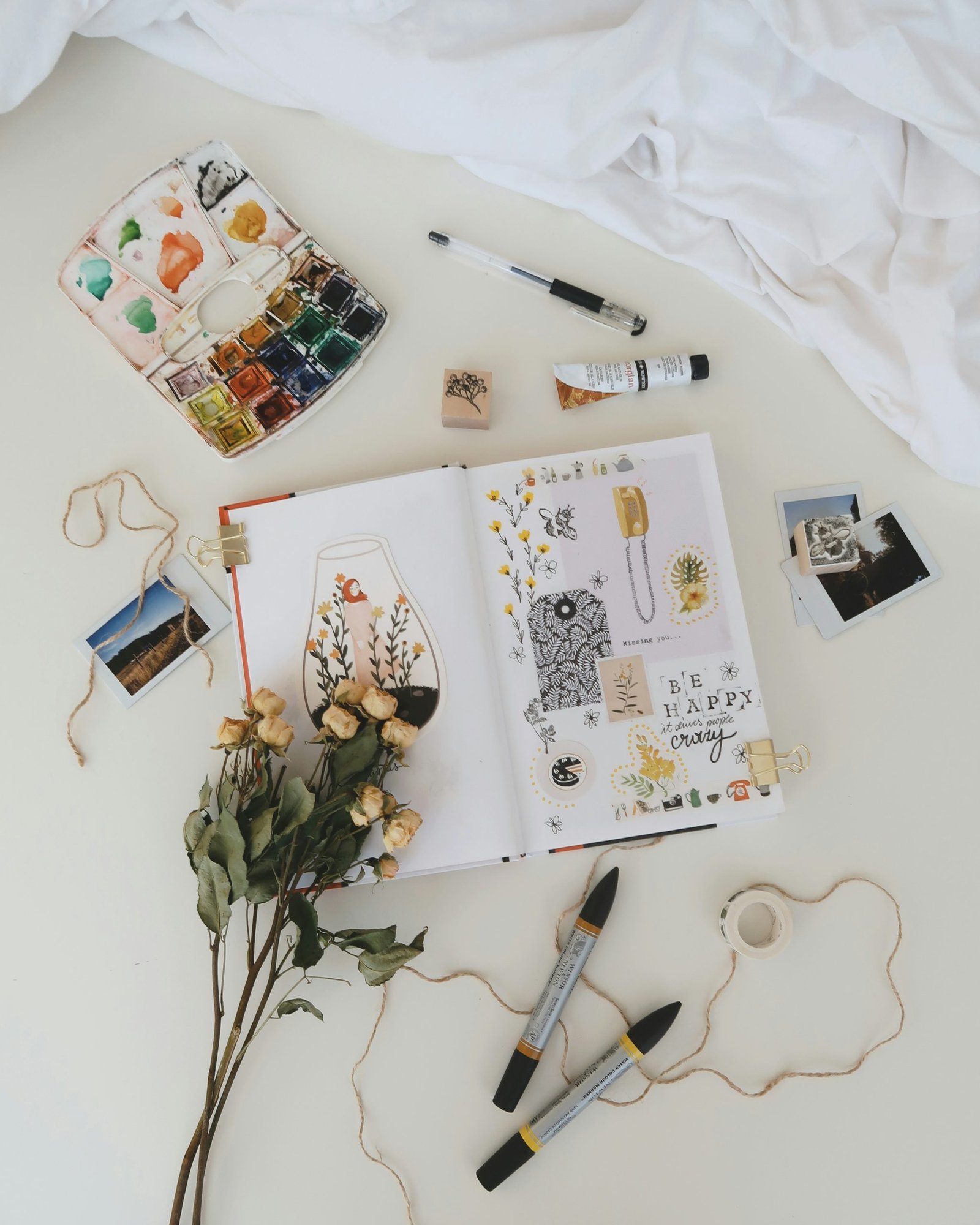
The year-long framework for junk journaling integrates structure with flexibility. It begins by laying a foundation: establishing a dedicated space, selecting a workable journal, and assembling a modest supply kit that balances simplicity with versatility. A typical supply list might include a journal or notebook with a sturdy cover, scissors, glue or adhesive, a pencil for planning, a variety of paper types (printer paper, scrapbook pages, postcards), adhesive tapes, stamps or stencils, and a small selection of decorative elements such as stickers, washi tape, textile scraps, and natural finds. The philosophy centers on “use what you have” while gradually introducing new techniques as confidence grows.
Prompts are organized to cultivate a habit of regular practice and to nurture both intuition and craftsmanship. Monthly themes guide the emotional and imaginative direction of entries, while weekly prompts encourage deeper exploration. For example, a month focused on memory might invite prompts that prompt the journaling of a specific moment, the sensory details associated with it, and the inclusion of physical remnants like ticket stubs or pressed leaves. A month dedicated to texture could emphasize layering, collage, and tactile contrasts, inviting the creator to consider how surface feel translates into memory and meaning on the page.
An important component of the guide is flexibility. It acknowledges that not all prompts will feel relevant at all times, and it encourages readers to adapt, combine, or skip prompts as needed. This adaptive approach reduces pressure and increases the likelihood of long-term engagement. The guide also highlights the value of routine without rigidity: establishing a consistent time and space for journaling helps cultivate momentum, yet the exact length of each session is left open to the creator’s schedule. Even short sessions can yield meaningful results when driven by curiosity and a willingness to experiment.
The practical techniques suggested span a spectrum from simple to more involved. Basic page layout experiments may include collage, color blocking, or journaling with a minimal set of supplies. More advanced explorations can introduce stitched elements, folded pages, pocket inserts, or mixed-media combinations. The guide also stresses the importance of storytelling: prompts are designed to elicit a narrative thread across multiple entries, helping maintain continuity while allowing for standalone pages. This narrative approach can transform a collection of fragments into a coherent personal chronicle.
Accessibility is a core principle. The guide emphasizes that journaling should be inclusive of diverse skill levels, budgets, and available materials. Substitutions are encouraged, and readers are invited to reinterpret prompts through their own cultural context and personal experiences. The end product—whether a fully decorated journal or a concise, text-focused record—reflects the creator’s identity and pace.
Beyond the craft, the guide invites reflection on the personal and emotional benefits of junk journaling. Engaging with physical materials can slow down the pace of life, encourage mindful observation, and provide a private space for processing thoughts and feelings. The activity also offers an opportunity to preserve memories in a tangible format, creating a keepsake that can be revisited in the years ahead. The year-long structure is designed to sustain curiosity, build confidence with varied techniques, and nurture a habit that can bring ongoing inspiration beyond 2026.
In summary, the guide balances practicality with imagination. It provides enough direction to start and maintain a meaningful practice, while also leaving ample room for experimentation and personal interpretation. By combining ephemera, texture, and narrative, junk journaling emerges as a versatile creative endeavor that can adapt to changing interests, seasons, and life circumstances.
Perspectives and Impact
The year-long prompts and ideas ecosystem offers several potential benefits and implications for participants. Educationally, junk journaling fosters multimodal literacy by integrating writing, visual arts, and material culture. It encourages critical observation of everyday life—the objects we collect, the fragments we save, and the stories we choose to tell about them. Such practice can enhance memory, reflection, and intentionality, as individuals curate a personal archive that is both meaningful and expressive.

*圖片來源:Unsplash*
From a therapeutic standpoint, the tactile, slower-paced nature of junk journaling can reduce stress and provide a nonjudgmental space for self-expression. The act of assembling fragments into a narrative can help organize thoughts and emotions, offering a private, reflective outlet. The year-long format supports habit formation, which is valuable for sustaining creative routines over time. It also invites social sharing in appropriate contexts, such as local journaling groups, online communities, or classroom settings, where participants can exchange techniques, inspiration, and feedback.
Aesthetically, the practice celebrates individuality. Because junk journaling centers on personal materials and preferences, no two journals look the same. This nonstandardized approach challenges conventional expectations of “finished art,” reframing creativity as an ongoing process rather than a fixed product. The inclusivity of accessible materials invites broader participation, making it possible for people with varied budgets and resources to engage in meaningful creative work.
Looking to the future, the implications of a year-long journaling program extend beyond 2026. The skills developed—curation, journaling discipline, and a comfort with mixed media—are transferable to education, workplace projects, and personal life management. As digital culture continues to dominate, such analog practices may gain renewed appreciation for their tangible, memory-preserving value. Communities built around junk journaling can foster collaboration, exchange of ideas, and a shared language of material storytelling, contributing to cultural preservation in small, personal ways.
Readers who engage with a year-long prompt framework may discover evolving interests over time. Early prompts focused on simple collection and layout can gradually give way to more complex techniques—such as fabric integration, small bookbinding, or collaborative journaling. The progression supports skill development while maintaining the core ethos of experimentation and personal expression. The ongoing practice itself can become a resource for inspiration in other creative arenas, including scrapbooking, art journaling, and handmade gift-making.
Key Takeaways
Main Points:
– Junk journaling is a flexible, year-long practice that blends memory-keeping, ephemera, and personal storytelling.
– A structured prompt calendar supports steady engagement while allowing for adaptive interpretation.
– Accessibility and resourcefulness are central, encouraging substitutions and creativity with what’s on hand.
– The practice offers emotional, cognitive, and creative benefits, including mindfulness and narrative building.
– The framework is designed to accommodate beginners and seasoned journalers alike.
Areas of Concern:
– Potential overwhelm for absolute beginners if prompts feel too open-ended.
– Availability of materials may vary; some participants may need more explicit substitution options.
– Balancing time commitments with daily life can be challenging for busy individuals.
Summary and Recommendations
The Ultimate Junk Journaling Guide for 2026 presents a balanced, inclusive approach to a year-long creative practice. It emphasizes adaptability, open-ended prompts, and a focus on tactile, meaningful storytelling through everyday materials. By providing a monthly thematic structure alongside a generous toolkit of techniques, the guide aims to cultivate consistency without stifling experimentation. Its value lies not only in producing a tangible journal but also in the personal growth that comes from deliberate reflection and creative risk-taking.
For readers seeking to adopt this practice, the following recommendations flow naturally from the guide:
– Start with a simple setup: choose a durable notebook, gather essential adhesives, scissors, and a modest assortment of papers or ephemera.
– Establish a routine: set aside a regular time for journaling, even if only 15–20 minutes, to build habit and momentum.
– Embrace substitutions: adapt prompts to fit available materials, space, and time—there is no single “correct” method.
– Document progress: periodically review previous entries to observe growth, recurring themes, and evolving techniques.
– Share and connect: consider joining local workshops or online communities to gain inspiration and feedback while maintaining personal boundaries.
Overall, the guide envisions junk journaling as a sustainable, joy-filled practice that nourishes creativity, memory-making, and self-expression. Whether pursued as a casual hobby or a serious art form, it offers a reliable framework to explore ideas, experiment with materials, and tell personal stories across an entire year.
References
- Original: https://abeautifulspace.co.uk/the-ultimate-junk-journaling-guide-a-year-of-prompts-ideas/
- Additional references:
- How to Start Junk Journaling: Practical Tips for Beginners
- The Art of Ephemera: Collecting and Using Found Objects in Journaling
- Mindful Crafting: Benefits of Hands-On Creative Activities
Forbidden:
– No thinking process or “Thinking…” markers
– Article starts with “## TLDR”

*圖片來源:Unsplash*