TLDR
• Core Points: Lenovo plans to unveil a rugged 2-in-1 detachable, the ThinkPad X13 Detachable, at Mobile World Congress in Barcelona (March 2–5), marking Lenovo’s first detachable refresh in two years.
• Main Content: The X13 Detachable targets enterprise and field users with rugged build, modular design, and enhanced security, debuts at MWC 2024.
• Key Insights: Expect improved durability, enterprise-focused features, and a renewed emphasis on productivity in challenging environments.
• Considerations: Details on specifications, battery life, display, and accessory ecosystem remain forthcoming.
• Recommended Actions: Stakeholders should monitor MWC 2024 announcements for official specs and pricing; compare to competing rugged 2-in-1 devices.
Content Overview
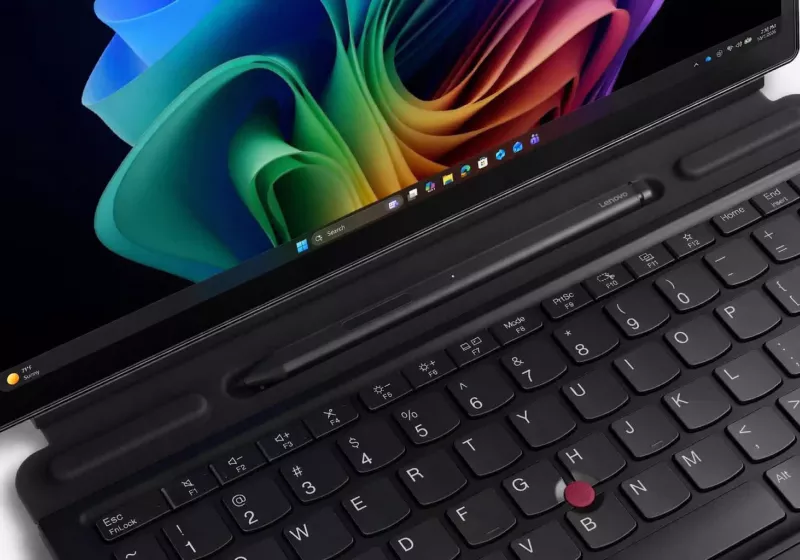
Lenovo is preparing to introduce a new ThinkPad model that seeks to reinvigorate the rugged 2-in-1 segment: the ThinkPad X13 Detachable. According to sources familiar with Lenovo’s product roadmap, the device is slated to make its debut at Mobile World Congress in Barcelona, which runs from March 2 to March 5. This marks Lenovo’s first detachable refresh in two years, signaling a renewed commitment to a category that blends portability, resilience, and modular flexibility for professionals who operate in demanding environments.
Rugged laptops have long served customers in industries such as construction, manufacturing, logistics, field services, and remote IT support. These users require not only a lightweight, versatile device but also a chassis that can withstand drops, dust, moisture, and temperature fluctuations. The ThinkPad line, historically associated with durability, security, and enterprise-grade reliability, provides a fitting foundation for Lenovo to extend its rugged offerings into the detachable format—a form factor that fuses a keyboard with a detachable tablet, enabling instant switching between laptop-like productivity and tablet-mode mobility.
The anticipated ThinkPad X13 Detachable appears to align with Lenovo’s broader strategy to balance performance, security, and ruggedization while preserving ThinkPad’s signature user experience. Industry observers expect Lenovo to emphasize features that appeal to IT departments, including robust manageability options, enterprise-grade security, and accessories designed for fieldwork and collaboration. While the exact specifications and performance metrics remain to be officially confirmed, the product’s positioning suggests Lenovo aims to compete with other rugged 2-in-1 devices that combine durable construction with business-centric capabilities.
This anticipated announcement also reflects ongoing trends in the PC market where detachable devices are gaining traction for their ability to deliver both powerful processing and flexible form factors. As work increasingly blends in-office and on-the-go settings, devices that can endure harsh environments without compromising productivity are becoming more valuable to organizations that require reliable solutions for remote sites, service calls, and field operations. Lenovo’s plan to refresh the ThinkPad X13 Detachable could reinforce its presence in this space and offer a compelling option for customers who prioritize rugged durability, long-term support, and a familiar ThinkPad experience.
Industry watchers will be looking not only at build quality and resilience but also at how Lenovo integrates security, serviceability, and ecosystem compatibility with existing enterprise workflows. In addition to durability, potential refinements may include brighter displays for outdoor use, improved battery capacity, faster processors, updated I/O options, and enhancements to docking and keyboard mechanisms that suit frequent detachments and reattachments in busy work environments. Lenovo’s ability to deliver a well-rounded package—combining rugged design, keyboard comfort, reliable performance, and enterprise-grade management features—will be decisive in determining the success of the ThinkPad X13 Detachable in a market that values both durability and productivity.
In-Depth Analysis
The upcoming ThinkPad X13 Detachable represents Lenovo’s strategic push to refresh its detachable lineup after a two-year hiatus. By leveraging the ThinkPad heritage—widely recognized for dependable keyboards, robust security features, and strong enterprise support—Lenovo signals that it believes there is meaningful demand for a rugged detachable that can withstand the rigors of fieldwork while delivering a productive computing experience.
One core element of the X13 Detachable is likely to be its chassis design. In rugged devices, chassis integrity matters as much as performance. The device would typically include reinforced edges, sealed ports, and a chassis that meets or exceeds standard MIL-STD-810G or similar durability criteria. A detachable form factor requires careful engineering to ensure seamless transitions between modes without compromising stability or keyboard feel. For professionals who move between workshop floors, customer sites, and office environments, a reliable hinge, a secure locking mechanism, and a keyboard with tactile feedback can define daily usability.
Display is another critical area for rugged 2-in-1s. Outdoor usability, glare reduction, and readability under various lighting conditions are essential. Improvements such as higher brightness levels, outdoor-friendly anti-reflective coatings, and color accuracy calibrated for professional workflows could be expected. In addition, a rugged device must manage thermal performance efficiently to sustain peak productivity during long work sessions. Heat dissipation strategies—whether through passive cooling, advanced materials, or intelligently tuned fans—will influence sustained performance and user comfort.
Performance expectations for the X13 Detachable depend on Lenovo’s chosen processor family and memory configuration. In enterprise tandems, manufacturers balance CPU speed, RAM capacity, and storage with power efficiency to maximize battery life and maintain responsiveness during heavy tasks such as data analysis, virtualization workloads, or multi-application workflows. Given Lenovo’s current lineup trends, it is plausible that the X13 Detachable would leverage contemporary Intel Core vPro processors or equivalent, paired with ample RAM (potentially 16 GB or more in higher configurations) and fast storage solutions (PCIe-based NVMe SSDs). The inclusion of enterprise-grade security features—such as hardware-backed fingerprint sensors, TPM, secure enclaves, and optional facial recognition—would align with Lenovo’s ThinkPad focus on data protection and device integrity.
Battery life is a persistent battleground for detachable devices. The X13 Detachable would need to deliver all-day usage on typical workdays, with practical endurance during extended field assignments far from power sources. This implies careful optimization between CPU performance, display brightness, background tasks, and the efficiency of the detachable keyboard and accessory ecosystem. The product might offer hot-swappable or smartly managed battery configurations, perhaps with an additional battery option in the keyboard dock or a battery-saving mode that preserves essential productivity features in challenging environments.
Connectivity and expansion options play a pivotal role in rugged laptops, especially for professionals who rely on multiple peripherals. The X13 Detachable would likely include a robust selection of ports, possibly including USB-C with Power Delivery and DisplayPort, USB-A for compatibility with older accessories, HDMI or Display outputs, and an optional microSD or SD card reader for quick data transfer on-site. Wireless connectivity, including the latest Wi-Fi 6E or Wi-Fi 7 capabilities and robust Bluetooth support, would be important for cloud-based workflows, device management, and peripheral integration. An emphasis on security-conscious features, such as a trusted platform module (TPM), discrete fingerprint readers, and optional logical/physical security measures, would be consistent with Lenovo’s ThinkPad lineage.
The keyboard experience remains a critical differentiator for detachable laptops. Lenovo has historically delivered comfortable keyboards with well-spaced keys and reliable key travel. In rugged environments, the keyboard’s performance under dust exposure, moisture, and temperature variations is essential. Keyboards may also feature backlighting with enhanced brightness control for use in dim or outdoor settings, along with splash resistance or sealing to resist spills. A well-designed keyboard docking mechanism would ensure quick, secure reattachment, with magnets or mechanical latches providing dependable alignment and stability.
The pen or stylus support is another often-valued feature in detachable devices, especially for field notes, diagramming, and annotation tasks. If the X13 Detachable includes a stylus, Lenovo would be expected to provide low-latency input, palm rejection, and magnetic charging or docking to prevent loss and ensure convenience in the field. The presence or absence of a stylus could influence the device’s suitability for specific industries like design, engineering, or digital note-taking.
Software and manageability aspects are crucial for enterprise deployments. Lenovo’s ThinkPad devices typically ship with Windows Pro or Enterprise editions, along with a suite of management tools for IT administrators. Features such as remote administration, policy enforcement, secure boot, drive encryption, and centralized device management via platforms like Microsoft Intune or VMware Workspace ONE would be relevant. The X13 Detachable would need to integrate smoothly into existing enterprise ecosystems, with predictable update cadences and strong after-sales support, serviceability options, and spare-part availability to minimize downtime in field operations.
In terms of design language, Lenovo often balances ruggedization with a professional aesthetic. While rugged devices frequently adopt bulkier silhouettes, Lenovo tends to preserve a clean, business-friendly appearance that aligns with the ThinkPad brand. The X13 Detachable could maintain that recognizable black chassis with a matte finish, a signature keyboard deck, and a robust, understated look that conveys durability without appearing overly industrial. The form factor of detachable devices also invites considerations about weight distribution and ergonomics, especially when used for extended typing sessions or in cramped field environments.
Market positioning is another dimension to consider. The rugged detachable segment competes with devices from other manufacturers that target mission-critical environments. Lenovo would be aiming to distinguish the X13 Detachable through ThinkPad’s long-standing emphasis on reliability, security, and thoughtful engineering. The pricing strategy would likely reflect enterprise-oriented features, serviceability, and bundled support options. Lenovo may offer tiered configurations, including base models geared toward small teams and higher-end variants with advanced security features, enhanced display quality, and premium accessories.
The anticipated announcement at MWC 2024 will also be a platform for Lenovo to showcase ecosystem enhancements. This could include new keyboard and stylus accessories, rugged docks, protective cases, and other peripherals designed to maximize productivity in challenging environments. The company might also emphasize service and warranty extensions, such as on-site repair services or rapid replacement programs, which are particularly appealing to businesses operating in remote locations where downtime carries higher costs.

*圖片來源:Unsplash*
Customer considerations for a rugged detachable device include total cost of ownership, durability in real-world use, and compatibility with legacy equipment. Organizations with established workflows that depend on Windows-based management, secure access, and enterprise security will evaluate how the X13 Detachable integrates with existing infrastructure. Software compatibility, driver support, and access to timely firmware updates will influence adoption decisions. Users may also compare the X13 Detachable to rival rugged 2-in-1 devices in terms of display quality, keyboard feel, battery performance, weight, and overall user experience.
As with any product launch, certain uncertainties remain until Lenovo releases official specifications and hands-on impressions. The absence of confirmed details on processor options, memory configurations, battery capacity, exact IP ratings, display brightness, and port assortment means that prospective buyers should approach early previews with cautious optimism. The MWC reveal will likely address these gaps, providing a clearer picture of the device’s capabilities, target use cases, and competitive stance.
In summary, Lenovo’s ThinkPad X13 Detachable represents a strategic refresh in the rugged 2-in-1 category. By leveraging the ThinkPad brand’s strengths—durability, security, and enterprise-friendly features—Lenovo aims to offer a device that can deliver reliable performance in demanding environments while preserving the flexibility of a detachable design. The upcoming reveal at Mobile World Congress will be a critical moment to gauge how Lenovo intends to compete against established rugged devices and whether the X13 Detachable can redefine expectations for durability, productivity, and total cost of ownership in enterprise settings.
Perspectives and Impact
Industry analysts and enterprise buyers will be watching closely how Lenovo positions the ThinkPad X13 Detachable within a crowded segment of rugged laptops and detachable devices. The rugged 2-in-1 market has seen various players emphasize different strengths—from exceptionally durable chassis and sealed ports to long battery life and modular accessories. Lenovo’s approach—rooted in ThinkPad’s legacy—could influence the direction of future rugged detachable designs and set benchmarks for enterprise-focused features.
A key question for buyers is how Lenovo balances ruggedization with usability. Increased durability often brings trade-offs in weight and stiffness, which can impact user comfort during prolonged use. Lenovo will need to demonstrate that the X13 Detachable maintains an ergonomic profile, comfortable keyboard travel, and a responsive display without compromising resilience. Moreover, IT departments will assess whether the device’s security and manageability meet their stringent requirements while not introducing complexity that slows deployment or complicates maintenance.
The timing of the launch—two years after Lenovo’s last detachable refresh—suggests the company recognizes that detachable devices have gained traction as work models evolve. The COVID-19 pandemic accelerated the adoption of remote and hybrid work, and field-based roles continue to rely on devices that can perform across diverse environments. A rugged ThinkPad detachable could prove particularly appealing to industries that require both robust protection against the elements and the flexibility to switch between on-the-go productivity and desk-oriented tasks.
Future implications of the X13 Detachable extend beyond immediate product sales. If Lenovo successfully combines durability, performance, and enterprise-ready features, it could influence how organizations approach device standardization for field teams. This could lead to longer hardware refresh cycles, more predictable maintenance planning, and enhanced security postures as IT teams adopt uniform rugged devices with centralized management capabilities. In addition, Lenovo’s emphasis on a cohesive accessory ecosystem—docks, keyboards, styluses, protective cases—could encourage more holistic procurement strategies, emphasizing compatibility and lifecycle support rather than isolated hardware upgrades.
From a broader industry perspective, the introduction of new rugged detachables signals continued demand for devices that can withstand challenging environments while delivering professional-grade performance. As consumer devices become thinner and lighter, enterprise needs for durability, security, and policy-driven management remain significant. Lenovo’s entry into this space could spur competitive responses, encouraging other vendors to iterate on hardware design, feature sets, and service offerings. The result could be a more dynamic market with a wide range of rugged detachable options tailored to specific verticals, from construction and utilities to logistics and public sector work.
The MWC reveal will also be an opportunity for Lenovo to showcase how the X13 Detachable integrates with cloud services, remote work platforms, and collaboration tools. For teams that rely on real-time communication and document sharing in outdoor or remote locations, seamless connectivity and robust security are paramount. Lenovo may highlight next-generation wireless capabilities, improved battery management, and enhancements to its hardware-based security stack, all of which contribute to a more resilient and productive field workflow.
In terms of long-term impact, the X13 Detachable could influence the design language of subsequent rugged ThinkPad devices. If Lenovo secures positive feedback on its balance of durability and usability, future models could push further into modularity, offering more easily swappable components, swifter serviceability, and broader accessory compatibility. The device’s lifecycle management—encompassing spare parts availability, predictable firmware updates, and reliable on-site support—will be crucial to its reputation as a durable enterprise tool. The success of the X13 Detachable will hinge on how convincingly Lenovo demonstrates a measurable advantage over competing rugged detaches in terms of uptime, reliability, and total cost of ownership.
Key Takeaways
Main Points:
– Lenovo intends to launch the ThinkPad X13 Detachable at Mobile World Congress, marking the brand’s first detachable refresh in two years.
– The device targets rugged, enterprise-focused users who need durability, security, and flexibility for fieldwork and office tasks.
– Expect emphasis on enterprise manageability, robust security features, and an accessory ecosystem designed to support field operations.
Areas of Concern:
– Official specifications, including processor options, memory, battery life, and IP rating, are not yet disclosed.
– Real-world performance in extreme environments and total cost of ownership remain to be seen until hands-on reviews.
– Availability, pricing, and after-sales support details will influence adoption decisions in enterprise buyers.
Summary and Recommendations
Lenovo’s forthcoming ThinkPad X13 Detachable represents a strategic rekindling of rugged detachable capabilities within the ThinkPad family. By leveraging Lenovo’s reputation for reliability, security, and enterprise-grade features, the X13 Detachable has the potential to address the needs of professionals who require a device that can endure harsh environments while offering the productivity benefits of a 2-in-1 form factor. The planned debut at Mobile World Congress will provide the first concrete look at how Lenovo translates durability into practical, everyday workflow improvements, and how it stacks up against competitors in the rugged detachable space.
For enterprise decision-makers, the key to evaluating the X13 Detachable will be a careful assessment of durability specifications, security features, software manageability, and the total cost of ownership over the device’s lifecycle. IT teams should look for detailed technical disclosures at the MWC unveiling, followed by independent hands-on reviews that test durability, battery life, and performance under typical field conditions. If Lenovo delivers a compelling combination of rugged build quality, seamless integration with enterprise management tools, and a robust accessory ecosystem, the ThinkPad X13 Detachable could become a preferred option for organizations seeking resilient, flexible computing solutions for field and office use alike.
As always, buyers should compare the X13 Detachable to competing rugged 2-in-1 options across design, performance, and total cost of ownership. The competition will naturally push for improvements in battery endurance, outdoor readability, and secure, scalable management features. The MWC reveal will set the stage for these discussions and will help determine whether Lenovo’s renewed detachable strategy can reshape expectations for rugged enterprise devices.
References
- Original: https://www.techspot.com/news/111330-lenovo-thinkpad-x13-detachable-reinvents-rugged-2-1.html
- Additional context and industry trends related to rugged laptops and detachable devices (industry analysis and enterprise considerations).

*圖片來源:Unsplash*