TLDR
• Core Points: Amazon has discontinued its Blue Jay warehouse robot less than a year after its debut, signaling a strategic shift in its robotics program amid the broader AI-to-physical-world translation gap.
• Main Content: Blue Jay, unveiled in October 2025 as Amazon’s fastest-developed warehouse robot to date, is being discontinued, reflecting a reconsideration of the company’s aggressive automation push.
• Key Insights: The move highlights the persistent challenge of translating rapid AI software progress into cost-effective, reliable hardware deployments at scale.
• Considerations: The decision may influence future robotics investments, staffing models, and internal assessments of automation ROI across Amazon’s fulfillment network.
• Recommended Actions: Stakeholders should re-evaluate automation roadmaps, preserve lessons learned, and align future robot programs with realistic ROI and deployment timelines.
Content Overview
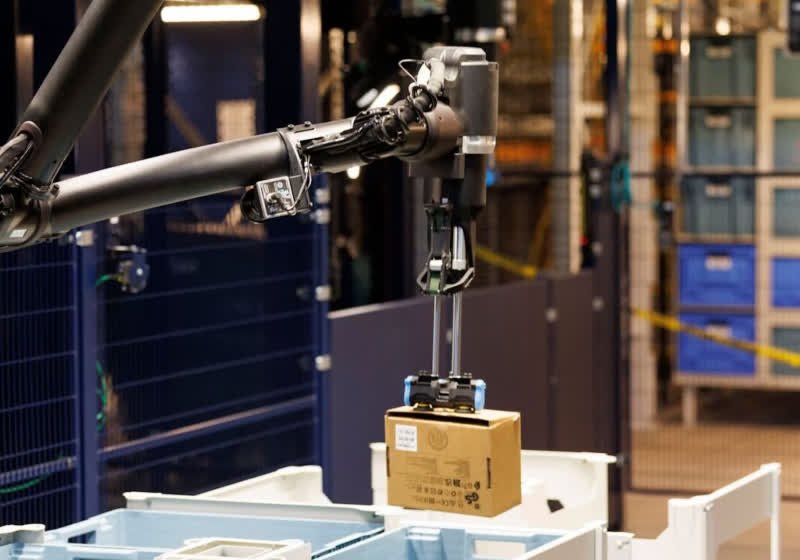
Amazon’s ambitious push into warehouse automation has taken another notable turn with the quiet cancellation of its Blue Jay robot program. Introduced in October 2025, Blue Jay was billed as Amazon’s fastest-developed warehouse robot to date, built on the latest advances in artificial intelligence. The robot aimed to streamline fulfillment center operations by performing tasks that would traditionally require human labor, potentially boosting throughput, reducing human workload in certain zones, and improving picking and packing efficiency.
However, after months of operation and internal assessment, Amazon has decided to discontinue Blue Jay. The cancellation marks a significant course correction in Amazon’s robotics strategy, underscoring a broader industry reality: while AI software has enjoyed rapid and impressive progress, translating those advances into reliable, cost-effective physical systems remains a slower, costlier endeavor. The decision also reflects the company’s careful balancing of capital expenditure, return on investment, and risk management across its vast network of fulfillment centers.
Blue Jay’s emergence represented a notable milestone in Amazon’s quest to automate its logistics network. It purportedly leveraged state-of-the-art AI to navigate warehouse environments, understand tasks, and coordinate with other automation systems. Yet despite those capabilities, the evolution from prototype to wide-scale deployment proved more challenging than anticipated. The discontinuation suggests that Amazon may be prioritizing a more incremental, test-and-learn approach to automation—favoring scalable, reliable robotics solutions with clearer ROI over expansive, high-risk innovations that promise large gains but carry hefty implementation costs and operational uncertainties.
This development arrives amid broader industry conversations about the pace at which AI-powered software can be converted into physical automation. Experts often point to the “AI-to-robot” gap, where software breakthroughs do not automatically translate into practical gains on the manufacturing or logistics floor. Variables such as durableness, maintenance, safety compliance, real-world unpredictability, integration with existing systems, and total cost of ownership all influence the viability of a robotics program. Amazon’s decision to retire Blue Jay highlights the importance of aligning ambitious automation initiatives with pragmatic execution paths and measurable, near-term benefits.
For employees and partners within Amazon, the cancellation may prompt internal realignments: teams that had been aligned with Blue Jay’s development might pivot toward other automation projects, reskill workers to operate, program, or repair future robots, and retool processes to maximize efficiency with the remaining automation assets. It also has implications for the broader supply chain strategy, as Amazon continues to pursue more intelligent fulfillment solutions while ensuring resilience and cost control across its network.
While the Blue Jay initiative is winding down, Amazon’s broader robotics and automation efforts are unlikely to vanish. The company has historically pursued a diversified portfolio, exploring various forms of automation—from automated storage and retrieval systems to collaborative robots and sophisticated warehouse management software. The shutdown of one project does not negate the potential of other automation strategies, including software-driven optimization, predictive maintenance, and hybrid models that combine human labor with selective robotic assistance. The tech industry will watch closely to see how Amazon reallocates resources, recalibrates timelines, and tests new concepts that may ultimately contribute to a more balanced, effective automation strategy.
In-Depth Analysis
Blue Jay’s brief life in Amazon’s warehouse ecosystem offers a case study in the complexities of deploying cutting-edge robotics at scale. Several factors likely influenced the decision to discontinue the program:
1) Cost and ROI Considerations
Deploying a new class of robots in hundreds of fulfillment centers involves substantial upfront capital expenditures, ongoing maintenance costs, and the need for specialized integration with existing systems. Even with impressive AI capabilities, robots must deliver measurable improvements in throughput, accuracy, and operating costs to justify the investment. If the observed gains fall short of projected ROI within expected timeframes, leadership may decide that continuing growth requires a different approach or a pause to reassess the technology’s maturity.
2) Reliability and Safety in Dynamic Environments
Warehouse environments are dynamic and often crowded. Robots must handle unexpected obstacles, human-robot interactions, and a range of payloads. Real-world reliability, fail-safes, and safety certifications are paramount. If Blue Jay’s performance in day-to-day operations did not meet the reliability thresholds required for broad deployment, the cost of incidents, downtime, and servicing could outweigh potential benefits.
3) Integration with Legacy Systems
Amazon’s fulfillment network relies on a complex mix of legacy automation, software platforms, and logistics processes. Integrating a new robotic system requires compatibility with warehouse management systems, inventory tracking, order routing, and human task allocation. If integration challenges proved to be more intrusive than anticipated or required substantial custom development, that would erode the value proposition of a rapid-scale rollout.
4) Talent and Maintenance Considerations
A new robot class demands specialized technical talent for installation, programming, and ongoing maintenance. The availability of skilled technicians, spare parts, and training resources affects long-term viability. If Blue Jay required more ongoing support than planned, Amazon might choose to pivot toward more maintainable technology or to rely more on software optimization and existing automation assets.
5) Strategic Focus on Software-First Optimization
There is a growing perception in the logistics industry that many efficiency gains can be achieved through smarter software—better routing, real-time inventory visibility, workforce management, and predictive maintenance—without necessarily replacing large portions of human labor with hardware. If Amazon determined that software-driven optimization and incremental automation could deliver more predictable returns with lower risk, a temporary or permanent pause on a hardware-heavy project like Blue Jay would be rational.

*圖片來源:Unsplash*
6) Competitive Landscape and Industry Trends
The broader robotics space has seen mixed results for large-scale deployments. Several companies have faced similar challenges in scaling advanced warehouse robots. In this context, Amazon’s decision might reflect a cautious approach to maintaining flexibility in the automation portfolio, ensuring that investments are directed toward technologies with a clearer path to scalable, repeatable deployments.
Despite the cancellation, there remains significant interest in automation within Amazon and the wider market. The company’s ongoing investments in warehouse robotics, AI-driven optimization, and related technologies suggest that the pursuit of efficiency gains through automation will continue, albeit with a potentially revised strategy. Future robot programs could emphasize modularity, easier maintenance, and more predictable ROI, integrating advances in perception, decision-making, and control in a manner better aligned with the realities of large-scale fulfillment operations.
The Blue Jay case also invites a broader reflection on AI’s role in physical automation. While AI software advancements can deliver impressive capabilities in perception, planning, and autonomous decision-making, translating those capabilities into robust, reliable hardware systems requires careful consideration of hardware constraints, manufacturing timelines, and long-term service models. The experience underscores the importance of aligning technological ambition with practical deployment realities and financial discipline.
Perspectives and Impact
Completed research and industry perspectives on Blue Jay’s discontinuation point to several broader implications for the robotics and logistics sectors:
Strategic Patience in Automation Programs
The decision signals that even highly ambitious automation programs may require patient, staged investments. Early-stage breakthroughs can inspire confidence, but scalable deployments demand refined hardware, dependable maintenance ecosystems, and clear, sustainable ROI. Companies may increasingly favor phasing projects, validating performance in controlled pilots before broad rollouts, and leaving room to pivot to alternative approaches if initial results are inconclusive.Emphasis on Hybrid Models
Rather than pursuing entirely automated warehouses, many operators are likely to adopt hybrid models that balance human workers with robotic assistance. The Blue Jay experience could encourage a renewed focus on collaborative robots (cobots), task-specific automation, and software-driven optimization that can be incrementally integrated with human workflows. This approach can reduce risk while preserving opportunities for automation gains over time.Lessons for AI-to-Physical Translation
Blue Jay’s cancellation illustrates the broader challenge of translating AI progress into tangible physical systems. While AI excels in software domains such as perception, planning, and learning, physical embodiment introduces constraints like reliability, energy efficiency, maintenance demands, and safety considerations. The industry may respond by prioritizing robust hardware design, modular architectures, and more comprehensive testing regimes that emulate real-world conditions.Workforce Impacts and Upskilling
The shift away from a large, fully automated robot program could influence staffing models within fulfillment networks. There may be renewed emphasis on upskilling workers to perform higher-value tasks, manage and repair automation assets, and oversee complex software-driven optimization. Workforce transitions could be gradual and paired with training investments to minimize disruption and preserve productivity.Economic and Competitive Considerations
From a business perspective, the Blue Jay decision may reflect a prudent use of capital in an environment where capital discipline and cost control are essential. It suggests that even tech-forward players must balance ambitious R&D with the practicalities of scale, maintenance, and total cost of ownership. Competitors and partners will likely monitor such moves as indicators of how large operators architect long-term automation roadmaps.
Future iterations of Amazon’s automation program will be watched closely by industry stakeholders. The company’s ability to extract meaningful efficiency gains while maintaining safety, reliability, and cost-effectiveness remains a key determinant of its overall logistics strategy. Blue Jay’s discontinuation does not spell the end of Amazon’s automation ambitions; instead, it may herald a recalibrated approach that leverages lessons learned to guide future, more measured automation initiatives.
Key Takeaways
Main Points:
– Amazon has canceled its Blue Jay warehouse robot program, signaling a strategic pivot in its automation efforts.
– The move reflects ongoing challenges in commercializing AI-enabled hardware at scale, despite software progress.
– The company appears to favor risk-managed, ROI-driven automation strategies with incremental deployments over expansive, single-project bets.
Areas of Concern:
– Short-term impact on fulfillment capacity and staffing in affected centers.
– Reallocation of resources away from Blue Jay toward other automation initiatives or software optimizations.
– Long-term implications for supplier relationships, maintenance ecosystems, and internal skill development.
Summary and Recommendations
The quiet cancellation of Blue Jay underscores a pragmatic recalibration within Amazon’s robotics strategy. While the project showcased the potential of AI-driven automation to enhance warehouse operations, the complexities of scaling a new robot class—cost, reliability, integration, and maintenance—proved to be substantial hurdles. The experience highlights a broader industry truth: software breakthroughs, though rapid and transformative, do not automatically translate into immediate, scalable hardware solutions. For Amazon, the prudent path forward likely involves a mix of software-led optimization, modular automation, and more narrowly scoped robotic deployments that deliver measurable ROI within acceptable risk margins.
In terms of recommendations, stakeholders should:
– Reassess automation roadmaps with a focus on near-term ROI, reliability, and maintainability.
– Preserve the insights gained from Blue Jay to inform future hardware and software integration strategies.
– Invest in upskilling and reskilling the workforce to manage hybrid automation environments and to support maintenance ecosystems.
– Prioritize modular, interoperable robotic systems that can be scaled incrementally and easily replaced or upgraded as technology matures.
– Maintain transparency with internal teams and external partners about deployment plans and expected timelines to manage expectations and supply chain impacts.
Overall, while Blue Jay is no longer moving forward, its legacy may influence a more measured, resilient, and adaptable automation strategy for Amazon as it continues to pursue efficiency gains across its vast fulfillment network.
References
- Original: https://www.techspot.com/news/111371-mazon-quietly-cancels-blue-jay-warehouse-robot-months.html (Note: The link appears to be truncated; please verify the exact source.)
- [Add 2-3 relevant reference links based on article content]
- [Additional industry analyses on warehouse robotics and AI-to-robot translation]

*圖片來源:Unsplash*