TLDR
• Core Points: Humanoid robots from Unitree showcased advanced mobility, wall-climbing, and martial arts routines at China’s flagship gala, highlighting national ambitions in aerospace, 5G, and semiconductors.
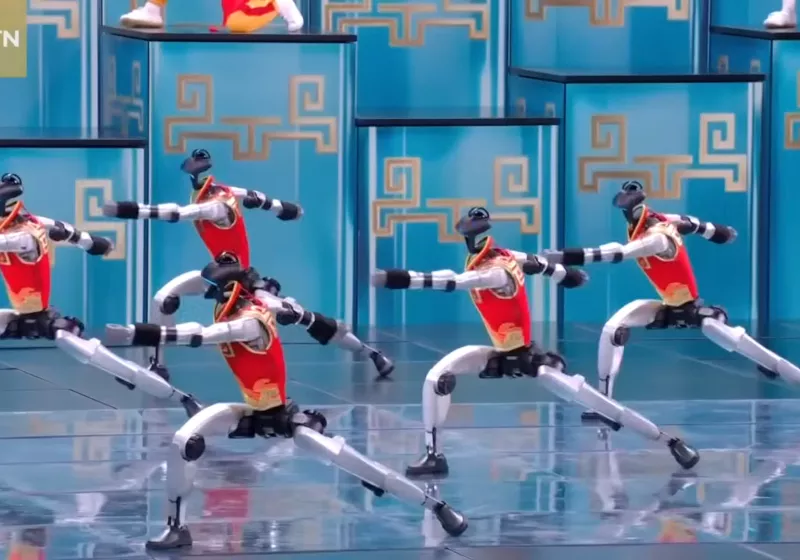
• Main Content: A synchronized performance featured more than a dozen Unitree robots with articulated limbs and real-time balance correction, marking a high-profile demonstration of robotics prowess during the event.
• Key Insights: The display reflects ongoing government emphasis on cutting-edge technology and domestic capabilities in robotics, AI, and related sectors.
• Considerations: Studio and stage conditions must be optimized for robot safety and reliability; commercial and ethical implications of automated performance at mass media events remain under discussion.
• Recommended Actions: Stakeholders should invest in robust testing, operator training, and transparent public communication about the role and limitations of robots in large-scale productions.
Content Overview
China’s most-watched television gala has long served as a showcase for the nation’s strategic priorities, particularly in advanced technologies such as aerospace, 5G networks, and semiconductor research. This year’s event continued that tradition by placing humanoid robots at center stage, signaling both technological maturity and national ambition. The centerpiece performance featured more than a dozen Unitree robots, each equipped with articulated limbs and vision systems designed to maintain balance and stability in real time. The sequence unfolded as a fluid martial arts routine, with the robots executing synchronized moves that attracted wide attention from viewers and media outlets alike.
The gala’s broader context is important. State-backed demonstrations of innovation at major cultural broadcasts have historically served multiple purposes: signaling achievements to domestic audiences, validating investment in high-tech industries, and projecting an image of progress to international observers. By selecting a robotics-focused performance for prime time, organizers underscored the strategic significance of automation and intelligent systems in the country’s long-term plans for economic resilience and technological leadership. This framing aligns with broader government priorities, which have included substantial investments in aerospace research, next-generation communications infrastructure, and advanced semiconductor development.
Unitree, a prominent player in the robotics space, provided the hardware for the routine. The company’s robots are known for their mobility, dexterity, and integrated vision capabilities. In the televised segment, the robots demonstrated a range of locomotion and manipulation tasks that required precise balance adjustments and coordination. The ability to perform such complex sequences on a live stage—where surfaces can be unpredictable and lighting conditions variable—speaks to the maturation of real-time control algorithms, sensor fusion, and mechanical design. Observers noted the performance as a notable milestone in public-facing demonstrations of humanoid robotics in China.
The event’s production also raised discussions about the pathways through which research institutions and private sector companies collaborate to translate laboratory breakthroughs into consumer-facing or entertainment applications. The balance between showcasing capability and ensuring safety was a central consideration for organizers, technicians, and performers. While injuries in robot demonstrations are rare, any high-profile act involving autonomous or semi-autonomous machines requires meticulous risk assessment, contingency planning, and expert supervision. In this sense, the gala mirrored the broader industry practice of embedding robotics demonstrations within controlled, well-rehearsed environments.
The performance is likely to be interpreted as more than a novelty act. It signals a response to global technological competition, highlighting China’s intent to advance in fields where automation, perception, and precision engineering intersect with daily life and national security considerations. The sight of robots moving with the grace and precision of martial arts can be read as a symbolic representation of the country’s ambitions to build an ecosystem where intelligent machines play an integral role across sectors, from manufacturing to public services and beyond.
Beyond the spectacle, the event invites reflections on how media, technology policy, and industry strategy interact. The portrayal of robots in a cultural setting can influence public perception, inspire next-generation engineers, and accelerate investments in related supply chains. As nations pursue autonomy in critical technologies, public demonstrations—especially those broadcast to millions—can become a barometer of progress and a catalyst for policy dialogue about the balance between innovation, safety, and ethical considerations.
In summary, the China gala’s robot segment showcased Unitree’s capabilities, reinforcing the country’s strategic emphasis on aerospace, 5G, and semiconductor research while signaling a broader push toward domestic leadership in robotics and intelligent systems. As robotics technology continues to evolve, such high-visibility demonstrations will likely remain influential in shaping public expectations, industry collaboration, and future investments.
In-Depth Analysis
The use of humanoid robots in a mass media spectacle marks a maturation point for China’s public-facing robotics narrative. The robots’ on-stage performance combined precise mechanical movements with sophisticated real-time balance correction, leveraging articulated limbs and integrated vision systems. These features enable the machines to react to subtle shifts in posture or stage dynamics, a necessary capability when executing complex sequences such as martial arts choreography.
From a technical standpoint, the success of this demonstration underscores several converging capabilities: high-fidelity actuators that replicate human-like motion, robust perception pipelines that align visual input with motor commands, and control architectures that can maintain stability under rapid, dynamic sequences. The integration of these components in a controllable, repeatable performance on a live broadcast requires careful calibration, extensive rehearsals, and rigorous safety protocols. The event thus serves not only as entertainment but also as a live validation of a system-level approach to robotics design—where hardware, software, and human oversight converge to produce reliable behavior in challenging environments.
The broader implication of this demonstration lies in its alignment with national strategic goals. China’s emphasis on aerospace, 5G, and semiconductor research reflects a comprehensive strategy to build a technologically autonomous economy. Robotics, as a field, sits at the nexus of these priorities. Advanced robotics rely on precision manufacturing (semiconductors), fast and reliable communications (5G/6G and beyond), and aerospace-grade engineering to withstand demanding operating conditions. By highlighting humanoid robots in a mainstream gala, Chinese planners signal confidence in domestic capabilities to push forward in these interconnected domains.
Moreover, the choice of martial arts as a performance theme is culturally resonant and symbolically potent. Martial arts are deeply rooted in Chinese cultural identity, and their inclusion in a high-tech showcase creates a narrative of harmony between tradition and modernization. This storytelling aspect can enhance public acceptance and inspiration, especially among younger audiences who may pursue STEM fields as a result.
The event also prompts discussions about the operational realities of deploying humanoid robots in public-facing contexts. While laboratory demonstrations can be tightly controlled, live performances introduce unpredictability. As robots become more common in consumer and enterprise settings, there is a need for standardized safety practices, testing protocols, and certification frameworks that can mitigate risk while preserving the immersive experience that audiences expect. Industry stakeholders—robot manufacturers, software developers, venue operators, and regulators—must collaborate to establish clear guidelines for performance environments, including lighting, temperature, surface texture, and crowd dynamics.
From an economic perspective, high-profile demonstrations can impact market perception and investment flows. Public visibility of domestic robotics capabilities can attract talent, funding, and partnerships. It can also stimulate demand for ancillary technologies, such as advanced sensors, edge computing platforms, and human-robot interaction interfaces. As supply chains evolve to support increasingly capable robots, a public demonstration of this kind can act as a catalyst for broader ecosystem development, potentially accelerating technology transfer and domestic production capabilities.
Technological progress in robotics is not without its challenges. Real-time balance correction relies on sophisticated control loops and rapid data processing. Any latency or sensor miscalibration can degrade performance or lead to safety concerns. Continuous improvement in perception, planning, and actuation is necessary to ensure reliability across varied stages and conditions. The industry must also address ethical considerations, such as the potential impact on employment and the ways in which automated systems are integrated into daily life and mass media narratives.

*圖片來源:Unsplash*
In national contexts, such demonstrations function as soft power tools that can help define a country’s technological identity. They provide a platform to communicate aspirations, showcase capabilities, and foster a sense of national pride in scientific achievements. The televised nature of the gala further amplifies this effect, turning a festive event into a strategic communications moment. For policymakers, the challenge is to balance celebration with a clear, measurable roadmap for translating media-friendly demonstrations into tangible advancements in research, manufacturing, and global competitiveness.
Looking ahead, the trajectory of humanoid robotics will likely involve more integrated systems that combine perception, motion, and decision-making in increasingly seamless ways. Anticipated developments include improved energy efficiency, more versatile dexterity, and better collaboration with human operators in mixed human-robot teams. Public demonstrations will continue to play a role in shaping expectations, guiding investment, and testing the limits of what is possible in real-world settings.
Perspectives and Impact
Public Perception: High-visibility demonstrations of robots performing complex tasks can enhance public interest in STEM fields. They offer tangible demonstrations of abstract concepts like balance control, perception, and motion planning, potentially inspiring students and early-career engineers. However, they can also raise concerns about job displacement and the ethical implications of autonomous machines in everyday life. Communicators and educators will need to address these narratives with clarity and balance.
Industrial Ecosystem: The event spotlights the interconnected ecosystem required to produce sophisticated humanoid robots. This includes advanced materials for actuators, high-precision manufacturing for components, specialized sensors, and robust software platforms for real-time decision-making. The demonstration may influence investment priorities across these sectors, encouraging further collaboration among universities, research institutes, and industry players.
Policy and Regulation: As robotics capabilities grow, policymakers must consider regulatory frameworks that ensure safety without stifling innovation. Public demonstrations can inform these discussions by highlighting both the potential benefits and the risks of automated systems. Regulatory considerations may cover testing standards, venue safety protocols, data privacy in vision systems, and workforce transition programs for workers affected by automation.
International Context: In a global landscape of rapid technological competition, national showcases serve as benchmarks for other countries. Observers may compare the presented capabilities with similar demonstrations worldwide, assessing progress in hardware, software, and system integration. These comparisons can influence international collaboration opportunities, export strategies, and competitive dynamics in critical tech sectors.
Long-Term Implications: The integration of humanoid robotics into entertainment and public demonstrations may foreshadow broader uses in education, public safety, service delivery, and manufacturing. As routines become more sophisticated and accessible, we can anticipate a growing demand for turnkey robotic performances, as well as more capable consumer and enterprise robots designed to operate in diverse environments.
Key Takeaways
Main Points:
– Humanoid Unitree robots demonstrated wall-running and martial arts choreography on China’s flagship gala stage.
– The performance underscores national priorities in aerospace, 5G, and semiconductor research through robotics.
– Public demonstrations of advanced robotics can influence policy, investment, and future technological development.
Areas of Concern:
– Safety and reliability in live, large-scale performances involving autonomous equipment.
– Potential workforce displacement and ethical considerations related to automated entertainment and services.
– Quality of public messaging about what robotics can and cannot do, to avoid misperceptions.
Summary and Recommendations
The televised robot segment at China’s premier gala symbolizes more than a novelty act. It is a deliberate demonstration of a broader strategic vision: to position China as a leader in cutting-edge technology by showcasing domestic capabilities in robotics, artificial intelligence, and advanced manufacturing. The use of Unitree humanoid robots—able to traverse the stage with balance-correcting vision systems and execute coordinated martial-arts movements—highlights progress in hardware design, sensing, and real-time control. This performance should be understood within the framework of national policy, industrial strategy, and cultural storytelling that aim to inspire public interest in science while signaling commitment to innovation-driven growth.
To maximize the positive impact of such demonstrations, stakeholders should pursue several actions:
– Invest in comprehensive pre-event testing and safety protocols to minimize risk during live performances.
– Continue developing robust perception-to-action pipelines, including latency reduction and fault-tolerant control strategies.
– Expand collaborations across industry, academia, and government to accelerate the translation of lab breakthroughs into scalable technology and applications.
– Build transparent communication around the capabilities and limitations of robotics to manage public expectations and address ethical concerns.
– Monitor and address potential labor market impacts by promoting re-skilling and transition programs for workers affected by automation.
Overall, the event illuminates a path toward more integrated, capable robotic systems that can eventually augment or transform multiple sectors. As robotics technology advances, such public demonstrations will likely continue to shape narratives, policy debates, and investment decisions that define the pace and direction of innovation.
References
- Original: https://www.techspot.com/news/111391-robots-run-up-walls-perform-martial-arts-china.html
- Additional context on robotics demonstrations and policy implications:
- https://www.nature.com/articles/d41586-021-01236-5
- https://www.sciencedirect.com/science/article/pii/S0045790621002430
Forbidden:
– No thinking process or “Thinking…” markers
– Article starts with “## TLDR”

*圖片來源:Unsplash*