TLDR
• Core Points: Microsoft’s Project Silica develops glass-based data storage capable of preserving digital information for up to 10,000 years, with ongoing improvements in cost, performance, and storage capacity.
• Main Content: Glass storage encodes data in silica via laser-based techniques, aiming to provide durable, archival storage beyond traditional media.
• Key Insights: Durable, long-term storage intersects with data centers, cultural heritage preservation, and disaster-resilient archiving; cost and scalability remain key challenges.
• Considerations: Manufacturing complexity, read/write reliability, error correction, and environmental factors require further optimization.
• Recommended Actions: Continue pilot deployments with enterprise and archival partners; invest in standardized interfaces and error-correcting schemes; monitor cost-per-bit trends.
Content Overview
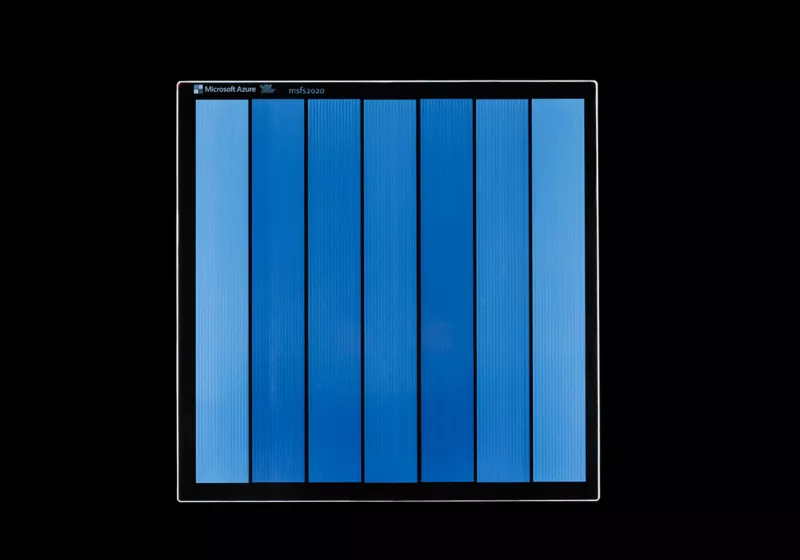
Project Silica represents Microsoft’s long-running effort to reimagine data storage by turning glass into a robust archival medium. The core idea is to encode digital information into silica glass using laser-writing techniques that permanently alter the material’s structure at nanoscale levels. Once written, the data purportedly remains readable for up to 10,000 years, offering a potential alternative to conventional magnetic tapes, hard drives, and even some optical media for long-term archival storage.
The project has evolved through multiple iterations, focusing on practical deployment considerations alongside the fundamental science. Key concerns include improving storage density (how much data can fit into a given volume), reducing production costs, ensuring reliable data retrieval, and designing scalable processes that can be adopted by data centers and archival institutions. While the promise of millennia-spanning durability is compelling, realizing widespread use requires addressing manufacturing complexity, standardization, and integration with existing data ecosystems.
This article summarizes the latest advancements highlighted by Microsoft, noting improvements in cost efficiency, performance metrics, and storage complexity. It also situates Project Silica within the broader context of archival computing, data preservation, and the evolving needs of organizations that must store vast quantities of information for extended periods.
In-Depth Analysis
Project Silica’s central premise is to leverage the resilience of glass as a data-holding medium. Data is encoded into the glass by precisely altering the internal structure of the silica along nanostructures, a process achieved with high-precision laser systems. This method aims to produce durable, non-volatile storage that is physically impervious to many environmental threats that commonly threaten magnetic or semiconductor media, such as magnetic field fluctuations, chemical degradation, and some forms of mechanical shock.
One of the strongest selling points of glass-based storage is its potential for longevity. Traditional archival media—like archival-quality magnetic tapes, specially treated optical discs, or archival-grade paper—often require controlled storage conditions and periodic refresh cycles to retain readability. If glass can achieve true 10,000-year data retention under ordinary environmental conditions, it could dramatically reduce the frequency of migration or refresh processes and lower long-term risk for critical data.
From a technical perspective, a few crucial considerations shape the feasibility and economics of Project Silica:
Data density and capacity: The rate at which information can be packed into glass determines overall viability for large-scale archives. While glass grants durability, achieving high-density storage without compromising readability is a primary engineering objective.
Read and write processes: Laser inscription and subsequent data retrieval require precise instrumentation. The reliability of both writing and reading operations over time is essential to prevent data loss.
Error correction and data integrity: Long-term storage increases the importance of robust error-correcting codes and verification mechanisms. As data ages, material variations or microscopic changes could introduce errors that must be detected and corrected.
Manufacturing scalability: Producing glass data carriers at scale involves ensuring consistency across large volumes, controlling manufacturing costs, and maintaining uniform quality for reliable long-term storage.
Environmental resilience: Although glass is inherently durable, storage conditions—including humidity, temperature, UV exposure, and handling—can influence long-term readability. Projects like Silica aim to minimize sensitivity to such factors or mitigate their effects through protective design.
Ecosystem integration: For glass storage to be practical, it must interface with existing data workflows, metadata standards, and data management tools. This includes compatibility with file systems, encryption, and data retrieval protocols.
Microsoft has indicated progress in reducing costs and improving performance while managing the complexity of storing data in glass. These advancements reflect a broader trend in the storage industry: organizations continually balance durability, density, access speed, and total cost of ownership (TCO). In the case of archival storage, cost per bit and the predictability of retrieval times are often as important as physical durability.
Beyond the technical circle, the potential applications of glass-based storage extend into sectors that require long-term preservation of cultural, scientific, and regulatory data. Museums, libraries, national archives, and multinational corporations could benefit from a medium that provides stable, long-term readability without requiring frequent migrations. This aligns with the strategic need to preserve institutional memory, regulatory records, and invaluable scientific data for generations.
It is important to maintain a measured perspective on the timeline for widespread adoption. While 10,000-year readability is an appealing claim, real-world deployment includes verification across diverse environments, data formats, and operational models. The ongoing work likely involves pilot programs with enterprise partners to gather empirical results, refine error-correcting strategies, and finalize manufacturing processes that can be scaled to production volumes.

*圖片來源:Unsplash*
Perspectives and Impact
Proponents of glass storage emphasize its potential to redefine archival archiving by delivering a durable, low-maintenance medium that could outlast many current technologies. The capacity to store data for millennia could transform how institutions think about disaster recovery, historical preservation, and compliance with long-term data retention requirements. Additionally, the technology could complement existing archival strategies, offering a new option for data that must survive across centuries, even in the face of environmental challenges that would degrade conventional media.
From an enterprise perspective, the ability to store large swaths of information with minimal ongoing maintenance could offer meaningful cost savings over time. Businesses with strict regulatory or archival obligations, as well as public sector organizations, may find glass storage attractive for preserving critical records in a way that minimizes the risk of obsolescence and data degradation. The long timescales involved also prompt collaboration with policymakers, archivists, and standards bodies to define best practices for data formats, readout technologies, and longevity guarantees.
However, there are notable challenges that could temper the pace of adoption. The production costs of glass data carriers, while improving, must remain competitive with existing archival solutions. Additionally, the readback systems—the lasers, optics, and sensors used to retrieve information from glass—must be reliable, maintainable, and cost-effective at scale. Data density is another critical variable: without sufficiently high density, the space required for petabyte-scale archives could become impractical. Interoperability with current data ecosystems is essential, including how metadata, encryption, and integrity checks are preserved during the glass-to-digital transition.
Another important dimension is risk management. While glass is robust against many physical threats, it is not immune to damage from high-impact events or manufacturing defects. The industry would need robust quality assurance, defect detection, and remediation pathways to prevent data loss from latent flaws in the substrate or inscription process. Standardized testing and verification procedures will be crucial to building trust among potential users.
Looking toward the future, the potential use cases extend beyond ordinary data archives. Museums and heritage institutions could leverage glass storage to preserve digital surrogates of priceless artifacts, including high-resolution images, 3D scans, and critical provenance records. Scientific research data, long-run experiments, or climate data archives could also benefit from a medium designed to outlast multiple generations of hardware. As with any disruptive technology, education and collaboration with researchers, archivists, and data managers will shape how quickly and effectively glass storage becomes part of mainstream archival strategies.
It is also worth noting that Project Silica sits in a broader landscape of ambitious data storage research. Other approaches exploring DNA data storage, advanced phase-change materials, and 5D glass storage have pursued similar goals: achieving higher durability, density, and energy efficiency. The diverse array of strategies reflects a shared recognition that long-term data preservation is a strategic priority for organizations that cannot afford to lose critical information to obsolescence or decay.
In this context, Microsoft’s progress with Project Silica should be viewed as part of a multi-pronged effort to extend the life of digital information. While the technology remains in developmental stages, early results and pilot deployments can illuminate practical constraints and guide further investment. The promise of 10,000-year durability is an aspirational benchmark, and the path to mass adoption will depend on tangible metrics: cost per terabyte, read/write speed, error correction resilience, and the ability to scale production without sacrificing reliability.
The broader implications touch on how societies safeguard knowledge across time. Archival strategies must account for evolving data formats, software dependencies, encryption standards, and regulatory requirements. Glass storage introduces a physical dimension to this challenge, urging a careful balance between physical durability and digital accessibility. The collaboration between technologists, archivists, policymakers, and end users will determine whether glass storage becomes a durable backbone of long-term data stewardship.
Key Takeaways
Main Points:
– Microsoft’s Project Silica targets durable glass-based data storage with claimed readability up to 10,000 years.
– The latest progress emphasizes reductions in cost, improvements in performance, and management of storage complexity.
– The technology holds promise for archival storage, cultural preservation, and disaster-resilient data retention, though scalability and integration remain key hurdles.
Areas of Concern:
– Manufacturing scale and cost-per-bit challenges.
– Read/write reliability and long-term data integrity under varying conditions.
– Need for standards, interoperability, and robust error correction.
Summary and Recommendations
Project Silica embodies a bold approach to long-term digital preservation by embedding data in glass. The longevity potential—decades to millennia—addresses a critical risk: technological obsolescence and media degradation over time. The latest advancements from Microsoft indicate progress in making glass storage more cost-effective, higher performing, and capable of handling more complex storage scenarios. If these trends continue, glass-based archival storage could complement existing archival media by providing a low-maintenance, highly durable option for critical data.
However, turning a promising technology into widespread practice requires solving several practical challenges. Achieving high data density without sacrificing readability, ensuring reliable read/write processes, and building scalable manufacturing pipelines are essential steps. Equally important is the development of comprehensive data management ecosystems, including metadata standards, security controls, and encryption, so that glass-stored data remains usable and protected as part of broader information systems.
Organizations considering this technology should adopt a cautious, staged approach. Pilot programs with trusted partners in industries with stringent archival requirements can yield valuable insights into performance, durability, and total cost of ownership. Collaboration with standards bodies and archival institutions can help define best practices for data formats, verification methods, and restoration procedures. Stakeholders should also monitor ongoing research into alternative long-term storage approaches to understand where glass storage best fits within the spectrum of archival strategies.
In the near term, the most prudent path is to pursue incremental adoption alongside established archival media. As manufacturing processes mature and economies of scale improve, glass storage could become a viable, durable layer within enterprise data architectures. Long-term observers should remain attentive to advancements in read/write technologies, error-correcting codes, and ecosystem interoperability, all of which will shape whether Project Silica achieves its millennial-perfect promise or remains a specialized, high-value archival solution.
References
- Original: https://www.techspot.com/news/111381-project-silica-breakthrough-microsoft-store-digital-data-glass.html
- Additional references:
- Microsoft official Project Silica overview and updates
- Archival storage technology and long-term data preservation studies
- Industry analysis on durable storage media and their cost, performance, and reliability considerations

*圖片來源:Unsplash*