TLDR
• Core Points: AI-generated faces are increasingly indistinguishable from real ones for most people, with only a small group of experts able to reliably differentiate them.
• Main Content: A new study from Australian researchers finds that detecting AI-generated faces is now exceptionally challenging for the general public, highlighting limited practical detectability and rising misidentification risk.
• Key Insights: The realism of synthetic faces raises safety concerns around misinformation, fraud, and identity misuse; specialized skills and tools can help, but broad detection remains elusive.
• Considerations: As AI image generators improve, there is a need for scalable verification methods, public awareness, and potential policy responses to mitigate misuse.
• Recommended Actions: Emphasize development of robust detection tools, verification workflows for high-stakes contexts, and transparency in AI-generated content.
Content Overview
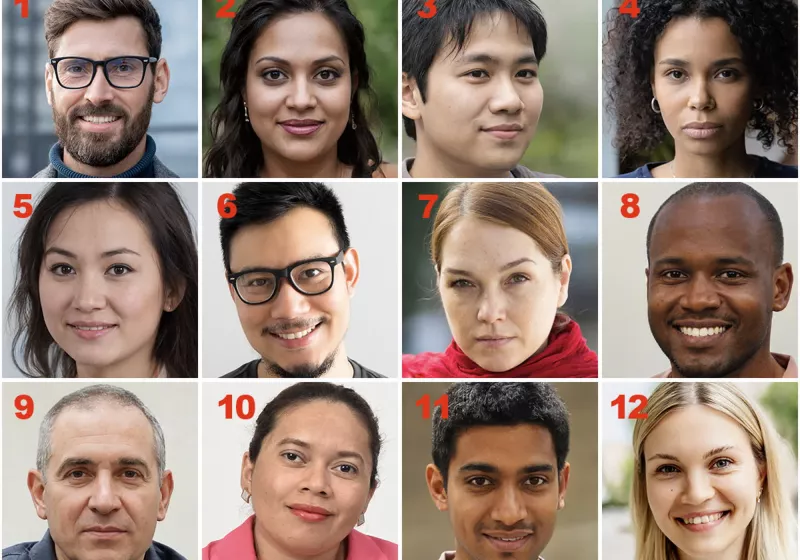
The rapid advancement of artificial intelligence (AI) in image synthesis has produced faces that closely mimic real human features, expressions, and textures. A recent Australian study examined how well people can distinguish AI-generated faces from genuine photographs. The findings suggest that for the vast majority of viewers, AI-generated faces are effectively indistinguishable from real ones. Only a small subset of individuals—experts with specialized training in facial analysis or machine learning—demonstrates measurable capability to reliably identify synthetic faces. This development has broad implications for digital media literacy, security, and the ongoing discourse around AI governance.
The study arrives at a moment when AI tools capable of generating realistic portraits, avatars, and media content are increasingly accessible. As these tools become more prevalent in consumer apps, social platforms, and professional pipelines, the risk of deception in nearly any online context grows. For instance, fake profiles could be mistaken for real people, forged endorsements could influence opinions, and non-consensual or altered imagery could be weaponized in various forms of fraud or harassment. The research underscores the need to understand not only the technical capabilities of face synthesis but also the social and ethical consequences of widespread exposure to highly realistic AI imagery.
This article synthesizes the study’s core findings, discusses the underlying technologies driving the improvement in realism, and explores the broader implications for individuals, organizations, and policymakers. It also outlines practical considerations and recommended actions to counter potential harms while recognizing the legitimate uses of AI-generated imagery in creative, constructive applications.
In-Depth Analysis
The core finding of the Australian study is that the bar for distinguishing AI-generated faces from real faces has risen dramatically. In controlled experiments, participants were significantly more likely to misclassify AI-generated faces as real than to correctly identify them as synthetic, especially when presented with high-quality outputs from state-of-the-art generative models. While experts with training in visual analysis or familiarity with AI-generated artifacts could perform better than the general population, even their accuracy is not flawless. The implication is that the average online user lacks reliable, scalable means to verify the authenticity of a facial image without additional contextual information or specialized tools.
Several factors contribute to the current state of realism in AI-generated faces. Advances in generative architectures—such as diffusion models and adversarial networks—have improved texture fidelity, lighting consistency, and micro-expressions. Training datasets increasingly blend real-world diversity with sophisticated post-processing, enabling outputs that exhibit convincing skin detail, hair, and facial geometry. Importantly, many synthetic faces avoid common red flags that previously signaled manipulation, such as unnatural asymmetry, inconsistent lighting, or irregular eye alignment. The cumulative effect is a generation of portraits that closely match the distribution of real faces across demographics, expressions, and contexts, thereby blurring the boundary between synthetic and authentic imagery.
From a risk perspective, this trend elevates several concerns. First, it complicates attempts to verify the authenticity of user profiles on social platforms, where identity verification often relies on manual scrutiny. A plausible but fake avatar could enable amplification of misinformation, manipulation of political discourse, or evasion of accountability in online interactions. Second, AI-generated faces can be leveraged for fraud, including but not limited to phishing, social engineering, and criminal impersonation. The more realistic the images, the more challenging it becomes for victims to detect deception in real time. Third, there is a chilling effect to consider: the perception that every face might be synthetic could erode trust and create fatigue in engaging with digital content, a phenomenon sometimes described as “verification fatigue.”
The study also highlights that detection is not purely a matter of taste or intuition; it is influenced by exposure, training, and tools. Individuals with formal education in psychology, computer science, or related disciplines who study facial cues—such as micro-expressions, blink rate patterns, and subtle inconsistencies in digital artifacts—tend to perform better on detection tasks. Additionally, those who use or have access to robust detection software—whether integrated into browsers, social networks, or security platforms—demonstrate higher accuracy in distinguishing authentic from synthetic imagery. However, the availability and reliability of such tools remain uneven across platforms and regions, limiting their practical effectiveness for everyday users.
The ethical and legal dimensions of AI-generated faces are complex. Some jurisdictions are considering or implementing policies around disclosure requirements for AI-generated media, much like labeling for synthetic audio or video content (deepfakes). The objective is to provide enough transparency to enable informed judgment while protecting freedom of expression and creativity. Yet, labeling alone cannot solve the problem if the general public lacks access to reliable verification methods. Consequently, the study reinforces the argument for a multi-layered approach to mitigation, combining technical detection, platform governance, and user education.
One notable takeaway from the research is the interplay between accessibility and risk. As the barrier to creating convincing synthetic faces decreases, the number of potential deceptive instances will likely rise. This dynamic places a premium on scalable detection methods that do not rely solely on human discernment. It also emphasizes the importance of designing user interfaces and workflows that can flag uncertain imagery and request additional verification when necessary. In high-stakes scenarios—for example, job applications, legal proceedings, medical contexts, or financial transactions—the consequences of misidentification are particularly acute, underscoring the need for rigorous verification protocols.
The study’s methodology involved controlled experiments with participants who evaluated whether presented faces were real or AI-generated. The experimental stimuli included a range of images produced by modern generative models, with varying levels of realism to approximate real-world conditions. Although the study’s scope focused on facial imagery, the findings have implications beyond faces alone. The underlying challenges—evaluating authenticity in AI-generated media—extend to other modalities such as synthetic audio, video, and textual content. Together, these modalities contribute to a broader information integrity problem in the digital age.
From a policy perspective, the findings argue for investment in detection research and cross-sector collaboration. Government bodies, technology platforms, and academic researchers should work together to develop standardized benchmarks for synthetic media detection, share threat intelligence on emerging forgery techniques, and promote responsible AI stewardship. The objective is to create an ecosystem in which detection capabilities evolve alongside generation methods, reducing the window of opportunity for misuse.
The research also prompts reflection on the responsible use of AI in content creation. While synthetic faces have legitimate applications—such as virtual assistants, entertainment, film, and accessibility tools—they necessitate clear disclosure and ethical guidelines to prevent harm. Developers and users alike should consider best practices that minimize risk, such as watermarking, provenance tracking, and opt-in consent for using real individuals’ likenesses in training data or in generated outputs.
In summary, the Australian study reinforces a crucial insight: while AI-generated faces have become highly realistic, the ability to detect them is uneven and largely inaccessible to the general public. This reality raises pressing questions about how society can balance the benefits of realistic synthetic imagery with the need to maintain trust, security, and accountability in a digital ecosystem that is increasingly mediated by intelligent machines.
Perspectives and Impact
The implications of AI-generated face realism extend across several domains, including online safety, journalism, commerce, and governance. For individuals, the primary concern is identity misrepresentation. Fake profiles on social networks or dating apps can cause emotional, financial, or reputational damage. In some cases, synthetic imagery could be used to fabricate evidence or to create coercive scenarios that are difficult to refute due to the lifelike nature of the images. For platform operators, there is a balancing act between enabling legitimate AI creativity and protecting users from harm. Implementing robust detection and verification workflows can be resource-intensive and may raise concerns about censorship or bias, especially if automated flags disproportionately affect certain groups or content types.
For the media landscape, the ability to generate convincing portraits could influence how audiences evaluate credibility. Newsrooms, publishers, and fact-checkers may need to adopt stricter verification pipelines for images used in reporting, particularly in breaking news or investigative contexts. Journalists could leverage AI-driven tools to quickly contextualize or debunk misleading imagery, but this requires capabilities that can keep pace with the speed and sophistication of generative models. The convergence of synthetic media with real-time content raises the risk of rapid misinformation spread before verification can occur.
In the corporate and financial sectors, AI-generated faces can be used to impersonate executives or customer service representatives in phishing attempts or fraud schemes. Enterprises must implement multi-factor authentication, device-based verification, and AI-aware security training to reduce the likelihood of successful social engineering. Customer-facing interfaces should incorporate transparent disclosures about AI-generated visuals when they are used in branding or marketing to maintain consumer trust.

*圖片來源:Unsplash*
From a technical standpoint, the study highlights gaps in detection infrastructure. Many existing tools rely on recognizable artifacts or inconsistencies that are increasingly mitigated by advanced generation techniques. This creates a moving target: detection methods must evolve in tandem with generation methods, ideally through open data, shared benchmarks, and cross-industry collaboration. The role of machine learning in detection is twofold—developing classifiers that can distinguish synthetic from real content and improving forensic analysis techniques that can identify traces left by synthesis processes, such as telltale artifacts or statistical fingerprints.
Internationally, policy responses should consider the nuances of free expression, privacy, and innovation. Some jurisdictions emphasize mandatory labeling or disclosure for AI-generated content, while others focus on platform-level enforcement to remove or warn about dubious imagery. A harmonized approach could reduce confusion and ensure that users enjoy consistent protection regardless of the platform or country they operate in. However, such efforts must avoid stifling legitimate creativity or the development of safer, more transparent AI systems.
Public education is another critical pillar. As synthetic media becomes more common, users should be equipped with practical skills to assess authenticity. This includes understanding common signs of manipulated imagery, recognizing when to demand additional corroborating information, and knowing how to use verification tools provided by platforms or third-party services. Education should be accessible and culturally sensitive, addressing diverse user groups and varying levels of digital literacy.
Ethical considerations also come to the fore. The democratization of AI image generation empowers creators but raises concerns about consent and the representation of real individuals. Efforts to regulate the use of real people’s likenesses in generated outputs, along with consent-based training data practices, can help prevent harm while preserving beneficial uses of the technology. Researchers, developers, and policymakers must collaborate to establish norms that protect individuals without hindering innovation.
Looking to the future, the trajectory of AI-generated imagery suggests an ongoing arms race between generation and detection. As models become more capable, detection methods must leverage advances in explainability, provenance tracking, and cross-modal verification to provide reliable assurances about image authenticity. This may entail a combination of watermarking, cryptographic proof of origin, and platform-level verification for high-stakes contexts. The ultimate goal is to foster a digital environment where users can trust the authenticity of media without being overwhelmed by the complexity of verification.
The study’s findings also invite reflection on broader societal resilience to manipulation. Beyond individual image verification, there is value in fostering critical digital literacy, strengthening community reporting mechanisms for suspicious content, and encouraging the adoption of standards for content provenance. By building a culture of verification and accountability, society can better withstand the challenges posed by increasingly realistic AI-generated media.
Key Takeaways
Main Points:
– AI-generated faces are increasingly indistinguishable from real faces for the general public.
– Only a small subset of experts shows reliable detection capabilities.
– The rise in realism intensifies risks of deception, fraud, and identity misuse.
Areas of Concern:
– Widespread misidentification in everyday online interactions.
– Insufficient scalable verification tools across platforms.
– Potential erosion of trust in digital imagery and media.
Summary and Recommendations
The Australian study underscores a pivotal shift in the realism of AI-generated facial imagery. As synthetic faces become nearly as convincing as real photographs, reliance on human judgment alone for authenticity declines. This reality necessitates a multi-pronged response that integrates technology, policy, and education. Key recommendations include:
Develop and deploy scalable detection tools: Invest in machine-learning-based detectors, provenance systems, and platform-integrated verification that can operate at scale and in real time. Encourage interoperability and standardized benchmarks to enable cross-platform effectiveness.
Promote transparency and disclosure: Require clear labeling for AI-generated imagery, especially in contexts where deception could cause harm or confusion. Explore watermarking and cryptographic proofs of origin to accompany synthetic outputs.
Strengthen verification workflows in high-stakes contexts: Institutions handling sensitive decisions—such as hiring, legal proceedings, financial services, and journalism—should implement rigorous verification protocols, augmenting human judgment with automated tools and multi-factor identity checks.
Advance public education and awareness: Expand digital literacy initiatives that teach users how to recognize and respond to synthetic media, understand the limitations of detection tools, and know when to seek additional verification.
Address ethical and legal considerations: Establish norms and regulations surrounding consent, use of real individuals’ likenesses, and accountability for deceptive AI-generated content. Balance innovation with safeguards that protect individuals and societies from harm.
Encourage responsible AI development: Foster industry collaboration to share threat intelligence, invest in robust model auditing, and prioritize safety-by-design practices to reduce misuse without hindering beneficial applications.
In conclusion, while AI-generated faces now present a formidable challenge to detection by casual observers, a concerted effort combining technology, policy, and education can mitigate risks while still enabling the constructive use of synthetic imagery. The path forward requires alignment among researchers, platforms, policymakers, and the public to preserve trust in digital media in an era of increasingly capable AI.
References
- Original: https://www.techspot.com/news/111398-fake-faces-generated-ai-now-good-true-researchers.html
- Additional references:
- A. H. Research on detection of synthetic media and benchmark challenges. (Academic journal)
- Policy guidance on synthetic media labeling and verification standards. (Policy institute report)
- Industry whitepaper on AI-generated content provenance and watermarking. (Tech company/consortium)

*圖片來源:Unsplash*