TLDR
• Core Points: Tesla unveils a more affordable Cybertruck at $59,990 with 325 miles of range, adaptive damping, steer-by-wire with four-wheel steering, powered frunk, and heated front seats.
• Main Content: The updated spec aims to broaden appeal but remains above the original $40k target; includes a 6′ x 4′ bed, powered tonneau cover, and multiple outlets with Powershare.
• Key Insights: Tesla prioritizes advanced driveline tech and live-work versatility, but price and capability gaps persist relative to initial promises.
• Considerations: Real-world range, weight, and charging efficiency will influence practical value; availability and build quality will shape reception.
• Recommended Actions: Prospective buyers should assess total ownership costs, charging infrastructure, and how the bed outlets suit their use cases.
Content Overview
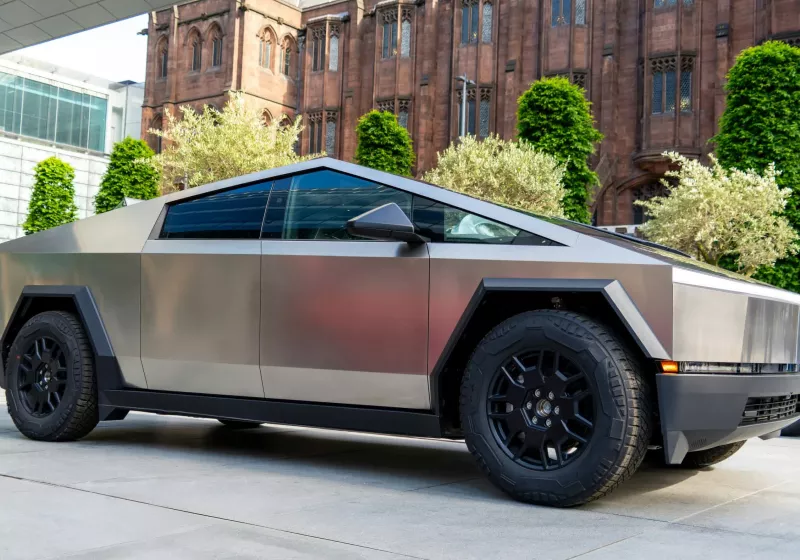
Tesla’s latest entry in the Cybertruck lineup positions the vehicle as a more accessible option within the lineup, aiming to attract buyers who previously dismissed the cybertruck’s higher price tag. The automaker emphasizes a blend of utility and technology, delivering features that cater to both daily usability and work-site practicality. The updated Cybertruck brings a claimed 325 miles of range and introduces a set of performance and convenience enhancements designed to differentiate it in a crowded pickup market.
Key features highlighted in Tesla’s presentation include coil springs with adaptive damping for improved ride comfort, steer-by-wire with four-wheel steering to enhance maneuverability, and a powered front trunk (frunk) for secure, convenient storage. Inside, the vehicle offers heated first-row seats, a practical touch for colder climates and longer trips. The 6-foot by 4-foot bed includes a powered tonneau cover for weather protection and security, as well as multiple power outlets—two 120-volt outlets and one 240-volt outlet—alongside Powershare capability for off-vehicle charging or powering tools and devices. These elements collectively illustrate Tesla’s aim to merge daily practicality with the versatility demanded by work crews, campers, and urban adventurers.
Despite these updates, the price point remains notably higher than the initial target of around $40,000, a figure that was widely discussed during the vehicle’s development. Tesla’s decision to position the vehicle at $59,990 reflects a strategy to balance feature set, production costs, and anticipated demand, while still trying to offer a more affordable option within a product line that has already been associated with premium or higher-priced variants. The company’s messaging suggests a focus on delivering value through a combination of range, drivetrain innovation, and on-board power capabilities, rather than pursuing the lowest possible sticker price.
The discussion surrounding the Cybertruck’s affordability hinges not only on the sticker price but also on ongoing cost considerations for buyers. Range and efficiency interact with charging infrastructure availability, electricity costs, and the time required to recharge. Tesla’s ecosystem—supercharging compatibility, energy management software, and Powershare technology—plays a central role in the total cost of ownership and practicality for users who plan to work remote sites, tow, or operate as part of a mobile lifestyle. While a sub-$60k price point broadens access, the remaining gap with the promised $40k figure invites scrutiny about long-term value, resale appetite, and how many potential customers will be persuaded by the updated spec versus seeking alternative options.
This article synthesizes the available information on the newly announced “cheaper” Cybertruck variant, placing it in context with Tesla’s broader product strategy, the competitive pickup segment, and the needs of buyers who prioritize capability, efficiency, and versatility alongside price.
In-Depth Analysis
Tesla’s reveal of a more affordable Cybertruck variant changes the calculation for would-be buyers who previously assumed the truck would remain out of reach financially. At a stated $59,990, the vehicle sits in a price region where mid-range electric pickups compete with traditional internal combustion pickup options that offer varying degrees of efficiency and technology. The stated range of about 325 miles on a full charge positions the Cybertruck as a practical daily driver and work vehicle for many users, particularly those who regularly embark on tasks that benefit from electric torque and quick acceleration.
From a mechanical and design perspective, the updated Cybertruck brings several notable features that matter for comfort and usability. The adaptive damping system, implemented via coil springs, promises responsive suspension that can adjust to changing road conditions and payloads. This is especially relevant for a pickup that might carry heavy loads or traverse uneven terrain on job sites and recreational trips alike. The steer-by-wire system with four-wheel steering is another significant upgrade, potentially improving low-speed maneuverability and high-speed stability, while also enabling more compact turning radii in urban contexts. These elements reflect Tesla’s ongoing emphasis on steering and chassis technologies as differentiators within the electric pickup space.
The interior and comfort upgrades align with consumer expectations for extended-range vehicles used in longer trips or daily commutes. Heated front seats add a notable level of comfort for cold-weather regions and extended drives, contributing to a more premium feel in the cabin. The presence of a powered frunk adds not only convenience but also a degree of weather protection for items stored in the storage space at the vehicle’s front end, an area of the vehicle that is increasingly used for extra payloads, tools, or emergency equipment.
Bed functionality is a core consideration for pickup buyers, and Tesla’s 6′ x 4′ bed is designed to balance cargo capacity with vehicle dimensions and usability. The powered tonneau cover ensures that cargo remains protected from the elements, while the bed outlets expand the vehicle’s ability to run power tools or charge devices on-site. The two 120-volt outlets and a 240-volt outlet broaden the range of devices that can be powered off the vehicle, which is especially valuable for contractors and outdoor enthusiasts who may rely on a portable power supply. Powershare capability further enhances the vehicle’s role as a mobile energy hub, allowing the Cybertruck to power other devices or be charged from alternative sources, reinforcing its utility beyond mere transportation.
Despite these enhancements, the price and a potential gap between advertised promises and final product pricing continue to frame the conversation. The initial expectation of a sub-$40,000 base price created considerable anticipation among potential buyers who wanted an economical EV that could directly compete with conventional gas-powered pickups on cost of ownership and functionality. The current pricing underscores a strategic decision: Tesla is delivering a truck that offers a robust feature set and substantial range, but at a higher price point than originally suggested. This creates a market dynamic where consumers must weigh the benefits of the added technology and energy features against the higher upfront cost and the total cost of ownership, including charging and maintenance.
Market dynamics and competitive pressure also influence the Cybertruck’s potential reception. The electric pickup segment has matured rapidly, with several manufacturers pushing for greater ranges, faster charging, and more efficient powertrains. Tesla’s emphasis on a technologically advanced platform with features like steer-by-wire and Powershare positions the Cybertruck as a technologically forward option. However, pricing parity with or undercutting of non-EV pickups remains a key lever for broad adoption. The $59,990 price tag—while still potentially eligible for various incentives or subsidies depending on region—will likely determine how quickly the vehicle gains traction among fleets, tradespeople, and private buyers.
Another dimension of consideration is production capacity and supply chain resilience. Tesla’s latest iteration will test the company’s ability to deliver at scale, particularly given the complex features involved in steer-by-wire systems and active suspension. Manufacturing challenges that accompany new hardware types can influence delivery timelines, warranty performance, and customer satisfaction. Buyers should stay informed about production updates, delivery windows, and any updates to software that might further refine ride quality, range, or feature behavior after initial ownership.
Beyond product specifics, the Cybertruck’s continued appeal hinges on ecosystem compatibility and long-term reliability. Tesla’s charging network, software updates, and over-the-air enhancements contribute to ongoing ownership value, but consumers must consider how future software changes could affect features like steering feel, suspension behavior, and energy management. The ability to keep the vehicle up-to-date with the latest capabilities is a distinct advantage of Tesla’s approach, although it can also introduce a perception of ongoing “feature streaming” where certain capabilities may be enhanced or altered over time.
The broader implications of Tesla’s approach involve how the company positions affordable EV options within a lineup that includes high-end models and other utility-focused variants. The updated Cybertruck illustrates a philosophy of incremental improvement and feature-rich specialization rather than a singular commitment to the lowest possible entry price. For some buyers, the added capabilities—like the Powershare functionality, a robust bed setup, and advanced drivetrain controls—offer compelling value that justifies the higher price. For others, especially those who are price-sensitive or who have alternative access to grants or incentives, the $59,990 price point may still feel steep, particularly if real-world range or payload capacity does not align perfectly with expectations.

*圖片來源:Unsplash*
In the context of vehicle ownership, buyers should consider several practical questions when evaluating the Cybertruck. What is the real-world range under typical payload and highway driving conditions? How quickly can the battery be charged on a 240-volt or DC fast-charging network, and what is the total energy cost over the vehicle’s lifetime given local electricity prices? How do the vehicle’s weight, aerodynamics, and drivetrain configuration influence efficiency and performance over time? How reliable are the steer-by-wire and active suspension systems in varied climate and road conditions, and what is the maintenance profile for the power outlets and Powershare components? These are essential considerations that will shape the total ownership experience beyond the initial purchase decision.
In conclusion, Tesla’s newer, more affordable Cybertruck variant represents a strategic effort to broaden access to a flagship electric pickup while maintaining a compelling feature set. It underscores Tesla’s emphasis on advanced technology, flexible power solutions, and practical utility for work and leisure. However, the price point remains above the originally anticipated $40,000 baseline, and buyers will need to weigh the enhanced capabilities against the higher upfront cost. As the market for electric pickups continues to evolve, Tesla’s approach—combining range, clever power features, and a strong ecosystem—will influence how buyers, fleets, and competitors view the balance between affordability and capability in electric commercial and consumer pickups.
Perspectives and Impact
The cybertruck’s latest iteration has broader implications for the EV market and the adoption of electric pickups in both commercial and consumer segments. By offering a 325-mile range and a suite of advanced features at a price point that, while not entry-level, is more accessible than many premium EV trucks, Tesla signals a shift toward a more inclusive approach to electrified utility vehicles. This could spur more consumers to consider EVs for work-related tasks, weekend adventures, or rural use cases where range and charging infrastructure have historically been concerns.
For fleet operators and tradespeople, the combination of a sizable bed, weather protection (via the tonneau cover), and accessible on-board power sources presents a compelling value proposition. The Powershare capability, in particular, aligns with the needs of on-site work, outdoor events, or remote locations where portable power is at a premium. The ability to power tools and devices, or to charge equipment directly from the vehicle, reduces the need for separate generators and can improve overall job-site efficiency and safety.
From a competition perspective, the Cybertruck’s new variant raises the bar for what buyers can expect from electric pickups at a given price. Competitors rushing to match or beat Tesla’s range and feature set will need to consider how to differentiate through reliability, charging speed, payload capacity, or price. The presence of steer-by-wire with four-wheel steering and adaptive damping adds a layer of sophistication that may push other automakers to accelerate the development of similarly advanced drivetrains. This could hasten the broader shift toward more capable and comfortable electric pickups, potentially drawing more buyers into the EV space who were previously uncertain about the practicality of electric trucks.
The longer-term implications include how Tesla handles software updates, maintenance, and service for complex systems like steer-by-wire and active suspension. Customer satisfaction will depend on the consistency of service support, the clarity of warranty terms, and the speed with which software updates roll out to address bugs or improve performance. As the ecosystem around the Cybertruck evolves, buyers will weigh the certainty of product quality against the allure of cutting-edge technology and on-board power capabilities. If Tesla can deliver seamless reliability with strong after-sales support, the Cybertruck could become a mainstay in the growing segment of all-electric work-oriented vehicles.
In terms of consumer sentiment, affordability remains a central theme. The contrast between the original $40k promise and the $59,990 price point may affect early perceptions and interest among potential buyers who hoped for an even more economical entry. However, for buyers who prioritize range, advanced drivetrain features, and utility, the updated Cybertruck presents a balanced proposition that could attract a new cohort of customers who value the combination of capability and technology. The market will determine whether the perceived value aligns with the price as real-world experiences, efficiency, and ownership costs reflect the vehicle’s performance in everyday use.
Future iteration plans will likely influence how customers view the model’s value proposition. If Tesla introduces periodic software-enabled enhancements that unlock or refine existing features, or if hardware updates reduce production costs without compromising performance, the company could shift the perception of value over time. Conversely, if production costs rise or if competitor offerings improve more rapidly, the Cybertruck’s price-to-value ratio could tighten, making it harder to appeal to price-conscious buyers.
Overall, the Cybertruck’s evolution demonstrates Tesla’s willingness to iterate on a highly unconventional vehicle design while adding practical features that resonate with real-world use. The balancing act between cost, capability, and innovation will continue to shape the trajectory of this vehicle and the broader electric pickup market.
Key Takeaways
Main Points:
– Tesla introduces a more affordable Cybertruck at $59,990 with 325 miles of range.
– The truck includes adaptive damping, steer-by-wire with four-wheel steering, powered frunk, and heated front seats.
– A 6′ x 4′ bed features a powered tonneau cover and multiple power outlets with Powershare.
Areas of Concern:
– Price remains higher than the originally promised $40k baseline.
– Real-world performance, payload, and charging efficiency need validation in varied conditions.
– Availability and delivery timelines could affect early adoption.
Summary and Recommendations
Tesla’s release of the “cheaper” Cybertruck emphasizes a strategic balance between feature richness and affordability within a premium-oriented market segment. While priced at $59,990 and offering a notable range of 325 miles, adaptive suspension, steer-by-wire, a powered frunk, heated seats, and a versatile bed with on-board power, the model stops short of the promised $40k entry price. This pricing dynamic shapes buyer expectations and underscores the importance of evaluating total cost of ownership, including charging costs, maintenance, and potential incentives.
For prospective buyers, a thoughtful approach is advised:
– Consider how often you will utilize on-board power features, bed capabilities, and four-wheel steering in your typical use cases.
– Assess charging options, access to fast charging networks, and electricity costs in your region to estimate real-world range and total energy expenditure.
– Monitor production timelines and after-sales support quality, given the vehicle’s advanced systems and the breadth of features.
If Tesla maintains a steady cadence of software updates and ensures reliable hardware performance, the Cybertruck could become a compelling option for those who need a capable, tech-forward electric pickup with practical work-site utilities. The ongoing market response will reveal how the price-to-value proposition holds up as more consumers experience the updated design in real-world conditions.
References
- Original: https://www.techspot.com/news/111410-tesla-launches-most-affordable-cybertruck-but-only-limited.html
- Helpful context: automotive technology and electric vehicle coverage from industry outlets
- Additional references:
- Tesla official announcements and product pages
- Industry analyses on electric pickup market trends
- Reviews and first-drive impressions from reputable automotive outlets

*圖片來源:Unsplash*