TLDR
• Core Points: A SpaceX Falcon 9 booster reentered Earth’s atmosphere over Europe on Feb 19, 2025, with researchers observing lithium signatures in the upper atmosphere during prediction windows.
• Main Content: German scientists used a lidar system to monitor the fiery reentry, reporting detectable lithium pollution linked to the rocket’s exhaust.
• Key Insights: The findings suggest rocket debris and propellant residues can contribute traceable chemical signatures at high altitudes, prompting considerations of environmental impact and monitoring needs.
• Considerations: The study highlights gaps in understanding about upper-atmosphere chemistry during reentries and the longevity and dispersion of lithium signals.
• Recommended Actions: Expand observational campaigns for reentries, develop standardized environmental impact assessments, and refine atmospheric models to incorporate rocket-derived trace species.
Content Overview
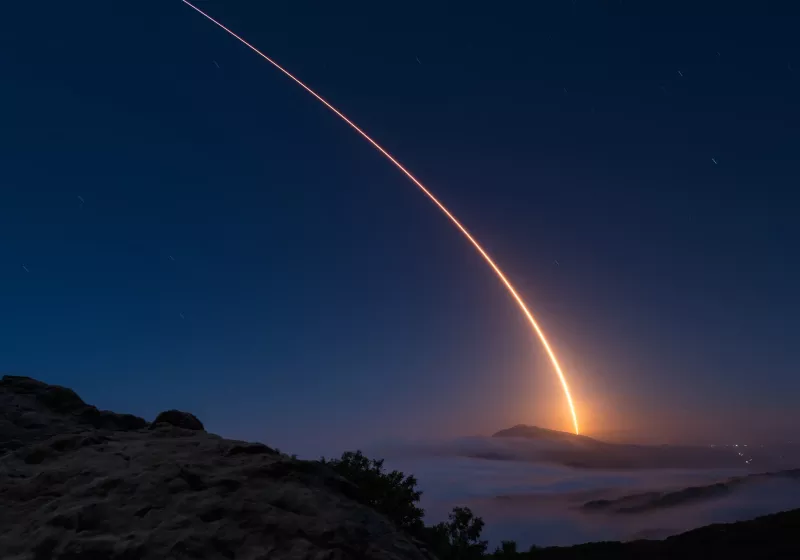
SpaceX conducts frequent launches and orbital reentries, generating both scientific interest and environmental concern. The February 19, 2025 event involved a Falcon 9 booster that reentered over Europe after delivering payload to space. While the visible spectacle of a meteor-like fireball captures public attention, researchers are increasingly focused on what these reentries deposit into the upper atmosphere. In Germany, scientists at the Leibniz Institute of Atmospheric Physics utilized their high-powered lidar (Light Detection and Ranging) system to observe the reentry within the predicted window of atmospheric entry. Lidar, which sends laser pulses into the sky and analyzes the backscattered light, offers a means to detect trace atmospheric species with high sensitivity.
This article summarizes the recent study published by researchers who traced a lithium signature in the upper atmosphere, linking it to the rocket’s exhaust and materials. The work adds to a growing body of evidence that even atmospheric releases from spaceflight—beyond the well-known issues of debris and orbital hazards—may have measurable chemical footprints in the upper layers of Earth’s atmosphere. The relevance extends to aviation and space policy, as environmental monitoring programs increasingly consider the broader implications of human activities that interact with the near-space environment.
In-Depth Analysis
The February 19, 2025 Falcon 9 reentry presents a case study for examining how rocket-derived materials disperse in the upper atmosphere. During reentry, rocket stages experience intense heating and rapid deceleration. As the booster descends, residual propellants, exhaust products, and shed materials can be released into the surrounding air. The German researchers used lidar to probe the composition along the reentry path, capturing data during the critical interval when the booster was brightest and most energetic in its descent.
A key finding of the study is the detection of lithium in the upper atmosphere within the reentry plume. Lithium is a known constituent in certain rocket propulsion formulations and can also arise from onboard components and seals that contain lithium-containing compounds. The lidar measurements showed a distinguishable signal consistent with lithium vapor or particulates at altitudes where commercial and military reentries occur. The precise interpretation of lidar data requires careful calibration against atmospheric background signals, seasonal variability, and potential interferences from natural lithium sources or other anthropogenic activities.
The observation of lithium does not by itself imply a large-scale environmental hazard, but it does confirm that spaceflight activities introduce trace chemical species into the upper atmospheric regime. The study discusses the potential transport mechanisms that would carry lithium from the reentry altitude down to regions observed by ground-based instruments, as well as the timescales involved for dispersion and eventual removal through atmospheric mixing and precipitation processes. Moreover, the authors consider how lithium and other trace species may interact with existing upper-atmosphere chemistry, including reactions with ozone, nitrogen, and hydrogen species, though the immediate chemical pathways remain a topic for further research.
In addition to lithium, the study acknowledges that reentries can release a complex mixture of substances, including metal oxides, aluminum oxide from solid rocket motors, and other particulate matter. The exact composition and concentration are influenced by the design of the booster, the propellants used, and the state of the vehicle at the moment of breakup. The researchers emphasize that their measurements reflect a snapshot within a broader context of ongoing monitoring of near-space environmental effects. They advocate for continued, coordinated observations across multiple platforms—lidar, radar, spectroscopic sensors, and satellite-based instruments—to build a more comprehensive picture of how reentries alter the chemical landscape of the upper atmosphere.
The February 2025 observation aligns with a growing emphasis on environmental stewardship in the space industry. As rocket launches become more routine and space traffic increases, scientists seek to quantify not only debris risks but also chemical footprints that may affect atmospheric chemistry, climate relations, and long-term upper-atmosphere dynamics. The study from the Leibniz Institute contributes to this discourse by providing empirical data on lithium as a tracer, which can help in modeling dispersion patterns, estimating the total mass released, and evaluating the potential environmental persistence of reentry-derived species.
The authors also address the limitations of lidar-based inference. While lidar offers high sensitivity to selected species, it provides a vertical profile rather than a complete three-dimensional map of all reentry-derived pollutants. To fully understand the environmental impact, researchers propose integrating lidar data with in-situ measurements from sounding rockets or high-altitude aircraft, as well as satellite observations that can broaden spatial coverage. Such integrated approaches would enable scientists to assess whether lithium signals indicate localized plumes or more widespread atmospheric perturbations, and how these signals evolve over time.
In a broader scientific context, detecting lithium in the upper atmosphere raises questions about how much material is released during typical reentries and whether cumulative effects from repeated events contribute to detectable changes in atmospheric composition. The study does not claim alarming levels of pollution, but it does underscore that rocket reentries are not entirely inert from an environmental standpoint. The results, published in a peer-reviewed outlet, invite ongoing scrutiny, replication, and expansion to other reentry events and rocket platforms to determine whether lithium signatures are a generalizable feature or peculiar to specific propulsion systems and configurations.
Policy implications stem from these findings. If upper-atmosphere trace species from spaceflight become more widely observed, space agencies and launch providers may need to incorporate environmental impact assessments into mission planning. This could involve optimizing reentry trajectories to minimize environmental footprints, improving propulsion formulations to reduce lithium usage, or enhancing shielding and material choices to limit particulate release. The study’s authors caution against jumping to far-reaching conclusions from a single event, but they argue for a proactive research agenda to understand the potential cumulative effects of near-Earth space activities on atmospheric chemistry.

*圖片來源:Unsplash*
Perspectives and Impact
The detection of lithium during a Falcon 9 reentry highlights an emerging frontier in space environment research. Traditionally, the environmental concerns surrounding rocket launches have focused on ground-level air quality impacts near launch sites, acoustic energy, and debris risk. Reentries, while less frequent and geographically constrained, present a different set of challenges. The upper atmosphere is a relatively thin and chemically dynamic region, where trace species can participate in a variety of catalytic cycles, potentially affecting ozone chemistry and energy balance in subtle ways.
This study raises questions about the scale and significance of upper-atmosphere pollution from spaceflight. Lithium, as a tracer species, provides a useful indicator because it is detectable with existing remote sensing techniques and can be linked to propulsion materials. However, measuring the exact quantities released and their long-term fate requires coordinated observations across multiple platforms and timescales. The work encourages collaboration among atmospheric scientists, aerospace engineers, and policy makers to establish a framework for monitoring and mitigating environmental impacts associated with space operations.
The implications extend to future missions and reentry practices. If lithium or other trace metals are confirmed as common byproducts of reentries, there may be impetus to reexamine propulsion technologies, fuel formulations, and component materials used in launch vehicles. Such considerations could influence the design of future boosters, potential retrofits to existing stages, and even the development of standardized environmental reporting for space activities. The scientific community may also push for enhanced atmospheric models that can simulate the dispersion and chemical interactions of reentry-derived species under varying meteorological conditions and solar activity levels.
From a societal standpoint, these findings contribute to public conversations about the environmental footprint of space exploration. As space becomes more accessible and commercial activity expands, transparent reporting on environmental effects becomes increasingly important. Stakeholders, including regulators, industry players, and the public, will seek robust data on what is released during reentries, how long it remains detectable, and what the ecological and climate implications might be. In this context, the lidar-based lithium detection serves as a stepping stone toward more comprehensive environmental accounting for space operations.
Future research directions are clear. Scientists will aim to quantify the total mass of lithium and other trace species released during reentries, track their atmospheric lifetimes, and determine spatial distribution patterns under different reentry geometries and atmospheric conditions. Cross-validation with other measurement techniques, such as in-situ sampling and satellite-based spectroscopy, will be essential to confirm lidar observations and to refine estimates of environmental impact. In addition, studies may explore whether certain propulsion systems or mission profiles produce more pronounced chemical footprints, thereby informing best practices for minimizing atmospheric perturbations.
Overall, the February 2025 Falcon 9 reentry study marks a meaningful step in understanding the interface between human space activities and the Earth’s upper atmosphere. It underscores the value of high-precision remote sensing in detecting trace chemical signals and highlights the need for continued interdisciplinary research to assess and manage the environmental consequences of spaceflight.
Key Takeaways
Main Points:
– A Falcon 9 booster reentered Europe on February 19, 2025, with researchers observing lithium signals in the upper atmosphere.
– German researchers used lidar to detect a lithium signature associated with the reentry plume.
– The findings indicate rocket-derived trace species can reach and be detected in the upper atmosphere, informing environmental monitoring efforts.
Areas of Concern:
– The exact quantities and fate of lithium and other species released during reentry remain uncertain.
– Lidar provides targeted measurements but requires corroboration from additional observation methods for a complete assessment.
– Policy implications require careful interpretation to avoid overstatement of environmental risk from individual events.
Summary and Recommendations
The February 2025 Falcon 9 reentry event demonstrates that rocket reentries can introduce trace chemical species into the upper atmosphere, with lithium detected by lidar in the reentry plume. While this discovery does not imply immediate or large-scale environmental damage, it confirms a measurable chemical footprint associated with spaceflight activities. The study advocates for ongoing, coordinated observations that integrate multiple sensing modalities to build a more complete picture of how reentries affect atmospheric composition. It also invites broader consideration of environmental impact assessments in mission planning and propulsion development, signaling a shift toward more proactive environmental stewardship in space operations.
To advance understanding, researchers should:
– Expand observational campaigns to capture a wider range of reentry events across different rocket families and propulsion systems.
– Integrate lidar data with in-situ sampling and satellite spectroscopy to quantify mass releases and dispersion patterns.
– Develop atmospheric models that incorporate reentry-derived trace species, enabling better predictions of chemical interactions and potential climate-related effects.
– Encourage policy frameworks that require transparent reporting of environmental indicators associated with launches and reentries, along with guidance for minimizing potential impacts.
As space activities become more routine and commercial participation grows, establishing robust environmental monitoring and mitigation strategies will be essential. The lithium signal detected in this instance is a signal of ongoing scientific inquiry into the environmental dimensions of near-space operations, rather than a definitive verdict on ecological risk. It marks a prompt for the space science community and policymakers to collaborate on how humanity’s presence in the near-space environment can be managed responsibly and sustainably.
References
- Original: techspot.com
- Additional references:
- U.S. National Oceanic and Atmospheric Administration (NOAA) – Atmospheric Composition and Remote Sensing Techniques
- European Space Agency (ESA) – Space Weather and Upper-Atmosphere Monitoring Programs
- Journal articles on lidar remote sensing of atmospheric trace species and reentry debris impacts

*圖片來源:Unsplash*