TLDR
• Core Points: SpaceX Falcon 9 booster reentries deposit detectable lithium into the upper atmosphere, measured via lidar during reentry timing window.
• Main Content: German researchers used a lidar system to observe a Falcon 9 reentry, contributing to evidence of lithium pollution in the upper atmosphere.
• Key Insights: Reentries can release trace metals from rocket stages; lithium signatures help quantify pollution and inform environmental risk assessments.
• Considerations: The study highlights measurement challenges, atmospheric dispersion, and debate over long-term environmental impact.
• Recommended Actions: Expand systematic monitoring of rocket debris traces, refine atmospheric models, and assess mitigation strategies for future launches.
Product Specifications & Ratings (Product Reviews Only)
| Category | Description | Rating (1-5) |
|---|---|---|
| Design | – | – |
| Performance | – | – |
| User Experience | – | – |
| Value | – | – |
Overall: -/5.0
Content Overview
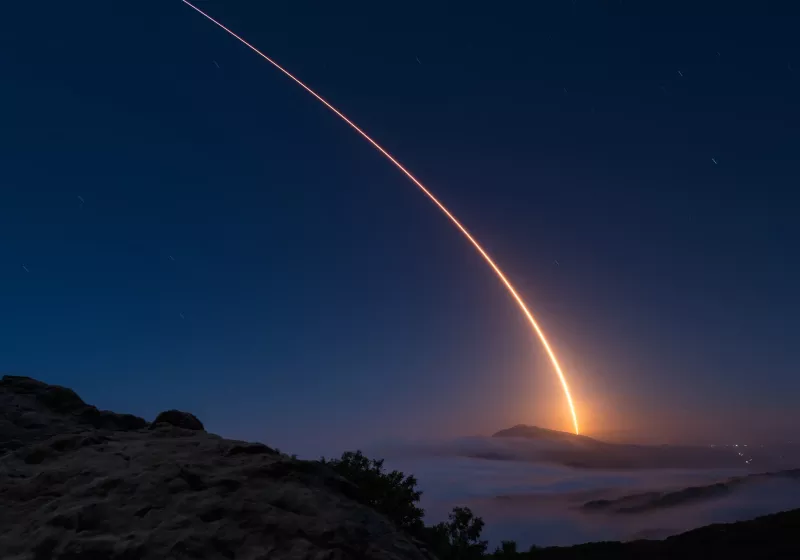
In February 2025, a SpaceX Falcon 9 booster underwent a fiery reentry, tracing a dramatic arc across Europe’s night sky. While such events are not uncommon in an era of frequent orbital launches, this particular reentry provided a valuable data point for atmospheric researchers. The incident was observed by scientists at the Leibniz Institute of Atmospheric Physics in Germany, who had their lidar (light detection and ranging) system trained on the predicted reentry window. Lidar, which uses laser pulses to probe atmospheric constituents, offered a unique opportunity to detect trace elements as the booster descended through the upper layers of the atmosphere.
The situation came to light as researchers published new findings detailing measurable signals consistent with lithium and other metallic species released during rocket exhaust and vehicle materials ablation. These observations align with broader concerns in the space community about the environmental footprint of rocket operations, particularly in the upper atmosphere where chemical and physical processes differ markedly from those at the surface. The study contributes to a growing body of evidence that reentries can leave behind detectable pollution signatures, emphasizing the need for systematic monitoring and improved modeling of atmospheric interactions with space launch debris.
This article summarizes the event, the measurement approach, and the implications of detecting lithium pollution from rocket reentries. It also situates these findings within the larger context of environmental monitoring for rocket-derived contaminants and the evolving discussion around sustainable launch practices.
In-Depth Analysis
The February 2025 Falcon 9 reentry presented a scenario well-suited for targeted atmospheric observation. Falcon 9 boosters, after delivering payloads to orbit, reenter the atmosphere at hypersonic speeds. During descent, extreme heating and ablation can cause materials from the rocket and its fuel to sublimate, melt, or fragment, releasing a variety of compounds into the surrounding air. In this case, researchers observed signals consistent with lithium—a known additive in some rocket propellants and a material present in certain components of the booster’s structure and payload fairings.
The Leibniz Institute of Atmospheric Physics deployed its lidar system during a predicted reentry window. Lidar instruments emit laser pulses and measure backscattered light to derive information about atmospheric composition, aerosol concentrations, temperature, and wind profiles. By tuning the lidar to wavelengths sensitive to lithium (and other metals), researchers can detect trace amounts of these elements as the reentry plume passes through the observational volume. The data revealed measurable lithium signatures, indicating that the reentry event transported lithium-containing material into the upper troposphere and lower stratosphere, where thin air and specialized chemical processes can influence how pollutants disperse and potentially persist.
Several factors influence the interpretation of lidar-detected lithium signals. First, the signal strength depends on the concentration of lithium in the exhaust plume and the efficiency with which lithium is dispersed into the ambient atmosphere. Second, atmospheric dynamics—such as stratospheric winds, turbulence, and vertical mixing—shape how long lithium remains detectable and how far it travels from the reentry path. Third, background atmospheric lithium isotopes and concentrations, though typically low, can affect the baseline and must be accounted for in analysis. Finally, the timing and geometry of the observation relative to the reentry trajectory affect the detectability of the plume.
The broader context involves ongoing discussions about the environmental implications of rocket launches and reentries. Lithium is not inherently hazardous at trace atmospheric concentrations; however, the cumulative effect of repeated launches from a given site or region can raise questions about localized loading and atmospheric chemistry. Researchers emphasize that this study does not necessarily imply immediate health or environmental crises but demonstrates that measurable pollution signatures can be captured with current sensing techniques. The findings underscore the importance of expanding observational networks, improving atmospheric transport models, and developing regulatory frameworks that consider upper-atmosphere pollution from space activities.
Methodologically, the study illustrates the feasibility and value of lidar-based measurements in capturing transient, high-altitude pollution events associated with rocket reentries. The approach can be extended to monitor other trace metals and to quantify the total loading of various contaminants over time. It also encourages collaboration among observatories, satellite missions, and industry operators to build a comprehensive picture of how reentry events contribute to atmospheric chemistry and pollutant transport.
The implications for policy and practice are multifaceted. On one hand, the visibility of such lithium signatures calls for more robust environmental accounting for space activities, including more precise inventories of materials used in rocket stages and fairings. On the other hand, the study may incentivize the space sector to explore mitigation strategies, such as redesigned materials, reduced use of lithium-containing compounds in propulsion, or improved reentry trajectories that minimize atmospheric exposure. It can also motivate the development of in-situ debris mitigation technologies and better end-of-life management for boosters.
The research also highlights the challenges of attributing atmospheric lithium to a single reentry event, given the potential for overlapping signals from multiple launches and natural atmospheric processes. To strengthen conclusions, researchers advocate for longitudinal monitoring campaigns, cross-validation with other observation techniques (e.g., high-altitude aircraft measurements, satellite-based sensors), and comparative studies across different launch sites and vehicle configurations. Such efforts would help quantify the typical scale of lithium emissions associated with reentries and inform risk assessments for communities and ecosystems.
Overall, the study signals a shift toward more rigorous scrutiny of the environmental footprints of space operations, extending beyond traditional concerns about ozone depletion and rocket exhaust at lower altitudes. As space activity grows, so too does the need to understand and manage the upper-atmosphere consequences of reentry, which, though invisible to most, play a role in the larger health of the planet’s atmospheric system.

*圖片來源:Unsplash*
Perspectives and Impact
The discovery of measurable lithium in the upper atmosphere linked to rocket reentry carries several important implications for science, policy, and industry. First, it demonstrates that high-altitude pollution from space activities is detectable with current technology and can be quantified with careful experimental design. The use of lidar in this context showcases a non-invasive, continuous monitoring capability that can be deployed at observatories around the world or in collaboration with spaceports during launch campaigns.
Second, the finding contributes to a growing recognition that the upper atmosphere is accessible to human-made perturbations. While the air at altitudes above 60 kilometers is a sparse medium, it is a dynamic environment where trace elements can participate in complex chemical reactions and transport processes. Lithium, among other metals, can become part of the mesoscale and stratospheric chemistry, potentially influencing aerosol formation, radiative properties, or microphysical processes that affect cloud formation and atmospheric heating. Although the immediate climate or health impacts of trace lithium at such altitudes remain uncertain, establishing a measurable baseline is a crucial step toward risk assessment.
Third, the event raises questions about cumulative effects. Space agencies and private launch companies are scaling up activity, including rapid-fire reentries and more aggressive propellant formulations. If lithium and other metals are repeatedly released into the upper atmosphere, their collective influence could warrant regulatory attention or at least systematic tracking. The study paves the way for standardized monitoring protocols, enabling time-series analyses that could reveal trends, seasonal variations, and regional differences in upper-atmosphere contamination from spaceflight.
From a policy perspective, the research community is likely to advocate for transparent reporting of material compositions used in launches and a harmonized approach to environmental impact assessment. This could include mandatory reporting of propellant types, additives, and materials that are prone to ablation during reentry, as well as the establishment of environmental baselines for upper-atmosphere pollutants. International collaboration would be essential, given the cross-border nature of atmospheric transport and the global reach of space operations.
For industry players, the study offers both caution and opportunity. Caution, in the sense that environmental scrutiny may intensify, prompting investment in cleaner propulsion technologies, alternative materials, or reentry optimization to minimize high-altitude pollution. Opportunity, in that there is room for leadership in environmental monitoring—demonstrating responsible operations through independent verification, data sharing, and proactive mitigation strategies. Companies and research institutions could partner to create real-time monitoring networks that track reentry plumes from multiple launch sites, providing data for independent risk assessments and public communication.
In terms of scientific research, the findings invite additional studies to quantify emission factors for various rocket stages, fuels, and configurations. Researchers may pursue multidisciplinary collaborations that combine atmospheric chemistry, fluid dynamics, propulsion engineering, and environmental science to build comprehensive models of how reentry plumes evolve and disperse. Such work could inform not only regulatory frameworks but also the design of future spacecraft, where lessons learned from upper-atmosphere pollution may lead to less intrusive materials or more favorable flight profiles.
The local and regional perspective should also be considered. While a single reentry event primarily affects the high atmosphere, the optical display in Europe and the potential for trace metal deposition downstream can influence public perception and local air quality monitoring efforts. Clear communication about what measurements can and cannot infer about immediate health risks will be critical to maintaining trust with communities near launch corridors and observed reentry paths.
Lastly, this line of inquiry aligns with broader environmental stewardship in aerospace. As humanity becomes more dependent on space-based infrastructure for communication, navigation, weather forecasting, and scientific exploration, ensuring that the search for knowledge does not come at an undue environmental cost becomes a strategic imperative. The integration of observational science with responsible engineering and policy-making will shape how the space age evolves in harmony with protecting the planet’s atmospheric systems.
Key Takeaways
Main Points:
– A SpaceX Falcon 9 reentry produced measurable lithium signatures detectable by lidar in the upper atmosphere.
– The observation demonstrates that rocket reentries can leave detectable traces of materials in near-space environments.
– Systematic monitoring and modeling are needed to understand the extent and implications of upper-atmosphere pollution from space activities.
Areas of Concern:
– Attribution challenges due to multiple simultaneous launches and natural atmospheric processes.
– Unclear long-term environmental and climatic impacts of trace lithium in the upper atmosphere.
– Potential regulatory and industry implications requiring standardized monitoring and reporting.
Summary and Recommendations
This event marks a noteworthy step in recognizing and quantifying the environmental footprint of space operations in the upper atmosphere. The successful use of lidar to detect lithium emissions from a Falcon 9 reentry demonstrates both the feasibility and value of targeted observation campaigns for high-altitude pollution events. While the detected lithium concentrations at such altitudes are unlikely to pose immediate threats to human health or the global climate in isolation, the accumulation of emissions from a growing number of launches could become a more significant concern over time. The study advocates for expanding atmospheric monitoring networks, developing standardized methodologies for detecting rocket-derived pollutants, and integrating environmental considerations more deeply into launch planning and propulsion design.
Recommendations moving forward include:
– Implementing systematic, international monitoring campaigns during major reentry periods to establish a robust dataset of upper-atmosphere pollution events.
– Refining atmospheric transport and chemical-kinetics models to quantify the fate of lithium and other metals released during reentries.
– Encouraging the space industry to pursue cleaner materials and reentry strategies that minimize atmospheric exposure without compromising mission objectives.
– Facilitating transparent reporting of propulsion and material choices used in rockets, enabling independent assessment and accountability.
– Fostering cross-disciplinary collaboration among atmospheric scientists, aerospace engineers, policymakers, and industry stakeholders to align environmental monitoring with technological advancement.
If pursued, these steps can help the scientific community and the public gain a clearer understanding of the atmospheric implications of rapid, large-scale space activity and guide responsible innovation as humanity expands its presence in space.
References
- Original: https://www.techspot.com/news/111427-falcon-9-fiery-demise-exposes-hidden-form-space.html
- European Space Agency (ESA) and space-monitoring networks on atmospheric impacts of rocket launches
- NASA and international lidar-based atmospheric observation initiatives
- Recent reviews on upper-atmosphere pollution from aerospace activities and propulsion systems

*圖片來源:Unsplash*