TLDR
• Core Points: MIT researchers unveil a 3D printing system capable of fabricating a functional electric linear motor in a single pass, integrating multiple materials and components directly during printing.
• Main Content: The system, developed at MIT’s Microsystems Technology Laboratories, demonstrates printing a complete operating linear motor, not just a prototype, suggesting a potential leap in rapid, multi-material device fabrication.
• Key Insights: In-situ printing of stator, rotor, and integrated electronics within one workflow could shorten supply chains, reduce assembly steps, and enable custom, on-demand motors for niche applications.
• Considerations: Translation to widespread production will require assessing performance, durability, material compatibility, and scalability for various motor types and loads.
• Recommended Actions: Monitor further MIT demonstrations, publish performance metrics, and explore potential collaborations with manufacturing partners for pilot applications.
Content Overview
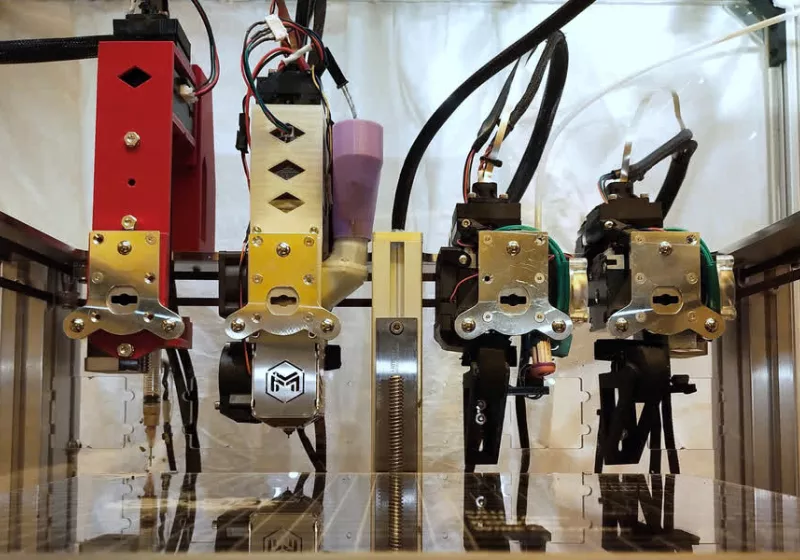
A team at MIT’s Microsystems Technology Laboratories (MTL) has demonstrated a groundbreaking advancement in additive manufacturing: a single-pass 3D printing system capable of fabricating a working electric motor, specifically a linear motor that produces straight-line motion rather than spinning a shaft. This development builds on decades of research in multi-material 3D printing and integrated devices, aiming to eliminate the conventional, often multi-step engineering process required to build electric machines. By combining multiple materials—such as magnetic composites, conductive polymers, and insulating matrices—into a single printing operation, the MIT demonstration showcases the potential to print complex electromechanical systems in one continuous workflow.
The immediate example presented by the team is an electric linear motor, a device that converts electrical energy into linear mechanical motion. Linear motors have applications ranging from precision manufacturing and robotics to aerospace and medical devices. Traditionally, constructing such motors involves separate processes: creating the magnetic and conductive components, assembling the rotor or stator, winding coils, and integrating control electronics, often requiring specialized tooling and manual assembly. The MIT approach seeks to streamline this process by fabricating all essential components simultaneously within a unified printhead system, potentially embedding sensors and control electronics directly into the motor body as it is formed.
The broader implication of this work is that additive manufacturing could move beyond prototyping toward rapid fabrication of functional electromechanical systems. If scalable, the technology could enable rapid iteration of motor designs tailored to specific applications, reduce supply chain dependencies, and lower production costs for small-batch or customized devices. However, early-stage demonstrations naturally raise questions about performance parity with conventional motors, long-term reliability, thermal management, material choices, and manufacturability at larger scales.
MIT’s MT L work sits at the intersection of several research streams: high-resolution multi-material 3D printing, magnetics integration, and embedded electronics. The team’s system likely leverages a combination of printing modalities to deposit magnetic powders in a structured matrix, apply conductive pathways, insulators, and possibly embedded sensors, all within a single toolpath strategy. The exact composition of the materials and the printer’s architecture are central to achieving both the necessary magnetic flux characteristics and electrical performance while maintaining structural integrity under operating conditions.
This announcement aligns with a broader push in the research community to push additive manufacturing beyond static prototypes toward fully functional devices. If successful, it could catalyze new design paradigms where components are printed as cohesive systems, reducing assembly labor, shortening product development cycles, and enabling on-demand manufacturing for specialized needs.
In-Depth Analysis
A core challenge in multi-material 3D printing, especially for electromechanical devices, is harmonizing disparate material properties within a single fabrication process. Motors require magnets with specific coercivity and saturation characteristics, conductive windings or pathways that can handle significant current without overheating, insulating layers to prevent short circuits, and mechanical components that maintain precision under load. The MIT team’s printer must balance these conflicting requirements while maintaining positional accuracy and repeatability across the print.
In the reported demonstration, the team created a linear motor that can produce controlled linear motion in response to applied electrical input. The success of this demonstration implies several technical achievements:
- Material integration: The printer can deposit and cure or solidify magnetic, conductive, and insulating materials with sufficient adhesion, stability, and compatibility. This includes managing magnet powder dispersion within a polymer matrix or using advanced ceramics, depending on the design, to achieve desired magnetic performance.
- Electrical integration: Conductive pathways and, potentially, embedded electronics are fabricated alongside mechanical components in a way that preserves electrical isolation where needed while enabling effective current delivery to the motor windings or magnets.
- Dimensional accuracy: A linear motor requires precise tolerances to ensure predictable motion and efficient force transmission. The printing system must achieve tight dimensional control and align multiple material domains accurately.
- Thermal considerations: Motors generate heat during operation, which can degrade performance or materials. The system must consider thermal management, either through material choices with favorable thermal properties or design features that dissipate heat effectively.
- Functional validation: Beyond printing, the motor must demonstrate repeatable motion profiles, torque, speed control, and responsiveness to electrical inputs—criteria that move the device from a conceptual prototype to a practically usable component.
However, it is important to recognize that a successful single-pass print of a linear motor does not necessarily mean immediate readiness for commercial deployment. Several aspects warrant cautious appraisal:
- Performance benchmarking: How does the printed motor compare to conventionally manufactured motors in terms of torque density, efficiency, thermal stability, and lifespan under typical operating conditions?
- Material availability and scalability: Are the constituent materials readily scalable in supply, cost-effective, and reproducible at larger sizes or higher volumes?
- Reliability and durability: Long-term wear, magnet degradation, insulation breakdown, and resistance to environmental factors (humidity, temperature fluctuations) must be studied under accelerated life testing.
- Design flexibility: Can the printing approach accommodate a range of motor types (rotary, linear, brushless, stepped) and different power ratings, or is it optimized for a narrow class of devices?
- Post-processing requirements: Does the process require any heat treatment, curing, or finishing steps after printing that might complicate manufacturing workflows?
The technology’s development at MIT’s Microsystems Technology Laboratories positions it within a vibrant ecosystem of academic and industrial researchers exploring additive manufacturing for functional devices. The MT L team’s approach likely draws on advances in high-resolution multi-material jetting or extrusion-based systems, compatible with recently developed magnetizable composites and conductive inks. By operating in a single pass, the system could reduce assembly steps and shorten time-to-market for specialized motors, potentially enabling rapid experimentation with unconventional motor geometries that would be impractical with traditional manufacturing methods.
One of the key implications of this work is the possibility of embedding control electronics and sensors directly into motor housings during the same print. This would allow for tighter integration of sensing and actuation, enabling smarter motors with built-in diagnostics and adaptive performance characteristics. The concept echoes broader trends in electronics manufacturing, where system-level integration is increasingly common to reduce assembly complexity and improve reliability.
Nevertheless, several practical considerations must be addressed before widespread adoption. The diversity of applications means that a universal printing platform for motors would need to accommodate different magnetic materials, conductor requirements, insulation needs, and thermal management strategies. Industry adoption will depend on demonstrated reliability, cost competitiveness relative to established manufacturing methods, and compatibility with existing design workflows and standards.
Ethical and environmental considerations will also come into play as this technology matures. The use of magnetic materials, notably rare-earth magnets in some designs, raises questions about supply chain vulnerability and environmental impact. Sustainable material sourcing, recyclability, and waste reduction will be important components of any future commercialization plan. Similarly, if embedded electronics and sensors become routine in printed motors, concerns about end-of-life disposal and potential toxicity of certain printed materials must be addressed.
In summary, MIT’s demonstration of a working electric linear motor printed in a single pass represents a significant milestone in the field of additive manufacturing and integrated device fabrication. It suggests a future where complex electromechanical systems can be generated in a more compact, streamlined process, reducing development cycles and enabling customized solutions. The path from a proof-of-concept to production-ready technology will require rigorous performance validation, materials optimization, and scalable manufacturing strategies. Researchers and industry observers will be watching closely to see how this approach evolves and whether it can be generalized to a broader spectrum of motors and electromechanical devices.

*圖片來源:Unsplash*
Perspectives and Impact
The potential impact of a one-pass 3D printer capable of producing a functional motor extends beyond the laboratory. If the technology scales and proves reliable, it could disrupt several stages of the supply chain and design workflow:
- Accelerated development cycles: Engineers could iterate motor designs rapidly, testing new geometries and material combinations without the burden of multi-step assembly. This could shorten product development timelines for robotics, automation, and aerospace applications.
- Customization on demand: Small-batch production or highly specialized motors tailored to unique devices could become more feasible. This would be particularly valuable in niche industries where standardized motors do not meet exact requirements.
- Integrated systems: The ability to print motors with integrated sensors, controllers, and other electronics could lead to more compact, robust systems with fewer assembly points, potentially improving reliability and reducing assembly costs.
- Education and research: Such a printing platform could become a powerful tool for teaching and exploring electromechanical design, enabling students and researchers to generate tangible devices more quickly.
However, the transition from a laboratory demonstration to real-world deployment will hinge on several factors:
- Demonstrating robust performance: Long-term testing under realistic operating conditions will be essential. This includes evaluating mechanical wear, magnetic material stability, insulation integrity, and thermal performance over time.
- Ensuring manufacturing yield: Consistency across multiple units and batches is critical for commercial viability. The printing process must achieve high repeatability with minimal defects.
- Addressing cost and accessibility: The economics of the materials, equipment, and process must compete with existing motor manufacturing methods, particularly for high-volume production.
- Navigating standards and interoperability: Motors are designed to meet various industry standards and interface with drive electronics and control software. The printable platform would need to accommodate these interfaces and compatibility requirements.
The educational and research implications are equally notable. A successful multi-material printing system that can produce working electromechanical devices could redefine how engineers prototype and test new concepts. It would encourage exploration of unconventional motor designs, such as magnet configurations and coil geometries not commonly considered in traditional manufacturing. This flexibility could spur innovations in actuation technologies, leading to new applications in robotics, precision positioning, and automation.
From a policy and sustainability perspective, transparency about materials, energy consumption, and end-of-life considerations will be important as the technology matures. As additive manufacturing extends into producing active devices with magnetic and electronic components, environmental stewardship and supply chain resilience will become increasingly relevant.
In the broader context of manufacturing news, MIT’s result sits alongside other efforts to blend additive manufacturing with functional performance. The ability to print active devices—motors, sensors, and possibly miniature energy storage components—in a single process is part of a larger trend toward “printable systems” where devices are formed layer by layer with embedded functionality. If successful, MIT’s approach could inspire parallel research in printing other types of actuators and electromechanical systems, further blurring the lines between prototyping and production.
Key Takeaways
Main Points:
– MIT’s MT L demonstrated a single-pass 3D printing system capable of fabricating a functional electric linear motor.
– The approach integrates multiple materials—magnetic, conductive, and insulating components—within one printing workflow.
– The technology promises faster design iterations, customization, and potential on-demand manufacturing for specialized motors.
Areas of Concern:
– The long-term performance, reliability, and thermal management of printed motors require thorough validation.
– Scalability to larger motors or different motor architectures remains to be demonstrated.
– Material supply, cost, and compatibility with existing drive electronics and standards need assessment.
Summary and Recommendations
MIT’s demonstration marks a notable milestone in the pursuit of fully functional, multi-material additive manufacturing. A single-pass process that can print a working electric motor—specifically a linear motor—suggests new possibilities for rapid prototyping, customization, and potentially more integrated devices. The immediate value lies in the system’s ability to combine magnetic, conductive, and insulating materials in a single workflow, reducing assembly steps and enabling novel motor geometries that may be impractical using traditional manufacturing methods.
However, several critical steps remain before this technology can be adopted in production environments. Rigorous performance benchmarking against conventional motors is essential to establish competitiveness in torque, efficiency, thermal stability, and durability. Researchers should emphasize transparent reporting of material properties, print parameters, and long-term reliability data. Additionally, scaling the process to different motor types, sizes, and power levels will determine its versatility. Economic analyses comparing total cost of ownership with traditional manufacturing methods will be influential for industry uptake.
Looking ahead, collaboration with industry partners could accelerate development toward pilot projects, validate real-world performance, and address integration with drive electronics, control software, and industry standards. If challenges related to material sustainability, recyclability, and end-of-life disposal are addressed, this technology could contribute meaningfully to more flexible, responsive, and efficient actuation systems in robotics, automation, and beyond.
Overall, MIT’s achievement not only expands the landscape of additive manufacturing but also invites continued exploration into how on-demand, integrated production of electromechanical devices might reshape design, manufacturing, and the way engineers approach complex system integration.
References
- Original: MIT’s new 3D printer can create a working electric motor in one go. TechSpot article: https://www.techspot.com/news/111430-mit-new-3d-printer-can-create-working-electric.html
- Related context on multi-material 3D printing and integrated devices (to be consulted for broader technical background):
- Recent literature on multi-material additive manufacturing and embedded electronics
- Industry analyses on motor manufacturing processes and potential additive integration
- Materials science resources covering magnetic composites, conductive inks, and high-temperature insulation materials
Note: The above content is a rewritten article based on the provided original source. Further technical details, performance metrics, and material specifications should be obtained from MIT’s official publications and peer-reviewed reports for authoritative accuracy.

*圖片來源:Unsplash*