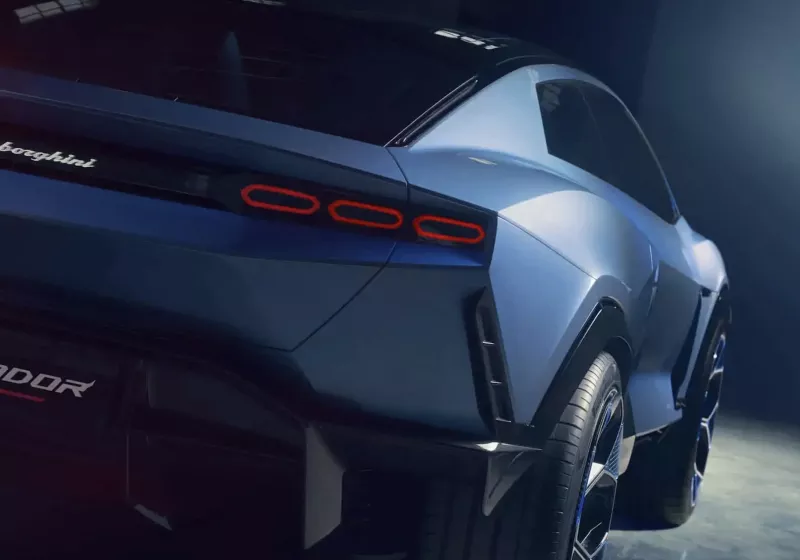
TLDR
• Core Points: Lamborghini pauses its first EV program after over a year of internal review, market testing, and dealer feedback indicating core buyers favor combustion engines for their character and sensory experience, making a sleek V12/V8-powered grand tourer more attractive than an electric alternative.
• Main Content: The decision reflects a shift in strategy to align with customer expectations and market timing, emphasizing brand integrity and profitability over rapid electrification.
• Key Insights: High-end enthusiasts prize mechanical engagement and sound; this complicates mass adoption of luxury electric GTs; timing and product fit are critical in super-luxury segments.
• Considerations: Brand positioning, technology readiness, charging infrastructure expectations for ultra-premium buyers, and potential future utility of hybrid or specialty electrified models.
• Recommended Actions: Maintain progress on sustainable powertrains while developing EVs that preserve Lamborghini’s driving emotion, explore strategic partnerships, and reassess product portfolio cadence.
Content Overview
Lamborghini, the Italian supercar maker renowned for its dramatic V10 and V12 engines, has paused its inaugural electric vehicle (EV) project after extensive internal deliberation spanning more than a year. CEO Stephan Winkelmann and the company’s leadership conducted market testing and consulted with dealers to gauge the reception of a high-end, fully electric grand touring car. The feedback from Lamborghini’s traditional buyer base—customers who have long collected combustion-powered models for their raw mechanical character and sensory appeal—was less enthusiastic about a sleek, all-electric GT that forsook the visceral experience of a V8 or V12 engine.
In the luxury automotive sector, where exclusivity, emotional engagement, and brand heritage carry significant weight, the prospect of introducing a first-ever EV program requires more than technology readiness. It demands confidence that the product will not only perform technically but also resonate with a customer base whose purchasing decisions are as much about storytelling and sound as about numbers on a spec sheet. This dynamic appears to have influenced Lamborghini’s decision to shelve the project, choosing to protect brand alignment and long-held customer expectations while continuing to explore electrification in ways that do not undermine its core identity.
The broader industry context sees many luxury automakers pursuing electrification as part of a global push toward sustainability and regulatory compliance. Yet for ultra-premium brands, the challenge is striking a balance between cutting-edge propulsion technology and the driving experience that defines the marque. Lamborghini’s pause indicates a cautious approach: invest in powertrain electrification in a way that preserves the driving emotion and sensory engagement customers expect, while evaluating the most suitable timing, form, and scope of an EV offering.
This article reviews the rationale behind the decision, its implications for Lamborghini’s product strategy, and what it signals for the broader trajectory of high-end performance cars as the industry navigates the transition to electrification without compromising the unique appeal of combustion-driven heritage.
In-Depth Analysis
Lamborghini’s decision to suspend its first EV project is rooted in a multi-dimensional assessment that extends beyond the immediacy of battery technology or regulatory deadlines. At the heart of the deliberation is a recognition of who Lamborghini’s customers are and what they value most. The company’s clientele have historically prioritized the authentic, raw driving experience—intense acceleration, distinctive exhaust notes, and the tactile engagement of mechanical systems. For many collectors and enthusiasts, these elements are inseparable from ownership, status, and the emotional connection to the brand.
The internal debate stretched over more than a year, suggesting that senior leadership weighed several scenarios: proceeding with an EV that could deliver on technological achievements but potentially alienate the existing customer base; delaying or scaling the EV project to better align with product cadence and market readiness; or exploring hybrid configurations that could offer an alternative pathway to electrification without a complete departure from Lamborghini’s hallmark combustion character.
Market testing and dealer consultations were crucial inputs in this process. Dealers in the Lamborghini network, who directly observe customer preferences, provided insights into demand patterns, likely resale trajectories, and the perceived desirability of non-emotive, all-electric grand touring models. The consensus, as indicated by Winkelmann, appeared to tilt away from a fully electric flagship GT in the near term. Buyers who collect and admire Lamborghinis for their mechanical personality and sensory impact reportedly showed limited enthusiasm for a high-end grand touring car devoid of a traditional V8 or V12 heartbeat.
This sentiment does not suggest a blanket rejection of electrification. Rather, it underscores a strategic decision to preserve Lamborghini’s voice within the electric era. A potential path forward could involve hybridization or modular electrified architectures that retain the brand’s emotional core while gradually introducing electric propulsion in ways perceived as compatible with Lamborghini’s DNA. This approach would address the expectations of the core customer base while allowing the marque to participate in broader sustainability trends and regulatory developments.
The decision also raises questions about the cadence and architecture of future Lamborghini models. In the ultra-luxury segment, product timing is as essential as engineering. Customers with deep pockets and specialized tastes often expect unique, disruptive offerings that reinforce brand aura. If an EV-only strategy risks diluting the sensory and auditory identity of the marque, then a measured rollout that couples high-performance combustion variants with selective electrified models could be more prudent. This could include performance hybrids, plug-in hybrids with distinctive sound design, or limited-edition electrified hypercars that maintain the company’s architectural language while gradually integrating new propulsion technologies.
Moreover, the broader market context cannot be ignored. The automotive industry is witnessing a rapid acceleration of electrification, with several luxury brands launching or accelerating EV programs. Yet the most successful entries in this space tend to deliver more than eco-friendly credentials; they convey a compelling emotional experience and a sense of exclusivity that remains tightly connected to brand heritage. Lamborghini’s pause may be a tactical move to ensure that any future EV aligns with perceived value, exclusivity, and driving pleasure, thereby preserving the long-term loyalty of its customers.
The financial calculus behind the decision is also a factor. Developing a first EV platform at the level of Lamborghini’s expectations requires substantial investment in new powertrains, chassis architectures, and user experiences. The return on such a capital-intensive program must be compelling, considering not only the potential sales volumes but also the risk of eroding the brand’s positioning if early EV offerings fail to meet expectations. In a market where limited-production cars often command price premiums, there is a premium on delivering a product that resonates with the target audience’s sensibilities, and not merely a technological showcase.
In this context, the company’s stance can be viewed as a strategic risk management exercise: protect the brand’s essence while remaining adaptable to future electrification opportunities that do not compromise the core values of the Lamborghini name. It also signals to stakeholders—customers, dealers, investors, and collaborators—that Lamborghini seeks to manage transition prudently, balancing tradition with innovation rather than rushing toward an electrified standard-bearer that may not land as intended.
Looking ahead, several questions emerge. Will Lamborghini pursue a hybrid performance flagship that retains the audible drama and mechanical engagement while introducing electric propulsion in a controlled, tastefully integrated way? Could there be a dedicated, limited-run EV that uses a unique motor configuration, innovative sound design, and a distinctive aesthetic, thereby preserving brand emotion while appealing to forward-looking buyers? How will the company navigate charging infrastructure expectations, service networks, and aftersales experiences that accompany high-end EV ownership? Addressing these questions will shape Lamborghini’s post-pause trajectory and determine how swiftly it can re-enter the EV conversation without eroding buyer confidence.

*圖片來源:Unsplash*
In addition to product strategy, the decision has reputational and strategic signaling implications. By shelving its first EV project, Lamborghini communicates a commitment to its living heritage and a cautious approach to disruptive technology. This can be interpreted positively by buyers who value tradition and the continuity of the brand’s signature sensory cues, but it could draw scrutiny from environmental advocates or investors who advocate for faster electrification. The balance between environmental responsibility and brand fidelity is delicate, and Lamborghini’s choice reflects a nuanced stance within the broader automotive sector’s evolving expectations.
Finally, leadership communication around the pause matters. Clarity about the reasons, milestones for re-evaluation, and potential alternative pathways would help stakeholders understand the rationale and future opportunities. If Lamborghini remains open to revisiting the project as technology matures, customer demand shifts, or strategic partnerships emerge, the door to an electrified Lamborghini could re-open under conditions that satisfy both the brand’s emotional DNA and the industry’s sustainability goals.
Perspectives and Impact
The decision to shelve the first EV project resonates beyond Lamborghini’s walls, offering insight into how ultra-luxury brands approach disruption. In a market where performance, exclusivity, and heritage command premium attention, the path to electrification must balance the allure of new propulsion technology with the intangible assets that define a brand. The current stance suggests that Lamborghini intends to preserve its distinctive character while remaining flexible enough to explore future electrified options that harmonize with customer expectations.
For customers and collectors, the pause may be interpreted in several ways. Some may view it as a sign of disciplined product management—prioritizing passion and authenticity over immediate alignment with global electrification trends. Others may worry about whether Lamborghini’s lineup can maintain momentum if EVs are sidelined or delayed. Dealer networks are likely to support this measured approach, reinforcing the message that Lamborghini will not compromise its identity for the sake of speed to market.
The impact on the broader market is nuanced. If premium brands demonstrate a willingness to slow down or recalibrate electrification strategies in favor of preserving emotional engagement, it may encourage customers to remain loyal to established brands rather than prematurely moving toward more recently electrified alternatives. Conversely, a clear and sustained pivot toward a robust electrification plan by some competitors could intensify pressure on Lamborghini to eventually embrace an EV path more aggressively. Ultimately, the competitive landscape benefits from clarity and deliberate decision-making that aligns product philosophy with customer expectations.
From a technology perspective, the pause underscores the importance of not only how electric propulsion is implemented but also how a vehicle’s sensory and experiential aspects are designed. In supercars and hypercars, the acoustic signature, the weight distribution, the steering feel, and the tactile surface quality all contribute to the perception of performance. Engineers and designers tasked with marrying electric powertrains to Lamborghini’s driving philosophy must innovate in ways that replicate or even surpass the emotional impact of combustion engines. This includes deliberate sound design, chassis tuning, and possibly hybrid configurations that retain engine presence while delivering the efficiency and performance benefits of electrification.
Regulatory trends also play a role. Governments around the world are accelerating restrictions on internal combustion engines, potentially influencing the long-term viability of combustion-centric models. Lamborghini’s approach—cautious, measured, and aligned with customer sentiment—indicates a strategy that could adapt to changing regulatory landscapes without compromising brand allure. It remains to be seen how and when the company will reconcile regulation, consumer demand, and performance in a way that preserves the essence of Lamborghini’s product portfolio.
The pause may also incentivize collaboration and innovation in areas beyond propulsion. For instance, Lamborghini could invest in advanced materials, aerodynamics, lightweight construction, and simulation-driven design to improve efficiency and performance without sacrificing the visceral experience. Partnerships with battery developers, simulation specialists, and even luxury service ecosystems could redefine what an electrified Lamborghini might look like when the concept finally returns to the table.
Ultimately, the pause reframes Lamborghini’s electrification ambitions as a long-term, strategic endeavor rather than a rapid, headline-grabbing rollout. It signals patience and rigor in product planning, a hallmark of luxury brands that prioritize brand integrity alongside technological leadership. As the company continues to observe market signals and refine its roadmap, stakeholders can expect ongoing conversations about how electrification will coexist with the brand’s enduring emphasis on drama, driving engagement, and the sensory qualities that define Lamborghini’s most celebrated models.
Key Takeaways
Main Points:
– Lamborghini has paused its first EV project after a year-long internal review and external market feedback.
– Core Lamborghini buyers value combustion engine character and sensory experience, which tempered enthusiasm for a V8/V12-free electric GT.
– The brand intends to preserve its emotional identity while continuing to explore electrification in a measured, strategic manner.
Areas of Concern:
– Balancing environmental mandates with brand heritage could delay electrification plans.
– The potential for customer doubt if the EV program is perceived as deprioritized.
– The risk of losing momentum if competitors advance more aggressively with electrified performance.
Summary and Recommendations
Lamborghini’s decision to shelve its inaugural electric vehicle project reflects a calculated effort to honor the brand’s visceral appeal while navigating an industry-wide shift to electrification. By aligning product strategy with the desires of its core customer base, the company aims to protect brand equity and maintain a trajectory that can accommodate future electrified offerings without eroding Lamborghini’s signature driving experience.
In the near term, the recommended path involves a hybrid approach that preserves the sensory engagement Lamborghini buyers expect. This could include high-performance hybrids that deliver immediate torque and a distinctive driving feel, complemented by selective, purpose-built electrified models that offer unique experiences rather than a wholesale EV replacement for the brand’s combustion lineup. Strategic partnerships with battery developers, powertrain specialists, and luxury service networks will be essential to delivering compelling electrified options that remain faithful to Lamborghini’s DNA.
Additionally, Lamborghini should maintain transparent communication with its customer base and investors about its electrification roadmap. Clear milestones, anticipated product timelines, and the role of hybrids or EVs within the lineup can help manage expectations and sustain enthusiasm. Continued dealer engagement will be crucial for refining product concepts and ensuring that any future EV variants meet the emotional and performance criteria that have defined Lamborghinis for decades.
As the automotive landscape evolves, Lamborghini’s approach—prioritizing brand integrity and customer sentiment while staying adaptive to technology—could position the company to re-enter the electric era with offerings that are not only technically capable but also emotionally resonant with its most ardent followers.
References
- Original: https://www.techspot.com/news/111448-expensive-hobby-lamborghini-shelves-first-ev-project.html
- Additional context on luxury EV strategy and brand heritage considerations in the ultra-premium automotive segment
- Industry perspectives on hybrid versus full EV pathways for performance-focused brands

*圖片來源:Unsplash*