TLDR
• Core Points: Starlink’s LEO network enables live broadcast contribution with improved latency, reliability, and flexibility; practical deployment hinges on integration with existing workflows, regulatory considerations, and power/mobility constraints.
• Main Content: Real-world experiences from a two-decade live production career illustrate how LEO satellite links are transforming field operations, equipment choices, and team protocols in challenging environments.
• Key Insights: Transition to LEO adds new redundancy and mobility, but requires careful plan for bandwidth planning, service variability, and ecosystem interoperability.
• Considerations: Weather, orbital dynamics, terminal geometry, power management, and security/privacy of transmissions must be addressed.
• Recommended Actions: Operators should pilot LEO links in controlled projects, standardize gear and procedures, and invest in training and vendor collaboration to ensure reliability.
Content Overview
The live production landscape has evolved dramatically over the past twenty years. From the era of bulky satellite news gathering (SNG) trucks to the popularization of backpack transmitters, and later to bonded cellular solutions, the industry has continually sought faster, more reliable, and more flexible ways to deliver high-quality feeds from remote locations. The arrival of low Earth orbit (LEO) satellite networks—most notably Starlink—represents what many professionals in the field view as the most significant connectivity shift since the widespread adoption of LTE networks. This article distills practical lessons from a working engineer who has navigated multiple generations of broadcast contribution technology and now integrates LEO-based links into daily operations.
Several decades of on-site experience are anchored in conflict zones, disaster areas, stadiums, and remote venues. The common thread across these environments is the relentless demand for dependable uplink and downlink pathways that can withstand physical disruption, power variability, and environmental pressures. The emergence of LEO constellations offers new capabilities: high throughput, low-latency access, and a degree of independence from terrestrial fiber or traditional satellite footprints. Yet, translating these capabilities into reliable broadcast workflows is not simply a plug-and-play exercise. It requires deliberate engineering, disciplined process development, and a clear understanding of where LEO fits within the broader distribution chain.
The article traces the practical implications of adopting LEO-enabled transmission for live production. It discusses terminal hardware choices, interface with production control rooms (PCRs), packetization and redundancy strategies, workflow integration, and the realities of service availability in various operating contexts. It also considers safety, security, and regulatory considerations that accompany any remote transmission operation, including data privacy and the risk profile associated with satellite links in unstable environments.
What follows is a synthesis of field-tested insights, organized to help practitioners, engineers, and decision-makers evaluate whether LEO-based live broadcast contribution fits their needs, and if so, how to implement it in a way that aligns with established production standards and quality expectations.
In-Depth Analysis
LEO satellites offer a unique blend of advantages for live broadcast contribution. The reduced distance to satellites compared to geostationary satellites translates into lower latency and potentially more robust real-time feedback for talent and crew. For field operations, this can mean tighter coordination during complex multi-camera shoots, quicker response times for codecs and encoding adjustments, and more immediate failover signals when terrestrial links degrade.
However, the practical deployment of LEO-based links is not a universal cure-all. Several factors shape the success of a live contribution solution:
Bandwidth and reliability: LEO networks deliver high-capacity uplinks, but throughput can be variable based on network load, terminal performance, and satellite handoffs. In a live setting, this variability must be anticipated and mitigated through robust buffering, adaptive bitrate strategies, and contingency plans that include alternative transports (e.g., remaining terrestrial paths or backup satellite links).
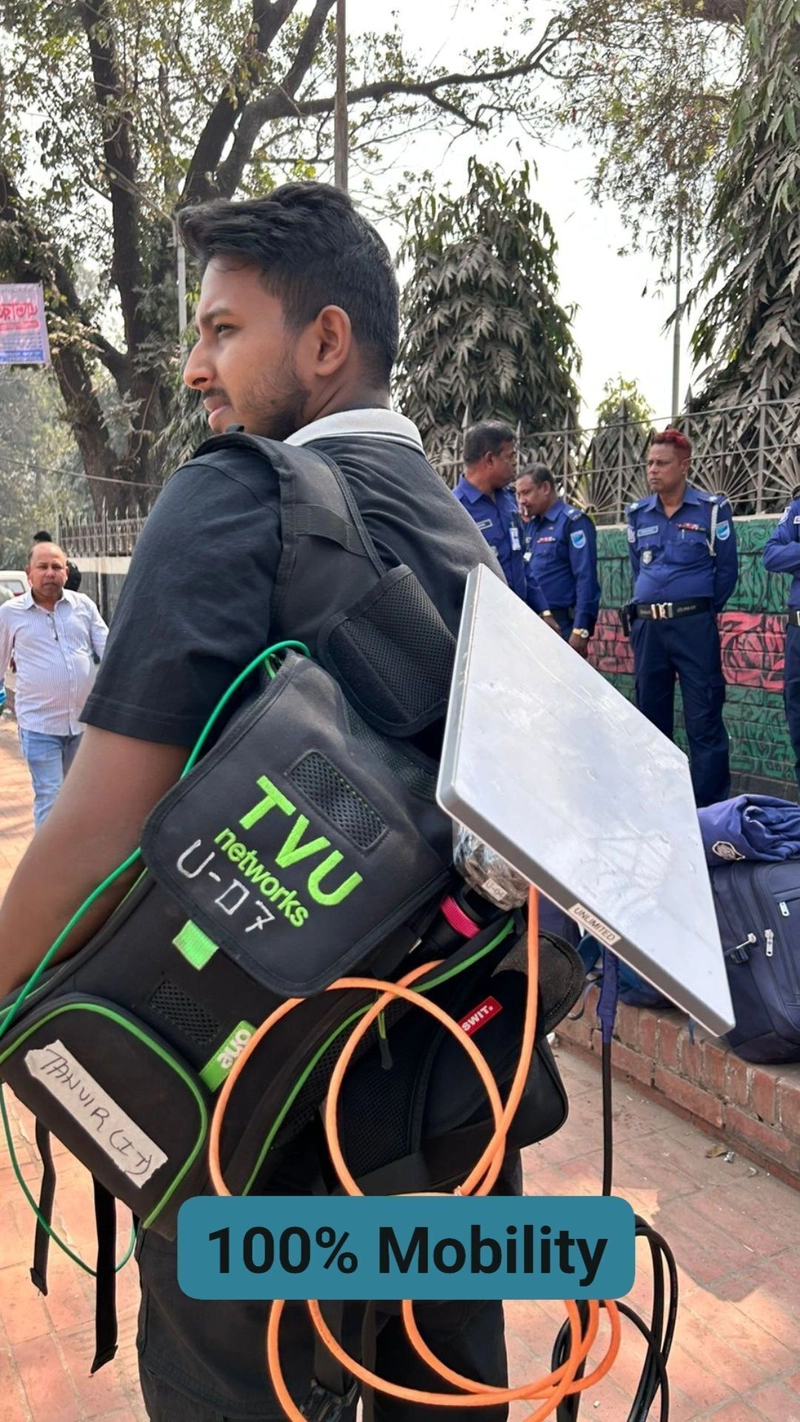
Terminal design and mobility: Portable or vehicle-mounted modems must balance power consumption, antenna geometry, and environmental resilience. The siting of terminals, weatherproofing, and antenna tracking performance all influence link stability. In practice, teams have found that modular, serviceable hardware with swappable components reduces downtime and simplifies maintenance in field conditions.
Integration with production workflows: LEO links must plug into existing ingest pipelines, control room interfaces, and media asset management systems. This involves standardizing on common codecs, transport protocols, and orchestration layers that can automatically reconfigure during a live event. Producers benefit from a predictable operator experience, the ability to marshal multiple uplinks for redundancy, and clear visibility into link health and performance metrics.
Redundancy and failover: A core strength of modern contribution systems is redundancy. LEO can complement fiber and traditional satellite links by providing a mobile, rapidly deployable uplink option. A well-designed approach uses diverse paths—perhaps combining a primary terrestrial line with one or more LEO links and, if needed, a GEO backup—to minimize single points of failure. The operational challenge is to manage cost, complexity, and scheduling for multiple independent paths without overwhelming the crew.
Security and compliance: Broadcast workflows must protect content and control signals. Encryption at the link layer, secure key management, and controlled access to terminals are essential. When using public networks or third-party satellites, careful risk assessment and adherence to organizational security policies become paramount.
Geography and target markets: LE O networks excel for remote or quickly changing topologies—breaking news, disaster zones, live events in rural areas, or venues without reliable terrestrial connectivity. In dense urban centers with strong fiber presence, the incremental benefit of LEO might be less dramatic, but the mobility and redundancy gains can still justify the investment for certain workflows.
Economics: Capital expenditure on terminals and service plans must be weighed against ongoing costs, including bandwidth usage, service reliability, and maintenance. A cost-benefit analysis that accounts for potential production delays, travel savings, and risk reduction can show where LEO adds value. In practice, the most successful implementations treat LEO as part of an integrated, multi-path strategy rather than a standalone solution.
The human element remains central. Training engineers and operators to interpret link health dashboards, respond to changing conditions, and coordinate with field crews is critical. Teams leaned into proactive monitoring, with clear escalation paths if latency spikes, packet loss, or handoffs threaten the stability of the live signal. The human workflow—checklists, rehearsals, and on-the-spot decision-making—often determines whether technical capabilities translate into a reliable broadcast.
Another point of consideration is interoperability with legacy systems. While LEO can deliver compelling performance, many facilities still rely on established SNG configurations, microwave hops, or fiber-based contributions. A pragmatic approach integrates LEO as a supplementary conduit rather than a wholesale replacement. The operating model should specify when to activate an LEO path, how to balance it with existing links, and how to route different streams (video, audio, telemetry) across the network fabric.
Weather and environmental conditions also influence performance. While LEO itself mitigates some of the latency concerns associated with higher-altitude satellites, rain, wind, and atmospheric conditions can still affect signal integrity, particularly for certain frequencies and antennas. Field teams adapt by selecting appropriate terminal types for the venue, ensuring proper sheltering, and scheduling uplinks to minimize exposure to adverse weather when possible.
Regulatory and policy factors may differ by region and service provider. Compliance with spectrum usage, licensing requirements, and data protection regulations is essential, especially when transmitting from or through zones with heightened regulatory scrutiny. Operators should maintain up-to-date awareness of local rules and ensure their gear and procedures reflect those requirements.
The evolving ecosystem around LEO-based broadcast contributions includes equipment manufacturers, satellite network operators, and platform integrators. Standardization efforts, open APIs, and collaborative workflows will influence how quickly LEO links become a normalized part of live production. Vendors are responding with turnkey terminals designed for ease of use, as well as more modular solutions that allow operators to tailor capacity and redundancy to a specific event.
In practice, deploying LEO for live broadcasts begins with a careful pilot program. A pilot helps teams quantify performance in the target environment, validate integration points with the production control room, and establish operational norms. A staged rollout—from single-camera segments in controlled environments to multi-camera, high-stakes productions—allows risk to be managed and lessons learned to be captured and disseminated across the organization.
Finally, the broader industry context suggests that LEO-enabled contributions will coexist with a spectrum of legacy and next-generation methods. Rather than a binary replacement, the most resilient broadcast operations will blend multiple transport paths, selecting the best available link for each moment in the production. As the ecosystem matures, operators can expect improved service guarantees, better monitoring tools, and more seamless interoperability among devices, networks, and production software.

*圖片來源:Unsplash*
Perspectives and Impact
LEO satellite connectivity has the potential to reshape how live content is gathered, transmitted, and monetized. For news organizations, sports broadcasters, and live event producers, the ability to deploy a rapid uplink in a location with minimal ground infrastructure reduces logistical complexity and accelerates time-to-air. This capability is particularly valuable in disaster areas, remote locations, or interior venues where traditional uplinks are impractical or unavailable.
From an operational standpoint, LEO introduces a shift in risk management. The broadcast team can place a premium on redundancy and resilience, knowing that if one link falters, alternative paths can preserve the live feed. This flexibility also expands the reach of smaller teams, enabling them to cover events that would have previously required a more substantial ground footprint.
Beyond immediate production benefits, LEO adoption can influence contract structures, talent deployment, and audience expectations. With mobile transmitters and rapid deployment capabilities, producers can allocate more on-site resources to capture compelling visuals, while maintaining the reliability clients expect. The financial implications are nuanced: while ongoing service costs and equipment investments add to the budget, the potential to avoid costly delays, reduce travel time, and deliver timely content can yield a favorable return.
Looking ahead, several developments could shape the trajectory of LEO-based broadcast contributions:
Hardware maturation: Antenna systems, tracking accuracy, and ruggedization will continue to improve, reducing the barriers to reliable mobile operation.
Network reliability: As more ground stations come online and satellites proliferate, capacity and coverage will stabilize, leading to more predictable performance.
Software ecosystems: Unified management platforms, better telemetry, and smarter routing decisions will simplify integration and operation, making LEO paths more transparent to production teams.
Security enhancements: Encryption, authentication, and secure provisioning will address concerns about interceptability and unauthorized access to transmission channels.
Training and standards: Industry-wide training programs and standard operating procedures will help broadcast teams scale LEO usage without sacrificing quality or safety.
The convergence of these trends suggests that LEO-based live contribution will become a standard option in many production environments. The practical question is not whether to adopt LEO, but how to incorporate it in a disciplined, cost-aware manner that aligns with an organization’s production philosophy and risk tolerance. The most successful deployments will emphasize clarity of purpose, robust testing, and a culture of continuous improvement.
Key Takeaways
Main Points:
– LEO satellite networks offer low-latency, high-throughput options for live broadcast contribution, enabling rapid deployment in challenging environments.
– Effective use requires careful integration with existing workflows, redundancy planning, and operator training.
– A blended transport strategy—combining LEO, terrestrial, and possibly GEO paths—yields the most reliable outcomes in diverse production scenarios.
Areas of Concern:
– Bandwidth variability and latency during handoffs can affect live production quality.
– Hardware resilience, weather sensitivity, and power management remain practical obstacles in field use.
– Security and regulatory compliance must be tightly managed when using satellite links.
Summary and Recommendations
LEO-based broadcast contribution represents a meaningful advancement in the live production toolkit, offering new opportunities for agility, resilience, and reach. To translate the technology’s potential into reliable on-air results, organizations should adopt a structured approach:
Pilot and quantify: Start with controlled pilots to measure performance in your typical operating environments, focusing on metrics such as latency, jitter, packet loss, and throughput under load. Document results to inform broader adoption.
Standardize and integrate: Develop standardized workflows that incorporate LEO links alongside existing transport layers. Define routing policies, encoding profiles, and failover procedures that are repeatable across events.
Invest in training: Equip engineers, operators, and producers with knowledge about LEO capabilities, limitations, and operational best practices. Practice scenarios that stress link health and rapid decision-making.
Build redundancy into the plan: Treat LEO as one component of a multi-path strategy. Ensure you have backup paths and clear criteria for when to switch to alternative transports to maintain broadcast integrity.
Collaborate with vendors: Engage with terminal manufacturers, network operators, and platform providers to address interoperability challenges and influence the development of tools that suit your workflows.
Consider the total cost of ownership: Assess not only the upfront equipment costs but also ongoing service fees, maintenance, and potential savings from reduced travel and faster time-to-air.
In conclusion, LEO satellites are not a panacea, but when deployed thoughtfully within a layered transport strategy, they can significantly enhance the capabilities and reliability of live broadcast contributions. The real-world lessons from experienced practitioners emphasize the importance of disciplined integration, robust testing, and continuous alignment with production goals. As the ecosystem matures, LEO connectivity is likely to become a staple option for field-based broadcasting, enabling teams to deliver compelling content with greater speed and resilience than ever before.
References
Original: https://dev.to/jason_jacob_dcfc2408b7557/when-leo-satellites-join-the-broadcast-chainreal-world-lessons-from-a-working-engineer-2026-1haf
Additional references:
- Industry overview on LEO satellite use in media and broadcasting (industry white papers)
- Technical specs and best practices for portable satellite terminals and uplink management
- Regulatory and security considerations for satellite-based broadcast transmissions
Forbidden:
– No thinking process or “Thinking…” markers
– Article must start with “## TLDR”
Ensure content is original and professional.

*圖片來源:Unsplash*