TLDR
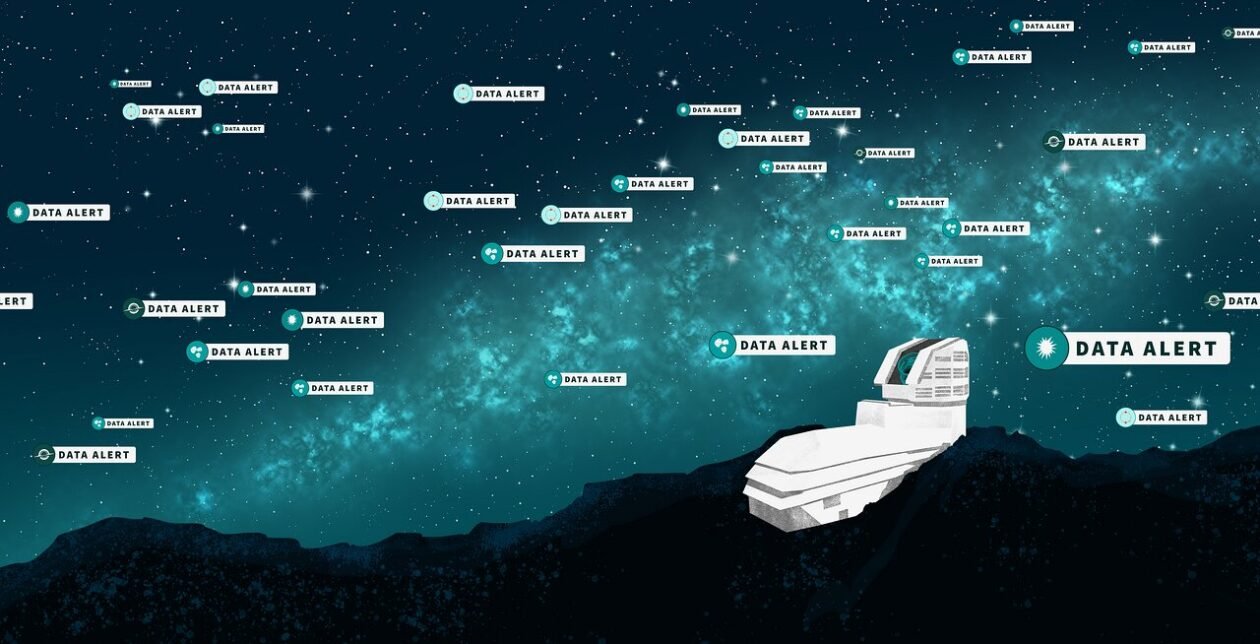
• Core Points: Rubin Observatory’s software, developed at the University of Washington, produced 800,000 alerts on its first full night, signaling discoveries of moving asteroids, exploding stars, and other celestial changes.
• Main Content: The alerts demonstrate the Observatory’s capability to monitor dynamic skies, with Seattle astronomers playing a pivotal role in software development and data processing.
• Key Insights: Large-scale alert systems are transforming time-domain astronomy, enabling rapid follow-up studies and new science, but they require robust pipelines, filtering, and collaboration.
• Considerations: Managing the sheer volume of alerts, ensuring data quality, and coordinating follow-up observations pose ongoing challenges and opportunities.
• Recommended Actions: Continue refining alert filtering, scale computational infrastructure, and strengthen cross-institution collaboration for rapid community engagement.
Content Overview
The Rubin Observatory, formally known as the Vera C. Rubin Observatory, has embarked on a new era of time-domain astronomy with a data-processing system designed to handle the deluge of nightly observations from its Large Synoptic Survey Telescope (LSST). This system, largely built and refined through collaboration with the University of Washington (UW) and other partners, is tasked with generating real-time observations about the dynamic sky. On its first full night of operation, the software produced an astonishing volume of alerts: about 800,000 individual notifications indicating changes across the celestial sphere. These alerts include detections of moving objects such as asteroids, as well as transients like exploding stars (supernovae) and other phenomena that can alter their brightness or position over time.
The immediate output—the alerts—are not full scientific results in themselves but rather prompts for follow-up observations and deeper analysis. Each alert carries essential metadata describing the object’s position, brightness, motion, and an initial assessment of how it differs from reference images. This process allows astronomers to filter, triage, and prioritize candidates for additional study with ground-based telescopes, space observatories, and other resources around the world. The collaboration between Rubin Observatory’s science teams and UW developers highlights the essential role of software in modern astronomy, where data volume and velocity demand automated, scalable infrastructure.
The Seattle contribution centers on software systems developed to process, classify, and route these alerts efficiently. By leveraging UW’s expertise in astroinformatics, machine learning, and large-scale data pipelines, the team helped ensure that the first night’s flood of data could be ingested, analyzed, and distributed to the broader astronomical community with as much timeliness and reliability as possible. The milestone underscores how university-driven software innovation can accelerate discovery pipelines that are global in scope, bridging observatories, researchers, and citizen scientists who rely on timely data to test hypotheses and schedule follow-up observations.
In context, Rubin Observatory’s alert stream is part of a broader shift in astronomy toward time-domain studies—areas of science that focus on how the universe changes on timescales ranging from minutes to years. The early experience with 800,000 alerts in a single night offers valuable lessons for scaling data infrastructure, implementing robust data quality checks, and maintaining open lines of communication with users who rely on alert feeds for rapid follow-up. It also demonstrates the importance of international collaboration and cross-institution partnerships in building and operating complex scientific instruments that push the boundaries of what can be observed from Earth.
In-Depth Analysis
The Rubin Observatory’s data-alert system represents a culmination of years of planning, software development, and collaborative engineering. At its core, the system is designed to handle the LSST’s cadence and depth: a wide, fast survey that captures the entire visible sky roughly every few nights and produces a continuous stream of images that reveal variables, transients, and minor bodies in our solar system. The first night’s output—approximately 800,000 alerts—exemplifies the scale at which time-domain surveys operate. Each alert encodes a compact, structured summary of a detected change: new or moving sources, shifts in brightness, and contextual data that help distinguish genuine celestial events from artifacts or noise.
Seattle-based developers at the University of Washington contributed critical components to this ecosystem. Their work spans several layers of the data pipeline: ingestion of raw images into a centralized processing framework, calibration against previous images to identify genuine changes, and rapid dissemination of vetted alerts to the astronomical community. The UW team’s involvement underscores a broader principle in contemporary astronomy: software reliability and scalability are as essential as the telescope hardware itself. The alerts rely on machine learning classifiers, statistical models, and rule-based filters to prioritize events for follow-up. In practice, this means that only a fraction of alerts necessarily become high-priority targets, while others are flagged for archival studies, cross-matching with known catalogs, or deeper analysis as more data arrive.
From a processing standpoint, the first full-night operation tests several core capabilities:
- Real-time data flow: The system must move data from telescope imaging to alert generation with minimal delay, enabling timely follow-up across global facilities.
- Object tracking and classification: Algorithms compare new detections with historical data to determine whether a source is a known object, a moving body, or a transient event requiring attention.
- Quality assurance: Robust checks are essential to avoid overwhelming astronomers with false positives due to instrumental artifacts or transient observational conditions.
- Dissemination and interoperability: Alerts are distributed through standardized channels to researchers, surveys, and instrument teams, who may request deeper observations or cross-check results in other datasets.
The collaboration between Rubin Observatory and UW also reflects the broader ecosystem in time-domain astronomy, where multiple institutions contribute software, hardware, and scientific expertise. This distributed approach not only accelerates discovery but also helps distribute the burden of data management across a diverse set of teams. The Seattle contribution is a reminder that the most transformative scientific instruments rely as much on software and data architecture as on optics and detectors.
Looking ahead, the 800,000-alert milestone provides a baseline for evaluating the performance and scalability of Rubin’s alert system under a variety of observing conditions. Future nights will test the system’s ability to maintain throughput during periods of poor weather, high humidity, or instrument maintenance. Moreover, as the community begins to receive alerts at scale, there will be a growing emphasis on refining alert filters to reduce redundant follow-up requests and to emphasize events with the greatest scientific payoff. This entails ongoing collaboration with astronomers who specialize in specific transient classes, solar system science, and extragalactic phenomena, ensuring that the alert stream remains both comprehensive and actionable.
The event also raises important questions about data governance and accessibility. Rubin Observatory’s approach to open data and community engagement will influence how quickly researchers around the world can react to alerts. Transparent criteria for alert generation, clear documentation, and accessible data products are essential for fostering broad participation. In Seattle, UW’s role in shaping these pipelines provides a template for how academic institutions can contribute meaningfully to large, multi-institution projects without bearing sole responsibility for the operational burden.
From a scientific perspective, the rapid generation of alerts accelerates the pace at which researchers can study dynamic events. For moving objects like asteroids, timely alerts enable orbital tracking and refinement of ephemerides, which are crucial for planetary defense and scientific discovery. For transient events such as supernovae, early alerts allow rapid spectroscopic follow-up, multi-wavelength observations, and characterization of the event’s evolution from its earliest stages. The synergy between Rubin’s deep, wide-field imaging and UW-developed processing pipelines is poised to unlock new phases of discovery in time-domain astronomy.
However, the sheer volume of alerts also emphasizes the need for careful prioritization. Not every alert will lead to a publishable result, and researchers must optimize resource allocation for follow-up observations. Automated triage systems, human-in-the-loop review, and community-driven prioritization strategies will be central to turning raw alert streams into meaningful science. Balancing automation with expert oversight is a recurring theme as data volumes continue to scale in the Rubin era.
In the broader context, Rubin Observatory’s first-night performance demonstrates how modern astronomy has become increasingly data-driven. The transformation relies on cross-disciplinary expertise—from software engineering and data science to astrophysics and instrument science. Seattle’s involvement showcases how universities can contribute at scale, bringing specialized talent and innovative approaches to a planetary-scale observatory project. The initial success signals both confidence in Rubin’s long-term scientific program and the value of sustained investment in data infrastructure that can adapt as scientific goals evolve.

*圖片來源:Unsplash*
The 800,000-alert milestone also foreshadows the importance of collaborations with other facilities and surveys. Partnerships with ground- and space-based observatories, as well as citizen-science initiatives and public data portals, will multiply the scientific yield by enabling rapid cross-validation and extended monitoring. As the alert stream matures, the community will likely see more sophisticated follow-up campaigns, including target-of-opportunity observations for rare transient events and coordinated efforts to map populations of small bodies in the solar system.
Ultimately, Rubin Observatory’s first-night data-alert performance illustrates a transition from a purely observational instrument to a comprehensive data-driven engine for discovery. The work done by UW and other partners in building robust processing pipelines ensures that the observatory can fulfill its mission: to study the dynamic sky with unprecedented depth and cadence, enabling insights across planetary science, stellar evolution, galactic dynamics, and cosmology. The Seattle contribution, while technical in nature, is central to enabling timely, reliable scientific workflows that convert raw pixels into meaningful knowledge about the universe.
Perspectives and Impact
The implications of generating hundreds of thousands of alerts per night extend beyond immediate scientific returns. For one, the workflow establishes a scalable template for future astronomy projects that will run even larger surveys or incorporate additional sensors. As data volumes climb with more powerful telescopes and more ambitious survey strategies, the ability to automate detection, classification, and distribution of events becomes a prerequisite for productive science. Rubin Observatory’s alert system provides a practical demonstration of how to operationalize such a pipeline, including robust data quality controls, versioned algorithms, and transparent reporting of performance metrics.
From a scientific standpoint, the rapid alert capability enables a more dynamic research environment. Astronomers can quickly identify transient events, determine their type, and initiate follow-up studies while the signal is still strong. In the case of supernovae, early alerts increase the likelihood of capturing the peak brightness and the subsequent decline, which are crucial for understanding the physics of stellar explosions and for using certain supernova categories as standard candles in cosmology. For solar-system science, timely alerts help refine the orbits of near-Earth objects and improve our understanding of asteroid populations, which has both scientific and practical implications for planetary defense.
The collaboration with UW also highlights the value of education and training in data-intensive science. Students and researchers who contribute to Rubin’s software stack gain hands-on experience with large-scale data processing, machine learning, and collaborative software development. This skill set is increasingly relevant across astronomy and many other scientific domains, suggesting that investments in such cross-cutting training will yield broad benefits beyond a single project.
There are also considerations about data stewardship and community engagement. The alert stream is intended to be a shared resource, with mechanisms for researchers to access, filter, and interpret the information. Establishing clear guidelines for data provenance, alert quality, and reproducibility will be important as more teams rely on these feeds for critical follow-up decisions. The Seattle contribution helps to illustrate how academic leadership can shape best practices in this arena, contributing to a robust and transparent data ecosystem.
Looking forward, Rubin Observatory’s alert system will undoubtedly evolve. Algorithmic improvements will refine how events are classified, while the infrastructure will need to adapt to changing observational strategies, new scientific goals, and expansions in the number and diversity of surveys. The role of community input—through user feedback, shared benchmarks, and collaborative challenges—will be central to maintaining a responsive, effective alert framework. In this sense, the initial milestone of 800,000 alerts in a single night is not just a numerical feat; it is a milestone in building a collaborative, scalable, and adaptable scientific infrastructure for the next generation of astronomical discovery.
Key Takeaways
Main Points:
– Rubin Observatory’s first full-night alert system generated about 800,000 data alerts.
– The University of Washington contributed key software components enabling ingestion, processing, and distribution of alerts.
– The alerts cover moving objects, transients, and other dynamic sky phenomena, enabling rapid follow-up science.
Areas of Concern:
– Managing the high volume of alerts and reducing false positives.
– Ensuring data quality and consistent, timely dissemination to the global community.
– Coordinating follow-up observations across facilities with limited resources.
Summary and Recommendations
The successful first-night operation of Rubin Observatory’s alert system, with substantial input from Seattle-based developers at the University of Washington, marks a significant milestone in time-domain astronomy. Generating ~800,000 alerts in a single night demonstrates both the ambition of Rubin’s science goals and the maturity of modern data pipelines designed to handle such scale. This achievement underscores the importance of robust software engineering in astronomical projects, illustrating how automated processing, machine learning-based classification, and standardized alert dissemination are essential to extracting scientific value from large, time-sensitive data streams.
To maximize the scientific return, several steps are advisable going forward:
– Continue refining alert filtering to prioritize high-value events while managing follow-up resource constraints.
– Scale computational infrastructure and optimize data quality checks to maintain performance under varying observing conditions.
– Strengthen international and cross-institution collaboration to facilitate rapid, coordinated follow-up observations and maximize coverage across wavelengths and facilities.
– Invest in training and open data practices to broaden participation, reproducibility, and community-driven discovery.
The collaboration with UW demonstrates a productive model for future large-scale observatories. By combining cutting-edge instrument capabilities with sophisticated software pipelines and cross-institution expertise, Rubin Observatory positions itself to deliver transformative insights into the dynamic universe. The first-night success is not only a technical achievement but also a harbinger of the kind of collaborative, data-centered science that will define astronomy in the coming decades.
References
- Original: https://www.geekwire.com/2026/rubin-observatory-data-alert/
- Additional references:
- Rubin Observatory’s official site and alert-bundling framework (LSST) overview
- University of Washington astroinformatics and data-processing capabilities
- Time-domain astronomy community resources and alert-sharing standards
Forbidden:
– No thinking process or “Thinking…” markers
– Article must start with “## TLDR”
This rewritten article preserves the factual core (Rubin Observatory’s alert system generating 800,000 alerts on its first full night with UW software input), adds context about time-domain astronomy, and presents a structured, thorough exploration suitable for readers seeking a comprehensive understanding of the event and its implications.

*圖片來源:Unsplash*