TLDR
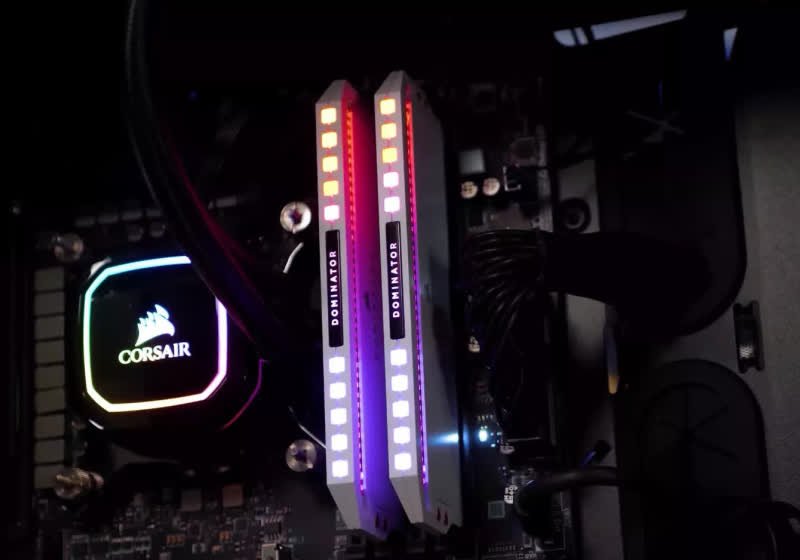
• Core Points: A PC enthusiast ordered a single DDR5 RAM kit for $300 and unexpectedly received 10 kits valued at about $3,000 due to a fulfillment error.
• Main Content: The Reddit user, AccomplishedFan8690, posted that the order price was $300 for a 32GB Corsair DDR5 RAM kit, significantly below typical market prices.
• Key Insights: Fulfillment mistakes can result in substantial overages; returns and communications with retailers vary by company policy; online communities highlight price anomalies and potential negotiating outcomes.
• Considerations: Stock management, shipping logistics, and warranty implications can complicate resolution; buyers should consider how vendor policies handle excess or mis-shipped merchandise.
• Recommended Actions: Contact the retailer promptly, review return and cancellation policies, and document all correspondence; consider whether to keep or return surplus items depending on policy and value.
Content Overview
The online PC-building community frequently discusses component prices, promotions, and occasional pricing errors. In a recent case shared on the /pcmasterrace subreddit, a user going by the handle AccomplishedFan8690 described an unusual fulfillment incident involving high-end RAM. The user reported purchasing a single 32GB DDR5 RAM kit for about $300, a price point notably lower than the average market cost for Corsair DDR5 kits, which commonly hover around $400 or more in retail channels. The exchange underscores two realities common in e-commerce: sharp price discrepancies can occur due to misprints, catalog errors, or warehouse mishaps, and they sometimes prompt retailers to re-evaluate orders post-purchase. The broader context for the RAM market includes increasing demands for faster memory in modern gaming rigs and content-creation workstations, as well as ongoing supply adjustments in response to chip production cycles and consumer demand.
While the original Reddit post focuses on the price discrepancy and the customer’s experience, it also raises practical questions about how retailers handle such mistakes. When a customer pays significantly less than the intended price, vendors may choose different paths: honor the sale, request a correction, offer partial fulfillment, or cancel the order entirely. Each option has implications for customer satisfaction, brand trust, and supply chain operations. This case also highlights how online communities interpret pricing anomalies, discuss potential consequences for both buyers and sellers, and consider the long-term effects on pricing transparency in online marketplaces.
In-Depth Analysis
The core event involves a consumer who targeted a single DDR5 RAM kit, specifically a 32GB module configuration from Corsair, at a price point around $300. DDR5 memory represents the latest generation of system memory, delivering higher bandwidth and improved efficiency for modern PCs, particularly for enthusiasts building gaming rigs or workstations that demand rapid data access. Corsair, a well-known memory and PC hardware manufacturer, offers various 32GB DDR5 kits designed for overclocking headroom and reliable performance.
Prices for Corsair DDR5 kits can vary based on speed, timing, kit capacity, and market conditions. In many retail scenarios, a 32GB DDR5 kit can fetch prices closer to or exceeding the $400 range, depending on speed class (for example, DDR5-5200, DDR5-5600, or higher), CAS latency, and whether the kit uses dual-rank or single-rank memory configurations. Therefore, a purchase price of approximately $300 is not typical and would naturally draw attention from both the buyer and the seller.
According to the Reddit post by AccomplishedFan8690, the buyer paid $300 for the kit and later discovered that the fulfillment resulted in a significant overage: the seller inadvertently shipped 10 kits instead of just the one, implying a potential value of around $3,000 based on typical RAM kit pricing. This situation introduces multiple layers of consideration for both parties involved: the buyer who now has more inventory than anticipated, and the seller whose inventory system and order processing may have issued an incorrect quantity, possibly due to a warehouse allocation error, mislabeling, or a bulk-picking mistake.
From a consumer rights perspective, the scenario tests how retailers handle pricing errors and order fulfillment anomalies. In many jurisdictions, retailers reserve the right to cancel orders placed due to pricing mistakes, especially when the mispricing is glaring and the customer has not had a reasonable opportunity to review the final price before shipment. However, if an order is processed and shipped, some retailers attempt to resolve the discrepancy through partial fulfillment, refunds, or other compensation, depending on internal policies and legal considerations. The customer’s obligation often aligns with accepted terms of service, which may include clauses about price corrections or unintentional mispricing. Yet, in practice, outcomes vary by retailer, the magnitude of the error, and the potential reputational impact of refusing to honor an order.
The Reddit community reaction to such an incident typically involves a mix of curiosity, practical advice, and risk assessment. Some posts discuss whether the buyer should attempt to return the extra RAM without penalty, while others speculate on potential goodwill offers from the seller, such as paying for return shipping or accepting a restocking fee. There are also conversations about whether the buyer should resell the extra kits or negotiate a discount with the retailer to cover shipping costs or other associated expenses. The discussions illustrate how online communities weigh ethical considerations, business norms, and personal financial risk when confronted with unexpected windfalls or mistakes.
An important component of this situation is the potential impact on the involved retailer’s operations. A mis-shipment of this magnitude can strain inventory control and warehouse processes, particularly if the retailer’s fulfillment software misreads stock levels or if there is a human error in order assembly. The retailer must decide how to respond while considering customer goodwill, statutory rights, and the possibility of the surplus inventory affecting profit margins. In some cases, retailers may offer a return-to-sender option, issue a credit note, or request the customer to return the surplus units at their own expense if the error is deemed unverifiable or not cost-effective to rectify.
For the broader market, this incident is a reminder of the volatility that can accompany consumer electronics pricing. DDR5 kits frequently trend with memory speeds and capacities that influence overall system performance and price. When a single transaction becomes a case study in price disparity, it underscores how dynamic pricing can be across online marketplaces and retailers, with promotional pricing, bundling, and limited-time offers contributing to occasional mispricing scenarios.
The user’s experience highlights the importance of documenting communications with vendors. If a mis-shipment occurs, it is prudent for buyers to preserve email exchanges, tracking numbers, invoices, and any other evidence that might influence the resolution process. Clear documentation helps ensure that the buyer can present the situation accurately if there is a need to negotiate a return, request a refund, or coordinate with the retailer’s customer service team. It is also advisable to review the retailer’s return policies, eligibility criteria for mis-shipment, and any related terms of service.
In addition to the immediate financial considerations, there are practical implications for the buyer who now has an excess of memory modules. RAM kits, especially those from Corsair, may have a long shelf life, but technological relevance can evolve. A buyer who keeps extra units should consider storage conditions to avoid degradation, warranty implications if the original kit’s warranty was registered under the initial purchase, and potential resale value if the buyer chooses to liquidate surplus stock. These factors influence whether retaining or returning the extra kits is the more prudent path.
It is worth noting that the initial article statement mentions that the 32GB Corsair kit’s typical price hovers around $400. Market prices fluctuate, and the exact model (speed, timing, and kit composition) can influence value. The discrepancy between a $300 purchase price and a roughly $3,000 value in total shipment underscores why pricing errors can be commercially significant for retailers, especially for high-demand components where margins can be thin and the cost of mis-shipment is non-trivial.
Perspectives and Impact
From a buyer’s perspective, this incident provides a practical case study in handling pricing errors and mis-shipments. The buyer’s first step in any similar scenario should be to contact the seller promptly to confirm the details and understand the retailer’s position on the mispricing and over-shipment. Time is often a critical factor; prompt communication can influence whether the retailer agrees to a partial fulfillment or requests the return of surplus inventory. The buyer should be prepared to offer options that minimize inconvenience and cost for both parties, such as arranging covered return shipping for the over-shipped items or agreeing to keep some units if the retailer offers a discount or credit.

*圖片來源:Unsplash*
From the retailer’s standpoint, the incident spotlights several operational considerations. Inventory management systems, order entry interfaces, and warehouse picking processes are all points where misalignment can create costly errors. Retailers may implement stricter controls, such as requiring approval for large or unusual orders, implementing automated price verification steps before finalizing shipments, or placing a temporary hold on orders that exceed certain thresholds of value or quantity. In practice, many retailers balance the need to protect profit margins with the desire to preserve customer goodwill and avoid negative publicity that could arise from refusing to honor orders that were placed and paid for in good faith.
The broader memory market is not immune to such episodes. Given the price sensitivity of high-demand components and the frequent promotions that occur online, mispricing events can temporarily alter consumer expectations and behavior. Persistent or high-profile mispricing cases can influence retailer pricing policies, encourage more robust fraud prevention and order verification routines, and drive customers to scrutinize future price points more closely. For the consumer electronics ecosystem, the incident reinforces the importance of understanding terms of sale, return policies, and the potential for unexpected outcomes when shopping online.
Another angle to consider is the ethical and legal dimension. Depending on local consumer protection laws, mispriced items may entitle a retailer to cancel orders or demand payment at the correct price, particularly if the mispricing was obvious or the buyer had reason to suspect automation or human error. However, enforcement often hinges on contract terms, the nature of the error, and the retailer’s willingness to uphold an offer that was in place at the time of purchase. For buyers, awareness of these legal boundaries is useful, especially in jurisdictions with strong consumer protection frameworks that govern misrepresentation and honest dealing.
Future implications for online shopping include heightened transparency in pricing and improved user interfaces that flag unusual price points before checkout. Retailers could implement confirmation prompts for orders that involve large discrepancies between listed and typical market prices, or introduce safeguards to prevent substantial mis-ships, such as automated quantity checks for single-item orders. Consumers may benefit from richer price history data that helps identify when a good deal is a genuine bargain versus a result of a pricing error that should be scrutinized.
The social dimension, including the Reddit community discussions, also matters. Online forums function as collective knowledge bases where users share experiences, warn others, and advocate for best practices in shopping and dispute resolution. They can influence customer expectations and shape perceptions of brand responsiveness. In this case, the community’s discourse likely centered on practical strategies for remedy, concerns about warranty coverage, and considerations of whether to retain or return the excess inventory based on retailer policies.
In sum, the incident illustrates the intersections of e-commerce operations, consumer rights, and online community dynamics. It offers a rare window into how a pricing error can evolve into a real-world scenario with financial implications for both buyer and seller, potential impacts on inventory management, and broader lessons for responsible shopping and vendor policy design.
Key Takeaways
Main Points:
– A buyer paid $300 for a 32GB Corsair DDR5 RAM kit and received 10 kits due to a fulfillment error.
– The situation underscores how pricing mistakes can cascade into over-shipment and logistical questions.
– Retailer responses to mis-shipment vary, potentially including returns, credit, or partial fulfillment.
Areas of Concern:
– How retailers balance profit protection with customer goodwill in mispricing scenarios.
– Potential warranty and resale implications for surplus RAM kits.
– The legal and contractual nuances governing mispriced orders and over-shipment.
Summary and Recommendations
This incident demonstrates that pricing errors in online retail can produce extraordinary outcomes, including the shipment of multiple over-valued items for a single purchase. For buyers, the prudent course is to engage promptly with the seller to clarify the situation, review applicable return and mis-shipment policies, and preserve all communication records. Depending on retailer policies and the logistics of the mis-shipment, options may include returning excess units at the seller’s expense, accepting a partial fulfillment with compensation, or negotiating a mutually agreeable resolution such as a credit or discount to offset costs.
From a seller’s perspective, this scenario emphasizes the importance of robust order verification workflows and clear mispricing procedures. Implementing price confirmation steps prior to shipment, limiting bulk orders, and establishing transparent remedies for mis-shipments can help mitigate financial risk and preserve customer trust. In a market where high-demand components are frequently promoted at favorable prices, maintaining streamlined processes for addressing errors can prevent escalation into reputational damage and legal disputes.
For readers and prospective shoppers, this case reinforces the value of due diligence when confronted with unusually low prices for premium hardware. Checking price histories, verifying stock levels, and understanding return policies can help shoppers avoid potential complications. While mispriced items may sometimes result in favorable outcomes for buyers, they are generally exceptional events that warrant careful handling and clear, documented communication with the retailer.
Ultimately, the ongoing evolution of e-commerce policies and warehouse automation aims to reduce such occurrences while preserving customer confidence in online shopping. Buyers should approach unexpected windfalls with a balanced view of practicality and policy awareness, while retailers work toward transparent, fair, and efficient resolutions that uphold consumer trust.
References
- Original: https://www.techspot.com/news/111484-pc-builder-orders-one-ddr5-kit-receives-10.html
- Additional context on mispricing and fulfillment practices: https://www.product-litigation.com/resources/mispriced-online-sales
- Consumer rights and mis-shipment policies: https://www.consumer.ftc.gov/articles/0131-mistakes-when-shopping-online
Forbidden:
– No thinking process or “Thinking…” markers
– Article must start with “## TLDR”
Ensure content is original and professional.

*圖片來源:Unsplash*