TLDR
• Core Points: Trump proposes a “Ratepayer Protection Pledge” with Big Tech supplying electricity for AI data centers to shield households from rising costs.
• Main Content: The pledge aims to separate AI infrastructure costs from general electric rates, though specifics on participating companies remain undisclosed.
• Key Insights: The plan signals a politically charged approach to energy pricing in the AI era, raising questions about feasibility and market impact.
• Considerations: Details on implementation, regulatory alignment, and potential impacts on consumers and cloud providers require clarification.
• Recommended Actions: Monitor official announcements, evaluate economic and regulatory implications, and assess consumer protections and reliability considerations.
Content Overview
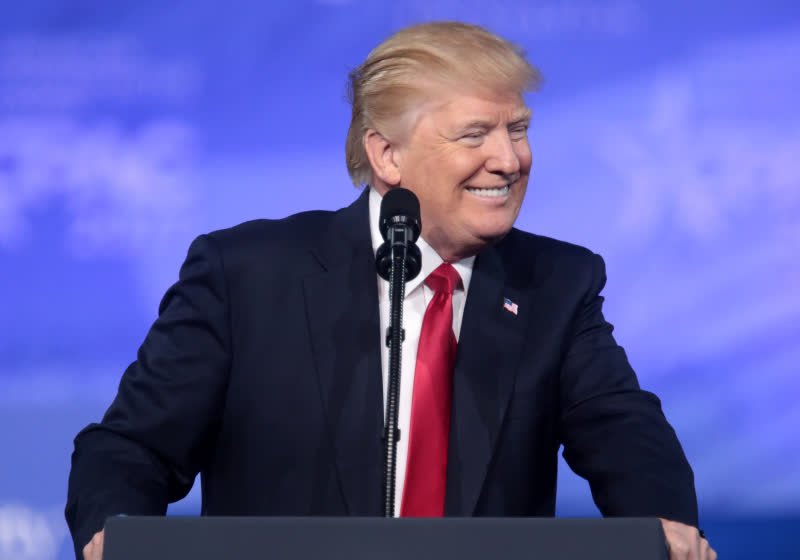
The State of the Union address this week included remarks from former President Donald Trump regarding the funding and energy strategy for artificial intelligence infrastructure. Trump asserted that he had negotiated with leading AI companies to create a “Ratepayer Protection Pledge.” The pledge is described as a mechanism to shield American households from rising electricity costs associated with the construction and operation of AI data centers. While the former president did not publicly name the participating companies, sources close to the administration indicated that several major tech firms may be involved. The broader context frames energy costs as a potential bottleneck or accelerant for AI deployment, prompting policymakers to explore ways to decouple the electricity expense from general consumer utility rates.
In framing the pledge, proponents argue that large-scale AI data centers require substantial and predictable electricity consumption, which can influence household electricity bills if costs are absorbed into typical rate structures. The pledge would, in theory, require participating companies to shoulder a portion or all of the electricity costs for their data centers, thereby insulating ratepayers from price volatility tied to AI workloads, maintenance, and expansion. Critics, however, may question the practicality, fairness, and enforceability of such a plan, including how it would interact with existing regulatory frameworks, interconnection agreements, and energy-market dynamics. This topic sits at the intersection of technology policy, energy economics, and consumer protection—an area of increasing relevance as AI services scale across sectors and geographies.
The proposal reflects a broader tension between rapid AI development and the regulatory environment that governs electricity markets in the United States. Advocates say that targeted reforms could unlock faster AI innovation while preserving consumer affordability. Opponents worry about the precedent of requiring private companies to fund public infrastructure costs and the potential for uneven burden sharing among different energy users. The discussion coincides with ongoing debates about energy security, grid reliability, and the costs associated with expanding data-center capacity in a nation with a complex and regionally varied electricity market.
This report synthesizes the available information surrounding Trump’s comments, examines the potential mechanisms by which a Ratepayer Protection Pledge could operate, and explores the likely implications for policymakers, technology firms, utility providers, and consumers. It is important to note that, at the time of publication, specifics such as the exact participating companies, the precise financial terms, measurement methods for electricity usage, and enforcement mechanisms were not fully disclosed.
In-Depth Analysis
The concept of a Ratepayer Protection Pledge centers on the premise that electricity pricing for data centers should be insulated from the general consumer market, thereby preventing AI-driven electricity demand from translating into higher household bills. In practice, this could take several forms: a) a contractual agreement where participating firms commit to covering incremental electricity costs attributable to their data centers, b) regulatory accommodations that exclude certain AI-related demand from ratepayer-based pricing models, or c) a public-private fund or subsidy mechanism funded by the tech firms themselves or through a combination of corporate contributions and tax incentives.
The rationale behind such a pledge hinges on the scale and energy intensity of contemporary AI infrastructures. Large language model training, inference workloads, and related AI services require vast amounts of electricity, often sourced from complex and fluctuating energy markets. For policy makers, there is a desire to maintain consumer electricity affordability while not throttling the growth of cutting-edge AI capabilities that could boost productivity, national security, and economic competitiveness. The proposed approach seeks to isolate the financial impact of AI electricity usage from the general rate base that utilities use to determine residential and small business rates.
However, numerous challenges accompany this approach. First, who qualifies as a participating company, and what thresholds of data-center capacity or energy intensity trigger pledge requirements? Second, how would the pledge be measured and verified? Electricity usage for data centers is already tracked for metering and billing, but attributing specific costs to AI workloads versus other operations (cloud storage, generic compute, non-AI tasks) could be technically and administratively complex. Third, what regulatory authorities would oversee the pledge, and what enforcement mechanisms would exist if a company failed to live up to its commitments? Fourth, what are the broader market implications? If tech giants bear the burden of electricity costs, could this hinder their competitiveness, alter investment strategies, or influence where data centers are built? Conversely, could such a pledge reduce volatility in consumer prices and improve public trust in AI investments?
Additionally, there are equity concerns. If only a subset of large tech firms participate, or if the pledge disproportionately benefits certain regions with favorable energy prices, consumer protections may be perceived as uneven. The energy market’s regional nature means that some states or utility territories face different grid reliability and pricing pressures than others. A successful pledge would likely need harmonization across states and possibly federal guidelines to avoid a patchwork of obligations that complicate project planning and financing for AI infrastructure.
The political dimension cannot be ignored. Energy policy has long been a balancing act among reliability, affordability, green energy goals, and economic growth. Introducing a private-sector funding model for AI-related electricity costs could become a partisan issue, depending on how it is framed and implemented. Supporters may portray the pledge as a pro-growth, pro-innovation policy that shields households during the transition to AI-enabled services. Critics could view it as an unwarranted preferential treatment for tech behemoths or as a mechanism that shifts the burden away from the producers and purchasers of electricity onto a more constrained public purse or regulatory framework.
From a financial perspective, the pledge would interact with existing incentive schemes and rate design. Utilities often rely on rate structures that recoup capital investments and operating costs through base rates, demand charges, or special tariffs. If large data centers are compelled to operate under a different cost-sharing scheme, utilities would need to adjust their revenue models accordingly. That could entail renegotiations of capacity charges, demand response programs, or alternative power purchase agreements (PPAs). The net effect on consumer bills would depend on the terms of the pledge, the proportion of total electricity costs covered by participating companies, and the degree of cross-subsidization that might occur.
Another layer involves grid resilience and reliability. Data centers are typically designed for high uptime and robust power supply, which aligns with grid reliability objectives but can also increase local demand during peak periods. If data centers shift more of their load away from traditional ratepayer funding, the overall demand profile for electricity could change, potentially affecting peak pricing and grid planning. Policymakers would need to ensure that any pledge does not inadvertently introduce new reliability risks or shift the burden of maintaining grid stability onto a narrow subset of customers or private operators.
In terms of international comparisons, several countries pursue different models for financing AI infrastructure and ensuring energy affordability. Some nations provide targeted incentives or public investments to attract data-center investments while safeguarding consumers through transparent pricing and grid modernization. Others rely on market-based mechanisms that minimize cross-subsidization. The United States’ approach, especially if it involves a ratepayer-pledge model, would be scrutinized for its alignment with federal energy policy, state-level regulatory autonomy, and competition laws.
The significance of this proposal also lies in signaling. Even without immediate yoking legislation, the pledge could influence corporate decisions. Companies may choose to pursue energy procurement strategies, like sourcing renewable energy under PPAs or investing in on-site generation and energy storage, to further demonstrate commitment to energy costs management and environmental goals. Conversely, if the pledge is perceived as a political leverage tool rather than a workable policy, firms may rely on existing hedging strategies or diversification of data-center locations to manage energy price exposure.
It is essential to recognize that the article in question does not disclose all specifics. The absence of names, numbers, and enforcement details means that much of the discussion is speculative. As coverage evolves, stakeholders should look for official policy documents, accompanying fiscal or regulatory analyses, and independent assessments of potential costs, benefits, and risks. The balance between innovation and affordability remains a central theme: how to support the rapid deployment of AI technologies while preserving households’ financial stability and grid reliability.

*圖片來源:Unsplash*
Perspectives and Impact
For policymakers: The pledge represents a potential policy tool to manage energy costs associated with AI infrastructure without broadly raising or altering consumer energy rates. It could prompt revisions to utility rate design, procurement policies, and incentives, and might necessitate intergovernmental coordination. The ultimate aim would be to sustain AI growth while maintaining consumer protection and grid reliability.
For technology firms: Participation in such a pledge could help build public trust and reduce political and regulatory scrutiny regarding AI energy footprints. It could also affect capital budgeting and site selection, as firms weigh the cost implications of bearing electricity costs themselves versus continuing to rely on general utility rates. Companies might accelerate investments in energy efficiency, onsite generation, or green energy sourcing to complement any pledge terms.
For utilities and ratepayers: The pledge would raise questions about cost allocation, regulatory incentives, and how to equitably fund or allocate the costs associated with AI data centers. Utilities would need to reconcile a potentially changing revenue model with ongoing infrastructure investments, reliability programs, and the need to maintain safe and affordable energy for all customers.
For the broader public and consumers: If implemented effectively, the pledge could reduce the risk of sudden electricity price spikes driven by AI workloads and improve predictability of household bills. However, transparency would be key, as consumers would want to understand which companies are participating, how costs are calculated, and what protections are in place to prevent cross-subsidization or reduced service quality.
For the AI industry’s trajectory: Energy pricing is a critical factor in the total cost of ownership for AI services. A pledge that stabilizes or reduces electricity exposure could lower operating costs, potentially lowering barriers to entry for startups and enabling broader AI experimentation. On the flip side, if the pledge imposes additional costs or regulatory burdens on participating firms, there could be a chilling effect, especially in regions where energy prices are already high.
Future implications will hinge on how the pledge is designed and adopted. A workable model would require precise definitions, rigorous accounting, independent oversight, and alignment with existing energy-market regulations. It would also need to address disparities across regions, ensure that non-participating customers are not disproportionately affected, and maintain a clear path toward grid modernization and decarbonization, if that remains among policy objectives. As AI capabilities continue to expand, the interplay between technology policy and energy policy will become increasingly central to national competitiveness, consumer protection, and environmental stewardship.
Key Takeaways
Main Points:
– Trump proposed a Ratepayer Protection Pledge to shield households from AI-related electricity costs.
– Participating Big Tech firms would supply electricity for their AI data centers, reducing impact on general ratepayers.
– Specific participants, metrics, and enforcement details were not disclosed in the available statements.
Areas of Concern:
– Feasibility: How costs would be allocated and measured across private firms and public rate structures.
– Regulatory Alignment: Coordination among federal and state energy regulators and potential legal challenges.
– Equity and Burden Sharing: Implications for regions with differing energy prices and grid reliability.
Summary and Recommendations
The idea of a Ratepayer Protection Pledge represents a high-level policy concept aimed at balancing the rapid growth of AI with consumer energy affordability. By asking participating technology companies to bear the electricity costs for their data centers, the pledge seeks to decouple those costs from household electricity bills. While the intention appears to be to foster innovation without compromising consumer protection, the plan raises critical questions about feasibility, implementation, and equity. Key considerations include how to define eligible participants, how to measure and allocate AI-specific electricity usage, and how to integrate such a pledge within the existing regulatory and market frameworks. It will be essential for policymakers to publish detailed terms, establish independent oversight, and ensure transparent reporting. The importance of grid reliability and energy sustainability should remain central to any policy design, with attention to how such a pledge would interact with renewable procurement goals, demand management, and regional price variations.
If pursued, stakeholders—policymakers, technology firms, utilities, and consumer groups—should engage in a structured dialogue that addresses:
– Transparent criteria for participation and scope of the pledge
– Clear accounting methods for attributing electricity costs to AI workloads
– Regulatory compatibility across jurisdictions
– Protective measures to ensure consumer affordability and grid resilience
– Mechanisms for accountability, review, and adjustments as AI technologies and energy markets evolve
In sum, the Ratepayer Protection Pledge could become a notable chapter in the policy landscape surrounding AI and energy. Its success would depend on concrete, well-communicated terms, robust governance, and alignment with broader energy and environmental objectives. As AI continues to reshape economic activity, thoughtful policy design that protects consumers while supporting innovation will be critical.
References
- Original: techspot.com
- Additional context and policy considerations on AI energy demands and data-center economics (examples for further reading, not direct quotes):
- U.S. Department of Energy: Data Center Energy Efficiency and Policies
- International Energy Agency: Global data center electricity usage and trends
- National Regulatory Research Institute: Utility regulation and data-center load management
Forbidden:
– No thinking process or “Thinking…” markers
– Article must start with “## TLDR”

*圖片來源:Unsplash*