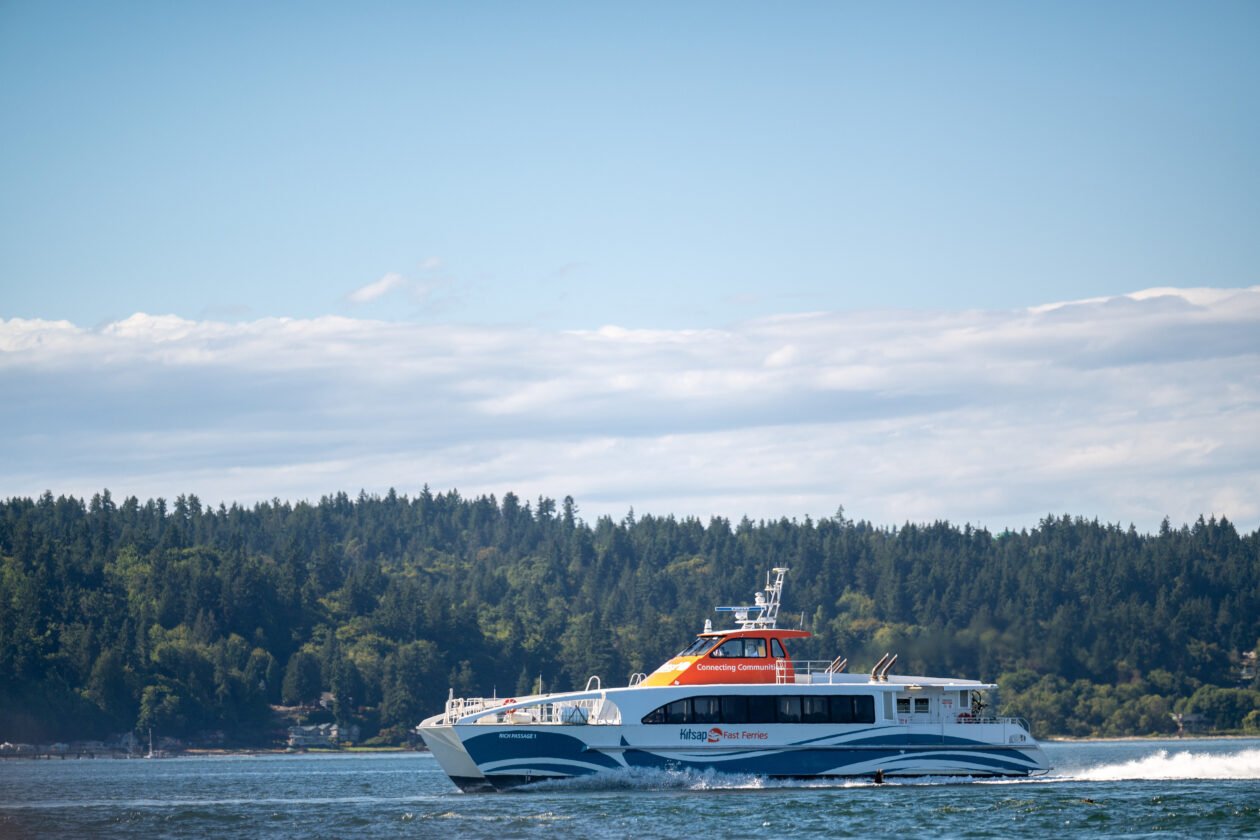
TLDR
• Core Points: A fast-tracked, passenger-only ferry service is proposed to improve commutes, access to medical care, and tourism in underserved Washington communities.
• Main Content: The plan aims to reestablish a modernized “Mosquito Fleet” of ferries to expand regional transit, supported by policy and funding efforts.
• Key Insights: Integrating ferry service with tech-driven economic development could widen labor mobility and regional connectivity while presenting operational and funding challenges.
• Considerations: Weather, vessel procurement, labor, schedules, equity of access, and environmental impact must be addressed.
• Recommended Actions: Stakeholders should pursue streamlined permitting, robust funding avenues, public-private partnerships, and phased service rollouts with performance metrics.
Content Overview
Washington state has long looked to its maritime past for answers to present-day mobility and economic disparities. In the early 20th century, a dense network of small, fast ferries—colloquially known as the “Mosquito Fleet”—connected coastal and Puget Sound communities, delivering timely transportation in an era before highways dominated regional travel. Today, policymakers are revisiting that model with a modern twist: a fast-tracked, passenger-only ferry service designed to scale maritime transit, support workers, and catalyze tech-enabled economic activity in areas that remain harder to reach by road or rail.
Supporters of a proposed bill argue that a passenger-only ferry network could offer significant benefits. By providing reliable and efficient cross-water commutes, it could reduce travel times for workers who live in remote communities but work in more urbanized hubs, ease access to medical care for residents who struggle with transportation barriers, and boost tourism by improving the accessibility of smaller ports and waterfront towns. In addition, the project is seen as a potential catalyst for regional tech development, where small businesses and startups could leverage improved transit connectivity to attract talent and investment.
The idea is not merely about replacing current modes of transportation; it is about reimagining regional mobility to align with a broader strategy of resilient infrastructure. A modern Mosquito Fleet would be equipped with contemporary ferry designs optimized for frequent service, quick turnaround times, and enhanced safety features. It would also consider integration with existing transit networks, local economic development plans, and environmental standards that reflect today’s climate and ecological priorities.
As with any large-scale transit initiative, the proposal faces a range of practical considerations. These include capital costs for vessels and terminals, ongoing operating expenses, labor, maintenance, and the regulatory environment governing vehicle construction, port access, and waterfront development. Policymakers are evaluating how best to structure funding—potentially combining public investments with private capital and federal or state programs aimed at transportation efficiency and economic revitalization. The plan emphasizes a phased approach, starting with pilot routes or limited-service corridors that can demonstrate ridership, reliability, and revenue viability before broader expansion.
The broader context for this effort is Washington’s ambition to enlarge its maritime economy while advancing digital and tech-driven growth. By improving access to coastal and Puget Sound communities, the state hopes to attract talent, support tourism, and stabilize transportation options for residents who currently face long commutes or disruption when weather or infrastructure constraints affect land routes. The project also raises questions about environmental stewardship, community engagement, and equitable access to mobility across different regions and income levels. Stakeholders must weigh the benefits of faster, more frequent service against the costs and potential trade-offs, ensuring that the project delivers measurable social and economic gains while preserving the character and needs of port towns and maritime industries.
This article examines the rationale behind reviving the Mosquito Fleet concept, the policy pathways being considered, and the potential implications for workers, residents, and regional tech ecosystems. It also addresses the practical challenges of launching, financing, and sustaining a passenger ferry network in a modern context, with attention to how such a system could complement other modes of transit and contribute to a more connected, resilient economy.
In-Depth Analysis
The proposal to reintroduce a modern, passenger-only ferry network in Washington rests on several interconnected assumptions about mobility, economic opportunity, and regional development. First, proponents contend that enhanced cross-water transit can substantially reduce daily commute times for a segment of the workforce living in areas with limited land-based transit options. In communities where ferries previously served as a primary transportation artery, a contemporary system could offer reliable, high-frequency service designed to meet the needs of workers, students, healthcare appointments, and social engagements.
Second, access to medical care and health services is a central rationale. For residents in remote coastal towns or on islands within Puget Sound, long drives to distant facilities can be a deterrent to timely medical treatment. A scheduled passenger ferry network could provide a more consistent and affordable means of reaching clinics and hospitals, thereby supporting health equity and reducing wait times for essential services.
Third, the tourism implications are significant. Easier access to waterfront towns and scenic routes can broaden the tourist footprint and generate ancillary economic activity in port communities. This aligns with broader state objectives to diversify local economies, attract visitors, and promote sustainable travel experiences that leverage Washington’s natural geography.
Fourth, there is a clear interest in tying the ferry initiative to technology-led economic growth. The transference of digital-era efficiencies into maritime operations—such as real-time passenger data, integrated ticketing, and optimized scheduling—could attract tech firms and startups seeking locations with robust, multimodal transportation networks. In turn, healthier transit options may enable greater labor mobility, enabling residents to pursue opportunities across counties without enduring long, multi-modal commutes.
Policy design considerations are central to the feasibility of the project. A key issue will be the sourcing of capital for fleet construction, terminal development, and ongoing operations. Given the scale of such an undertaking, stakeholders may pursue a blended model that combines public funding with private investment, leveraging federal programs for transportation infrastructure, and state resources targeted at regional growth and climate resilience. A phased rollout is often favored as a risk-managed approach: initial routes could test demand, refine scheduling, and establish governance structures, followed by additional corridors as performance metrics justify expansion.
Operational design will need to address a variety of practicalities. Vessel specifications must balance speed, capacity, and reliability with cost considerations. High-frequency service requires vessels that can endure heavy weekday utilization while maintaining comfortable passenger experiences. Terminal design will need to accommodate tide, weather, and maritime traffic, ensuring safe embarkation and debarkation processes. Scheduling will need to reflect peak work hours, medical appointment windows, and tourism patterns, necessitating sophisticated demand forecasting and flexible staffing models.
Environmental considerations are a core dimension of the planning process. Modern ferries must meet stringent emissions standards and incorporate sustainable practices across the supply chain. This includes vessel propulsion choices, waste management, shoreline resilience, and the potential for electric or hybrid propulsion in alignment with ongoing decarbonization goals. Environmental impact assessments will likely be integral to permitting and community acceptance, ensuring that the project minimizes harm to aquatic ecosystems while maximizing resilience to climate-related events.
Equity and accessibility are also critical. A passenger-focused system should ensure fair pricing, inclusive access for seniors and people with disabilities, and equitable service patterns across communities with varying levels of economic need. The governance structure will be tasked with oversight that protects public interests while fostering an environment conducive to innovation and operational efficiency. Public engagement with communities along proposed routes will be essential to address concerns about traffic, noise, waterfront development, and the potential displacement of existing maritime industries.
The policy landscape includes considerations of how to integrate the ferry network with other transportation modes. Interoperability with bus and rail networks, park-and-ride facilities, and last-mile connectivity will dictate overall system utility. Ticketing integration, real-time updates, and unified passenger information systems can enhance user experience and reduce friction in multimodal travel.

*圖片來源:Unsplash*
Finally, the broader economic implications must be weighed. If successful, the ferry network could become a strategic asset contributing to regional resilience by diversifying transportation options and supporting economic diversification in coastal towns. It could also stimulate private investment in waterfront infrastructure and create new jobs in vessel maintenance, port operations, and passenger services. However, misalignment between capital costs and anticipated ridership could lead to underutilized assets and fiscal strain, underscoring the importance of careful traffic modeling, scenario planning, and ongoing performance monitoring.
Perspectives and Impact
From the perspective of workers and residents in underserved communities, a well-executed passenger ferry system could dramatically alter daily life. Reliable access to urban job centers means shorter commutes, more predictable schedules, and better work-life balance. For families reliant on timely medical care, the service could translate into fewer missed appointments and improved health outcomes. In tourist destinations, easier access could boost economic activity, with spillover benefits for hotels, restaurants, and cultural sites.
For the tech sector, the initiative represents both a logistical challenge and an opportunity. A modern maritime transit network can serve as a living lab for transportation technology, data analytics, and user-centered design. The capacity to collect and analyze ridership data in real time enables more responsive service, supports demand-driven schedules, and helps attract tech talent seeking employers with innovative infrastructure. Regionally, it can reinforce the idea that Washington is investing in modern, climate-conscious mobility that complements digital economy initiatives.
Policy makers face a balancing act. On the one hand, the potential benefits are substantial: improved mobility, enhanced health access, economic diversification, and a platform for technological innovation. On the other hand, there are legitimate concerns about cost, risk, and long-term sustainability. A phased approach, with transparent performance metrics and clear accountability structures, can help manage these concerns by enabling early evaluation of ridership trends, operating costs, and social outcomes.
Communities adjacent to proposed routes may have divergent priorities. Some residents may welcome better transit and economic opportunities, while others may worry about environmental impacts, increased traffic on dockside areas, and changes to the character of waterfront towns. Transparent stakeholder engagement, local hiring mandates, and community-benefit agreements can help ensure that the project yields broad, inclusive advantages rather than concentrated gains.
Environmental advocates may emphasize the need for rigorous impact assessments and adherence to climate goals. Modern ferries offer the chance to reduce reliance on longer car trips and to shift freight or support services toward more sustainable maritime modes, but these benefits depend on careful design choices and policy implementation. Ports must also be prepared to manage potential ecological effects, including disruptions to marine habitats and increased vessel traffic in sensitive areas.
The financing landscape will determine feasibility. The project’s success hinges on assembling a robust portfolio of funding sources, including state budgets, federal transportation appropriations, and private capital. Efficient procurement processes, competitive vessel design standards, and strong risk management practices will help ensure that the project remains on schedule and within budget. The role of public-private partnerships could be pivotal, balancing public accountability with private efficiency and innovation.
Looking ahead, if the passenger ferry initiative demonstrates compelling ridership and measurable social and economic gains, it could inspire similar models in other regions with dispersed waterfront communities. Washington could become a testbed for scalable, technology-enabled maritime transit that seeks to harmonize mobility with regional growth objectives. The long-term success will depend on delivering reliable service, minimizing costs, and maintaining a governance framework that sustains momentum beyond initial milestones.
Key Takeaways
Main Points:
– Reintroducing a modern, passenger-only ferry network could improve commutes, healthcare access, and tourism in underserved Washington communities.
– The plan envisions a phased rollout with high-frequency service and seamless integration into broader transit and tech-driven economic strategies.
– Financing, environmental stewardship, equity, and stakeholder engagement are central to feasibility and public acceptance.
Areas of Concern:
– High capital and operating costs, vessel procurement challenges, and port infrastructure needs.
– Ensuring equitable access and benefits across diverse communities.
– Environmental impacts and alignment with climate goals, including potential adoption of electric or hybrid propulsion.
Summary and Recommendations
The proposed revival of the Mosquito Fleet as a modern passenger ferry network represents a bold approach to addressing transportation gaps, economic development, and technology-enabled growth in Washington. By prioritizing fast, passenger-focused service, the plan seeks to shorten commutes, improve health access, and stimulate tourism and regional innovation. However, the success of such a project depends on careful design, financing, and implementation that acknowledge the complexities of harbor infrastructure, vessel technology, and environmental stewardship.
To advance this initiative responsibly, policymakers and stakeholders should pursue a structured, evidence-based path:
- Develop a clear, phased implementation plan with defined routes, service levels, and performance metrics that demonstrate ridership potential and financial viability before expanding.
- Pursue a diversified funding strategy that blends public funding, federal transportation programs, and private capital, complemented by robust risk management and cost-control measures.
- Prioritize environmental sustainability by selecting propulsion technologies that minimize emissions, implementing shore power where feasible, and conducting thorough environmental impact assessments.
- Design an equity-centered framework to ensure affordable fares, accessible services for people with disabilities, and meaningful engagement with all affected communities.
- Align the ferry network with existing and planned transit options to maximize multimodal connectivity, including park-and-ride facilities, bus, and rail integration, as well as tourism and economic development initiatives.
- Establish strong governance and accountability mechanisms to monitor performance, transparency, and community benefits over time.
If executed with due diligence and broad stakeholder buy-in, a modernized passenger ferry network could become a cornerstone of Washington’s resilient, tech-forward regional economy, restoring a dynamic “Mosquito Fleet” ethos for 21st-century transportation.
References
- Original: https://www.geekwire.com/2026/reviving-the-mosquito-fleet-washington-eyes-passenger-ferries-to-scale-maritime-transit-and-tech/
- Additional context: [1] Washington State Department of Transportation maritime programs and ferry operations; [2] Federal transportation funding programs and public-private partnership frameworks; [3] Environmental standards for maritime propulsion and shore-side power policy developments.

*圖片來源:Unsplash*