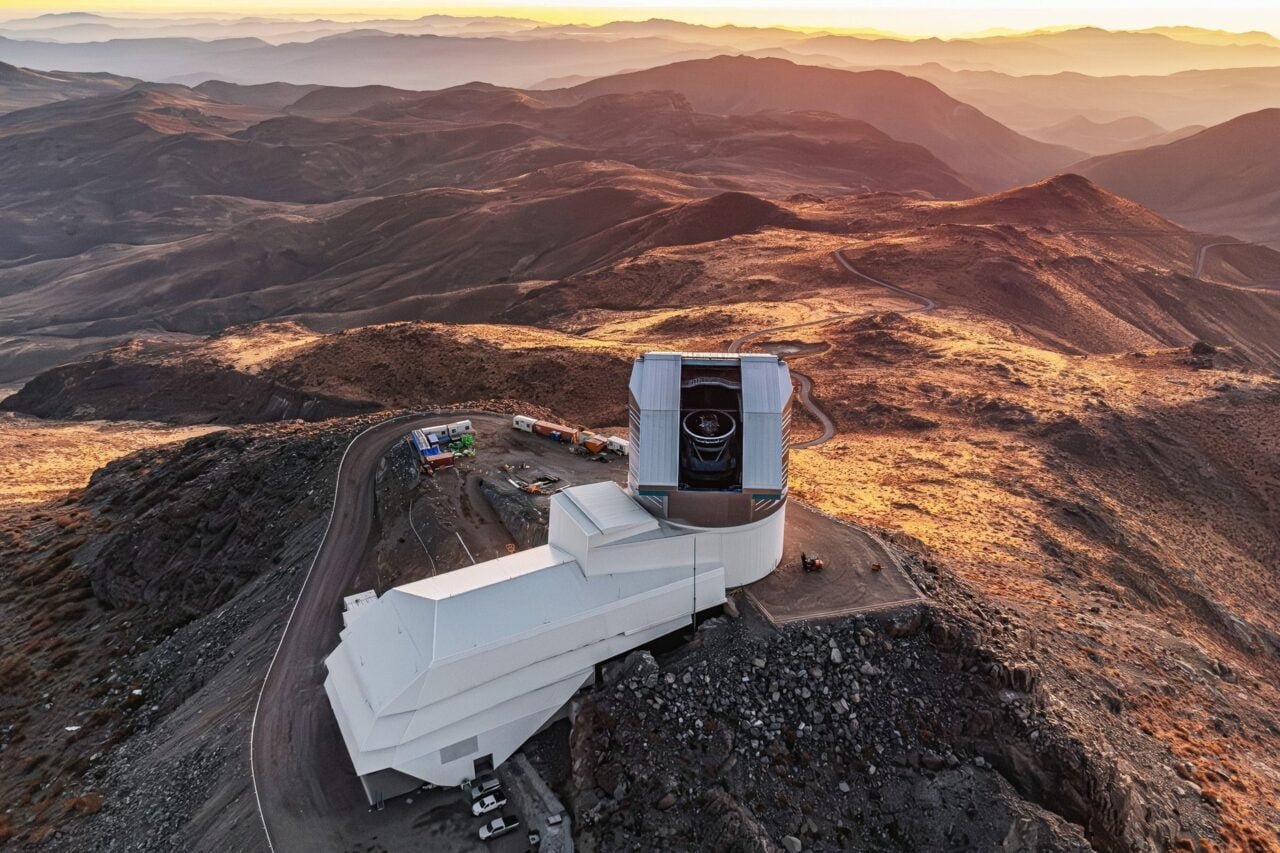
TLDR
• Core Points: The Vera Rubin Observatory began sending the first flood of alerts about new asteroids, supernovae, and active galactic nuclei, signaling a new era in time-domain astronomy.
• Main Content: The initial batch demonstrates the telescope’s unprecedented capability to monitor the night sky, identifying transient events and cataloging celestial objects in near real-time.
• Key Insights: The alerts enable rapid follow-up observations, collaborative science across institutions, and the potential discovery of rare and fleeting phenomena.
• Considerations: Managing data volume, ensuring reliability, and coordinating global follow-up efforts present operational and scientific challenges.
• Recommended Actions: Develop standardized alert protocols, invest in automated prioritization and machine-assisted triage, and strengthen international networks for rapid response.
Content Overview
The Vera C. Rubin Observatory, currently under construction in Chile, is poised to redefine observational astronomy with its Large Synoptic Survey Telescope (LSST) project. When it becomes fully operational, Rubin will survey the entire visible sky every few nights, producing an enormous stream of data about moving objects, transient events, and variable sources. The first tranche of alerts from Rubin’s alert stream, a system designed to notify astronomers about changes in the sky as they happen, has already captured attention in the scientific community and beyond. The initial batch includes alerts about newly detected asteroids, supernovae, and active galactic nuclei (AGN) that exhibit variability or flaring activity. This milestone marks the transition from construction and commissioning phases to active scientific discovery, illustrating both the promise and the practical realities of operating one of the most ambitious astronomical facilities ever built.
Rubin’s approach centers on time-domain astronomy—the study of how astronomical objects change over time. The observatory’s cameras will repeatedly image the same regions of the sky, allowing researchers to identify new objects that were previously invisible, track the motion of near-Earth objects (NEOs), measure changes in brightness of distant supernovae, and monitor the variability of active galaxies. The initial alerts demonstrate the system’s core capability: processing enormous data streams, detecting statistically significant changes, and distributing real-time notices to researchers around the world. The implications extend across multiple subfields, from planetary defense and cosmology to rare transient phenomena such as kilonovae, fast radio bursts (FRBs) counterparts, and tidal disruption events.
This article provides a comprehensive look at what the first Rubin alerts reveal, the technical and scientific considerations they entail, and what lies ahead for collaboration, data management, and discovery.
In-Depth Analysis
Rubin Observatory’s alert stream is designed to deliver real-time notices within minutes of data acquisition. Each alert packet contains crucial information about transient sources: precise coordinates, brightness measurements across multiple filters, the rate of brightness change, and a linked history of previous detections. For the initial cohort of alerts, astronomers saw a mix of predicted and unexpected events, including asteroids that had previously remained undetected, supernovae signaling the explosive deaths of massive stars, and active galactic nuclei whose variability hints at dynamic processes in the accretion disks around supermassive black holes.
Asteroids detected in the first alerts serve multiple scientific and practical purposes. Beyond simply expanding the catalog of known minor planets, tracking their orbits helps refine models of solar system dynamics and, in some cases, informs planetary defense strategies. While the initial alerts are not necessarily limited to near-Earth objects, Rubin’s sensitivity and cadence enable the timely identification of objects whose trajectories could intersect Earth’s orbit decades or even years in the future. The ability to alert a broad network of telescopes means follow-up measurements—photometry, spectroscopy, and astrometric refinements—can be performed quickly, improving orbit determinations and physical characterizations.
Supernovae alerts mark a different but equally important facet of time-domain astronomy. Rubin’s repeated sky imaging allows researchers to catch supernovae soon after they explode, capturing the early light curves that encode information about the explosion mechanisms, the nature of the progenitor stars, and the surrounding environment. Early detection enables complementary observations with other facilities across the electromagnetic spectrum, from radio to gamma rays, providing a holistic view of these cataclysmic events. Rubin’s data stream will help streamline the discovery process, reducing the lag between explosion and follow-up, which has historically limited the ability to study the earliest phases of supernova evolution.
Active galactic nuclei are another primary focus. AGN exhibit variability driven by processes in the vicinity of supermassive black holes at the centers of galaxies. Sudden increases or fluctuations in brightness can reveal changes in accretion rates, jet activity, or intervening material along the line of sight. Rubin’s alerts offer an unprecedented opportunity to monitor AGN behavior on short timescales and to trigger coordinated multi-wavelength campaigns aimed at disentangling the physical mechanisms at work.
Beyond these early detections, the Rubin alert stream also raises broader questions about data management and scientific workflow. The volume of data Rubin will generate—tens of terabytes per night when fully online—requires robust infrastructure for data storage, processing, and dissemination. The alert system must balance completeness with reliability; false positives, while inevitable, must be minimized, and the rate at which alerts are issued needs to be tuned to avoid overwhelming the astronomical community and automated follow-up facilities. Engineers and scientists are actively refining algorithms for transient detection, artifact rejection, and the association of new detections with known sources or moving objects.
The initial alert set also underscores the importance of international collaboration. Rubin’s science goals cover a wide range of topics that benefit from global participation. Telescopes worldwide can contribute follow-up observations across different time zones and spectral ranges, ensuring continuous monitoring and rapid data collection. This necessitates standardized coordination frameworks—data sharing agreements, alert semantics, and prioritization schemes so that researchers can quickly decide which events warrant deeper investigation and resource-intensive follow-up.
The Vera Rubin Observatory’s development hinges not only on data science but also on community readiness. The astronomical community has historically managed distributed follow-up through networks of observatories and informal collaborations. Rubin’s real-time stream accelerates this model, conditioning expectations for the speed and depth of scientist responses. It also emphasizes education and training, ensuring researchers, students, and citizen scientists understand how to utilize the alerts, interpret the data, and contribute meaningfully to analysis pipelines.
On the technical front, Rubin’s alert system is built to integrate with the Astronomical Observation Request (AOR) and VOEvent protocols, standard methods for distributing time-domain alerts. The interoperability of Rubin’s data with existing facilities—ranging from small robotic telescopes to major research instruments—depends on standardized data formats, calibration pipelines, and reliable metadata. While this interoperability is a strength, it also imposes stringent requirements on data quality and provenance tracking. Each alert must be accompanied by sufficient context to inform follow-up decisions and reproducibility of results.
Security and data governance are additional considerations. As with any large-scale scientific infrastructure, ensuring the integrity of alerts and preventing misuse or spoofing are important. Rubin and its partner institutions implement authentication mechanisms, access controls, and monitoring to safeguard the alert stream. The open nature of many astronomical datasets means that while data sharing accelerates discovery, it also requires careful stewardship to protect sensitive information and to manage the expectations of observers who rely on timely, accurate notices.
An interesting dimension of Rubin’s early alerts is their potential to reveal rare or unexpected phenomena. In time-domain astronomy, serendipitous discoveries often arise when vast data volumes are processed rapidly. The first alerts may hint at transient classes that are not yet well characterized, prompting theoretical work to interpret unusual light curves, colors, or spatial associations. Such discoveries can deepen our understanding of stellar evolution, galactic dynamics, and the extreme physics governing compact objects.
Finally, the rollout of Rubin’s alert stream serves as a broader example of how modern astronomy is evolving. The field increasingly blends cutting-edge instrumentation, advanced automation, and collaborative networks that span continents. The initial experiences with Rubin’s alerts will inform best practices for future surveys, including how to design user-friendly interfaces for alert interpretation, how to optimize follow-up resource allocation, and how to balance rapid dissemination with rigorous scientific vetting.
In sum, the first batch of Vera Rubin Observatory alerts demonstrates a successful demonstration of the telescope’s core capabilities: automated detection of transient events, rapid dissemination to the global astronomical community, and a pathway toward a more dynamic, data-rich era of discovery. The alerts about new asteroids, supernovae, and active galactic nuclei illustrate both the breadth of Rubin’s science program and the practical steps necessary to turn raw observational data into actionable scientific insight. As Rubin moves from commissioning to full operation, the astronomy community will learn how best to harness this powerful new tool to explore the dynamic universe in unprecedented detail.

*圖片來源:Unsplash*
Perspectives and Impact
The first flux of Rubin alerts signals a shift in how astronomical research is organized and conducted. Time-domain astronomy has gained new momentum as facilities like Rubin, the Zwicky Transient Facility (ZTF), and others converge on shared objectives: to identify transient events quickly, characterize their properties, and coordinate follow-up across the globe. Rubin’s role is particularly notable for its intended depth and cadence. With a planned observing strategy that revisits the same regions of the sky with high frequency, Rubin will build a comprehensive, time-resolved record of the night sky across multiple wavelengths. This will allow researchers to track the evolution of supernovae from their explosive onset to their late stages, monitor AGN variability on diverse timescales, and detect smaller, faster-changing phenomena that smaller surveys might miss.
One immediate impact is the acceleration of collaborative workflows. The real-time alert stream lowers the barriers to initiating follow-up programs. Researchers can automatically queue follow-up observations, solicit observations from partner facilities, and share datasets in near real-time. This, in turn, enhances the statistical power of studies by enabling larger, more uniform samples of transient events. Over time, Rubin’s data products are expected to feed into community-driven analyses, machine-learning models, and citizen science projects that leverage the public’s engagement with discoveries as they unfold.
The early alerts also spotlight the importance of robust data infrastructure. The velocity of observation-and-notification cycles demands scalable storage, high-throughput processing, and resilient network architectures. Rubin’s data management strategy will need to accommodate not only current needs but also anticipated growth as the survey progresses toward its design sensitivity. The broader astronomical ecosystem must adapt to the influx of alerts, ensuring that institutions have the necessary computational resources to process, classify, and interpret the incoming data streams.
From a scientific perspective, Rubin’s early detections reinforce the universe’s dynamic character. The discovery of new asteroids contributes to planetary science and celestial mechanics. Early supernova detections enable time-domain cosmology, including independent checks of cosmic distance scales and the physics of stellar explosions. Observing AGN variability over extended timescales can shed light on accretion processes, feedback mechanisms, and the evolution of galaxies across cosmic history. The sophistication of Rubin’s alert system will be judged not only by the number of objects found but also by the quality and completeness of the information conveyed in each alert, which determines the effectiveness of follow-up campaigns.
Education and outreach also stand to benefit. The public often follows dramatic astronomical alerts and discoveries with great interest. Rubin’s real-time notices provide tangible demonstrations of how modern astronomy operates: a dynamic, iterative process where observations lead to hypotheses, which are then tested through additional data collection. By communicating the science behind alerts clearly, the project can foster broader appreciation for astronomy and inspire the next generation of scientists and engineers.
However, with opportunity comes challenge. The sheer amount of data Rubin will generate means that some events may be more scientifically interesting than others, at least initially. The community must establish criteria for prioritizing follow-up—what constitutes a high-priority alert worthy of immediate, resource-intensive observation versus a lower-priority signal that warrants longer-term monitoring. This prioritization must be transparent and justifiable, balancing scientific merit with practical constraints on telescope time and detector capabilities.
Ethical and governance questions also arise in this context. As follow-up campaigns multiply, there is potential for unequal access to observing time, particularly for researchers in underfunded institutions or in developing countries. Rubin’s management structures and partner agreements should strive for inclusivity and fair distribution of opportunities to contribute to discoveries. This includes developing accessible data products, training programs, and collaborative platforms that empower a broad range of participants to engage with the data.
Looking ahead, Rubin’s success will influence the design and operation of future surveys. Lessons learned from the initial alerts will guide optimizations in alert brevity, anomaly detection, and the balance between automated analysis and human oversight. The project could also catalyze advancements in related technologies, including machine learning for event classification, adaptive survey strategies, and cloud-based infrastructures that support scalable data processing.
The first alerts are a milestone, but they are only the beginning. In the coming years, Rubin will increasingly reveal the universe’s transient and variable phenomena with greater regularity and depth. The scientific community will refine its understanding of the cosmos as a dynamic system, shaped by processes operating on timescales from seconds to years. The path ahead holds the promise of discoveries that challenge existing theories and prompt new questions about the nature of matter, energy, and the structure of the universe itself.
Key Takeaways
Main Points:
– The Vera Rubin Observatory has released its first real-time alerts, highlighting new asteroids, supernovae, and active galactic nuclei.
– These alerts demonstrate Rubin’s capability to process large data streams and enable rapid, coordinated follow-up observations.
– The initiative underscores the growing importance of time-domain astronomy and global collaboration in modern research.
Areas of Concern:
– Managing vast data volumes and ensuring alert reliability without overwhelming follow-up facilities.
– Ensuring equitable access to follow-up opportunities and preventing disparities among researchers and institutions.
– Maintaining data integrity and secure, interoperable alert ecosystems across international partners.
Summary and Recommendations
The initial wave of Vera Rubin Observatory alerts marks a significant moment in astronomy. It provides a tangible glimpse into a future where transient events are detected and addressed in near real time, enabling a more comprehensive and collaborative approach to exploring the dynamic universe. The alerts about newly discovered asteroids, supernovae, and active galactic nuclei illustrate Rubin’s potential to transform our understanding of celestial phenomena and to accelerate the pace of discovery through rapid, coordinated action.
To maximize the value of Rubin’s alert stream, several steps are recommended:
– Develop and standardize alert prioritization criteria to guide follow-up resources toward the most scientifically compelling events.
– Invest in automation and machine-assisted triage to reduce human workload while preserving data quality and scientific rigor.
– Strengthen international collaboration agreements and training programs to ensure broad, inclusive participation in follow-up campaigns.
– Enhance data provenance, calibration, and metadata practices to support reproducibility and cross-facility analyses.
– Communicate findings clearly to the public and the broader scientific community, highlighting the iterative nature of discovery in time-domain astronomy.
As Rubin progresses toward full operation, the astronomy community should remain adaptable, fostering interoperability, transparency, and collaborative innovation. Although challenges in data management and resource allocation will arise, the potential rewards—a deeper, more dynamic understanding of the sky and its changing phenomena—are profound. Rubin’s first alerts demonstrate not just what is scientifically possible today but also what the global research community can achieve when large-scale observational capabilities are paired with robust collaboration and thoughtful stewardship.
References
- Original: https://gizmodo.com/astronomers-wake-up-to-800000-notifications-from-observatory-watching-the-night-skies-2000727018
- Additional context on Rubin Observatory and time-domain astronomy:
-https://www.lsst.org/
-https://www.nsf.gov/awardsearch/showAward?AWD_ID=1921134

*圖片來源:Unsplash*