TLDR
• Core Points: Nvidia pulled the Feb 2026 Game Ready/Studio Driver after reports of RTX GPUs failing to spin fans, risking overheating and disrupting custom fan profiles.
• Main Content: Driver introduced optimizations for Resident Evil Requiem and Marathon server slam; user reports indicated fan control failures and ignored custom fan curves.
• Key Insights: The situation highlights the balance between performance optimizations and hardware safety, prompting ongoing driver validation and potential hotfixes.
• Considerations: Firmware, SKU variance, and third-party utilities may influence fan behavior; user safeguards and monitoring become essential during driver changes.
• Recommended Actions: Nvidia to investigate root causes, provide a fix timeline, and offer guidance to users with affected cards; communicate risk and recovery steps clearly.
Product Review Table (Optional)
N/A
Content Overview
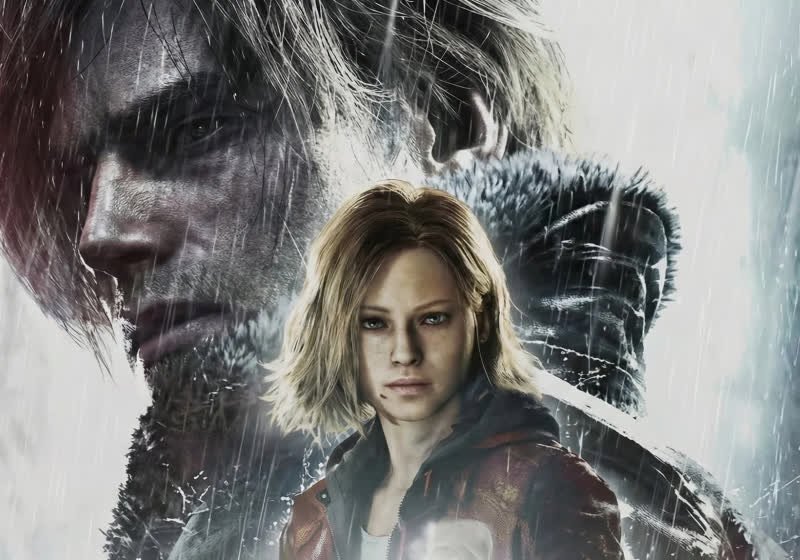
In early 2026, Nvidia released its February 2026 Game Ready and Studio Driver packages, delivering game-specific optimizations and stability improvements for a range of titles. Notably, the updates included enhancements intended to optimize performance for Resident Evil Requiem, a title associated with high graphical fidelity and demanding processing requirements, as well as optimizations tied to the Marathon server slam event. However, shortly after deployment, a wave of user reports emerged that raised concerns about hardware cooling and longevity. Several RTX GPU owners noticed that their graphics cards’ cooling fans failed to engage at expected times, or did not respond to customized fan control profiles. In some instances, cards appeared to ignore user-defined fan curves, leaving the GPUs more susceptible to overheating during extended gaming sessions or compute workloads. The culmination of these reports prompted Nvidia to pull the February 2026 driver package, halting its distribution until the issue could be resolved. Nvidia confirmed the removal as part of its standard quality assurance processes, prioritizing user safety and hardware protection over immediate feature delivery. This incident underscores the delicate interplay between software-level optimizations and the hardware mechanisms that govern thermal management.
The episode also illustrates a broader challenge in modern GPU software ecosystems: optimizations designed to extract extra frames per second or reduce latency may inadvertently interfere with hardware safety nets, such as fan control and thermal throttling. As titles like Resident Evil Requiem push both rasterization workloads and ray tracing, driver teams must carefully validate how fan control logic interacts with a spectrum of cooling configurations, including aftermarket coolers and custom profiles configured by enthusiasts.
Industry observers note that Nvidia’s decision to retract the driver aligns with similar caution exercised by hardware vendors when user-reported issues surface after a major software push. The company’s priority appears to be ensuring that thermal management remains reliable across a diverse base of GPUs and cooling setups, even if that means delaying optional optimizations until a fix is validated. In the wake of the pull, Nvidia has likely entered a cycle of investigation, reproduction of user environments, and iterative testing to identify the exact trigger or combination of factors leading to the anomalous fan behavior.
For users, the incident signals the importance of maintaining robust monitoring during driver updates, especially when new titles with high-performance demands are involved. It also highlights the value of keeping backup configurations and being prepared to revert to a stable driver if thermal protection features appear compromised after a software change. The broader market watching this scenario may anticipate public-facing guidance from Nvidia on safe reinstallation steps, recommended diagnostic tests, and any known-good driver versions for affected hardware.
In-Depth Analysis
The February 2026 driver suite from Nvidia arrived with two notable promises: optimized performance for the latest big-budget titles and enhancements tailored for the Marathon server slam, a high-profile event requiring sustained GPU compute. For Resident Evil Requiem, Nvidia highlighted optimizations intended to improve frame pacing, reduce latency, and stabilize gameplay under strenuous scenes that stress shader pipelines and memory bandwidth. Studio Driver updates typically target content creators and professionals, but in practice, the broader ecosystem benefits from the same driver ecosystem that affects gaming performance and stability.
Shortly after deployment, user feedback began to surface across forums and social channels, focusing on an alarming symptom: certain RTX graphics cards did not wake their cooling fans, or they would not adhere to user-defined cooling profiles. In some cases, enthusiasts reported that their cards would slowly heat up while remaining silent, creating a dangerous window where thermal throttling was insufficient to protect the GPU under load. Others observed inconsistent fan behavior where custom fan curves, which are commonly employed to balance acoustics and cooling, were ignored entirely. The consequences of such behavior include accelerated wear to thermal interface materials, potential hotspots on the die, and a higher risk of sudden thermal throttling or even hardware failure during extended gaming or computational workloads.
Nvidia’s decision to pull the driver appears to be a direct response to these reports. The company typically logs customer reports, reproduces the issues in controlled environments, and works toward a software-level remedy that ensures compatibility with a diversity of cooling solutions—from stock coolers to high-end AIO setups and aftermarket air or liquid cooling configurations. However, the exact root cause in this case remains not fully disclosed. Several plausible mechanisms could be at play:
Interaction with fan-control firmware: Some RTX GPUs rely on a dual-layer control system where the GPU firmware communicates with a motherboard or controller to regulate fan speed. A regression or miscommunication introduced by low-level microcode updates could cause the fan controller to ignore thresholds defined in software.
Cross-layer interference: The driver’s power management or performance-boosting features might recalibrate thermal policies in a way that inadvertently bypasses or overrides existing fan-curves, particularly when the GPU transitions between idle, light, and heavy load states.
Vendor-specific sensor readings: Inconsistent sensor data, such as thermistor readings or fan tachometer feedback, could mislead the driver’s thermal manager, causing it to misjudge heat levels or to misimplement fan control commands.
Interaction with third-party tools: Enthusiasts often rely on third-party software to enforce fan curves or monitor GPU temperatures. A driver update that changes how fans are controlled could conflict with these tools, exacerbating the issue if users do not update or configure those utilities accordingly.
Variants and SKUs: Nvidia’s driver ecosystem covers a wide range of RTX cards—from consumer GPUs to enterprise-class devices. A bug impacting only certain SKUs or a subset of board vendors would be consistent with the reported scattered nature of the symptoms.
From a user experience perspective, these traits are particularly worrying because they blur the line between performance optimization and hardware safety. Enthusiasts who chase higher clocks or more aggressive memory configurations may also push cooling solutions to their limits, increasing the likelihood that driver-induced fan control anomalies translate into thermal events.
Nvidia’s response—removing the February 2026 Game Ready and Studio Driver—signals a commitment to safety and stability over rapid feature delivery. In many past instances, such as with critical driver regressions affecting boot sequences, Nvidia has opted for a temporary withdrawal to prevent potential hardware damage while a fix is developed. The company typically follows up with a detailed investigation plan, a temporary or alternative driver, and post-release notes outlining the changes and the expected timeline for a fix.

*圖片來源:Unsplash*
For the broader ecosystem, this event underscores the necessity of robust regression testing, especially in a driver suite that caters to both gaming and professional workflows. It highlights the challenges of validating fan-control behavior across a vast matrix of generations, SKUs, cooling configurations, and software ecosystems that include overclocking utilities and monitoring software. Additionally, it motivates manufacturers and developers to adopt more transparent diagnostic capabilities within the driver, such as explicit status indicators for fan-control mode, smoother recovery logic after a fault, and clearer user-facing messages that guide troubleshooting.
In the wake of the issue, Nvidia will likely implement a multi-pronged remediation strategy. First, reproduce the issue across representative hardware configurations to isolate the trigger. Second, determine whether the problem is reproducible with standard cooling curves, or only with specific derivative profiles. Third, introduce a controlled fix that ensures fan-control commands and curves are faithfully honored by the driver under all supported load scenarios. Fourth, provide a software update or hotfix with explicit notes detailing which user profiles are affected and any recommended steps to recover to a safe state. Lastly, communicate with the user base about the expected timeline for a public release version that incorporates the fix and any recommended temporary workarounds, such as reverting to a prior driver version or avoiding certain game workloads until validation completes.
From a business perspective, this incident has potential implications for Nvidia’s trust with enthusiasts who value customization and control over their hardware. While Nvidia’s driver updates are widely adopted and often well-regarded for performance, a disruption in thermal management can deter users from adopting future optimizations immediately. The episode may also influence how Nvidia and other GPU makers communicate risk, ensuring that performance benefits do not come at the expense of hardware safety. On the other hand, transparent remediation and prompt communication can reinforce confidence, particularly among users who rely on precise cooling management for extended gaming marathons or professional rendering workloads.
Industry watchers may examine similar patterns across other GPU vendors when rolling out large driver changes tied to specific games or server events. The balance between performance wins and potential thermal risk remains a persistent theme in the PC hardware ecosystem, where enthusiast communities push for maximum throughput at the risk of thermal stress. This event could accelerate the adoption of more granular driver diagnostics, improved telemetry, and better post-release QA coverage across hardware variants.
Perspectives and Impact
For gamers: The situation highlights the importance of monitoring thermal conditions during and after driver updates, especially when playing titles that demand sustained GPU load like Resident Evil Requiem and Marathon-server scenarios. Users who rely on customized fan curves should be particularly vigilant and consider temporarily reverting to a prior driver version if signs of abnormal fan behavior or rising temperatures appear.
For hardware manufacturers: The incident may prompt more collaborative testing efforts with GPU vendors and motherboard manufacturers to ensure consistent fan-control behavior across a wide array of cooling solutions. It could also encourage clearer guidance on compatibility with third-party overclocking and monitoring tools.
For software developers: Game studios and event organizers might be more mindful of the dependency on drivers when presenting game-ready optimizations. Clearer timelines for driver compatibility and potential fallbacks during server events can help reduce risk to players’ hardware.
For the market: The withdrawal could influence consumer sentiment temporarily, but the long-term impact depends on how effectively Nvidia communicates the fix and delivers a stable driver with verified fan-control reliability. A transparent post-mortem and a timely hotfix could preserve confidence among enthusiasts who demand rigorous safety standards.
For future-proofing: The event underscores the value of robust telemetry within drivers, allowing users and technicians to diagnose fan-control anomalies quickly. It may accelerate improvements in how driver software surfaces status indicators, alarms, and recommended actions when fans fail to respond to control signals.
Key Takeaways
Main Points:
– Nvidia pulled the February 2026 Game Ready and Studio Driver after reports of RTX GPU fans not engaging or ignoring custom fan curves.
– The issue centers on hardware cooling reliability during high-load scenarios driven by new game optimizations.
– The incident emphasizes the need for rigorous validation of low-level hardware control mechanisms when deploying performance-focused driver updates.
Areas of Concern:
– Root-cause ambiguity may delay a precise fix and timeline.
– Potential impact on enthusiasts who rely on fan customization and third-party tools.
– Risk of thermal damage if users operate affected systems without immediate safeguards.
Summary and Recommendations
The Nvidia February 2026 driver release aimed to optimize performance for Resident Evil Requiem and the Marathon server slam, but user-reported failures in fan control prompted Nvidia to withdraw the driver to prevent possible hardware damage. The event illustrates a critical tension in GPU software development: delivering performance gains while preserving robust thermal protections across a broad hardware ecosystem. Nvidia’s responsive pull demonstrates a prioritization of safety and reliability, along with a commitment to validating a fix before re-release.
For affected users, the immediate recommendation is to refrain from applying the February 2026 driver until Nvidia provides a confirmed fix. In the meantime, monitor GPU temperatures and maintain conservative overclocking or fan-tuning settings, if applicable. When a fix is issued, users should update to the corrected driver version and verify that fan curves and sensor readings respond correctly under load. It is prudent to back up current configurations and ensure that monitoring software is compatible with the updated driver.
Looking ahead, Nvidia and the broader graphics industry may benefit from enhanced driver-level telemetry and clearer post-release support windows for critical issues. Transparent communication about the scope of the problem, affected hardware, and expected remediation timelines helps maintain user trust during incidents where performance optimizations intersect with hardware safety.
Overall, this episode serves as a reminder that while gaming optimizations are valuable, ensuring reliable thermal management remains essential to long-term hardware health and user confidence in software updates.
References
- Original: https://www.techspot.com/news/111507-nvidia-pulls-resident-evil-requiem-game-ready-driver.html
- Additional context: NVIDIA driver release notes and community feedback threads on RTX fan-control behavior
- Related discussions: Monitoring best practices for GPU temperatures and fan-control utilities in PC gaming setups

*圖片來源:Unsplash*