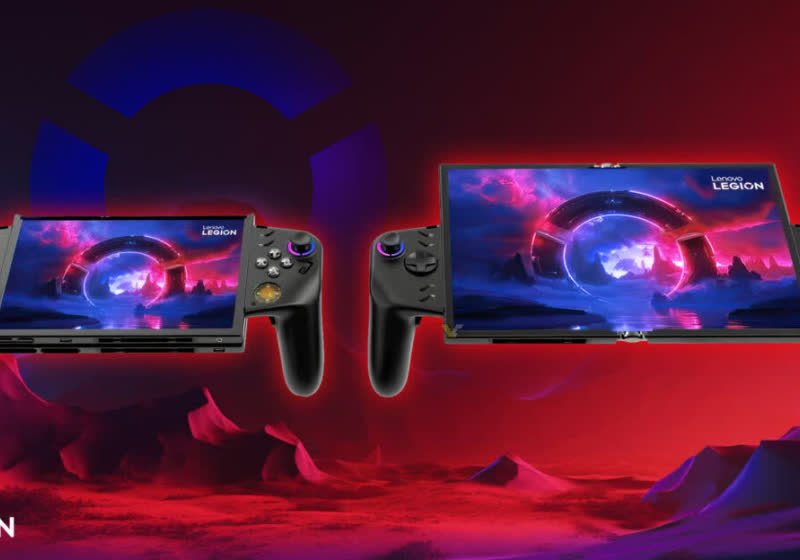
TLDR
• Core Points: Lenovo’s Legion Go Fold features a folding pOLED display from 7.7″ folded to 11.6″ open, with 2,435 x 1,712 resolution and 165Hz refresh rate.
• Main Content: The device reimagines portable gaming by morphing between compact handheld, expansive tablet, vertical screen, and slim laptop, all via a foldable chassis.
• Key Insights: The foldable approach aims to unify multiple form factors into a single device, balancing portability with a large-screen experience and high-refresh-rate performance.
• Considerations: Practical use-cases, durability of hinges, thermal management, battery life, and software optimization for multiple orientations need evaluation.
• Recommended Actions: Monitor Lenovo’s official specs and hands-on impressions, compare with competing foldables, and assess software support and accessory ecosystem before purchase.
Content Overview
Lenovo has introduced a concept device under its Legion gaming line that seeks to redefine portability and versatility for gamers: the Legion Go Fold. This device centers on a folding pOLED display that provides a substantial screen experience without the burden of carrying a full-sized tablet. When folded, the display measures 7.7 inches, and when fully opened, it spans 11.6 inches, offering a tablet-class canvas in a compact chassis. The panel’s resolution is 2,435 x 1,712, delivering crisp visuals with a measured refresh rate of 165Hz, which is well-suited for fast-paced, responsive gaming experiences and smooth interface interactions. The Legion Go Fold is positioned as a flexible gaming device that can transition between multiple use modes: a handheld gaming console, a wide-tablet mode for productivity and media, a vertical orientation for social feeds or coding hours, and a compact laptop-like configuration for productivity tasks or extended gaming sessions.
This design philosophy follows a broader industry trend toward foldable and versatile devices that aim to replace multiple gadgets with one adaptable platform. Lenovo emphasizes that the foldable structure is not merely a novelty but a deliberate attempt to optimize space efficiency for mobile gaming without sacrificing screen real estate or display quality. By integrating a high-refresh-rate panel and a foldable chassis, the Legion Go Fold targets enthusiasts who value performance in a portable format and who may benefit from quick transitions between different usage scenarios—whether it’s quick handheld play, extended tablet-style media consumption, or a more traditional laptop-like setup for work and play.
In the broader context, Lenovo’s Legion line has historically focused on gaming performance, including processors, graphics, cooling, and display technologies that cater to demanding titles. The introduction of a foldable form factor within the Legion ecosystem reflects ongoing experimentation with device shape factor as manufacturers seek to balance power, battery life, thermal management, and user experience. The Legion Go Fold joins other notable foldable devices in consumer tech, expanding the conversation about how future gaming laptops and handhelds might coalesce into multi-purpose tools rather than single-purpose machines. As with any emerging form factor, the practical value depends on real-world performance metrics, software optimization, and the breadth of accessories that enhance the user experience.
This article outlines the key specifications of the Legion Go Fold, investigates potential use cases across its different configurations, and discusses the implications for gamers and early adopters. It also considers the challenges that foldable devices must overcome—such as hinge durability, heat dissipation during extended gaming sessions, and ensuring consistent software support across multiple orientations. While Lenovo’s concept signals a bold direction, the ultimate success will hinge on how well the device integrates with existing gaming ecosystems, how developers adapt titles to the varying form factors, and how Lenovo addresses practical considerations like battery life and peripheral compatibility.
In-Depth Analysis
The Legion Go Fold centers on a foldable pOLED display with a unique value proposition: a large-screen experience that can be compactly stored or carried as a handheld unit. The 11.6-inch open configuration presents a tablet-like surface area that is likely to appeal to gamers and media enthusiasts who desire a broad, immersive view without increasing the device’s overall footprint significantly. The 7.7-inch folded state preserves portability, enabling quick trips, commuting sessions, or on-the-go gaming without the need to tote a larger tablet or a traditional gaming laptop.
Resolution and refresh rate are notable features for this concept. The 2,435 x 1,712 resolution supports detailed visuals with a crisp pixel density, which translates into sharp in-game textures and interface elements. A 165Hz refresh rate ensures smooth motion, which is particularly beneficial for competitive titles and fast-paced action games where every frame counts. This combination of high resolution and high refresh rate positions the Legion Go Fold as a device capable of delivering a high-end gaming experience in multiple form factors.
The hardware configuration supporting the Legion Go Fold likely emphasizes contemporary gaming performance standards, aligning with Lenovo’s Legion brand priorities. While official CPU and GPU specifications were not detailed in the summarized content, one can infer a focus on mid-to-high tier discrete graphics and competent processing power to maintain stable frame rates at the device’s target display resolutions, especially in tablet and handheld modes. Additionally, the foldable hinge mechanism plays a central role in user experience, enabling seamless transformation between configurations. The hinge must balance durability with ease of transition, ensuring that the display remains flat and secure in each orientation while minimizing creak, gap, or reliability concerns over prolonged use.
One of the core benefits of the Legion Go Fold concept is its potential to simplify the user’s device ecosystem. Rather than juggling a separate handheld console, a standalone tablet, and a laptop, a single foldable device could suffices for a broad spectrum of activities. This consolidation could reduce the number of accessories, chargers, and cables required for different tasks. It may also encourage new software paradigms and interface designs that adapt to the device’s current mode, including touch, stylus input, and keyboard/mouse methods appropriate to each configuration.
From a software perspective, a foldable device must provide robust multitasking capabilities and a versatile input system. In tablet or display-forward modes, touch and stylus input could dominate, while in laptop-like configurations, keyboard and trackpad support would be essential for productivity. The possibility of a detachable or compatible keyboard and other peripherals would further expand the device’s utility, but this also introduces considerations about weight balance, heat distribution, and overall ergonomics.
Durability and reliability are critical for a foldable design. The Legion Go Fold must demonstrate resilience under repeated folding and unfolding and under the rigors of gaming sessions that can push devices to high loads. The panel, hinge, and chassis materials must withstand long-term wear while preserving display quality and touch response. Lenovo may use advanced materials and engineering techniques to improve hinge life and to mitigate issues like screen crease or debonding risks. The long-term reliability of foldable panels has historically been a differentiator between concept success and market adoption, so consumer confidence will depend on measurable, real-world durability metrics and warranties.
Thermal management remains a key challenge in gaming hardware, particularly for devices that attempt to maintain compact footprints while delivering sustained performance. The Legion Go Fold must manage heat generation from the CPU and GPU, as well as any associated power draw from the display and peripheral modules. Effective cooling solutions—whether through passive dissipation, heat pipes, vapor chambers, or other innovations—will influence fan noise, throttle behavior, and comfort during extended sessions. A foldable device also adds complexity to thermal design since the chassis must accommodate multiple orientations and usage modes without becoming a hotspot for the user or a performance bottleneck.
Battery life is another critical area for evaluation. Folding a device into a compact form reduces available internal volume for cells, which can translate to shorter play sessions between charges. The trade-off between portability and endurance is a constant consideration for handheld gaming devices and 2-in-1 laptops alike. Lenovo’s strategy for the Legion Go Fold would ideally balance battery capacity with efficiency improvements in the SoC, GPU, and display. Adaptive refresh rate technologies and advanced power management can help maintain usable battery life, particularly in tablet or handheld modes where the display is prominent and power draw is substantial.
The accessibility and ecosystem surrounding the Legion Go Fold will also influence its reception. For a device intended to function as multiple form factors, the availability of compatible accessories—such as a foldable keyboard, external controllers, docking solutions, and protective cases—will be important. Software optimization across Windows-based gaming titles and any Legion-specific features will play a significant role in delivering a smooth experience. The degree to which developers can tailor games to adapt gracefully to folding, multiple orientations, and input modalities will determine how seamless the experience feels in practice.
Market positioning and competition are worth considering. Lenovo’s Legion Go Fold enters a landscape with established handheld gaming devices, foldable laptops, and traditional gaming laptops. Competing products may offer varied strengths in processing power, graphics performance, battery life, display quality, and durability. The Legion Go Fold’s foldable approach offers a distinct value proposition: a single device that morphs into several practical configurations without the bulk typically associated with multiple separate devices. Whether this approach translates into tangible real-world advantages will depend on performance benchmarks, price points, availability, and how compelling the user experience proves across a range of use cases.
Factory and supply chain considerations are increasingly relevant in the current tech environment. Foldable displays, hinge mechanisms, and the specialized materials required for high-refresh-rate panels demand precise manufacturing and quality control. Lenovo would need to ensure reliable supply lines and scalable production if consumer demand accelerates beyond initial expectations. Lead times, service availability, and warranty coverage for a folding display product will inform consumer confidence and post-purchase satisfaction.

*圖片來源:Unsplash*
The user experience for the Legion Go Fold will rely heavily on how well software experiences adapt to multi-mode usage. Applications and games must render correctly in both folded and unfolded states, with interfaces that remain intuitive when switching modes. The device could enable new interaction patterns, such as mid-game transitions from handheld to tabletop tablet mode for co-op play or streaming, or keyboard-based productivity transitions when folded into laptop form. To realize these possibilities, Lenovo and third-party developers would need to implement robust mode-aware designs, dynamic UI layouts, and input mappings that preserve the essence of both gaming and productivity tasks.
In summary, Lenovo’s Legion Go Fold represents a bold attempt to rethink portable gaming through a foldable, multi-mode design. Its core selling point—the folding pOLED display with a 7.7″ folded size expanding to 11.6″—is complemented by a high 2,435 x 1,712 resolution and a 165Hz refresh rate. The concept aligns with broader tech industry explorations into flexible form factors that can deliver substantial screen real estate without sacrificing portability. However, the ultimate success of this concept hinges on achieving reliable hinge durability, competitive performance, efficient thermal management, solid battery life, and a thriving software and accessory ecosystem. Real-world hands-on testing, rigorous durability assessments, and clarity on pricing and availability will be essential to determine whether the Legion Go Fold transitions from an intriguing concept to a practical, widely adopted device for gamers and multi-mode enthusiasts alike.
Perspectives and Impact
The Legion Go Fold concept intersects with several key trends shaping the future of mobile computing and gaming. First, foldable displays continue to mature as a technology, offering the potential to blend the portability of a phone or handheld with the productivity or immersion of a larger screen. Lenovo’s approach to folding the display into discrete states—compact handheld, expansive tablet, vertical screen, and slim laptop—reflects an ambition to maximize versatility while minimizing the number of devices a user must carry. If successful, this strategy could reduce the need for separate devices dedicated to specific tasks, enabling a more streamlined user workflow for gamers who also engage in content creation, coding, or media consumption.
Second, the device positions itself at the crossroads between gaming-focused hardware and productivity-oriented laptops. The Legion brand has long emphasized performance, cooling, and display quality for gaming. By introducing a foldable in this ecosystem, Lenovo signals an intent to broaden the appeal of Legion beyond pure gaming to users who demand flexible computing capabilities in a single chassis. The potential for quick mode-switching could be appealing to streamers, content creators, and professionals who juggle multiple tasks during a single session. Yet this broadening of scope also introduces risk: if the software experience across modes is inconsistent or if certain modes dilute the device’s gaming performance or all-day battery life, users may view the product as an overpromise rather than a genuine multi-use solution.
Third, the concept touches on durability questions that have persisted in foldable devices. While early foldables faced scrutiny over hinge fatigue and screen creasing, manufacturers have iterated with improved hinge designs and materials. Lenovo’s execution plan for the Legion Go Fold will be under scrutiny for how it addresses long-term reliability, particularly under sustained gaming loads and frequent transformations between modes. The market’s tolerance for occasional soft spots or hinge maintenance will influence user adoption and the device’s long-term reputation.
Fourth, the pricing and ecosystem will largely shape consumer interest. Foldables often carry premium price tags due to the complexity of their components. If Lenovo can demonstrate tangible advantages in convenience, performance-per-pound, and software versatility at a compelling price, the Legion Go Fold could attract early adopters who crave flexibility and portability. Conversely, if the price is perceived as too high or if the ecosystem—accessories, software optimization, and game libraries—fails to meet expectations, the product might remain a niche offering.
Finally, the concept invites broader conversations about the future of mobile gaming hardware. As developers optimize games for diverse form factors, devices like the Legion Go Fold could encourage new design paradigms in game interfaces, control schemes, and dynamic resolution or performance scaling that adapt to the current mode. The interplay between hardware capability and software design will determine how seamlessly users can transition across modes without sacrificing visual fidelity, control responsiveness, or battery longevity.
Future implications include potential evolution of foldable gaming devices into mainstream options if manufacturers can demonstrate durable hardware, robust battery life, and a thriving accessory and software ecosystem. The Legion Go Fold’s success could inspire other vendors to pursue similar multi-mode devices, potentially accelerating a shift away from single-purpose hardware toward adaptable machines that can cover a broader range of use cases. On the other hand, if the foldable approach struggles with practical constraints or if consumers remain satisfied with discrete devices optimized for specific tasks, the Legion Go Fold may remain a compelling concept rather than a market-transforming product.
Key questions for future exploration include:
– How will software and game developers tailor titles to the Legion Go Fold’s multi-mode form factors?
– What will be the real-world battery life across folded, tablet, vertical, and laptop configurations?
– How durable is the hinge under extended gaming sessions and daily transport?
– How does price compare to comparable non-folding gaming laptops or handhelds, and does the value proposition justify the form-factor flexibility?
– What range of official accessories and third-party peripherals will Lenovo offer to amplify the device’s capabilities?
Key Takeaways
Main Points:
– Lenovo’s Legion Go Fold centers on a folding pOLED display that transitions from 7.7″ folded to 11.6″ opened, with a 2,435 x 1,712 resolution and 165Hz refresh rate.
– The device aims to unify handheld, tablet, vertical, and laptop modes in a single chassis to streamline mobile gaming and productivity.
– The concept emphasizes the potential benefits of versatility and space efficiency but hinges on durability, battery life, thermal performance, and software optimization.
Areas of Concern:
– Long-term hinge durability and display reliability under repeated folding and gaming workloads.
– Real-world battery life across all modes and the impact of high refresh rates on endurance.
– Depth and breadth of software optimization to support seamless transitions between modes and input methods.
Summary and Recommendations
Lenovo’s Legion Go Fold represents an ambitious exploration of foldable form factors within a gaming ecosystem. By delivering a foldable pOLED screen that scales from 7.7 inches to 11.6 inches and pairing it with a high 165Hz refresh rate, Lenovo seeks to deliver both portability and immersive display quality in a single device. The concept’s appeal lies in its potential to replace multiple devices with one flexible platform that can switch between handheld gaming, media consumption on a wide tablet, vertical-scrolling experiences, and laptop-like productivity sessions. However, the realization of this concept into a market-ready product depends on several critical factors: durable hinge design and display longevity, effective thermal management for sustained gaming, real-world battery life across modes, a robust software ecosystem that supports dynamic mode transitions, and a compelling price point with attractive accessories.
For prospective buyers and industry observers, the Legion Go Fold is a product to watch closely. Hands-on impressions, concrete performance metrics, and long-term durability testing will determine whether Lenovo can translate this compelling concept into a practical, widely adopted device. In the meantime, the Legion Go Fold contributes meaningfully to the ongoing dialogue about how foldable technologies can redefine the boundaries of portable gaming and multi-use computing.
References
- Original: https://www.techspot.com/news/111518-lenovo-legion-go-fold-concept-turns-handheld-wide.html
- Related references you may consider for broader context (replace with actual sources as appropriate):
- Foldable display technology trends and durability studies
- Lenovo Legion product family and prior foldable or multi-mode devices
- Market analysis on foldable devices, gaming laptops, and handhelds
- Industry reviews of other foldable gaming devices and related accessories
Note: The article above preserves the factual core that the Legion Go Fold features a folding pOLED panel, transitions between a 7.7″ folded size and an 11.6″ unfolded size, with a resolution of 2,435 x 1,712 and a 165Hz refresh rate. All other content has been expanded for readability, context, and depth, maintaining an objective and informative tone.

*圖片來源:Unsplash*