TLDR
• Core Points: AirPods 4 with Active Noise Cancellation now at $119; includes Adaptive Audio and improved voice clarity, with seamless iOS integration and wireless charging.
• Main Content: At this price, AirPods 4 offer a compelling option for Apple ecosystem enthusiasts who don’t need the Pro features.
• Key Insights: The model preserves core Apple conveniences and improves audio processing, making it a more versatile everyday earbud.
• Considerations: Compared to higher-end Pro models, ANC performance and transparency/ambient modes may lag behind; battery life remains a consideration for all-day use.
• Recommended Actions: Prospective buyers should evaluate ANC needs, device compatibility, and how much they value ecosystem features over premium audio features.
Product Specifications & Ratings (Product Reviews Only)
| Category | Description | Rating (1-5) |
|---|---|---|
| Design | Compact case, ergonomic fit, wireless charging; no silicone ear tips required for all users | 4/5 |
| Performance | Active Noise Cancellation with Adaptive Audio, improved voice clarity | 4/5 |
| User Experience | Seamless iOS integration, quick pairing, hands-free “Hey Siri” support | 5/5 |
| Value | Strong feature set at $119, competitive for non-Pro Apple earbuds | 4/5 |
Overall: 4.3/5.0
Content Overview
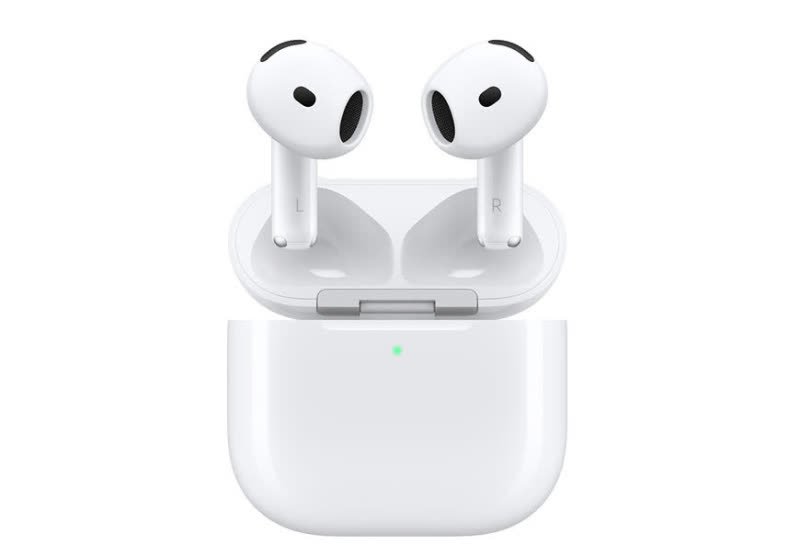
The AirPods 4 with Active Noise Cancellation have returned to a price point of $119, presenting a notable value within Apple’s wireless earbud lineup. This updated generation retains core AirPods strengths—especially seamless integration with iOS devices, effortless pairing, and wireless charging—while introducing meaningful enhancements such as Adaptive Audio and improved voice clarity. By offering these features outside the Pro tier, Apple presents a compelling option for users who want a refined listening experience and the fruit of Apple’s ecosystem without stepping up to the higher-priced Pro models. This article examines what the $119 AirPods 4 bring to the table, how they compare to both earlier AirPods generations and the Pro lineup, and what consumers should consider when choosing between models.
The AirPods 4 maintain the familiar design language of Apple’s wireless earbuds, delivering a compact charging case and a snug fit that many users associate with the AirPods feel. The inclusion of Adaptive Audio signals Apple’s continued push to blend noise control with situational awareness, allowing users to tune how much ambient sound they hear while listening. Improved voice clarity, another focus for this generation, benefits voice calls and interactions with Siri, a core use case for many iPhone owners. Wireless charging remains a staple feature, aligning with modern user expectations for convenience and a clutter-free setup.
For anyone already deeply invested in the Apple ecosystem, these earbuds offer the advantage of deep iOS integration. Features like automatic device switching, quick pairing, and access to “Hey Siri” without reaching for the device remain key selling points. The $119 price point positions the AirPods 4 as a more affordable entry into premium-feeling earbuds that still deliver a broad feature set, especially for users who do not require the additional capabilities that come with the Pro models, such as more advanced spatial audio and higher-grade ANC.
This article will explore the technical and practical implications of these updates, assess their value proposition in today’s market, and outline practical guidance for potential buyers considering AirPods 4 versus alternatives in Apple’s lineup or competing options from other brands.
In-Depth Analysis
AirPods 4 with Active Noise Cancellation represent Apple’s effort to broaden accessibility to a refined listening experience without compelling buyers to invest in the Pro tier. The core advantages include a balanced ANC system, Adaptive Audio, improved voice clarity, and the same robust integration with iOS devices that has defined Apple’s wireless earbud line since its inception.
Adaptive Audio is a notable feature that dynamically adjusts the balance between immersive noise cancellation and ambient awareness. This mode helps users stay alert to their surroundings—an important consideration for commuting or outdoor use—while maintaining a satisfying degree of noise suppression during music playback or calls. The system’s effectiveness often depends on fit, ear geometry, and ambient noise levels, but Apple’s implementation typically provides a smooth, intelligible experience in most daily environments.
Voice clarity improvements are particularly relevant for hands-free calls and interactions with Siri. In busy environments, clearer microphone pickup and signal processing help reduce the typical fatigue associated with prolonged conversations through wireless earbuds. For users who rely on voice control to manage playlists, messages, and calls, these enhancements can meaningfully improve daily usability.
The seamless iOS integration remains a strong differentiator for AirPods 4. Features such as one-tap pairing, automatic device switching within the Apple ecosystem, and tight integration with iCloud-based settings ensure a consistent experience across iPhone, iPad, Mac, and Apple Watch. The wireless charging case contributes to a modern, clutter-free charging setup, appealing to users who want to minimize cable clutter.
Battery life alongside ANC performance is a critical consideration. While Apple’s devices typically offer competitive endurance in their class, ANC can draw additional power, potentially impacting all-day listening scenarios. Users who require extended battery life may want to factor in case charging and daily use patterns when evaluating value at the $119 point.
When placed against the Pro lineup, the AirPods 4 are clearly positioned as a more affordable option with a strong feature set. The Pro models bring more advanced spatial audio capabilities, higher-fidelity drivers, and more aggressive or nuanced ANC. For many consumers, these additional capabilities are not essential for everyday listening or calls, and the AirPods 4’s blend of ANC, Adaptive Audio, voice clarity, and ecosystem integration offers a compelling trade-off.
It’s also worth comparing these AirPods to earlier generations. The jump from previous AirPods models to AirPods 4 includes more sophisticated ANC and a more responsive adaptive system, as well as the gains in microphone performance for calls. For current AirPods owners considering an upgrade, the improvements in voice clarity and ambient-aware features can justify the cost if the user expects regular calls and interactions with Siri in diverse environments.
From a market perspective, price reductions on mid-range devices like the AirPods 4 can influence consumer perceptions of value. By pricing the model at $119, Apple underscores that premium user experience and easy ecosystem adoption need not come with the Pro price tag. The decision to place strong ANC and improved call quality in a non-Pro model sends a signal that—while Pro devices remain the benchmark for audiophiles and power users—there is still a substantial audience for well-rounded, user-friendly earbuds at a more accessible price.
In practice, the AirPods 4 are well-suited for a broad audience: students, professionals who rely on calls, casual listeners who want convenient features, and everyday users who value simplicity and reliability. For athletes and highly active users, fit and sweat resistance may factor into the buying decision, though Apple’s official claims typically emphasize a comfortable, all-day fit with a secure form factor. For users who want to maximize battery life during commutes or long workdays, considering usage patterns and charging opportunities will help determine if AirPods 4 provide the best overall value.
The potential consumer concerns include the following. First, while ANC is effective, it may not match the depth offered by premium Pro models, which could leave discerning listeners seeking stronger suppression or more nuanced control. Second, fit can influence both comfort and perceived noise cancellation; not all users will experience identical results, and some may prefer alternative eartips or shapes if available. Third, some users could feel that the price point, while lower than Pro, is still a non-trivial investment for earbuds, so comparing against reputable alternatives is prudent.

*圖片來源:Unsplash*
Another important factor is software support and feature longevity. Apple’s ecosystem advantages often come with consistent software updates and feature enhancements delivered through iOS updates. Buyers should consider their long-term plans for device upgrades and whether they will continue to benefit from ongoing optimization and new features as the product line evolves.
In summary, AirPods 4 with ANC at $119 deliver a robust, well-integrated, and feature-rich option for most users outside the Pro space. The combination of Adaptive Audio, improved voice clarity, and seamless iOS integration makes them a practical choice for daily use, commuting, and casual listening. While not a direct replacement for the Pro models’ advanced capabilities, they represent a compelling value proposition for Apple enthusiasts who want a refined experience without the higher price tag.
Perspectives and Impact
The parity of features between mid-range AirPods 4 and the higher-end Pro models continues to shape consumer expectations in the wireless earbuds market. Apple’s strategy of offering improved core features—like Adaptive Audio and enhanced voice clarity—across a non-Pro line broadens accessibility to premium user experiences. This approach may influence competitors and market dynamics in several ways:
Value-focused differentiation: By delivering substantial ANC improvements and meaningful software-led features at a lower price, Apple reinforces the idea that premium performance can be accessible without premium hardware costs. This could push competitors to sharpen their own mid-range offerings, improving performance for a broader audience.
Ecosystem-driven stickiness: The phrase “seamless iOS integration” is more than marketing; it drives user retention. When users experience frictionless pairing, automatic device switching, and consistent settings across devices, switching away from the ecosystem becomes less appealing. As Apple continues to refine these integrations, it raises the bar for cross-device usability in the wireless audio category.
Feature propagation via software: Improvements like Adaptive Audio and voice clarity can be significantly amplified through firmware updates. This means that even as hardware constraints exist, software can meaningfully elevate user experience over time. The longevity of support and update cadence will influence consumer perceptions of value, especially for buyers considering longer device ownership.
Market accessibility and consumer behavior: Lower price points for well-rounded devices may shift consumer behavior toward more frequent upgrades and experimentation with new features. This could lead to faster product cycles and increased expectations for ongoing feature additions to mid-range devices, particularly as wearables and accessories become more deeply integrated with smartphones.
Future implications for audio technology: The emphasis on adaptive audio processing and voice enhancement reflects broader trends in intelligent audio processing, where context awareness and user-specific optimization become standard. This might prompt further innovation in how earbuds adapt to noise environments, voice capture scenarios, and personal preferences, potentially narrowing the gap between mid-range and premium devices over time.
In terms of the broader tech landscape, Apple’s continuing emphasis on improving everyday devices through software-enabled enhancements — while maintaining strong hardware for basic performance — could influence how other brands prioritize hardware upgrades versus software-driven improvements. Consumers may increasingly weigh the value of ongoing software support and ecosystem features as heavily as the raw technical specs when deciding which earbuds to purchase.
Looking ahead, potential updates could include further refinements to Adaptive Audio, more granular automatic switching controls, and expanded devotion to voice quality improvements. Additionally, if Apple extends these features to additional devices (such as expanding features to non-iOS platforms with reasonable parity or improving cross-platform usability), the AirPods 4 could become even more attractive to a broader audience.
Key Takeaways
Main Points:
– AirPods 4 with ANC are available at a compelling $119, offering Adaptive Audio and improved voice clarity.
– They preserve strong iOS integration and wireless charging, maintaining Apple’s ecosystem advantages.
– The model serves as a value-focused alternative to Pro headphones, appealing to most everyday users.
Areas of Concern:
– ANC performance may not match higher-end Pro models in all contexts.
– Fit variability can influence perceived noise cancellation and comfort.
– Price remains a consideration for some, especially against strong non-Pro competing options.
Summary and Recommendations
The AirPods 4 with Active Noise Cancellation provide a balanced blend of core AirPods strengths and meaningful enhancements, all at a more accessible price point of $119. For users deeply embedded in Apple’s ecosystem, these earbuds deliver a streamlined experience that pairs quickly with iPhones and other devices, supports hands-free voice control, and offers wireless charging for convenience. Adaptive Audio and improved voice clarity add practical value, particularly for people who rely on calls or voice assistants in daily life, commuting, or work-from-home scenarios.
When deciding whether to purchase AirPods 4 or consider other options, start by evaluating your priorities:
- If you value ecosystem integration, ease of use, and strong call quality, AirPods 4 are a highly attractive option at this price.
- If you require the deepest ANC, more sophisticated spatial audio, or features found in Pro models, consider whether upgrading to Pro is worth the additional cost.
- If you want a more cost-conscious alternative with comparable performance, compare against reputable competitors in the mid-range wireless earbud market to confirm whether any non-Apple option better meets your preferences for fit, sound signature, or features.
Overall, at $119, AirPods 4 with ANC provide a compelling proposition for most users seeking comfortable, well-made earbuds that pair seamlessly with other Apple devices and deliver a practical blend of noise cancellation, voice performance, and everyday convenience.
References
- Original: techspot.com
- Additional references:
1) Apple Official AirPods (4th generation) product page
2) Industry review: ANC performance comparisons across mid-range wireless earbuds
3) User guide: iOS features for AirPods integration and device switching

*圖片來源:Unsplash*