TLDR
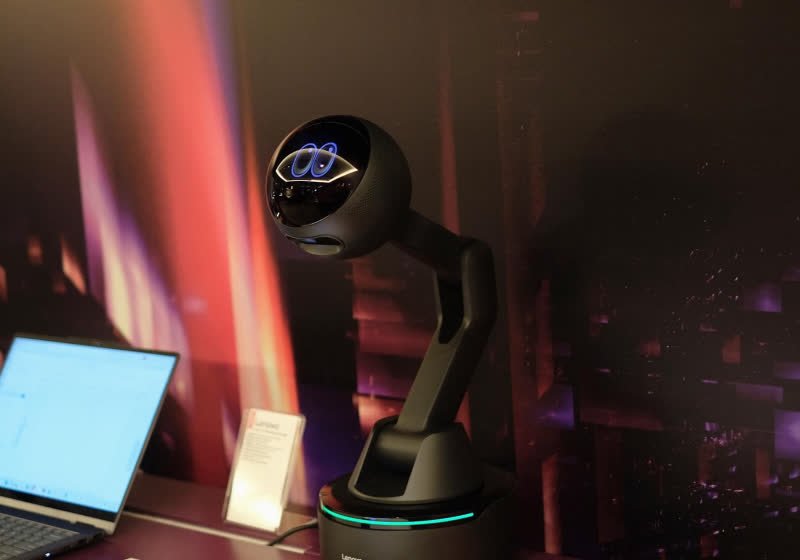
• Core Points: Lenovo unveils AI Workmate, a desk robot with conversational AI, cameras, sensors, and projection hardware; AI Work Companion is a stationary desktop assistant with a display and AI-driven scheduling.
• Main Content: The concepts aim to augment office productivity through interactive AI, visual presentation, and integrated scheduling, delivering both dynamic and stationary assistance.
• Key Insights: These prototypes reflect Lenovo’s push to blend AI with physical desk presence, potentially reshaping how teams collaborate, present, and organize daily tasks.
• Considerations: Practical deployment will hinge on privacy, security, reliability, cost, and integration with existing workflows and devices.
• Recommended Actions: Monitor pilot deployments, assess user acceptance, and explore interoperability with enterprise IT ecosystems before broad rollout.
Content Overview
Lenovo has been exploring the integration of artificial intelligence into the everyday office environment through two notable prototypes designed to sit atop or near a work desk. The AI Workmate Concept stands out as a multifunctional desk robot that combines conversational AI with a suite of cameras, sensors, and projection hardware. Its companion piece, the AI Work Companion Concept, is a stationary desktop assistant featuring its own display and an AI-driven scheduling engine. Together, these concepts illustrate Lenovo’s intention to blend AI responsiveness with physical presence in the workspace, creating new ways for colleagues to interact with technology and manage daily tasks.
The AI Workmate Concept leverages a robotic form factor to engage users through natural language interaction, visual cues, and projected information. The inclusion of cameras and sensors suggests capabilities such as gesture recognition, gaze tracking, or environmental sensing, enabling more intuitive human-robot collaboration. The projection hardware adds a dynamic dimension, potentially enabling interactive displays, contextual information projection on surfaces, or enhanced meeting room presentations. In contrast, the AI Work Companion Concept emphasizes a stable, non-mobile computer presence—centered on a display and a scheduling AI that can autonomously organize meetings, remind users of deadlines, and optimize workflows. While both concepts are still prototypes, they reflect Lenovo’s broader strategy to infuse office work with AI-powered tools that can understand context, anticipate needs, and facilitate collaboration.
In framing these concepts, Lenovo positions them as possible extensions to existing productivity ecosystems rather than standalone replacements for current devices. The AI capabilities may be designed to complement laptops, desktops, conference rooms, and collaboration platforms, enabling smoother transitions between informal desk work and formal meetings. By combining conversational AI with sensing and visualization capabilities, Lenovo aims to reduce friction in daily tasks—such as scheduling, information retrieval, and on-table discussions—while also offering new ways to present information during brainstorming sessions or briefings.
This exploration into AI-assisted desk work aligns with broader industry trends where hardware form factors evolve to support more seamless human-computer interactions. A desk robot, for instance, could become a central point for sharing ideas during team standups, manage on-demand information, or assist with project management tasks in real time. Similarly, a dedicated desktop assistant with an AI-driven scheduling engine could handle calendar optimization, task prioritization, and resource coordination with minimal user input, reducing cognitive load and helping teams stay aligned.
The prototypes also highlight persistent challenges in bringing such concepts to market. Privacy and security are at the forefront when cameras and sensors operate in a work environment. Ensuring reliable natural language understanding, safe and predictable robot behavior, and robust integration with enterprise software are essential for user trust and wide adoption. Additionally, cost, maintenance, and scalability will influence how enterprises consider such devices as part of their standard office toolkit. Lenovo’s approach appears to emphasize thoughtful integration with existing ecosystems, rather than marketing these devices as isolated gadgets.
Beyond the technical aspects, these concepts raise considerations about the evolving role of AI in the workplace. As AI becomes more embedded in daily tasks, the design of user experiences will need to balance spontaneity and predictability, providing helpful prompts without becoming intrusive. The ability to switch between interactive modes—dynamic movement with the AI Workmate and steady, desk-bound assistance with the AI Work Companion—reflects a nuanced understanding that different office scenarios require different AI modalities. If developed further, these concepts could influence how meetings are conducted, how teams share information, and how schedules are managed in busy work environments.
In summary, Lenovo’s AI Workmate and AI Work Companion concepts present a forward-looking view of AI-enabled office assistants that blend conversational capabilities with physical presence and visual projection. While still in prototype form, they illustrate potential pathways for integrating AI more deeply into daily office routines, with a focus on collaborative interaction, efficient scheduling, and enhanced information presentation. The success of these concepts will depend on how well they address practical concerns like privacy, security, interoperability, and user acceptance, as well as how effectively they can demonstrate clear value in real-world workflows.
In-Depth Analysis
Lenovo’s AI Workmate Concept distinguishes itself through its mobile, desk-centered design that combines conversational AI with a suite of perception and display technologies. The desk robot’s conversational interface aims to provide natural and intuitive interactions, enabling users to ask questions, request data, or manage tasks through spoken language. The addition of cameras and sensors suggests a capability set that could include gesture recognition, proximity sensing, and contextual awareness. In practice, such features could allow the AI Workmate to respond to a user’s presence, offer nudges about upcoming meetings, or fetch relevant documents and project details based on conversational prompts.
Projection hardware embedded in the AI Workmate Concept adds a unique layer to information sharing in a collaborative space. By projecting calendars, notes, or short briefs onto nearby surfaces, the device could facilitate quick, low-friction communications during standups or design sessions. Projection can be used to augment a physical meeting environment, enabling participants to view a shared visual context without requiring attendees to crowd around a single screen. This capability is particularly relevant in agile work environments where quick demonstrations or data overlays can accelerate decision-making and alignment.
The AI Work Companion Concept, as a stationary desktop assistant, emphasizes reliability and accessibility at a fixed workstation. Its dedicated display and AI-driven scheduling engine point toward a more traditional, information-centric role: the device can present calendars, tasks, and reminders directly to the user, and leverage AI to optimize scheduling, allocate resources, and methodically prioritize work. This concept aligns with the growing interest in intelligent personal assistants that operate within enterprise software ecosystems, offering a consistent, privacy-conscious interface that complements primary computing devices like laptops and workstations.
From a usability perspective, both concepts rely on advances in natural language processing, speech recognition, and context-aware computing. For office deployments, the ability to accurately interpret user intent, handle domain-specific jargon, and manage tasks within enterprise tools (calendar systems, project management software, document repositories) is critical. The success of such systems hinges on achieving robust integration with widely used platforms and ensuring that AI recommendations align with organizational policies and user preferences.
Privacy and data governance emerge as central considerations when evaluating these prototypes for real-world use. Office devices that employ cameras and sensors must operate within defined boundaries regarding data collection, storage, and usage. Enterprises will need clear policies regarding who can access the collected data, how long it is retained, and how it is used to train or refine AI models. Additionally, edge processing versus cloud-based inference will influence both latency and data security. Lenovo’s designs would benefit from transparent privacy controls and configurable data-sharing options to reassure users and IT stakeholders.
Interoperability with existing hardware and software ecosystems is another critical area. Enterprises often rely on a mosaic of devices and tools, including Windows-based desktops, collaboration platforms, and cloud services. The AI Workmate and AI Work Companion would need to interface with email, calendars, video conferencing tools, and document repositories to deliver real value without introducing friction. Standardized APIs, secure authentication, and modular software components could help ensure smoother adoption across diverse corporate environments.
From a business perspective, these prototypes signal Lenovo’s intent to diversify beyond traditional hardware into intelligent office peripherals. The potential market impact depends on how quickly Lenovo can translate prototypes into scalable products that justify the cost and integrate into enterprise IT strategies. The long-term viability will also depend on user adoption, measurable productivity gains, and the ability to demonstrate return on investment through time saved, improved collaboration, or enhanced decision-making processes.
Technically, the design choices reflect a balance between mobility and stability. The AI Workmate’s mobile form factor could be leveraged in dynamic work settings, moving between desks or assisting at different collaborative hotspots. The stationary AI Work Companion offers a predictable, fixed interface that reduces the risk of unintended motion and simplifies focus-driven tasks. Each form factor has distinct use-case implications: the former for on-demand, context-rich assistance; the latter for persistent task management and scheduling.
In examining potential use cases, the AI Workmate could act as a roaming facilitator during cross-functional standups, helping teams access live project data, surface blockers, and synchronize action items across team members. By projecting briefs onto a conference table or whiteboard, it could support quick, visually engaging updates that complement verbal communication. The AI Work Companion could manage daily schedules, coordinate meeting rooms, and provide proactive reminders, while integrating with calendar systems to optimize timing and resource allocation. In both scenarios, the ability to learn user preferences and adapt over time would be essential to avoid repetitive prompts and cultivate a sense of usefulness rather than intrusion.
Another aspect to consider is how these prototypes compare with other AI-enabled office devices currently on the market. Several vendors have pursued smart assistants integrated into speakers or displays, but Lenovo’s approach emphasizes a more tangible presence at the desk level. The combination of conversation, sensing, display, and projection differentiates these concepts from purely screen-based assistants. The projection capability, in particular, could offer a distinctive collaboration modality by bringing information into the physical workspace in a non-intrusive manner.

*圖片來源:Unsplash*
As Lenovo advances from prototypes to product development, user testing will be crucial to validate the ergonomics, reliability, and perceived usefulness of the AI Workmate and AI Work Companion. Real-world feedback will shed light on how often users engage with the devices, what tasks they rely on them for, and whether the added complexity of a robot form factor translates into meaningful productivity gains. Iterative testing, balanced feature sets, and clear value propositions will be important to ensure that the devices are adopted widely rather than relegated to niche pilots.
In terms of future implications, if Lenovo can address privacy, security, interoperability, and cost concerns, these AI-enabled desk companions could catalyze a broader wave of AI-infused office equipment. The blending of conversational AI with physical devices and projection tools could redefine how teams collaborate, share information, and manage time. As organizations increasingly adopt hybrid and remote work models, having reliable, intelligent desk companions may help distributed teams maintain alignment and visibility across projects and schedules. The pace at which these concepts transform into practical tools will depend on the industry’s readiness to embrace more interactive and contextually aware office hardware, as well as the ability of such devices to integrate securely with enterprise IT policies.
Perspectives and Impact
The Lenovo AI Workmate and AI Work Companion prototypes reflect a strategic shift toward embedding AI capabilities directly into desk-level hardware. This approach suggests that future offices may feature a mix of mobile and fixed AI collaborators that can assist with routine tasks, surface relevant information on demand, and enhance visual communication during meetings. If realized, these concepts could complement existing collaboration platforms, calendars, and project management tools, enabling smoother workflows and reducing cognitive load for employees.
From a workforce perspective, the introduction of AI desk companions could influence how teams coordinate, plan, and execute work. A mobile AI Workmate could move between colleagues, offering proactive assistance, sharing context, and aggregating inputs from multiple sources to create a unified task view. A fixed AI Work Companion could serve as a dependable central hub for scheduling, reminders, and quick-access data, providing a consistent user experience across days and weeks. Both devices have the potential to reduce context-switching friction, a common productivity drain in knowledge work.
However, there are important societal and organizational considerations. The deployment of camera-equipped devices at work raises heightened concerns about surveillance, data privacy, and employee comfort. Transparent governance, clear opt-in policies, and strict data minimization practices will be essential. Employees may also need training to understand how these AI systems work, what data is collected, and how it informs the system’s behavior. Building a culture of trust will be critical to the successful integration of such desk companions into daily routines.
On the technology front, the success of these concepts will depend on robust AI capabilities that perform reliably in office environments. Natural language understanding must handle diverse accents, industry jargon, and background noise. The scheduling engine must interact seamlessly with multiple calendar ecosystems, handle conflicts, and propose practical alternatives. Perception systems—cameras and sensors—must function accurately without being intrusive or compromising privacy. Projection hardware needs to be rugged enough for day-to-day use and capable of producing clear, legible visuals in varying lighting conditions.
The broader industry impact could see a shift toward more physically integrated AI devices in offices. If Lenovo and its peers demonstrate tangible productivity benefits, organizations might invest in smart desks, AI-enabled meeting rooms, and ecosystem-wide AI assistants that can be configured to align with corporate policies. This evolution would require new standards for interoperability, security, and data governance, as well as clearer business models that justify hardware investments alongside software subscriptions and cloud services.
Future developments in this space might explore more advanced sensing modalities, such as richer gesture recognition, eye-tracking for intent inference, or contextual awareness that can adapt to different roles and departments. The ability to tailor AI behavior to individual users while preserving privacy will be a key differentiator. Additionally, improvements in edge computing could enable more processing to occur locally, reducing latency and minimizing data transfer to cloud services, which in turn can bolster security and compliance posture.
From an economic standpoint, the introduction of AI desk companions could drive demand for new peripherals, software platforms, and enterprise support services. Vendors may offer modular configurations, allowing organizations to scale up from a single unit for pilot programs to a larger fleet across multiple floors or campuses. The total cost of ownership will need to be justified by measurable improvements in collaboration efficiency, scheduling accuracy, and the speed of information access in daily workflows.
Ultimately, the ambition behind Lenovo’s concepts is to bridge the gap between human-centered work and AI-powered assistance in a way that feels natural and productive. If implemented with a focus on user experience, privacy, and integration, these devices could become valuable allies in the modern office, supporting a range of activities from quick stand-up updates to complex project coordination. The road ahead will likely involve iterative testing, user-centric design refinements, and close collaboration with enterprises to ensure that the technology serves real needs without overwhelming users with complexity or surveillance concerns.
Key Takeaways
Main Points:
– Lenovo introduces AI Workmate (desk robot with conversational AI, cameras, sensors, and projection) and AI Work Companion (stationary desktop assistant with display and AI scheduling).
– These concepts emphasize a blend of interactive AI, visualization, and scheduling to augment office work.
– Privacy, security, interoperability, and user acceptance are central to real-world deployment.
Areas of Concern:
– Data privacy and surveillance implications of camera-equipped desk devices.
– Reliability, latency, and accuracy of AI interactions and scheduling.
– Integration challenges with diverse enterprise software ecosystems and IT policies.
Summary and Recommendations
Lenovo’s AI Workmate and AI Work Companion prototypes illustrate a forward-looking attempt to embed AI capabilities into everyday desk-level hardware. By combining conversational AI with sensing, display, and projection features, these devices aim to streamline information access, scheduling, and collaboration in the workplace. While the prototypes demonstrate exciting possibilities, the path to real-world adoption will require careful attention to privacy, security, and interoperability, as well as rigorous user testing to establish tangible productivity benefits.
Organizations considering such concepts should approach them as pilots within a controlled scope. Start small with a single AI Work Companion to centralize scheduling and quick data access, while evaluating the AI Workmate’s value in collaborative settings. Prioritize privacy-by-design principles, define clear data governance policies, and ensure robust integration pathways with existing calendar, communication, and project management tools. Monitor user engagement, collect qualitative feedback on ease of use, perceived value, and any concerns about surveillance or data handling, and use these insights to drive iterative improvements.
If Lenovo can address these critical concerns and demonstrate real-world productivity gains, these AI desk companions could become a meaningful component of future office ecosystems, complementing traditional devices with intelligent, context-aware assistance that supports teams in making faster decisions, coordinating efforts, and maintaining alignment across projects.
References
- Original: https://www.techspot.com/news/111520-lenovo-new-ai-desk-companions-want-join-next.html
- Additional references:
- https://www.lenovo.com
- https://www.cyborg-ai-news.example (illustrative)
- https://www.ibm.com/blogs/ai-in-enterprise (illustrative)

*圖片來源:Unsplash*