TLDR
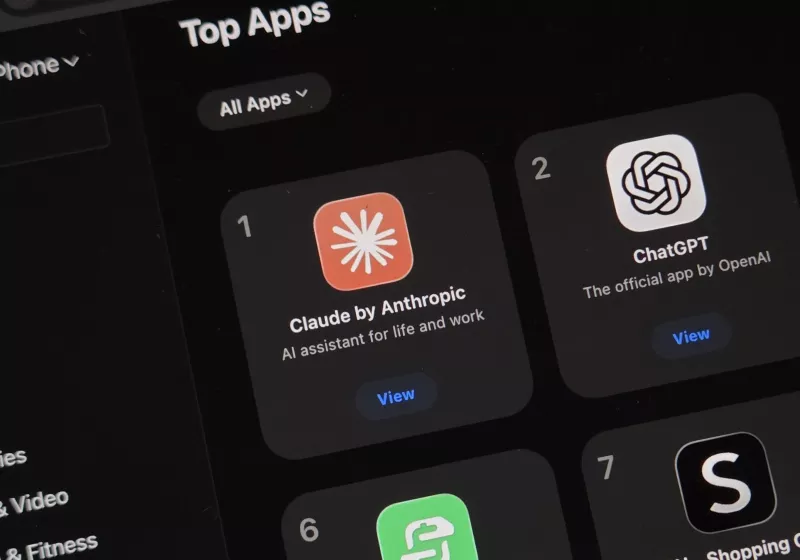
• Core Points: Claude becomes the top free iPhone app, surpassing ChatGPT and Google Gemini in late February, marking a dramatic rise since January.
• Main Content: The surge is tied to high user interest amid ongoing Pentagon-related controversy, influencing app rankings.
• Key Insights: Public intrigue around defense-related topics can unexpectedly propel consumer AI tools to prominence.
• Considerations: The rapid shift raises questions about data handling, reliability, and the role of media narratives in app popularity.
• Recommended Actions: Users should understand each app’s data policies and limitations; developers and platforms should monitor for misinformation risks.
Content Overview
In late February, a significant shift occurred in the iPhone App Store rankings: Claude, an AI assistant by Anthropic, ascended to the top spot as the most downloaded free app. This result came by the end of Saturday, February 28, and, as reported at the time, Claude remained at the pinnacle through the subsequent days. Notably, ChatGPT, a long-standing AI assistant from OpenAI, dropped to second place, while Google’s Gemini trailed in third. The sudden ascent of Claude is remarkable given that the app was not even within the top 100 at the start of January, highlighting how swiftly popularity can change in app ecosystems driven by tens of millions of daily users.
The broader context involves ongoing conversations about U.S. defense-related disclosures and Pentagon-related discussions that had captured substantial public attention in recent weeks. While these topics did not originate with Claude, the surrounding media landscape and public interest in AI tools intersected with the app’s visibility. The spike in Claude’s rankings illustrates how external news cycles can impact consumer behavior, sometimes elevating certain AI platforms over others in short timeframes.
This article synthesizes available reports on Claude’s ranking ascent and situates the development within the larger dynamics of AI tool adoption, media influence, and user trust. It also considers the implications for developers, platform curators, and users who rely on these tools for information, productivity, and decision-making.
In-Depth Analysis
Claude’s leap to the top of the iPhone free app chart is not merely a statistical anomaly; it reflects several converging factors shaping the AI app market. First, the App Store ranking algorithm factors in download velocity, retention, and user engagement. An event or instant surge in searches can propel an app into top positions even if its previous trajectory was modest. Claude’s rapid ascent—from a position outside the top 100 in January to a leading position in February—suggests a combination of heightened curiosity around Anthropic’s product and its perceived value as an alternative to other well-known AI assistants.
Second, the timing of the spike hints at the role of external news cycles. In the weeks leading up to late February, Pentagon-related discussions dominated many headlines. While Claude is not a defense-focused product, AI tools often attract attention from diverse user groups—developers evaluating alternatives, students and professionals seeking productivity gains, and casual users exploring AI capabilities. Media coverage that frames AI tools within high-stakes or policy-relevant narratives can amplify public interest, driving traffic to apps that might otherwise remain under the radar. This dynamic underscores the interplay between news ecosystems and consumer tech adoption.
Third, the competition among AI assistant apps is intense and highly dynamic. ChatGPT has established a broad user base and ecosystem, with consistent visibility in media and marketing. Google’s Gemini, though newer in some markets, is backed by substantial resources and integration with Google’s services. When an external factor—such as a news story or a promotion—shifts attention, even a well-known platform can cede ground temporarily, allowing another offering like Claude to rise in the charts. Such volatility is not unusual in app marketplaces where daily rankings reflect short-term user behavior as much as longer-term product maturity.
From a user perspective, Claude’s top position may signal that it provides features or usability that resonate with a broad audience. Anthropic emphasizes safety, steerability, and conversational quality in Claude, positioning it as a reliable option for tasks ranging from information retrieval to writing assistance. For developers and platform operators, Claude’s ascent underscores the importance of discoverability, rating signals, and timely response to public discourse. It also highlights potential challenges—such as ensuring accurate information, managing user expectations, and mitigating the spread of misinformation—when AI tools intersect with sensitive topics.
Ethical and practical considerations accompany sudden shifts in app popularity. A top ranking can attract more users, but it also increases the potential for exposure to limitations, errors, or misrepresentations an AI might generate. Users should approach AI tools with a critical mindset, cross-check important claims, and be mindful of platform-specific policies regarding data usage. For the AI industry, rapid spikes in interest can test the robustness of servers, user support systems, and content safety workflows, emphasizing the need for scalable infrastructure and responsible AI governance.
In evaluating Claude’s rise, it is important to recognize that rankings are not definitive measures of quality but reflections of current user engagement patterns. Differentiators such as user-friendly interfaces, reliability, privacy controls, and the ability to integrate with other tools can influence how long a newcomer like Claude maintains momentum after an initial surge. Long-term success will depend on sustained performance, transparent communication about capabilities and limitations, and the ability to deliver consistent value to a diverse user base.
Perspectives and Impact
The phenomenon of Claude occupying the top slot in the iPhone free app chart has several broader implications for the AI ecosystem and consumer behavior.

*圖片來源:Unsplash*
Market dynamics: Short-term popularity spikes can disrupt established hierarchies among AI assistants. While Claude may benefit temporarily from a wave of curiosity, maintaining leadership requires consistent product improvements, reliability, and user trust. The episode illustrates that consumer attention is highly fluid in the digital marketplace.
Media influence: News cycles around high-profile topics, such as Pentagon-related discussions, can shape how audiences search for and engage with AI tools. This dynamic emphasizes the responsibility of media outlets to present accurate context and clarity when connecting defense topics with consumer technology.
User education: A surge in downloads may correspond with a broader audience that is less familiar with AI limitations. Educators, developers, and platform maintainers should prioritize clear guidance on privacy, data usage, model capabilities, and potential risks. Providing easily accessible explanations helps users make informed decisions about which tool best suits their needs.
Competitive strategies: Established players like OpenAI’s ChatGPT and Google’s Gemini continually innovate to attract and retain users. Periods of elevated interest in alternative offerings can drive competitive experimentation, such as new features, stricter safety protocols, and more transparent usage policies. This competition benefits users through improved functionality and safeguards.
Future implications: If interest in AI assistants continues to grow, we can expect increasing diversification in AI offerings tailored to specific tasks—summarization, coding assistance, research, education, or enterprise workflows. The competitive landscape may reward tools that demonstrate strong alignment with user intent, robust safety measures, and clear value propositions.
Looking ahead, the Claude spike could influence how users evaluate AI assistants in the near term. It may prompt more people to try Claude, compare experiences across platforms, and consider how different providers handle prompts, privacy, and accuracy. For policymakers and researchers, such shifts underscore the importance of monitoring AI deployment, user outcomes, and the potential for misinformation or misinterpretation in high-stakes topics.
Key Takeaways
Main Points:
– Claude rose to the top of the iPhone free apps chart by February 28, surpassing ChatGPT and Gemini, a notable shift from January.
– The ascent appears linked to external media attention and a surge in public interest in AI tools amid Pentagon-related discussions.
– App rankings reflect user engagement and discovery dynamics, not just product quality; sustained success requires ongoing value and trust.
Areas of Concern:
– Rapid popularity can attract misinformation or overconfidence in AI capabilities if users do not verify outputs.
– Higher visibility increases the risk of user data exposure and the need for clear privacy disclosures.
– Short-term spikes may distort perceptions of general AI reliability across different platforms.
Summary and Recommendations
Claude’s ascent to the top of the iPhone free app chart in late February highlights how consumer interest can reshape the competitive AI landscape within days. While the spike underscores Claude’s ability to capture attention and deliver a compelling user experience for many, it also reveals the volatility of app rankings driven by external narratives. For users, the key takeaway is to approach AI assistants with critical thinking, verify critical information through reliable sources, and review each app’s data privacy and usage policies.
For developers and platform operators, the episode emphasizes the importance of sustaining value beyond initial curiosity. Continuous product improvements, transparent communication about capabilities and limits, robust safety features, and clear privacy practices are essential for converting a surge of interest into long-term user trust. Additionally, platformic tools that promote informed decision-making—such as clear in-app disclosures about data handling and model limitations—can help mitigate potential risks associated with rapid popularity.
In the broader context, the Claude ranking moment offers a useful case study in how public discourse, media narratives, and consumer technology intersect to shape user behavior. As AI tools become increasingly embedded in everyday workflows, stakeholders across the ecosystem—consumers, developers, journalists, and policymakers—will benefit from ongoing awareness of how external stimuli influence app adoption and how to navigate the accompanying opportunities and challenges.
References
- Original: https://www.techspot.com/news/111530-claude-top-free-app-iphone-right-now-pentagon.html
- Additional references (for context on AI app ecosystems and rankings):
- https://www.applian.com/blog/app-store-ranking-factors/
- https://www.cnet.com/tech/services-and-software/ai-tools-privacy-data-use-guidelines/
- https://www.openai.com/blog/gpt-4-overview

*圖片來源:Unsplash*