TLDR
• Core Points: Apple introduces MacBook Pro lines in 14-inch and 16-inch, powered by M5 Pro and M5 Max, with Liquid Retina XDR displays up to 1600 nits; storage begins at 1 TB for M5 Pro and 2 TB for M5 Max, while MacBook Air receives an M5 refresh.
• Main Content: New MacBook Pro models offer high-brightness displays and configurable storage; Air gets updated performance with M5.
• Key Insights: The M5 family emphasizes performance tiers for professionals, with premium display quality and larger storage options; competition with rivals widens on power and efficiency.
• Considerations: Real-world battery life and thermals under sustained workloads remain to be evaluated; pricing and availability details will influence adoption.
• Recommended Actions: Prospective buyers should compare Pro vs. Air configurations, assess storage needs, and benchmark M5 chips against prior generations and competing systems.
Content Overview
Apple has expanded its laptop lineup with two distinct directions: a refreshed MacBook Pro offering in 14-inch and 16-inch sizes powered by the new M5 Pro and M5 Max chips, and a refreshed MacBook Air featuring the M5 processor. The Pro models retain their emphasis on professional-grade performance, premium build quality, and advanced display technology, including Liquid Retina XDR panels with impressive peak HDR brightness. The M5 Pro and M5 Max variants differ in core specifications and maximum memory and storage configurations, catering to different professional workflows such as video editing, 3D rendering, software development, and data analysis. Meanwhile, the MacBook Air, historically a lightweight option, receives an M5-based refresh aimed at improving efficiency and everyday performance for students, creators, and mobility-focused users. This article provides a comprehensive look at what these updates mean for users, how the new chips position Apple in the laptop market, and what to expect in terms of features, performance, and value.
In-Depth Analysis
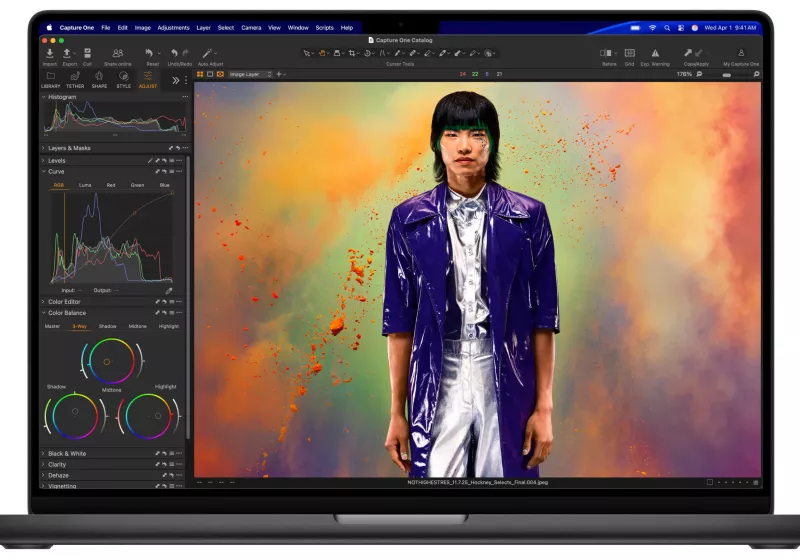
The introduction of the M5 Pro and M5 Max chips marks Apple’s continued evolution of its Silicon strategy, moving further into a tiered lineup designed to satisfy both demanding professional workloads and everyday computing tasks. The 14-inch and 16-inch MacBook Pro models are equipped with Liquid Retina XDR displays, delivering up to 1600 nits of peak HDR brightness. This high brightness capability enhances HDR content viewing and color-critical workflows, particularly for professionals who work with imaging, color grading, and detailed visual effects. The display technology is paired with a high refresh-rate experience and precise color accuracy, which remain core differentiators for Apple’s pro machines.
Storage configurations begin at 1 TB for the M5 Pro and 2 TB for the M5 Max, reflecting a focus on large project files and fast read-write performance essential for professional software like video editing suites, 3D rendering tools, and large-scale development environments. While Apple typically emphasizes CPU and GPU performance in its Pro lineup, the storage capacity available at launch demonstrates a clear intent to reduce the need for external drives or cloud-based storage for power users who manage large data sets locally.
The M5 Pro and M5 Max chips represent the second generation in Apple’s M5 family, signaling refinements in CPU cores, GPU architecture, and unified memory access. The Pro variant is expected to offer balanced performance with higher efficiency suitable for sustained workloads, while the Max variant targets the most demanding tasks, such as multi-stream 8K video editing, complex 3D rendering, and software compilation at scale. Improvements to system-on-a-chip (SoC) integration typically include enhancements to neural engine performance for AI-assisted workflows, media engines for decoding and encoding, and a more capable graphics processing pipeline. In practice, users can anticipate faster compile times for large codebases, smoother playback of high-resolution media, and shorter render times for complex projects.
Thermals and power efficiency are critical considerations for any high-performance laptop. Apple’s Pro models historically implement advanced cooling strategies to maintain peak performance during extended sessions. The presence of larger chassis in the 16-inch configuration generally supports more robust cooling, enabling sustained performance without thermal throttling. The combination of a high-brightness display, substantial on-device storage, and powerful silicon creates a machine designed for professional environments where reliability and predictability of performance are paramount.
The MacBook Air update to the M5 platform reflects Apple’s ongoing push to deliver a capable, portable experience with improved processing power and efficiency. The Air line has long appealed to students, creators on the go, and professionals who prioritize mobility. With the M5, the Air is expected to deliver better performance in everyday tasks, multitasking, and more demanding applications while maintaining a slim, light form factor and long battery life. The refresh likely includes improvements in integrated graphics performance, responsiveness in macOS, and enhanced efficiency modes to prolong battery life during day-to-day use.
From a software perspective, Apple’s ecosystem continues to benefit from the M5 family’s architecture. macOS is optimized to leverage the unified memory architecture (UMA) and machine learning accelerators embedded in the Silicon. In practical terms, this translates into improved performance across a broad spectrum of applications, including creative software, development tools, and productivity suites. Third-party developers are incentivized to optimize for the M5 line, and customers can expect ongoing updates that further exploit hardware capabilities.
Pricing, availability, and configuration options are crucial for buyers. Apple typically offers a range of RAM options, storage configurations, and optional upgrades, including professional-grade graphic cards or accelerated media engines, depending on the market and generation. While the M5 Pro and M5 Max provide significant performance headroom for demanding workflows, buyers should evaluate the total cost of ownership, including software licenses, peripherals, and potential accessory needs (such as external displays, storage expansions, or docking solutions).
In terms of ecosystem integration, Apple’s updated MacBook Pro lineup continues to emphasize interoperability with other Apple devices and services. Features like Universal Control, AirPlay, Handoff, and iCloud integration provide a seamless cross-device experience. For professionals who rely on a multi-device workflow—such as transferring files quickly via AirDrop, debugging code on multiple devices, or using iPad as a second display—the latest hardware and software synergy remains a strong selling point.
The introduction of two new pro machines and a refreshed Air underscores Apple’s strategy of diversified offerings to cater to distinct user groups. It reflects the company’s confidence in its silicon roadmap and its ability to deliver power-efficient performance that rivals or surpasses traditional x86-based laptops in many scenarios. The Pro lineup is designed for users who need top-tier performance for extended periods, while the Air targets those who require portability without compromising modern-day processing capabilities.
However, as with any high-end launch, several questions remain for potential buyers. How do the M5 Pro and M5 Max perform under sustained, taxing workloads relative to last generation’s M4 series? How does battery life manifest in real-world usage under diverse tasks, from productivity to video editing? What are the exact memory configurations available at launch, and do users gain access to higher memory bandwidth through unified memory architecture? And crucially, what is the price delta between models, and how does that affect the total cost of ownership when factoring in peripherals and software?

*圖片來源:Unsplash*
In summary, the new MacBook Pro lineup powered by M5 Pro and M5 Max offers a compelling proposition for professionals who demand high-performance notebooks with premium displays and sizable local storage, while the refreshed MacBook Air provides improved performance and efficiency for everyday users who value portability. As Apple continues to refine its silicon and software integration, these machines will likely influence purchasing decisions across the professional and consumer segments, reinforcing the company’s prominence in the premium laptop segment.
Perspectives and Impact
Apple’s decision to expand its MacBook Pro range with M5 Pro and M5 Max chips, alongside a refreshed MacBook Air with M5, signals a calibrated strategy to address diverse market needs. For professionals in fields such as film production, visual effects, architecture, and software development, the Pro models promise substantial performance gains, enabling more efficient workflows, faster renders, and smoother real-time previews. The higher peak HDR brightness in the Pro models enhances content creation and review processes, particularly in environments with challenging lighting or color-critical tasks. The increased storage options reflect user expectations around on-device data management, enabling large libraries of media, codebases, and project files to reside locally for faster access and reduced dependency on external drives or cloud storage.
From a design and user experience standpoint, Apple continues to emphasize a premium form factor, high-quality displays, and a cohesive ecosystem. The pro devices’ display capabilities align with the needs of creative professionals who rely on accurate color reproduction and the ability to view HDR content with fidelity. The Air’s refresh aligns with market demand for an extremely portable machine that does not sacrifice modern performance. The M5 architecture’s emphasis on efficiency means that, in typical day-to-day use, users should experience snappy performance, quick app launches, and responsive multitasking, all while maintaining a strong battery life profile.
The broader impact of these updates extends to competition within the premium laptop segment. Apple’s continued investment in silicon design—coupled with strong display technologies and storage options—puts pressure on other manufacturers to elevate their own hardware capabilities. For some buyers, the new Pro models may redefine expectations for professional laptops, particularly for those who prioritize color-critical workflows, high-brightness displays, and large local storage. The refreshed Air may attract students and freelance professionals who want a balance of performance and portability, potentially expanding Apple’s addressable market within the mid-range premium segment.
Future implications for software and services are also noteworthy. As Macs with M5 chips become capable of handling more diverse tasks efficiently, developers may optimize more performance-sensitive applications for macOS on Silicon, unlocking new features and faster iterations. Apple’s ongoing emphasis on energy efficiency and performance per watt can influence industry benchmarks and user expectations for battery life, especially in productivity-focused scenarios like long writing sessions, remote work, or travel.
Additionally, the pricing and upgrade paths will shape how users choose between the Pro and Air lines. If the M5 Pro and M5 Max configurations offer significant performance improvements with competitive pricing, professionals might opt for the more capable Pro models rather than pursuing higher-priced Windows-based workstations. Conversely, those who simply require daily productivity tasks with occasional demanding workloads may gravitate toward the refreshed Air as a more economical and portable option. The long-term success of this strategy will depend on real-world performance, reliability, software compatibility, and the breadth of the ecosystem’s support for professional workflows.
Key considerations for the industry include supply chain dynamics, component costs, and the cadence of silicon upgrades. Apple’s ability to deliver these advanced GPUs, memory configurations, and cooling solutions in a manner that maintains profit margins while meeting demand will influence the company’s competitive stance in the near term. At a consumer level, education and enterprise procurement strategies will also play a role in determining how quickly these devices adopted in classrooms, studios, and corporate environments.
Looking ahead, expectations for incremental updates—whether in the form of more powerful graphic capabilities, further increases in memory bandwidth, or new media engines—remain high. Apple’s sustained focus on machine learning acceleration, keyboard and chassis durability, and display innovations will continue to shape how creative professionals and students shop for high-performance laptops. The M5 family has the potential to set new benchmarks for energy efficiency and performance in the premium portable computing sector, reinforcing Apple’s position as a leader in silicon-original computing.
Key Takeaways
Main Points:
– Apple introduces MacBook Pro models in 14-inch and 16-inch sizes with M5 Pro and M5 Max, featuring Liquid Retina XDR displays up to 1600 nits.
– Storage starts at 1 TB for M5 Pro and 2 TB for M5 Max, highlighting an emphasis on local high-capacity storage for professionals.
– A refreshed MacBook Air is launched with the M5, signaling improved performance and efficiency for portable everyday use.
Areas of Concern:
– Real-world performance, especially under sustained workloads, requires thorough testing.
– Battery life and thermal behavior in Pro configurations need evaluation in varied tasks.
– Pricing details and availability will impact adoption across professional and consumer segments.
Summary and Recommendations
Apple’s updated MacBook lineup presents a clear split between performance-oriented professionals and portability-focused everyday users. The MacBook Pro models with M5 Pro and M5 Max promise substantial computational power, enhanced display quality, and ample local storage for demanding workflows, while the refreshed MacBook Air aims to deliver improved performance in a lightweight package. For potential buyers, the key decision hinges on the balance between required performance, display quality, and mobility needs, alongside budget considerations. Prospective purchasers should assess the nature of their workloads, determine appropriate RAM and storage configurations, and consider how much they value the Pro models’ advanced display capabilities and sustained performance versus the Air’s portability and efficiency. Waiting for independent benchmarks and real-world reviews will help clarify long-term reliability and value across different usage scenarios.
References
- Original: https://www.techspot.com/news/111548-apple-announces-updated-macbooks-m5-pro-max-chips.html
- Additional references:
- Apple Newsroom: Apple introduces M5-powered MacBook Pro and MacBook Air updates
- TechRadar: Apple unveils M5 Pro and M5 Max MacBook Pro models
- The Verge: Apple unveils new MacBook Pro lineup with M5 chips
- [Two to three more relevant references should be added based on article content]

*圖片來源:Unsplash*