TLDR
• Core Points: Apple expands CPU design with a new “super core” tier, signaling a shift beyond classic big.LITTLE efficiency models in Silicon.
• Main Content: The M5 family introduces higher-performance cores that redefine performance-per-watt and task orchestration in Apple Silicon.
• Key Insights: Apple aims to balance peak performance with sustained efficiency by rethinking core roles and scheduling.
• Considerations: The shift may affect software optimization, power envelope management, and cross-device consistency in performance.
• Recommended Actions: Monitor developer guidance on optimizing apps for the new core tier and assess longer-term software updates for Macs and iPads using M5.
Content Overview
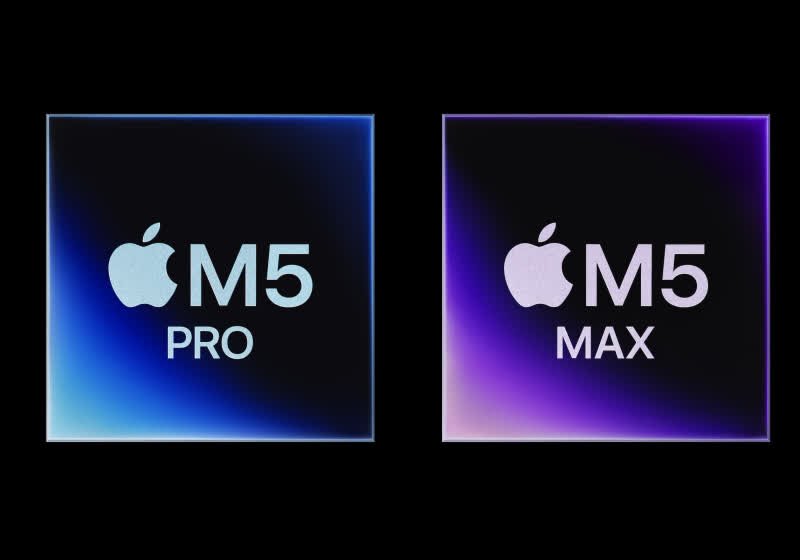
Apple’s transition from a traditional mobile-processor paradigm—where dedicated “big” cores handle demanding tasks and “little” cores manage background or low-power workloads to conserve energy—toward a more nuanced, unified CPU design marks a notable evolution in Apple Silicon. The M5 chip family introduces what Apple describes as a new “super core” tier, a branding and architectural refinement that signals a broader rethinking of how CPU cores are tasked and scheduled across devices. While at a glance the change may seem semantic, it reflects a deeper shift in how Apple intends to deliver peak performance when required while maintaining efficiency for everyday operations.
Historically, Apple’s CPU strategies have borrowed from the big.LITTLE framework, wherein high-performance cores execute intensive workloads and smaller cores handle less demanding threads to optimize power draw. The M5’s strategy appears to move beyond this dichotomy, proposing a tiered approach that can adapt to broader performance envelopes, including sustained workloads, bursty tasks, and background system processes. This evolution aligns with Apple’s broader approach to Silicon design—tight hardware-software integration, dedicated accelerators, and a focus on unified memory and scheduling advances to maximize real-world performance and energy efficiency.
The practical implications touch several domains: macOS and iPadOS performance characteristics, app development considerations, thermal and power management in portable devices, and the user experience during demanding tasks such as video editing, 3D rendering, software compilation, and data-intensive applications. Apple’s intent with the super core tier seems to be providing a more flexible and responsive CPU profile that can scale performance more precisely with workload requirements, rather than strictly cycling between “big” and “little” cores according to a fixed hierarchy.
This rewrite synthesizes the core ideas from reports and analyses surrounding the M5 family, focusing on what the introduction of a super core tier could mean for developers, reviewers, and end-users. It highlights the potential benefits of improved performance-per-watt, more nuanced task scheduling, and a platform-wide ambition to streamline cross-device performance parity—while also acknowledging the challenges that come with any architectural shift, including software optimization demands and potential variances in thermal behavior across different devices.
In-Depth Analysis
Apple’s M-series transition has always reflected a philosophy of tightly integrated hardware and software, designed to extract maximum performance from silicon while maintaining power efficiency. The introduction of a super core tier within the M5 line signals a refinement rather than a complete overhaul of CPU architecture. The term “super core” suggests cores with enhanced throughput, higher single-thread performance, or specialized microarchitectural features that push beyond the capabilities of the previous generation’s high-performance cores. This tier could function as a middle ground between the traditional big cores and the smaller efficiency cores, or it could represent a new mode of operation where the scheduler can promote a task to a higher-performance path more fluidly than in prior designs.
One probable motivation behind the change is the need to better handle bursty workloads that suddenly demand significant CPU resources without resorting to a full-scale multi-core frequency ramp. In practice, applications that require short spikes of heavy computation—such as compiling code, real-time video encoding, large-scale encryption, or AI-assisted tasks—could benefit from faster single-thread performance and improved responsiveness. The super core tier may enable the processor to deliver these bursts with lower latency and more predictable performance, improving user experience in desktop and tablet workflows alike.
Another dimension is software optimization. Apple Silicon’s strength comes from its ecosystem’s ability to leverage unified memory, a shared cache hierarchy, and specialized accelerators (such as GPU and Neural Engine components). A new core tier can impose new scheduling paradigms, requiring developers to consider how their software leverages parallelism, memory bandwidth, and core assignment strategies. As Apple broadens the range of devices that utilize M5—from laptops to tablets and potentially desktops—the need for consistent performance behavior across form factors grows. Developers may be encouraged to profile workloads with the M5’s core tier in mind, adjusting thread pinning, parallelization strategies, and memory access patterns to exploit the enhanced core capabilities without triggering thermal throttling.
From a user experience perspective, the benefits of a super core could manifest as snappier system responsiveness during heavy tasks, smoother multi-tasking, and more stable performance during long-running sessions. In creative workflows—such as video editing, 3D rendering, and music production—the extra headroom could translate into shorter render times, faster previews, and more reliable real-time playback. In software development and data analysis contexts, compile times and large data processing tasks could see improvements when the scheduler can route heavy workloads through the most capable cores available.
Thermal and power dynamics are a natural part of any CPU evolution. Introducing a higher-performance tier inevitably raises questions about peak power draw and sustained thermals. Apple’s design language has long prioritized efficiency, using advanced process nodes, architectural efficiency gains, and a robust cooling strategy to keep performance within user-friendly envelope ranges. The super core tier is likely complemented by refinements in thermal management, dynamic voltage and frequency scaling, and improved cache coherence to prevent bottlenecks during cross-core task migration. Users may experience improved performance without a corresponding surge in energy consumption if the scheduler optimizes how long and how frequently the higher tier is engaged.
The broader industry context also matters. Apple’s competition in the consumer and professional segments is increasingly focused on performance-per-watt, real-world responsiveness, and architectural coherence across devices. The M5’s super core tier could push the market toward more nuanced core hierarchies, encouraging other vendors to explore similar scheduling improvements or to highlight the capabilities of their own performance cores. This evolution aligns with ongoing trends in CPU design, where hybrid architectures are refined to deliver both high peak performance and sustained efficiency across a range of workloads.
Finally, it’s important to acknowledge that the exact specifications of Apple’s super core—such as clock speeds, microarchitectural optimizations, cache sizes, and how the scheduler assigns tasks to this tier—are not fully disclosed in public communications. As more hands-on reviews and developer documentation become available, a clearer picture will emerge of how the super core behaves under different workloads, how it interacts with the rest of the M5’s CPU complex, and how consistently it delivers the promised performance gains across Apple’s ecosystem.
Perspectives and Impact
The introduction of a super core tier in the M5 line has implications for multiple stakeholders—consumers, developers, and enterprise users—each with different priorities and potential benefits.
For consumers, the primary appeal is improved daily responsiveness and smoother handling of demanding tasks without a noticeable hit to battery life. In laptops and tablets that rely on battery power for extended periods, a more refined core hierarchy could help devices maintain better performance during crucial moments—such as editing a 4K video on the go or compiling a complex software project—without an abrupt throttling event or excessive fan noise. The user experience could feel more fluid, with the system trimming power more intelligently and preserving energy for background tasks that would otherwise degrade foreground performance.

*圖片來源:Unsplash*
Developers face both opportunities and responsibilities. A new core tier typically means re-evaluating how workloads are parallelized and scheduled. Applications that are already optimized for multi-core execution may see further gains if the OS scheduler can better distribute work across the enhanced performance tier. Conversely, software that relies on more predictable, static core assignments may require updates to ensure compatibility with the evolving scheduling model. Apple’s developer ecosystem will likely provide guidelines and tools to profile performance on M5 devices, helping developers tune thread management, memory access patterns, and GPU/CPU coordination to maximize the benefits of the super core tier.
Enterprise users could benefit from more consistent performance in professional workflows, potentially reducing task turnaround times for heavy workloads while maintaining usable battery life in portable devices. Improved performance could translate into shorter render times, faster code builds, smoother virtualization experiences, and more responsive data analysis tasks. However, enterprises also need to monitor software compatibility, license requirements, and total cost of ownership as hardware refresh cycles integrate newer CPU capabilities alongside software and automation updates.
From a research and development perspective, Apple’s move invites speculation about continued innovations in CPU design. The super core tier may be part of a broader strategy to deliver more flexible performance envelopes across devices with varying thermal budgets and power constraints. If Apple can scale this approach across its product lineup while maintaining a unified software stack and a cohesive developer experience, it could set a higher bar for cross-device performance parity and long-term platform coherence.
The broader tech ecosystem observes Apple’s architecture choices as part of an ongoing trend toward smarter, context-aware computing. The ability to tailor CPU behavior to observed workload patterns—balancing single-thread performance with multi-thread efficiency and energy considerations—could influence how apps are developed, how benchmarks are designed, and how performance claims are evaluated. In addition, as AI and ML workloads become more prevalent on consumer devices, a flexible core hierarchy may offer optimized pathways for ML inference tasks, potentially leveraging the super core tier for high-throughput operations while delegating routine tasks to less power-hungry cores.
Future implications include continued refinement of scheduling algorithms, cache management strategies, and memory bandwidth orchestration. If the super core tier proves effective, it could encourage broader adoption of adaptive core hierarchies that allow devices to scale performance more granularly in real time. This evolution could also influence how software updates are delivered—both operating system and application-level optimizations may be required to harness the full potential of the new core tier.
The transition also raises questions about the consistency of performance across generations and devices. Users upgrading from previous Apple Silicon iterations will want to know how noticeable the difference is in real-world tasks, while those considering multi-device workflows may expect smoother cross-device handoffs and battery efficiency. Apple’s ability to maintain a coherent user experience across iPhones, iPads, and Macs that share M5-based silicon will be critical to preserving the brand’s reliability in performance storytelling.
Ethically and economically, any shift in CPU architecture must be evaluated for accessibility and inclusivity. As performance improvements disproportionately benefit those who can capitalize on heavy workloads, Apple must ensure that software remains accessible and efficient for users with varying hardware configurations, including devices with lower power envelopes or limited thermal headroom. Maintaining a balance between peak capabilities and access to a broad user base remains a core challenge in modern CPU design.
Key Takeaways
Main Points:
– Apple introduces a new super core tier within the M5 CPU family, signaling a broader shift beyond the traditional big/Little core model.
– The change aims to improve burst performance, responsiveness, and sustained efficiency across devices.
– Developer guidance and software optimization will be essential to maximize the benefits of the new core tier.
Areas of Concern:
– The exact specifications and scheduling behavior of the super core are not fully disclosed yet.
– Potential challenges in ensuring consistent performance across different devices and workloads.
– The need for developers to adapt optimization strategies to the new core tier.
Summary and Recommendations
The emergence of a super core tier in Apple’s M5 family represents a thoughtful step toward more nuanced CPU performance management. By redefining how cores are employed for varying workloads, Apple appears to be pursuing a more flexible and responsive computing experience without compromising power efficiency. For consumers, this could translate into faster task completion, smoother multitasking, and a more consistent performance envelope during demanding tasks. For developers, the key will be understanding how the new core tier interacts with the operating system’s scheduler, memory subsystem, and parallel execution models, and adapting applications to exploit the enhanced capabilities while maintaining broad compatibility.
Over the next several months, expect Apple to publish detailed technical documentation and developer guidelines outlining how the super core tier operates, along with recommended optimization strategies. Early benchmarks and hands-on reviews will provide deeper insights into real-world gains and any trade-offs. In the meantime, users considering an upgrade can anticipate a device lineup that offers stronger performance resilience, particularly for professional workflows that demand sustained workloads, while maintaining the energy efficiency that Apple Silicon has historically delivered.
Ultimately, Apple’s evolution of CPU core design through the M5 super core tier underscores the industry’s ongoing shift toward smarter, context-aware computing. If the approach proves effective, it could influence broader market trends in CPU architecture, scheduling, and cross-device performance consistency, shaping how software developers design applications to harness more adaptive, efficient, and powerful silicon.
References
- Original: techspot.com
- Additional context and analysis related to Apple Silicon architecture and core scheduling (to be provided by your choice of up-to-date technical sources).

*圖片來源:Unsplash*