TLDR
• Core Points: Amazon trims staff in its robotics division, a group focused on designing warehouse robots and conveyance systems, amid broader cost-cutting and strategic realignment.
• Main Content: The layoff affects a unit primarily responsible for autonomous warehouse robots and other material-handling conveyances, reflecting Amazon’s ongoing efficiency drive.
• Key Insights: The move underscores Amazon’s emphasis on cost controls even as it relies on automation to power its logistics network.
• Considerations: The restructuring may impact project timelines and innovation pace within the robotics and automation initiatives.
• Recommended Actions: Monitor subsequent staffing updates and project milestones; assess potential shifts in automation deployment timelines and supplier relationships.
Content Overview
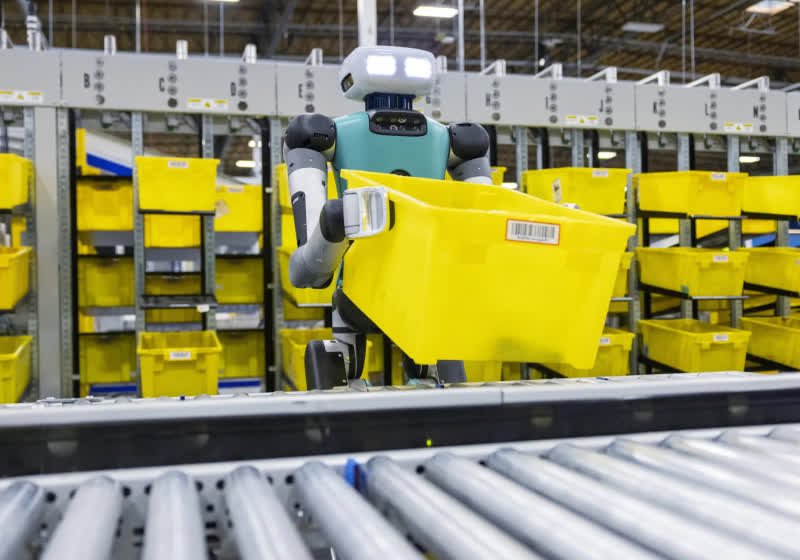
Amazon has entered another round of workforce reductions, this time impacting its robotics division. The unit, which concentrates on the design and development of autonomous robots and related conveyance technologies used within Amazon’s expansive network of fulfillment and logistics centers, faced layoffs announced on Tuesday. Reuters notes that the department under scrutiny is central to Amazon’s automation strategy, supplying the robots and associated systems that help move goods through vast warehouses with minimal human intervention. The layoffs form part of Amazon’s broader efforts to streamline costs and optimize operations in a highly competitive e-commerce and logistics landscape.
The robotics unit has historically been a cornerstone of Amazon’s attempt to scale its fulfillment capacity while controlling labor costs. By deploying autonomous robots to retrieve, sort, and transport items, Amazon aims to improve throughput, reduce order cycle times, and handle peak-season demand more efficiently. However, even as automation promises productivity gains, it requires significant investment in hardware, software, maintenance, and integration with human workflows. The latest reductions illustrate the ongoing tension between pursuing aggressive automation and delivering short- to mid-term financial performance.
This development sits within a broader context of corporate belt-tightening across major technology and retail players. Companies that invested heavily in automation and infrastructure during the pandemic-era expansion have since revisited staffing and capital expenditure plans as consumer demand patterns stabilized and profitability priorities shifted. While robotics and AI continue to present long-term advantages, executives remain mindful of capital allocation, project risk, and the time-to-value curve inherent in large-scale automation initiatives.
In-Depth Analysis
Amazon’s robotics division has long symbolized the company’s willingness to invest heavily in automation to support its expansive fulfillment network. The layoff round, which targeted workers within that division, highlights several nuanced pressures shaping corporate decisions in 2024 and beyond. First, there is a continued push for efficiency in an environment where labor costs, energy usage, and facility maintenance are non-trivial components of operating expenses. Automation remains a key lever for reducing variable costs and improving fulfillment speed, yet it is not a panacea. The capital expenditure associated with purchasing, deploying, and maintaining robotic systems is substantial, and the return on investment can be sensitive to the pace of scale, software updates, and the reliability of hardware in a real-world, dynamic warehouse setting.
Second, the move reflects risk management considerations. Automation projects often involve complex integration with existing processes, software ecosystems, and human workflows. A slowdown in hiring within a robotics unit could be a signal of reassessing project portfolios, consolidating roles, or reallocating resources to higher-priority initiatives. It may also reflect a strategic pivot toward refining current deployments and ensuring existing systems deliver expected performance before expanding to new lines of automation.
Third, the timing of the layoffs can be viewed in the context of the competitive landscape. Amazon faces ongoing pressure to optimize capital expenditures as margins fluctuate and growth trajectories evolve. Competitors in logistics and e-commerce are likewise evaluating automation strategies, including potential partnerships with robotics vendors, to balance speed, accuracy, and cost. In such an environment, a company might choose to pause or recalibrate internal robotics work while continuing to expand the use of third-party automation solutions or software-driven optimization tools.
Fourth, the role of the robotics unit in Amazon’s broader automation strategy warrants attention. The division focuses on designing robots and conveyance systems used primarily in warehouses. These systems are intended to assist with material handling, item sorting, and intra-warehouse transport, complementing other automation efforts such as warehouse management software, autonomous delivery initiatives, and friction-reducing processes for inbound goods handling. The effectiveness of such robots depends not only on hardware performance but also on software orchestration, sensor fusion, route planning, and maintenance protocols. The current layoffs may influence the tempo of innovation in those interdependent areas, even as the company maintains a long-term view of automation’s strategic value.
Factual implications of the layoff round include potential impacts on project milestones, team continuity, and the ability to iterate on hardware designs in a fast-paced development environment. Depending on how leadership reallocates talent, there could be shifts in which robot platforms or conveyance solutions receive priority. For instance, projects aimed at increasing payload capacity, improving battery efficiency, or enhancing navigation reliability might receive different resource allocations based on evolving business goals and customer demands.
Additionally, the symbolism of job cuts in a high-profile, automation-forward unit can influence external perceptions. Stakeholders—ranging from investors to partners in the robotics ecosystem—may interpret such moves as signals about the expected speed of automation-driven gains or as evidence of a broader recalibration of the company’s investment strategy. While layoffs are never isolated from broader financial aims, the long-term narrative for Amazon’s automation agenda remains one of ambitious scaling, incremental optimization, and integration across a vast network of fulfillment centers, sortation hubs, and delivery channels.
From a labor perspective, the layoffs affect a specific slice of the workforce—engineering and design professionals focused on robotics hardware and related conveyance systems. The precise composition of roles impacted—whether engineers, technicians, program managers, or product designers—can determine how quickly the division can regain momentum post-restructuring. If the company pursues a reorganization to streamline cross-functional collaboration, it may seek to preserve critical skill sets while realigning reporting structures or consolidating teams to reduce duplication of effort. Such changes can be challenging for employees adjusting to new roles or teams but may ultimately contribute to a leaner, more focused development pipeline.
As for the broader technology and supply-chain implications, the robotics unit’s evolution intersects with the growing importance of autonomy in warehousing and logistics. While many warehouses have increasingly embraced automation, the pace and scale of deployment continue to hinge on the balance between upfront investment, maintenance costs, reliability, and the net productivity gains achieved. The latest workforce reductions do not erase the long-term value seen in automation technologies; rather, they reflect a recalibration of how that value is pursued, funded, and integrated into day-to-day operations.
The situation also invites consideration of how Amazon communicates and manages change with its workforce and external observers. Transparent explanations about the rationale for layoffs, strategic redirects, and plans for sustaining innovation can help mitigate concerns among remaining employees and partners. In markets where public discourse around automation and job security is highly sensitive, clear messaging about the role of robotics in future growth and the steps being taken to preserve essential capabilities can influence morale and confidence.
Finally, any discussion of layoffs in a technology-forward division should be framed against the backdrop of ongoing innovation cycles. Robotics and automated systems continue to undergo rapid evolution, with advances in perception, manipulation, energy efficiency, autonomy, and human-robot collaboration shaping what is possible in modern warehouses. While personnel reductions may slow certain initiatives in the near term, the underlying push toward a more automated and efficient fulfillment network remains a strategic priority for Amazon, given the scale and complexity of its logistics operations.

*圖片來源:Unsplash*
Perspectives and Impact
Three primary perspectives emerge when evaluating the layoff in Amazon’s robotics unit. First, from an organizational and strategic standpoint, leadership may be prioritizing a tighter alignment between automation initiatives and financial performance. The capital-intensive nature of robotics programs means that even as automation offers long-term productivity benefits, there is a need to manage near-term costs and ensure that ongoing projects deliver measurable value. By trimming roles within the robotics division, Amazon could be signaling a shift toward project consolidation, a clearer product roadmap, or a reallocation of talent toward the most promising automation platforms.
Second, from a technical and innovation lens, the cuts could affect the pace of development in autonomous warehousing solutions. The robotics unit’s capabilities—ranging from mobile robots that navigate warehouses to conveyance systems that optimize item flow—depend on a combination of hardware engineering, software development, and systems integration. Workforce reductions may slow iterations, complicate the debugging of complex robotic workflows, and require a period of adjustment as remaining engineers reassign responsibilities. Nonetheless, if the company redirects resources toward core platform improvements or critical deployments, the net effect could be a more focused and efficient innovation cycle.
Third, from a labor and societal angle, the layoff news resonates with broader discussions about automation, job displacement, and the future of work. While robots can substitute for certain repetitive tasks and enhance throughput, the human element remains essential for design, maintenance, and oversight of automated systems. The transition for workers affected by the cuts includes retraining opportunities, internal mobility options, and potential redeployment to other parts of the organization or to vendor and partner ecosystems. How Amazon supports talent transitions and preserves institutional knowledge will influence perceptions of the company’s commitment to its workforce in periods of strategic realignment.
Looking ahead, several implications and possible trajectories could unfold. If the robotics unit continues to operate with reduced headcount, the company might accelerate partnerships with external robotics vendors or rely more on software-driven automation strategies that complement hardware deployments. This could lead to a hybrid approach where core hardware development teams focus on differentiated capabilities while software engineers emphasize optimization, simulation, data analytics, and control algorithms that improve overall system performance.
Another potential avenue is the reframing of automation projects around modular, scalable platforms. By developing standardized architectures that can be adapted to different facility types and sizes, Amazon could reduce bespoke development time and increase the repeatability of successful deployments across its fulfillment network. Such modularization may require upfront investment in robust software ecosystems, digital twin simulations, and standardized integration protocols, but it could yield faster rollouts and greater resilience against operational disruptions.
From a market standpoint, the robotics industry has continued to evolve with advances in perception, grasping, and autonomous navigation. As Amazon reassesses its internal priorities, it could influence how suppliers and partners structure collaboration agreements, technology roadmaps, and long-term commitments. The company’s decisions may also affect confidence levels among investors who closely watch automation initiatives as proxies for efficiency gains and competitive differentiation in e-commerce logistics.
In the broader context, this layoff episode sits alongside a range of strategic moves by technology and consumer-facing firms seeking to balance growth with profitability. The tension between ambitious automation programs and prudent financial management is a recurring theme as enterprises navigate inflationary pressures, supply-chain fluctuations, and evolving consumer demand patterns. The outcomes of such strategic recalibrations will likely become clearer over the next several quarters as project milestones are either met or adjusted and as the company communicates its ongoing automation roadmap to stakeholders.
Key Takeaways
Main Points:
– Amazon’s robotics unit, focused on warehouse robots and conveyance systems, faced workforce reductions in a recent layoff round.
– The move aligns with broader corporate cost-cutting efforts and a reevaluation of automation project portfolios.
– The layoffs may impact project timelines and the pace of innovation within Amazon’s automation initiatives.
Areas of Concern:
– Potential slowdowns in hardware development and deployment timelines for warehouse automation.
– Talent loss and knowledge transfer challenges within critical robotics programs.
– External perceptions about Amazon’s commitment to automation and workforce stability.
Summary and Recommendations
The latest layoffs within Amazon’s robotics division reflect a strategic push to tighten costs while continuing to pursue an automation-backed logistics model. The unit in question designs robots and other conveyance systems used predominantly in warehouses, and disruptions to staffing could influence both near-term project momentum and longer-term capability development. While automation remains central to Amazon’s efficiency and scalability ambitions, the current restructuring signals a careful recalibration of resource allocation and program priorities rather than an abandonment of automated solutions.
For stakeholders, ongoing observation of several indicators will be important. Monitor the company’s quarterly updates for changes in capital expenditure on robotics, reassignment or hiring plans for engineering teams, and any shifts in project milestones related to warehouse automation. Communicate clearly about the rationale for workforce changes, including how remaining teams will maintain continuity, protect critical competencies, and advance core automation platforms. Consider how partnerships with third-party robotics providers or software-centric automations could complement internal capabilities and help sustain momentum during periods of organizational adjustment.
In the longer term, Amazon’s commitment to an automated logistics ecosystem remains evident. A measured approach that prioritizes scalable, modular automation solutions, coupled with robust software, analytics, and maintenance ecosystems, has the potential to preserve the company’s competitive edge while limiting disruption to essential operations. If handled transparently and with a clear path to upskilling and internal mobility for affected workers, the company can navigate the current transition while continuing to invest in technologies that enable faster, more reliable fulfillment.
References
- Original: https://www.techspot.com/news/111578-amazon-latest-round-layoffs-hits-robotics-unit.html
- [Add 2-3 relevant reference links based on article content]

*圖片來源:Unsplash*