TLDR
• Core Points: A massive solar storm—the largest in over two decades—hit Mars, triggering notable atmospheric and magnetospheric responses and offering new clues about Mars’ space weather environment.
• Main Content: The event underscores Mars’ vulnerable atmosphere to extreme solar activity and the role of the planet’s weak magnetic field in shaping its atmospheric loss processes.
• Key Insights: Space weather dynamics at Mars involve complex interactions between the solar wind, solar storms, and Mars’ crustal magnetic fields, with implications for future exploration and habitability studies.
• Considerations: Researchers must integrate data from multiple missions to build a cohesive model of Mars’ atmospheric response to extreme solar events.
• Recommended Actions: Enhance coordinated observations, improve space weather forecasting near Mars, and prioritize instrument deployments that monitor upper-atmosphere and ionospheric changes during solar storms.
Content Overview
In recent years, researchers have increasingly studied how Mars—an planet without a global magnetic shield like Earth—responds to intense space weather events driven by the Sun. The focus intensified following the occurrence of the biggest solar storm in more than two decades, which occurred during a period when Mars was under heightened exposure to solar energetic particles and charged solar wind streams. This event provided a unique natural experiment to observe how Mars’ atmosphere and near-space environment react when subjected to extreme external forcing.
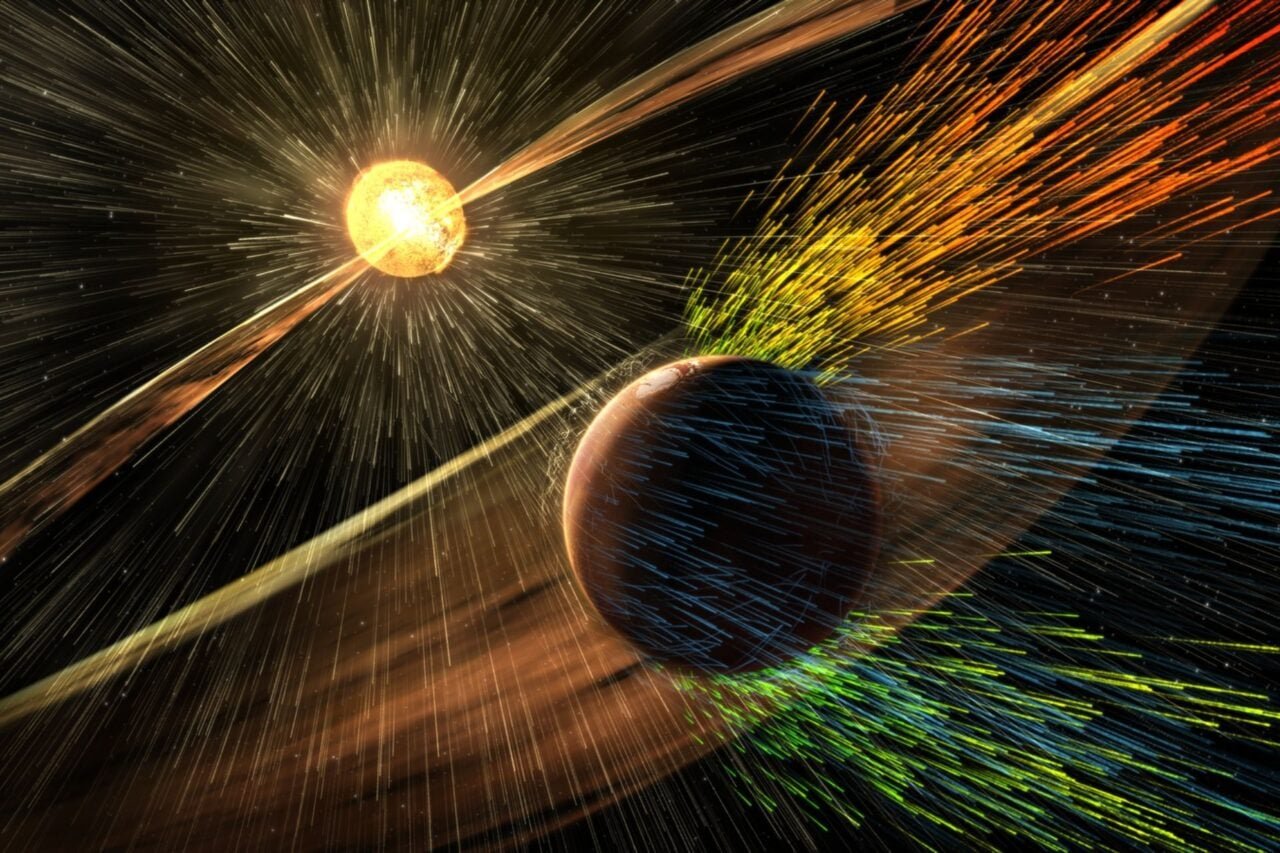
Mars sits at the intersection of a dynamic space weather system. Its thinner atmosphere and the lack of a global magnetic field mean that solar storms can interact more directly with atmospheric particles, ionospheres, and the planet’s crustal magnetic anomalies. While Earth benefits from a strong magnetosphere and an atmosphere that deflects many solar particles, Mars presents a more fragile frontier: the solar wind can directly erode, ionize, and heat upper atmospheric layers, affecting atmospheric composition and escape rates over time. The recent solar superstorm thus offered researchers a rare, high-intensity data set to examine these processes in detail, with measurements drawn from orbiting spacecraft, landers, and orbiters that monitor solar activity, particle fluxes, magnetic fields, and atmospheric properties.
This synthesized analysis contributes to a broader objective in planetary science: to understand how solar activity shapes the evolution of Mars’ atmosphere, its climate history, and its current prospects for hosting future human or robotic exploration. The storm’s immediate effects included increased ionization in the upper atmosphere, perturbations in the ionospheric layers, and transient changes in the magnetospheric boundary conditions around Mars. Some instruments recorded bursts of energetic particles, while others observed shifts in atmospheric density, composition, and temperature at various altitudes. Collectively, these observations help illuminate how the Martian atmosphere absorbs and redistributes energy from solar storms, and how crustal magnetic fields can channel or shield certain regions of the planet.
The event also highlighted the value of international and multi-mission collaboration. A concerted data-sharing effort among space agencies and research institutions enabled scientists to cross-validate measurements, reconcile differences between instruments, and build a more complete spatial and temporal picture of the storm’s impact. As missions continue to orbit Mars or descend to its surface, the community expects to refine its models of space weather coupling and atmospheric loss, with an emphasis on preparation for sustained human presence and activity on and around the planet.
In-Depth Analysis
The biggest solar storm in more than twenty years presented a rare stress test for Mars’ space environment. Solar storms release bursts of high-energy particles and magnetic energy that propagate through the solar system, dragging the solar wind along magnetic field lines and compressing planetary magnetospheres and ionospheres as they arrive. For planets with global magnetic fields, such as Earth, the magnetosphere serves as a substantial shield against much of this material. Mars, by contrast, lacks a global magnetosphere, though it retains remnant crustal magnetic fields in several regions. These crustal fields can offer localized magnetization and deflection patterns, but they do not provide uniform protection across the planet.
As the storm reached Mars, the solar wind intensified, driving a sequence of responses in the Martian environment:
– Upper-atmosphere ionization and heating: The influx of energetic particles increased the production of ions in the thermosphere and ionosphere. This enhanced ionization can alter electrical conductivity, affect radio wave propagation, and modify the overall energy balance within the upper atmosphere.
– Ionospheric disturbances: The ionosphere—the ionized portion of the atmosphere that interacts most directly with solar radiation and particle flux—experienced perturbations. Changes in electron density and composition can influence radio communications for orbiters and landers, as well as the accuracy of navigation signals for missions operating near Mars.
– Atmospheric escape signals: The heating and ionization at high altitudes can contribute to atmospheric escape processes. When charged particles deposit energy into the upper atmosphere, they can increase the rate at which atmospheric constituents gain sufficient energy to overcome Mars’ gravitational pull, contributing incrementally to the long-term loss of atmospheric gases.
– Magnetic field interactions: Without a global magnetic shield, Mars’ crustal magnetic anomalies became critical in shaping the local response. In regions where crustal fields are stronger, particle precipitation and magnetic reconnection could be more dynamic, creating spatial variability in the observed effects. Conversely, areas with weak crustal fields might experience more direct solar wind interaction, leading to greater ionospheric and atmospheric responses in those locales.
Data from a suite of instruments and missions—spanning orbiters that monitor solar wind parameters, energetic particle flux, magnetic fields, and atmospheric composition; landers and rovers that could provide complementary ground-truth measurements; and remote sensing platforms that observe global atmospheric structure—was essential to capture a comprehensive view of the storm’s impact. The cross-mission synthesis enabled researchers to map temporal changes and correlate them with the storm’s phase: shock arrival, main phase, and recovery. This approach helps to distinguish instantaneous responses from longer-term atmospheric dynamics tied to the planet’s rotation, seasonal aspect, and underlying atmospheric chemistry.
A central question this event helps address concerns the efficiency of atmospheric loss under extreme space weather. The Martian atmosphere is thin to begin with, and any sustained heating and ionization in the upper layers could accelerate the escape of light gases such as helium and hydrogen, as well as heavier species under certain conditions. While a single storm is unlikely to cause dramatic global atmospheric collapse, it provides a measurable signal that contributes to an accumulation effect over time, especially when combined with the ongoing processes driven by the solar cycle and the planet’s relic magnetic fields.
Beyond atmospheric science, the event informs the study of Mars’ magnetospheric boundary and its interactions with solar wind structure. The solar storm’s impact on the induced magnetosphere of Mars—an interaction between the solar wind and the planet’s ionosphere in the absence of a strong intrinsic magnetic field—offers insights into how Mars’ space weather environment differs from Earth’s and how it evolves with solar activity. Understanding these differences is crucial for planning missions that rely on precise communication, navigation, and timing. It also informs the design of future spacecraft and habitats, ensuring resilience against space weather and protecting sensitive systems from radiation and electric potential hazards.
The event also has implications for the interpretation of past and future measurements. Mars’ atmospheric loss history is pieced together from data across decades and multiple missions. Extreme solar events add episodic spikes to loss rates and ionospheric variability, which researchers must account for when reconstructing long-term trends. The storm thus serves as a calibration point, helping to verify models that link solar wind structure, crustal magnetic topology, and atmospheric responses to observational signatures. In addition, the data gathered during the storm contribute to ongoing efforts to forecast space weather around Mars, an essential capability for mission design and operational planning for both robotic and human explorers.
Researchers also noted the importance of regional variability induced by Mars’ crustal magnetic fields. The planet’s surface hosts remnants of ancient magnetic dynamos that have been preserved in rocks and crustal materials. These localized fields can create disparities in how different regions respond to a solar storm. Some regions may show heightened auroral-like phenomena in the ionosphere, while others experience milder responses. This heterogeneity underscores the need for wide-area coverage from orbiting satellites and, where possible, ground-based observations or lander-based instruments to capture a representative picture of global behavior and to understand local anomalies that could affect mission operations.
In terms of methodology, scientists relied on a multi-disciplinary approach, combining solar physics, magnetospheric physics, atmospheric chemistry, and planetary science. By cross-referencing in situ measurements with remote sensing data, they could construct a layered understanding of the chain of causation: solar storm arrival leads to changes in the solar wind’s density and velocity, which compresses the induced magnetosphere, increases particle precipitation into the upper atmosphere, and alters atmospheric composition and thermal structure. The study of these processes at Mars offers a complementary perspective to Earth-centric space weather research, revealing how planetary environments with different magnetic and atmospheric architectures respond to the same solar drivers.
The broader context of this event aligns with the growing field of comparative planetology in space weather. By comparing Mars’ response to that of Earth and other planetary bodies, scientists aim to identify universal patterns and unique differences driven by composition, magnetic structure, and atmospheric evolution. Such comparative studies improve predictive capabilities for future solar storms and their impact on space exploration infrastructure, ensuring that mission planners can anticipate and mitigate adverse effects on spacecraft systems, communication links, and astronaut safety.

*圖片來源:Unsplash*
Perspectives and Impact
The solar storm’s influence on Mars extends beyond immediate scientific curiosity; it has practical implications for future exploration and habitation in the Red Planet’s vicinity. As space agencies and private actors chart a course toward longer-duration missions, including crewed expeditions, Mars must be understood as a space weather environment with distinct risks and resilience requirements. The event underscores several key perspectives:
Space weather forecasting near Mars: The event demonstrates the value of real-time monitoring of solar activity and near-Mars space weather. Improved forecasting models can help mission operators plan protective measures for spacecraft, optimize communication windows, and safeguard habitats and life-support systems from radiation and electrical hazards. This includes understanding when and how the induced magnetosphere will compress, which can affect communication link reliability and surface operations.
Mission design considerations: When planning landers, rovers, or habitats, engineers must account for potential electromagnetic disturbances, radiation exposure, and thermal fluctuations caused by solar storm events. Shielding requirements, redundant communication links, and robust electrical systems become critical design considerations, particularly for missions that will operate in regions with strong crustal magnetic anomalies or during periods of higher solar activity.
Operational resilience: Even with precautions, space weather can introduce operational disruption. The Mars environment is characterized by a complex interplay of solar wind, atmospheric dynamics, and crustal magnetism. Operational protocols may need to include contingency plans for communication blackouts, instrument saturation, or temporary throttling of sensitive experiments during peak solar activity.
Implications for atmospheric evolution research: The storm adds a data point to the ongoing inquiry into how Mars has evolved to its current thin atmosphere. The cumulative effect of solar storms on atmospheric escape rates informs models of atmospheric loss and climate evolution, helping to reconstruct Mars’ past habitability and the likelihood that life-sustaining conditions could have persisted over geological timescales.
Comparative science value: In the broader solar system, the event provides a reference case for how terrestrial planets with differing magnetic and atmospheric properties respond to the same solar input. The insights gained can refine space weather frameworks used to interpret data from Mercury, Venus, and outer planets, fostering a more unified understanding of planetary space environments.
The timing of the storm—when multiple missions were in operation at Mars—allowed scientists to triangulate observations from different vantage points. Orbital platforms could monitor large-scale atmospheric and ionospheric changes, while landers provided localized measurements of surface-adjacent phenomena, including potential secondary effects on local dust dynamics and surface charging. The convergence of perspectives from diverse instruments strengthened the reliability of the interpretations and highlighted the value of sustained, distributed observation networks around Mars.
Researchers emphasize that this event should be viewed as part of a continuum of space weather interactions rather than an isolated anomaly. Mars experiences solar variability regularly, and extreme events, while infrequent, are anticipated given the variability of solar cycles. Future storms may present even more extreme, though unpredictable, manifestations. The current study contributes to a growing archive of Martian space weather observations that will be mined for decades as models and instrumentation advance.
From a policy and funding standpoint, the event reinforces the case for continuous investment in planetary space weather science. As human and robotic missions become more ambitious, the need to anticipate space weather effects increases. Data sharing among international partners, the maintenance of long-term mission commitments, and the development of robust predictive capabilities are essential to safeguarding missions and enabling sustainable exploration of Mars and its environs.
Key Takeaways
Main Points:
– A major solar storm delivered a pronounced and measurable impact on Mars’ upper atmosphere and near-space environment.
– The planet’s lack of a global magnetic field, together with crustal magnetic anomalies, shaped spatially variable responses to the storm.
– The event provided critical data toward refining models of Martian atmospheric loss, space weather coupling, and comparative planetary magnetospheres.
Areas of Concern:
– Global atmospheric loss rates during extreme solar events remain challenging to quantify precisely due to regional variability and limited temporal coverage.
– Reliable space weather forecasting near Mars requires enhanced instrumentation, data-sharing infrastructure, and cross-mission collaboration.
– Operational planning for future Mars exploration must account for intermittent communications disruptions and radiation exposure driven by such storms.
Summary and Recommendations
The occurrence of the largest solar storm in more than two decades offered a valuable, high-intensity dataset for probing how Mars responds to extreme space weather. The findings reinforce the understanding that Mars’ atmosphere is more susceptible to solar-induced perturbations than Earth’s, primarily because the planet lacks a global magnetic shield and relies on crustal magnetism and atmospheric dynamics to mediate solar wind interaction. The storm’s effects—ranging from enhanced upper-atmosphere ionization to ionospheric disturbances and potential implications for atmospheric escape—underscore the need for a robust, integrated approach to studying Martian space weather.
For researchers, the immediate recommendation is to sustain and expand multi-mission collaborations that enable comprehensive, high-cadence observations of solar activity, magnetospheric responses, and atmospheric changes at Mars. Future studies should aim to:
– Expand coverage and resolution of in situ measurements in the Martian upper atmosphere and ionosphere to capture regional variability associated with crustal magnetic anomalies.
– Improve cross-instrument calibration and data integration across missions to produce coherent, time-resolved pictures of storm progression and atmospheric response.
– Develop enhanced space weather forecasting capabilities specifically tailored to Mars, leveraging solar observations and in situ measurements to predict periods of increased atmospheric ionization, heating, and potential communication disruption.
– Integrate Mars space weather findings into broader comparative planetary science frameworks to better understand how different planetary environments process solar energy and how these processes influence atmospheric evolution.
Ultimately, the insights from this solar superstorm augment our understanding of Mars as an active, evolving system within the solar environment. They illuminate both the challenges of near-term exploration and the long-term questions about Mars’ past, present, and future.
References
- Original: https://gizmodo.com/a-solar-superstorm-blasted-mars-and-its-atmosphere-freaked-out-2000730128
- Additional reference ideas (to be added by the author):
- NASA Mars Space Weather and Atmosphere studies
- European Space Agency Mars mission coordinating publications
- Peer-reviewed articles on Martian atmospheric escape and crustal magnetic fields

*圖片來源:Unsplash*