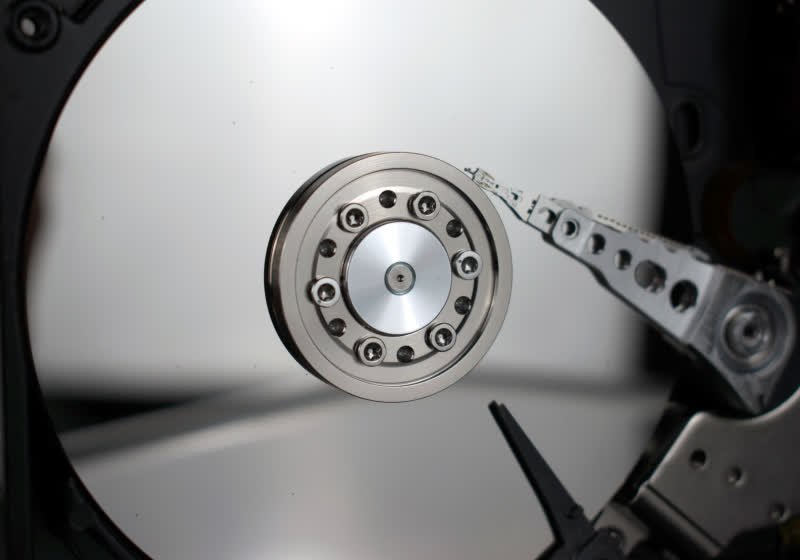
TLDR
• Core Points: Seagate expands HAMR-enabled storage with Mozaic 4+, offering up to 44TB per drive and advancing high-capacity HDD availability.
• Main Content: The Mozaic 4+ platform builds on 2024’s Mozaic 3+, delivering greater capacities and refined data density for enterprise storage needs.
• Key Insights: HAMR remains a path to higher capacity HDDs by increasing areal density; reliability, power efficiency, and integration with data centers are critical for broader adoption.
• Considerations: Adoption depends on enterprise requirements, drive endurance, and total cost of ownership in data-center environments.
• Recommended Actions: Data-center operators should evaluate Mozaic 4+ for archival, backup, and throughput-heavy workloads; monitor early field performance and TCO.
Content Overview
In 2024, Seagate introduced the Mozaic 3+ platform, marking a notable milestone in the deployment of heat-assisted magnetic recording (HAMR) technology for hard disk drives (HDDs). HAMR is designed to push areal density higher by using heat to assist magnetic recording, enabling more data to be stored in the same physical footprint. The Mozaic 3+ family represented a real product line aimed at customers with massive storage needs, particularly in data centers, cloud storage, and enterprise applications where capacity and density drive economics.
Building on that foundation, Seagate has announced the Mozaic 4+ family, the next generation of HAMR-based HDDs. The Mozaic 4+ drives push capacities up to 44TB per drive, continuing Seagate’s strategy to offer high-capacity storage solutions suitable for large-scale deployments. The new platform aims to deliver improved areal density, performance characteristics suitable for sequential and mixed workloads, and drive reliability designed to meet the demanding workloads typical of enterprise environments.
This evolution reflects broader industry efforts to extend the useful life of magnetic storage through increasing data density while managing power, thermal output, and endurance. For data-center operators, the potential benefits include reduced rack space, lower cost per terabyte, and streamlined data management workflows. The Mozaic 4+ lineup positions Seagate to address applications such as archival storage, backup repositories, cold data tiers, and other workloads where large, durable storage pools are essential.
Understanding the context of HAMR technology and Seagate’s roadmap helps frame the significance of the Mozaic 4+ release. HAMR’s core concept is to locally heat the recording medium to reduce the coercivity of the magnetic material, enabling smaller magnetic domains to be written without sacrificing stability. This approach can significantly increase areal density, allowing higher capacities on conventional form-factor HDDs. However, HAMR-based drives require careful engineering to maintain reliability, manage thermal envelope, and ensure steady performance under sustained load. Seagate’s emphasis on a complete platform—encompassing media, write heads, servo, and firmware—illustrates a holistic approach to delivering scalable, enterprise-grade storage.
The shift from Mozaic 3+ to Mozaic 4+ underscores Seagate’s focus on delivering tangible, deployable products rather than theoretical capabilities. Enterprises weighing high-capacity storage options must consider factors beyond raw capacity, including drive performance under real-world workloads, energy consumption, drive longevity, and the total cost of ownership (TCO) over the drive’s lifecycle. The Mozaic 4+ initiative aligns with trends in hyperscale and cloud storage that demand dense, cost-effective, and reliable storage infrastructure.
Overall, the announcement signals continued momentum for HAMR-based HDDs as a viable option for expanding storage capacity at scale. It highlights Seagate’s ongoing investment in next-generation recording technologies and its commitment to providing customers with the tools needed to manage rapidly growing data volumes while aiming to optimize operational expenses.
In-Depth Analysis
Seagate’s Mozaic 4+ arrives as a direct descendant of the Mozaic 3+ platform, which marked a milestone in bringing HAMR technology from the lab into production-grade drives. The primary selling point of these drives is the capacity uplift driven by higher areal density—more data per square inch of disk surface. The 44TB ceiling represents a substantial leap and targets environments where every terabyte counts, such as long-term archival repositories, large backups, and multi-petabyte storage arrays.
From a technology perspective, HAMR relies on heating the write surface to temporarily reduce magnetic coercivity, allowing the write head to imprint smaller magnetic domains. When the heat is removed, the material remains stable, preserving the data. This technique enables higher density formats without resorting to smaller physical disks or radically different form factors. However, HAMR’s successful deployment hinges on a robust ecosystem: reliable recording media, stable write heads, precise servo control, advanced firmware, and efficient thermal management within drive assemblies.
Seagate’s Mozaic 4+ is designed to integrate with existing data-center storage architectures, offering compatibility with standard enterprise interfaces, drive bays, and drive management tooling. The enterprise storage market prioritizes not only raw capacity but also sustained performance, reliability, and predictable behavior under heavy, continuous workloads. In this context, Mozaic 4+ must demonstrate consistent read/write bandwidth, steady IOPS for sequential and random patterns, and resilience to thermal cycling that comes with sustained high-density recording.
In practice, higher areal density brings a mix of trade-offs. On one hand, more data per platter can reduce the number of drives required to achieve a given capacity, potentially lowering power consumption per terabyte and reducing space. On the other hand, higher density can intensify thermal stress and marginally affect seek times and error rates if not managed properly through engineering controls. Seagate’s product roadmap typically includes enhancements across the stack: media materials, head design, servo patterns, and firmware that optimizes performance for real workloads. For Mozaic 4+, expected benefits include improved capacity per drive, refined power management, and reliability features suitable for 24/7 operation in data centers.
Adoption considerations for Mozaic 4+ involve evaluating workload characteristics. Archives and backups that require long-term retention with occasional access can benefit from large capacities and favorable cost-per-terabyte. Workloads that demand frequent data retrieval, lower latency, and high IOPS might rely on SSDs or hybrid configurations in tiered storage architectures. Integrating HAMR-based HDDs into a storage infrastructure also requires attention to drive failure rates, data rebuild times after failures, and the implications for redundancy schemes like RAID, erasure coding, or object storage backends.
From a market perspective, Seagate faces competition from other HDD makers pursuing higher-density drives and alternative storage technologies. The availability of Mozaic 4+ in large-scale deployments could influence storage procurement strategies, especially for hyperscale operators seeking to optimize data-center footprints. The broader trend toward dense HDD offerings aligns with the ongoing need to balance storage economics with performance and reliability in the face of expanding data volumes, including backups, archives, and data-intensive analytics.
Future improvements in HAMR-based storage may continue to focus on increasing areal density while ensuring reliability and longevity under continuous operation. Potential enhancements could involve further refinements to the recording media, improved thermal management, and better error-correcting codes that sustain data integrity at high densities. In addition, the software and firmware components that govern data placement, caching, error recovery, and drive health monitoring remain critical to maximizing the real-world utility of high-capacity HAMR drives.

*圖片來源:Unsplash*
Ultimately, Seagate’s Mozaic 4+ drives represent a strategic step in delivering practical, scalable, and high-capacity storage solutions for enterprise data centers. The success of these drives will hinge on how well they balance capacity gains with reliability, power efficiency, and total cost of ownership across diverse workloads and deployment scenarios.
Perspectives and Impact
The introduction of Mozaic 4+ reinforces the industry’s commitment to solving the data deluge challenge through incremental advances in magnetic storage density. HAMR technology has long been viewed as a promising path to materially higher capacities without abandoning the HDD form factor. By delivering drives up to 44TB, Seagate is signaling that high-density HDDs can remain a foundational component of enterprise storage alongside evolving SSD and storage-class memory ecosystems.
The implications for data-center design and operation are notable. If a significant portion of archival and backup data can reside on higher-capacity HAMR HDDs, facilities may realize tangible gains in rack space efficiency and cooling requirements per terabyte stored. This can translate into lower energy usage per stored byte and simplified data-management workflows due to fewer individual drive units to manage, monitor, and service. However, the real-world impact depends on continued reliability improvements, predictable performance, and robust firmware that can handle long-term operation with predictable failure modes.
From a vendor perspective, Seagate’s Mozaic 4+ strategy showcases the importance of an end-to-end approach to emerging technologies. HAMR success is not solely about the physical recording medium but also about the entire stack: heads, media, servo systems, controllers, firmware algorithms, and the integration with server and data-center management ecosystems. Compatibility with existing data-center tooling, such as drive firmware interfaces, monitoring software, and provisioning workflows, will influence adoption rates. In heterogeneous storage environments, seamless interoperability is essential to realize the full value of high-capacity drives.
The broader implications for the data-storage market include a continued emphasis on balancing performance, density, reliability, and cost. As hyperscale operators and enterprises scale their storage, the allure of 44TB per drive becomes compelling, particularly for cold and archival tiers where read/write patterns are less intense but data retention is critical. The challenge remains ensuring that such density does not compromise data integrity or drive longevity, given the mechanical realities of spinning disks. Stakeholders will watch for field performance data, warranty terms, failure rates, and how these drives perform under diverse temperatures, workloads, and maintenance regimes.
In the longer term, the evolution of HAMR-enabled drives like Mozaic 4+ may influence alternative storage strategies as well. While HDDs remain a cost-effective solution for vast, durable storage, ongoing improvements in SSDs, non-volatile memory express (NVMe) technologies, and hybrid architectures could shape how organizations tier data across different media. The cadence of updates in high-density HDD platforms will influence procurement planning, backup strategies, and archival policies for years to come.
Overall, the Mozaic 4+ release is a noteworthy milestone in the practical deployment of HAMR technology and a key data point in the ongoing effort to manage ever-growing data volumes with economical and reliable storage solutions. Stakeholders—from data-center operators to IT strategists—will likely consider these drives as a viable option for expanding archival capacity, simplifying storage architectures, and optimizing operating expenses, provided that performance, reliability, and total cost of ownership align with their workload profiles and service-level requirements.
Key Takeaways
Main Points:
– Seagate’s Mozaic 4+ expands HAMR-enabled HDD capacities up to 44TB.
– The platform builds on the earlier Mozaic 3+ release, deepening density and deployment readiness.
– High-capacity HAMR drives target enterprise archival, backup, and large-scale storage needs.
Areas of Concern:
– Long-term reliability and failure rates under continuous operation require real-world validation.
– Total cost of ownership and energy efficiency relative to workload patterns must be evaluated.
– Integration with existing data-center management tools and workflows is essential for smooth adoption.
Summary and Recommendations
Seagate’s Mozaic 4+ represents a meaningful advancement in HAMR technology, delivering drives with up to 44TB of capacity. This development strengthens the case for high-density HDDs as a practical backbone for archival and backup strategies in large data centers. Enterprises considering Mozaic 4+ should perform a careful assessment of workload characteristics, reliability expectations, and total cost of ownership. Key evaluation criteria include sustained performance under continuous operation, rebuild times after drive failures, energy consumption per terabyte, and compatibility with existing storage infrastructure and management tooling.
For organizations prioritizing space and cost efficiency in the data center, Mozaic 4+ could offer a compelling option to consolidate storage footprints while maintaining predictable service levels. It is advisable to pilot these drives in non-production environments or in dedicated archival pools to gauge real-world performance and reliability before broad deployment. Additionally, monitoring field data, firmware updates, and warranty terms will inform procurement decisions and help optimize deployment strategies in line with data-management goals and regulatory requirements.
References
- Original: https://www.techspot.com/news/111584-seagate-now-shipping-hamr-disk-drives-holding-up.html
- Additional references:
- Seagate press release on Mozaic 4+ (official product announcement)
- Industry analysis of HAMR technology and enterprise HDD trends
- Data-center storage architecture guides discussing archival storage and high-density HDD deployments
Forbidden:
– No thinking process or “Thinking…” markers
– Article must start with “## TLDR”

*圖片來源:Unsplash*