TLDR
• Core Points: A mother alleges her daughter’s death was linked to overwork at EY; social media users push for a legal “right to disconnect” in India to curb burnout.
• Main Content: The case centers on alleged long hours at EY and the absence of attendance at the funeral, highlighting workplace pressure and public calls for systemic change.
• Key Insights: Employee burnout, inadequate workload management, and gaps in corporate welfare policies prompt broader discussions on labor rights in India.
• Considerations: Verification of facts remains essential; corporate accountability and regulatory responses are evolving amid rising demand for worker protections.
• Recommended Actions: Employers should adopt clear off-duty boundaries, mental health support, and transparent attendance policies; policymakers may examine discharge of compensatory mechanisms and disconnect norms.
Content Overview
The conversation surrounding workplace culture in India gained renewed attention after a grieving mother publicly criticized Ernst & Young (EY) for what she described as a toxic work environment that contributed to her daughter’s death by overwork. The case has drawn significant attention on social media and in mainstream discourse, prompting a broader debate on worker rights, burnout, and the perceived need for a social contract that better protects professionals from excessive hours. At the heart of the discussion is not only the tragedy itself but also the perceived absence of compassionate leadership and corporate responsibility in the wake of a personal loss. The episode has sparked optimism among advocates who argue for systemic changes, including a legally recognized “right to disconnect” that would help employees separate from work responsibilities after hours and on leave. While EY has reportedly issued statements regarding its policies and commitments to employee welfare, critics argue that high-pressure environments in professional services can persist, especially in markets with intense competition and demanding client expectations. This article examines the incident, the public response, and the implications for corporate governance, labor rights, and the future of flexible work arrangements in India.
In-Depth Analysis
The core event centers on a mother’s accusation that the work culture at EY played a role in her daughter’s death by overwork. The specifics of the case—such as the exact work hours, modalities of overtime, and the immediate triggers of the tragedy—have been reported variably across outlets. What remains clear is the concern many observers have about the volume and intensity of work expected of professionals in large multinational firms operating in India, particularly in sectors like management consulting, auditing, and financial services. Proponents assert that such environments can normalize extended workweeks, high-pressure project timelines, and a culture that values performance metrics over personal well-being.
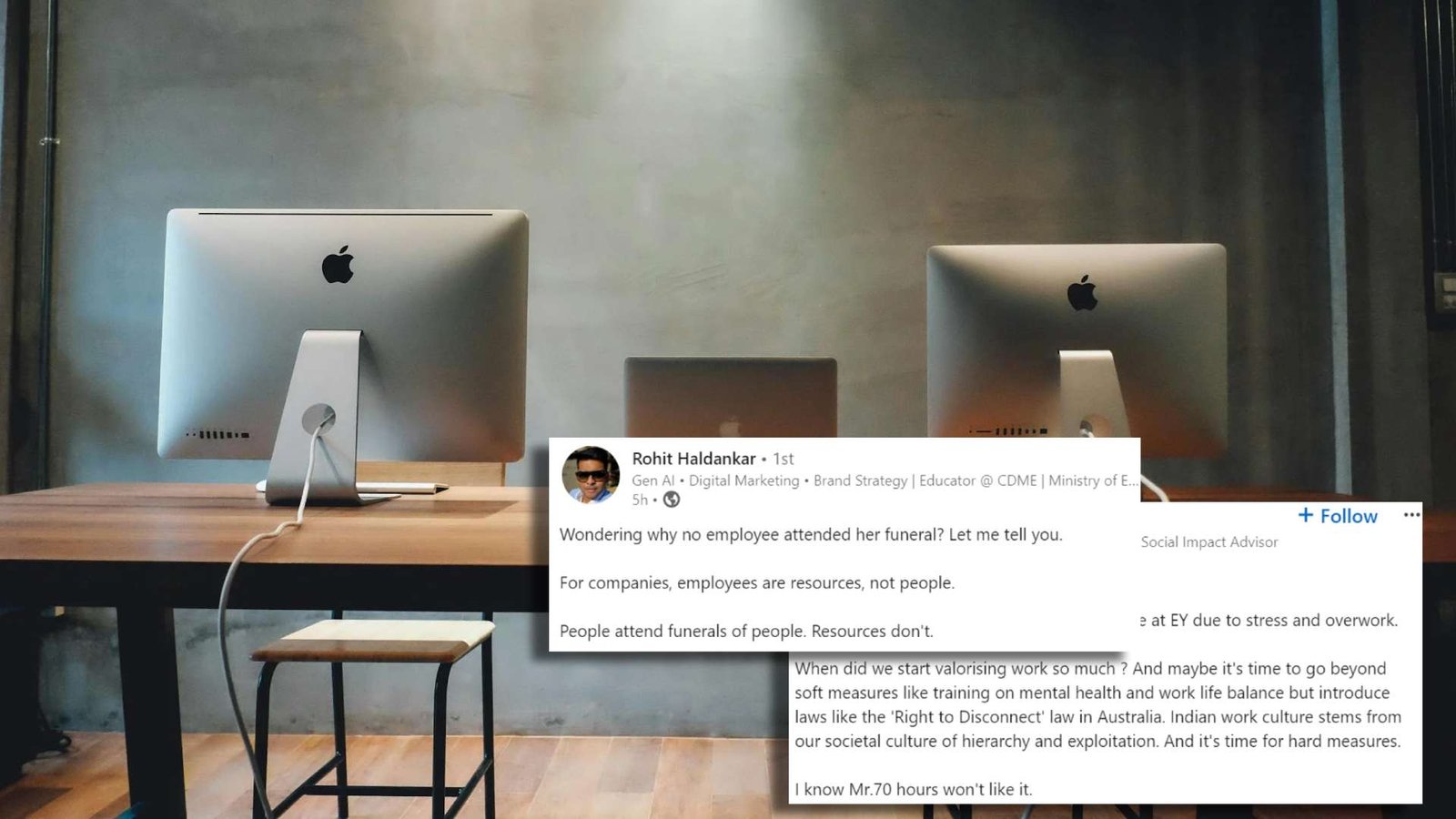
A notable element of the discourse is the alleged absence of corporate attendance at the funeral. The claim that “no one from EY attended Anna’s funeral” became a rallying point for critics who interpreted the company’s response, or lack thereof, as emblematic of broader corporate indifference to employee welfare. Corporations, in this frame, are judged not only by economic outcomes but also by how they honor the dignity and humanity of their staff, especially during times of personal loss. Critics argue that empathetic leadership and visible support during bereavement are basic expectations of responsible organizations.
The public conversation extends beyond this single incident to a wider analysis of work-life balance, burnout risk, and mental health stigma. Burnout in high-demand professions is not unique to India; global research has documented the adverse effects of chronic overwork, including decreased productivity, higher error rates, and long-term health consequences. Yet, the localized impact matters: in India, where labor laws and regulatory enforcement intersect with cultural expectations around work, job security, and career progression, calls for reform often emphasize practical protections that can be implemented without compromising business competitiveness.
One of the policy mechanisms frequently proposed in the wake of such incidents is the “right to disconnect.” The concept entails giving employees legal protection to refrain from work-related communications outside official work hours and during leave, thereby limiting the spillover of work demands into personal time. Advocates argue that codifying this right can reduce burnout, improve job satisfaction, and promote sustainable career trajectories. Critics, however, warn about potential complications in client-facing industries where time-sensitive delivery and flexible client demands shape work cycles. They call for a balanced approach that preserves service quality while safeguarding worker health.
From a corporate governance perspective, the incident raises questions about how employers set expectations, monitor workloads, and respond to employee well-being concerns. Transparent policies—outlining acceptable overtime, compensation for extra hours, and channels for reporting excessive workload—are increasingly viewed as essential governance practices. The discussion also touches on whistleblower protections, data-driven monitoring of overtime trends, and the role of HR in cultivating a supportive environment that prioritizes mental health resources, counseling services, and proactive workload management.
Media coverage of the case has varied in scope and depth. Some outlets provide a concise summary of allegations and the social media response, while others delve into broader debates about labor rights and the evolving nature of professional work in an increasingly digital economy. Across these reports, there is a shared emphasis on the need for accountability—of employers to their employees, of policymakers to regulate work practices, and of society to support workers facing extreme pressures. The intersection of personal tragedy with corporate responsibility has created a platform for advocacy, fundraising, and information campaigns aimed at promoting healthier work cultures.
In evaluating the implications for EY specifically, observers consider several dimensions. First is the reputation risk associated with perceived indifference to employee welfare, which can influence talent attraction and retention, client trust, and brand value. Second is the operational question of whether EY’s internal policies and training adequately address burnout, stress management, and crisis response. Third is the potential for policy adaptation, either through voluntary corporate initiatives or through legislative changes that codify the right to disconnect or similar protections. How EY and other professional services firms respond to such incidents can set industry-wide precedents in India and potentially beyond.
It is important to note that, as with many high-profile workplace cases, independent verification and legal considerations govern what conclusions can be drawn about causality. While burnout may have contributed to the personal tragedy highlighted by the mother, establishing a direct causal link between specific work practices and the death requires thorough investigation by relevant authorities. The role of unions, professional associations, and regulators becomes significant in these contexts, as they can facilitate independent reviews and recommend reforms grounded in evidence.
The broader labor market landscape in India also informs this discussion. India has a growing base of professionals in consulting, technology, finance, and related sectors, where demand for skilled labor remains high. At the same time, regulatory frameworks and enforceable protections for workers continue to evolve. Civil society organizations, labor rights advocates, and some political actors champion stronger protections against exploitative practices, while business groups may emphasize the importance of flexibility and market competitiveness. The balance between these forces shapes the path forward for reforms aimed at improving worker welfare without hindering economic growth.
Despite the complexities, the central sentiment driving ongoing conversations is a call for more humane workplaces. This includes explicit policies on reasonable work hours, mandatory rest periods, accessible mental health resources, and transparent mechanisms to voice concerns without fear of retaliation. In addition, there is a push for clear evidence-based approaches to workload management, performance expectations, and burnout risk mitigation, including training for managers on recognizing and addressing early signs of distress among staff.

*圖片來源:description_html*
In the Indian context, the conversation around a legal right to disconnect has gained traction in public discourse, but legislative progress may be gradual. Some states and national policymakers have discussed or introduced measures related to worker welfare and mental health, but comprehensive national legislation may require consensus among diverse stakeholders, including labor unions, industry bodies, and corporate leadership. Regardless of legal outcomes, organizations can adopt best practices that reflect a commitment to employee well-being, such as flexible scheduling, remote work options where feasible, clear guidelines on overtime compensation, and robust employee assistance programs.
As this case continues to unfold, its impact lies not only in the specifics of EY or Anna (the daughter referenced by the mother) but in the broader movement toward recognizing and mitigating the human costs of high-pressure work cultures. The dialogue now encompasses employee rights, corporate responsibility, and the role of government in protecting workers from burnout. The aspirational goal is to establish norms that respect professional ambition while safeguarding health, dignity, and personal time. Whether these norms will translate into immediate policy shifts or gradual cultural change remains to be seen, but the momentum signals a shift in how society values sustainable work practices in a rapidly evolving economy.
Perspectives and Impact
- Employees and advocates emphasize that sustainable work cultures require intentional design: reasonable hours, predictable workloads, and accessible mental health support. The incident has amplified calls for a systemic approach to deter overwork across industries, not solely in professional services.
- Employers face increased scrutiny over their wellness programs, leadership training, and the effectiveness of HR policies in identifying and addressing burnout early. The reputational dimension is critical in client-facing sectors where talent retention and the ability to attract new hires depend on visible commitment to worker welfare.
- Regulators and policymakers are considering frameworks that encourage or mandate practices like the right to disconnect, mandatory rest periods, and clearer overtime compensation. The challenge lies in balancing business needs with worker protection, particularly in a global economy where talent mobility and remote work complicate traditional jurisdictional boundaries.
- The broader implications for India’s labor market include potential shifts in contract structures, performance incentives, and how companies measure productivity in high-demand roles. Advocates hope that reforms will enable more humane career pathways and reduce attrition driven by burnout.
- Public discourse increasingly recognizes mental health as a legitimate workplace concern, reducing stigma and encouraging employees to seek help without fear of retaliation. This shift may influence corporate training, mentorship programs, and the integration of mental health resources into standard human resources practices.
Key Takeaways
Main Points:
– The discourse centers on alleged connections between overwork and personal tragedy within EY’s work culture.
– Public calls for a “right to disconnect” reflect broader demand for worker protections in India.
– Corporate accountability and reform-minded policy discussions are gaining prominence in relation to workplace well-being.
Areas of Concern:
– Verification challenges around causality and responsibility.
– The risk of stigmatizing high-performance professions without addressing systemic pressures.
– Potential regulatory pushback that could impact business operations and competitiveness.
Summary and Recommendations
The incident prompting public scrutiny of EY’s work culture highlights a critical conversation about employee well-being in India’s high-pressure professional services landscape. While the facts surrounding the tragedy require careful verification and, where applicable, official investigation, the broader debate emphasizes the need for sustainable work practices, better workload management, and stronger psychosocial support systems within organizations. The emergence of activism around a possible legal “right to disconnect” signals a shift in societal expectations—toward a more humane equilibrium between professional ambition and personal well-being.
Organizations can take proactive steps now, independent of regulatory changes, to foster healthier work environments. These steps include establishing clear boundaries for after-hours communication, enforcing reasonable overtime policies with appropriate compensation, and expanding access to mental health resources. Training programs for managers should emphasize recognizing burnout signs, supporting team members under pressure, and creating channels for employees to raise concerns safely. Transparent reporting on workload trends, hours billed, and employee feedback can build trust and accountability.
Policy makers may consider gradual, evidence-informed reforms that protect workers while maintaining economic vitality. A staged approach could involve piloting the right to disconnect in specific sectors or regions, followed by broader implementation if outcomes demonstrate benefits in well-being and productivity. Stakeholders—businesses, labor unions, civil society, and government agencies—should collaborate to design standards that are adaptable to various industries while upholding core protections for workers.
In conclusion, the conversation sparked by this personal tragedy has evolved into a broader movement advocating for more humane workplaces in India. Whether through corporate reforms, legislative action, or cultural change within organizations, the aim remains consistent: to ensure that professional achievement does not come at the unnecessary cost of health, dignity, and personal time. The road ahead will require continued dialogue, careful verification of facts, and a balanced approach that respects both the needs of employers and the fundamental rights of workers.
References
- Original: https://in.mashable.com/tech/82410/mother-slams-eys-toxic-work-culture-over-daughters-death-by-overwork-internet-demand-right-to-discon
- Additional references:
- World Health Organization on burnout and worker health
- Indian labor law resources on overtime, rest periods, and worker welfare
- Reports on the right to disconnect in different jurisdictions and industry analyses

*圖片來源:Unsplash*