TLDR
• Core Points: Lego debuts Smart Brick at CES 2026; a compact ASIC-based computer hidden inside a 2×4 brick with onboard processing, updateable firmware, and integrated sensors.
• Main Content: The Smart Brick represents Lego’s foray into merging tangible play with embedded computing, offering a modular, update-capable platform that can be expanded with sensors and connectivity.
• Key Insights: A device smaller than a single Lego stud signals a shift in toy-grade computing toward seamless integration and education-friendly accessibility.
• Considerations: Practical adoption will depend on app support, power efficiency, interoperability with existing kits, and safety/child-friendly design.
• Recommended Actions: Educational partners and LEGO enthusiasts should explore classroom pilot programs, developer tooling, and cross-brand sensor ecosystems to maximize impact.
Content Overview
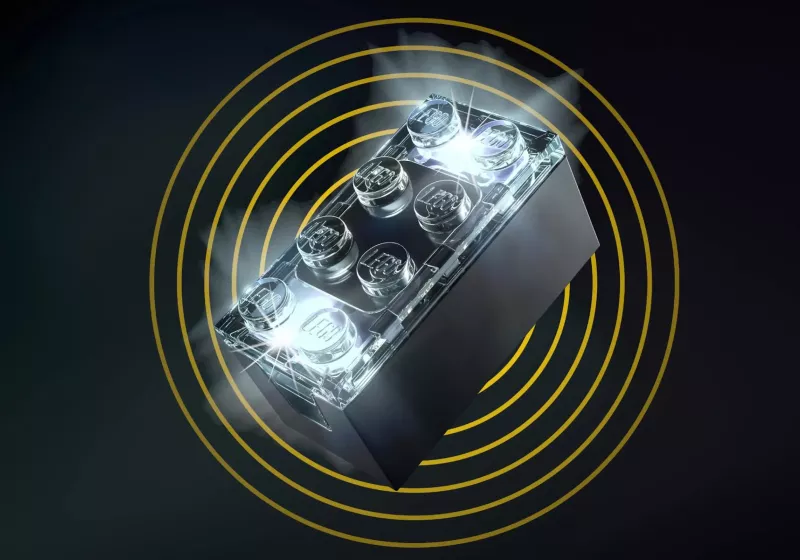
Lego’s CES 2026 unveiling introduces what the company calls the Smart Brick—a compact computer designed to fit inside the familiar 2×4 Lego brick form factor. The system centers on a custom ASIC that is smaller than a single Lego stud, enabling on-device processing, firmware that can be updated via a smartphone app, and an integrated network of sensors. By embedding computational capability directly into a widely recognizable building block, Lego aims to merge tangible play with modern computing, fostering a new kind of hands-on digital learning and prototyping.
The Smart Brick is positioned as a modular platform rather than a standalone gadget. This approach echoes Lego’s longstanding emphasis on creative construction and inclusivity, while introducing a simplified entry point into embedded systems for hobbyists, students, and educators. The product is designed to be compatible with standard kits and accessories, enabling combinations with lights, motors, and other familiar elements that have long powered interactive Lego projects. The integration of firmware update capabilities via a companion app suggests a software-enabled lifecycle that can evolve after purchase, potentially broadening use cases over time.
From a consumer perspective, the Smart Brick promises a blend of compact form factor and practical functionality. Its on-board processing implies tasks such as basic computation, sensor data collection, and possibly lightweight control of connected components. The presence of a sensor network inside a 2×4 brick hints at possibilities for sensing environmental factors or user interactions as part of larger builds. The device’s emphasis on updateability via a mobile app also aligns with contemporary trends in consumer electronics, where software updates extend hardware utility and safety updates over the device’s lifetime.
The announcement at CES 2026 thus situates the Smart Brick within a broader movement toward accessible, educational, and modular hardware storytelling. Lego’s brand equity—rooted in creativity, play, and constructive learning—provides a unique platform for introducing young developers and makers to the basics of computing without departing from familiar construction paradigms. As the company contemplates ecosystem development, potential areas of interest include developer tools, open interfaces or APIs for third-party extensions, and a robust catalog of sensor and connector options that complement the core Smart Brick module.
In-Depth Analysis
The core premise of the Smart Brick is to encapsulate computational capability inside a unit that remains visually and tactilely consistent with established Lego bricks. A custom ASIC, smaller than a single Lego stud, is the centerpiece of this design. This choice likely emphasizes power efficiency and task-specific performance, allowing the device to execute simple programs, process sensor data, and manage communications with external hardware. While the exact specifications, such as clock speed, memory capacity, and I/O interfaces, were not disclosed in detail at the time of the public introduction, the emphasis on a bespoke chip suggests a focus on optimized performance for the limited, discrete tasks typical of brick-based projects.
Firmware updateability via a smartphone app is another pivotal feature. This capability elevates the Smart Brick beyond a one-off gadget, enabling ongoing improvements and feature additions after purchase. In practice, users could install new firmware to unlock additional instructions, optimize sensor handling, or patch security vulnerabilities. The app-first update model also raises considerations about user experience: the process must be straightforward for younger users, but robust enough to support more advanced tinkering by educators and hobbyists. The app could potentially provide guided tutorials for beginners while exposing lower-level settings for more experienced builders.
The integrated sensor network inside a 2×4 footprint expands the potential use cases for Lego builds. Depending on the sensor suite, projects could monitor environmental parameters like light, temperature, or proximity, or sense interactions such as touch or motion. By embedding these sensing capabilities directly into a standard brick, Lego enables a modular approach to data collection and feedback within larger constructs. Users could chain multiple Smart Bricks to create distributed sensor systems, then consolidate readings through a central controller or a microcomputer in a larger build.
Interoperability is a critical factor in the Smart Brick’s long-term success. The bricks’ compatibility with existing Lego kits implies a familiar design language and building mechanics, but real-world adoption will hinge on the availability of connectors, power solutions, and software libraries that allow seamless integration with other components. If Lego provides an accessible development environment with well-documented APIs, students and educators can leverage the platform to prototype projects ranging from simple automated systems to more complex interactive installations.
Educational impact is likely at the forefront of Lego’s strategy. The Smart Brick could serve as a practical entry point into computer science concepts, robotics, and physical computing. Teachers may be able to design curricula that align with programming fundamentals, electronics basics, and systems thinking without requiring students to adopt unfamiliar hardware. The tactile nature of Lego, combined with programmable micro-computing, could reinforce lessons in logic, sequencing, and debugging in a way that complements traditional classroom activities.
Safety and privacy considerations will be important, especially given the product’s target audience of children and students. Ensuring that firmware updates come through a secure channel, managing data collected by onboard sensors, and providing clear parental controls or teacher oversight will be essential. Lego’s brand reputation will likely influence consumer confidence, as guardians and educators seek assurances that embedded hardware meets child safety standards and that software is designed with privacy in mind.
From a market perspective, the Smart Brick enters a niche that intersects toys, education technology, and hobbyist hardware. Competitors in this terrain include microcontroller boards, single-board computers, and educational robotics platforms. However, the unique combination of Lego’s physical affordances with an ASIC-based computing module creates a distinctive value proposition: the ability to embed computation inside the bricks themselves, enabling more compact and integrated builds. If Lego can cultivate a robust ecosystem of sensors, modules, and programming tools, the Smart Brick could catalyze new forms of project-based learning and creative expression that leverage both the physical and digital realms.
The timeline for a broader rollout, developer collaboration, and pricing remains to be clarified. Early previews at CES 2026 set the stage for subsequent announcements about availability, compatible accessory lines, and educational partnerships. The success of such a platform will likely depend on a combination of accessibility, affordability, and ongoing support. Price sensitivity is particularly relevant in educational settings, where procurement decisions weigh the cost per student or per classroom against the anticipated educational outcomes and engagement.
In summary, Lego’s Smart Brick signals a thoughtful integration of computation into the Lego ecosystem. By embedding a compact ASIC-based computer with updateable firmware and a built-in sensor network inside a standard brick, Lego aims to empower a new generation of builders to design, program, and experiment in a hands-on manner. The approach preserves the tactile, imaginative spirit of Lego while expanding the possibilities of what a brick can do in a connected, data-informed world. Real-world adoption will depend on the maturation of the software stack, the breadth of supported sensors and modules, and the effectiveness of safety, privacy, and classroom deployment strategies.

*圖片來源:Unsplash*
Perspectives and Impact
The introduction of the Smart Brick represents more than a simple product announcement; it reflects a broader shift in how technology integrates with play and education. By situating computing power inside the iconic 2×4 brick, Lego is embracing a future where digital capabilities are not separate gadgets but embedded features within everyday building blocks. This aligns with pedagogical philosophies that emphasize constructivist learning, exploratory tinkering, and collaborative problem-solving—principles that have long guided Lego’s mission.
From an educational standpoint, the Smart Brick could democratize access to foundational computing concepts. Students who grow up assembling modular builds with embedded sensors may develop familiarity with programming logic, data collection, and system integration long before encountering traditional software development laboratories. The hands-on, project-based approach could foster curiosity, resilience, and collaborative skills, all of which are critical for success in science, technology, engineering, and mathematics fields.
The potential for cross-disciplinary learning is notable. For example, a science project could use Smart Bricks to monitor environmental variables within a model ecosystem, while a design class could prototypically automate lighting and responsive features within architectural models. The platform’s sensor integration opens doors to experiments in physics, math modeling, and even art installations where user interaction drives dynamic changes in a constructed scene.
Yet, there are challenges to address. The success of the Smart Brick hinges on building a robust ecosystem that includes developer tools, clear documentation, and a marketplace of add-ons that extend functionality. Encouraging third-party hardware and software integrations while maintaining safety standards will require thoughtful governance and comprehensive support resources. Additionally, educators will need training materials and classroom-ready lesson plans to translate the technology into meaningful learning outcomes.
Looking to the future, the Smart Brick could inspire a new era of tangible computing. It may influence how hardware is perceived in educational contexts, highlighting the value of integrating computation with physical construction rather than presenting screens and devices as separate tools. The concept could drive innovations in modular robotics, interactive storytelling, and playful experimentation with sensors. If Lego successfully nurtures an engaged community around the Smart Brick—comprising students, teachers, hobbyists, and developers—the platform could catalyze widespread adoption and sustained interest in computing among diverse audiences.
The broader industry implications extend beyond Lego’s own product line. As more educational devices blur the line between toy and tool, there is potential for collaboration across sectors, including schools, museums, and after-school programs. Partnerships with software platforms that support beginner-friendly programming languages, as well as with hardware suppliers offering compatible sensors and actuators, could accelerate learning outcomes and spark creative project ideas. The Smart Brick could thus become a catalyst for a more immersive and inclusive digital literacy movement.
In terms of long-term positioning, Lego’s approach may influence how manufacturers design educational products. A successful Smart Brick would demonstrate that compact computing can coexist with safety-conscious design, modularity, and user-friendly software ecosystems. It could set a precedent for future generations of “brick-sized” devices, encouraging designers to embed computation in everyday building components rather than relying on external modules or screens. The potential is not just for enhanced play but for meaningful, scalable learning experiences that connect with real-world technology trends.
Key Takeaways
Main Points:
– Lego reveals the Smart Brick, a compact computer housed inside a standard 2×4 brick, announced at CES 2026.
– The device centers on a custom ASIC, supports on-board processing, and features firmware update via a smartphone app.
– An integrated sensor network within the brick enables data collection and interactive capabilities in builds.
Areas of Concern:
– Details on hardware specifications, power management, and I/O interfaces remain to be clarified.
– The breadth of third-party support, developer tools, and educational curricula will influence adoption.
– Safety, privacy, and classroom implementation strategies require clear governance and resources.
Summary and Recommendations
Lego’s Smart Brick marks a deliberate foray into embedded computing within its signature construction toy paradigm. By embedding a custom ASIC inside a familiar brick, offering updateable firmware through a companion app, and equipping the brick with an internal sensor network, Lego aims to fuse tangible play with practical computing education. If the company can cultivate a robust ecosystem—supporting developers, educators, and students with accessible tools, compelling tutorials, and a steady stream of compatible sensors and modules—the Smart Brick could redefine how young learners engage with technology. Realizing this potential will depend on transparent pricing, clear safety and privacy guidelines, and a long-term commitment to classroom- and community-oriented support materials.
To maximize impact, Lego should consider several strategic actions:
– Launch a developer program with comprehensive documentation, sample projects, and a sandbox environment to encourage experimentation.
– Build a library of classroom-ready lesson plans aligned with relevant curricula and learning objectives.
– Facilitate partnerships with educational institutions, museums, and after-school programs to pilot and showcase projects.
– Ensure secure firmware update processes, data handling best practices, and parental/teacher controls to address privacy concerns.
– Expand the ecosystem with an accessible catalog of compatible sensors, actuators, and connectors that seamlessly integrate with existing kits.
By delivering a compelling mix of hands-on hardware experience, accessible software tools, and a thriving community, the Smart Brick could become a cornerstone of modern, constructivist computing education. The product’s reception will ultimately hinge on the strength and breadth of its supporting ecosystem, the clarity of its safety and privacy assurances, and its ability to translate Lego’s cherished play ethos into durable educational value.
References
- Original: https://www.techspot.com/news/110813-lego-unveils-smart-bricks-computer-fits-inside-standard.html
- Additional references:
- [LEGO official announcements and CES coverage]
- [Educational technology and embedded systems in toys research]
- [Industry analysis on modular hardware in education]

*圖片來源:Unsplash*