TLDR
• Core Points: Razer has expanded Project Ava from CES 2025 into a desktop hologram that acts as an AI gaming coach with a more tangible form.
• Main Content: The hologram coaching assistant builds on a year of AI game coaching concepts, offering real-time feedback and guidance during gameplay.
• Key Insights: The evolution from a concept to a physical holographic presence reflects growing interest in immersive, AI-assisted gaming experiences.
• Considerations: Adoption will depend on privacy, latency, cost, and integration with existing gaming setups.
• Recommended Actions: Track development updates, evaluate compatibility with your hardware, and assess potential subscription or service costs.
Content Overview
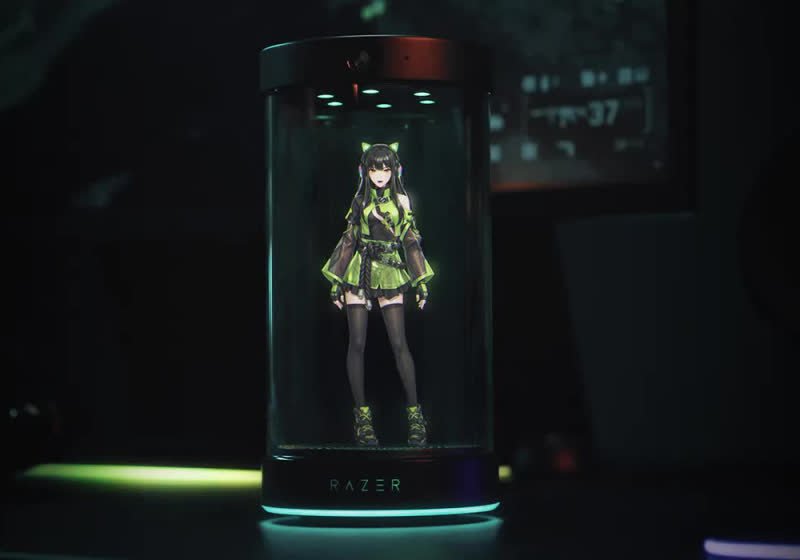
Over the past year, AI-driven coaching tools have surged in the gaming sphere, offering players real-time feedback to improve tactics, mechanics, and strategy. Among these developments is Razer’s Project Ava, introduced at CES 2025 as an eSports coach designed to assist players with data-driven insights and performance analysis. A year later, Razer has presented Ava in a more tangible form: a desktop AI hologram, positioned to act as a real-time coach that users can interact with while gaming. This progression illustrates a broader trend toward blending artificial intelligence with immersive display technologies to enhance training and performance in interactive media.
Razer’s approach centers on providing gamers with a persistent, responsive presence that sits in their environment without occupying traditional screens or devices. By leveraging holographic projection and AI processing, Ava aims to deliver context-aware guidance—such as strategic advice, mechanics tips, and situational analysis—without hindering the player’s field of view. The concept aligns with Razer’s broader product ecosystem, which emphasizes high-performance hardware, peripherals, and software designed for competitive play and immersive experiences.
The original concept in 2025 framed Ava as an eSports coach capable of tracking in-game events, player behavior, and performance metrics to offer coaching cues post-match and during play. The latest iteration reframes Ava as a desktop holographic assistant, intended to be more approachable and physically present within a gamer’s space. While still rooted in AI coaching, the holographic form factor seeks to foster a more natural and interactive relationship between player and coach, potentially including voice interaction, gesture control, and personalized feedback loops.
This piece of technology sits at the intersection of several ongoing trends: AI-assisted performance analytics, augmented reality (AR) or mixed reality (MR) display forms, and the gamification of training. As gaming continues to mature into a discipline with professional pipelines and performance benchmarks, tools that can provide immediate, actionable feedback—without requiring players to switch away from the game—could become a staple for both competitive and casual audiences.
This article synthesizes what is known about Razer’s desktop AI waifu hologram, its intended use cases, potential benefits, and practical considerations for gamers who may consider adding such a device to their setup. It also situates Ava within the broader ecosystem of AI coaching tools and explores the implications for players, developers, and the esports landscape.
In-Depth Analysis
Razer’s project trajectory reflects a deliberate expansion from software-oriented coaching concepts into physical, ambient coaching aids. The 2025 CES reveal positioned Ava as an AI-driven eSports coach capable of analyzing gameplay data, providing post-match summaries, and offering strategic recommendations. The newer desktop hologram version—described in communications as a more physical representation—suggests that Razer aims to deliver coaching through a visual, near-instantaneous presence that can be observed in the player’s line of sight during sessions.
At its core, Ava’s value proposition lies in reducing the cognitive load associated with self-analysis after long gaming sessions. Players are often forced to pause or switch contexts to review performance metrics, replay footage, or consult coaching materials. A holographic coach that appears within the player’s environment—without obstructing the monitor or keyboard—promises to deliver insights in real time. This could include:
- Real-time tactical guidance: suggestions about rotations, resource management, and positioning based on current in-game state.
- Mechanical coaching: hints on aim, reaction time adjustments, or cooldown usage tailored to the player’s style and the game’s mechanics.
- High-level strategy: analysis of opponent trends, map control, and team coordination to inform decisions on the fly.
- Post-game debriefs: summaries of performance, moment-by-moment breakdowns, and recommended practice drills for improvement.
The shift from a purely digital, screen-based coaching interface to a physical holographic form raises several design and usability questions. For example, how much of Ava’s functionality will rely on audio versus visual cues? Will the hologram be a passive display that surfaces suggestions, or will it actively engage the user through dialogue, animated demonstrations, or gesture-based instructions? The balance between distraction and assistance is delicate: a hologram that talks too much or overlays too many prompts could impair rather than enhance performance during tense gameplay.
One important consideration is latency. Real-time coaching depends on rapid data processing, streaming telemetry from the game, and fast rendering of holographic feedback. Any delays could lead to misaligned guidance or frustration. Razer will need to optimize software pipelines, potentially leveraging cloud processing or on-device AI accelerators to minimize latency while keeping player data secure. Privacy concerns will also be front-and-center, as an AI coach would naturally collect gameplay data to refine its recommendations. Players will want assurances about how their data is stored, processed, and potentially shared with third parties.
The physical design of Ava matters as well. The term “waifu hologram” evokes a certain character-inspired humanoid representation, which could appeal to a subset of gamers seeking personalization and personality in their training assistant. However, this design choice could limit broader appeal or raise considerations about inclusivity and representation. Razer will likely offer customization options for appearance, voice, and behavior to accommodate diverse user preferences while maintaining a consistent brand identity.
From a market perspective, Ava sits alongside a growing category of AI coaching and coaching-as-a-service tools. In parallel, advanced training aids, analytics dashboards, and performance metrics have become common in competitive gaming circles. Ava’s competitive differentiator would be its immersive, ambient presence—an attempt to make coaching feel less like software and more like a coach occupying the same space as the player. If successful, the product could become part of a broader suite of performance-enhancing devices, potentially integrating with other Razer hardware (such as VR/AR headsets, gaming chairs, or haptics) to create a cohesive training environment.
There are technical and ethical considerations that accompany such an evolution. First, the accuracy of the coaching model is paramount. The AI coach must interpret complex, dynamic game states across different genres—from fast-paced shooters to strategy titles—and translate those states into useful, actionable guidance. Achieving this requires sophisticated machine learning models trained on large datasets that cover various playstyles, geometries, and meta strategies. The model must also be adaptable to updates in games, which frequently alter balance, mechanics, and maps.
Second, the user experience must be carefully designed to avoid cognitive overload. In high-stakes matches, players need clear, concise guidance that can be consumed in seconds. The system’s feedback should be contextual, non-intrusive, and aligned with the player’s goals—whether they aim to improve aim accuracy, map awareness, or teamwork. The holographic coach should also respect players’ autonomy, offering suggestions rather than dictating actions, and enabling players to accept, adjust, or ignore guidance as needed.
Third, accessibility features will determine how broadly Ava can be adopted. For players with hearing impairments or those who prefer quieter setups, the AI coach should provide non-audio cues and accessible visual indicators. Conversely, players who rely on audio cues may benefit from synthesized feedback through natural language dialogue or sound design that integrates with gaming audio without becoming overwhelming.
Fourth, the financial model will influence adoption rates. Hardware-focused products often require upfront investment beyond the core device, including peripherals, subscription services, or ongoing software updates. Transparent pricing, flexible upgrade paths, and a clear value proposition will be essential to converting interest into sustained use.

*圖片來源:Unsplash*
Future implications for the gaming industry could see AI coaching become a standard part of training regimes, much like physical practice routines or aim trainers. If Ava proves effective at improving performance with minimal disruption, esports teams and individual players might incorporate such tools into their training pipelines. Developers could also leverage AI coaching ecosystems to refine game balance by aggregating anonymized performance data and feedback to influence patches and meta shifts.
As with any AI-enabled device that collects user data, governance around data privacy, consent, and security will be crucial. Players must have control over what data is collected, how it is used, and how long it is retained. Razer will likely need to implement robust encryption, provide clear data usage terms, and offer opt-out mechanisms for features that rely on sensitive telemetry.
In summary, the desktop AI waifu hologram represents a natural evolution in AI-assisted gaming coaching at a time when immersive display technologies and real-time analytics are increasingly integrated into consumer hardware. The success of Ava will depend on delivering meaningful, easily digestible coaching without becoming a distraction, while offering customization, strong privacy protections, and a pricing model that reflects the value it provides to players at different levels of commitment to improvement.
Perspectives and Impact
The emergence of a desktop AI waifu hologram for coaching signals a shift in how gamers may approach practice and performance enhancement in the near future. As AI coaching moves from hypothetical concept to tangible hardware, players gain access to an interactive training partner that lives in the same physical space as their PC setup. This evolution could reshape training habits, making frequent, short, guided practice sessions more common and reducing the need to rely solely on post-game reviews and external coaches.
For professional and amateur players alike, Ava could function as a scalable coaching resource. Teams might deploy holographic coaches to support individual players during training camps, while solo players could access high-quality coaching without the scheduling constraints associated with human tutors. If Ava’s AI can generalize across genres, it may become an adaptable trainer for shooters, racing sims, real-time strategy games, and more, adjusting its feedback style to suit the demands of each title.
The broader impact on the esports ecosystem could include increased focus on data-driven practice routines. As players rely more on AI feedback, the interpretation of telemetry data—such as input patterns, decision-making timelines, and map control metrics—would become more standardized. Analysts and coaches could leverage Ava’s outputs to tailor personalized curricula, track improvement over time, and benchmark against the community.
However, these advances also raise questions about equity and access. High-end AI coaching hardware may be cost-prohibitive for casual players, potentially widening performance gaps between those who can invest in such technology and those who cannot. To mitigate this risk, Razer or other manufacturers could offer tiered products, software subscriptions, or cloud-based coaching services to broaden accessibility. Additionally, there is the matter of on-device processing demands and latency; some players may opt for a leaner setup that prioritizes performance over a holographic assistant.
From a design ethics perspective, the choice to present Ava as a “waifu” character deserves scrutiny. While this aesthetic may enhance personalization for a segment of users, it could also polarize potential customers or render the product less inclusive. Offering a range of holographic personas or the option to customize appearance and demeanor could help address concerns about representation and user comfort, ensuring that the coaching AI remains a tool for improvement rather than a culturally specific character construct.
Beyond gaming, the underlying technology—AI-driven feedback delivered through a physical holographic interface—could have applications in other fields that rely on real-time performance optimization. Sports training, professional simulations, and even education could benefit from interactive coaching avatars that offer context-aware guidance within a user’s environment. The cross-pollination of ideas between gaming hardware and other domains could spur innovations in synthetic tutors, virtual mentors, and assistive agents that adapt to individual learning and practice needs.
As the AI coaching market evolves, regulatory and ethical frameworks will likely shape how such devices collect data, provide recommendations, and influence user behavior. Standards for transparency about how AI makes decisions, the strength and reliability of its recommendations, and the handling of performance data will be important for building consumer trust. Collaboration between hardware manufacturers, game developers, and AI researchers will be essential to ensure that coaching tools respect user autonomy while delivering tangible benefits.
In sum, Ava’s shift from a CES concept to a tangible holographic coaching aid signals a meaningful development in the fusion of AI, gaming, and ambient display technologies. If executed with careful attention to latency, privacy, accessibility, and user experience, the Ava hologram could become a valuable training companion for a broad spectrum of gamers, potentially accelerating the adoption of AI-assisted coaching as a standard practice in practice routines and competitive preparation.
Key Takeaways
Main Points:
– Razer expanded Project Ava from a CES concept into a desktop holographic AI coach designed to help players during gameplay.
– The hologram form aims to provide real-time, contextual guidance without obstructing the gaming experience.
– Privacy, latency, customization, and cost will influence adoption and user satisfaction.
Areas of Concern:
– Data privacy and storage of gameplay telemetry.
– Potential distraction or cognitive overload during intense matches.
– Accessibility and inclusivity of holographic design and persona options.
Summary and Recommendations
Razer’s desktop AI waifu hologram, derived from the earlier Project Ava, represents a notable step in integrating AI-driven coaching with immersive display technology. By delivering real-time guidance within the player’s environment, Ava aims to reduce the friction of post-match reviews and enhance on-the-fly decision-making. The concept holds promise for both competitive and casual gamers, provided that the system delivers concise, relevant feedback with minimal latency and respects user privacy.
For gamers considering adopting Ava, the evaluation should focus on compatibility with their existing hardware, the availability of customization options (including appearance, voice, and coaching style), and the total cost of ownership, including any software subscriptions or ongoing updates. Prospective buyers should also monitor privacy policies and data-handling practices to ensure alignment with personal comfort levels regarding performance data.
Overall, Ava’s success will depend on its ability to offer meaningful, non-intrusive coaching that improves performance without becoming a distraction. If those criteria are met, the holographic coach could become a standard fixture in advanced practice routines and a differentiating feature within Razer’s ecosystem of gaming hardware and software solutions.
References
- Original: https://www.techspot.com/news/110825-razer-revealed-desktop-ai-waifu-hologram-coaches-you.html
- Additional reference suggestions:
- Related coverage on AR/MR coaching devices and AI performance analytics in gaming.
- Industry analysis of AI coaching trends in esports and consumer gaming hardware.

*圖片來源:Unsplash*