TLDR
• Core Points: A map by Epoch AI links satellite imagery, construction data, and public permits to chart the rapid expansion of AI data centers across the U.S., with notable activity in states like Ohio and Virginia.
• Main Content: The map aggregates diverse data sources to illustrate where AI infrastructure is rising, highlighting multi-billion-dollar projects and the escalating capital required to support AI workloads.
• Key Insights: Public permitting, site selection, and investment signals reveal strategic corridors and potential energy and water use implications tied to data-center growth.
• Considerations: Data accuracy, local regulatory environments, and the environmental footprint of new facilities warrant sustained scrutiny.
• Recommended Actions: Policymakers, developers, and communities should enhance transparency, monitor grid capacity, and plan for resilient infrastructure to accommodate future AI demand.
Content Overview
The rapid expansion of artificial intelligence (AI) technologies has coincided with a surge in specialized data centers designed to train, store, and serve AI models. A recent mapping project from Epoch AI seeks to illuminate the true scale of this boom by connecting three core data streams: satellite imagery that reveals physical footprints, construction and permitting records that indicate project progress and investment timelines, and public announcements by tech firms about new data-center ventures. When viewed together, these data points provide a more holistic view of where the next wave of AI infrastructure is taking shape in the United States.
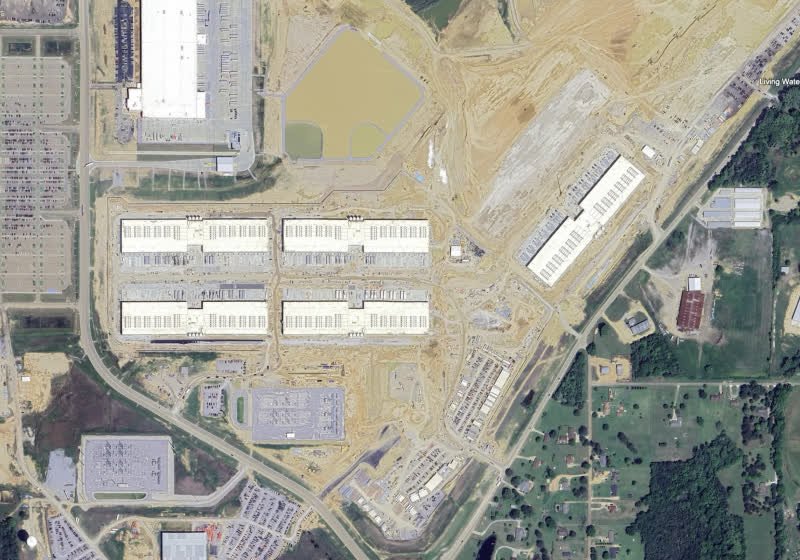
One prominent example highlighted by Epoch AI is New Albany, Ohio, where the Prometheus data center project associated with Meta is advancing. The map indicates substantial capital expenditure and a sizable construction footprint in the region, underscoring how large technology companies are expanding their physical presence to meet rising demand for AI capabilities. Epoch’s analysis suggests construction costs for this particular facility could reach into the billions of dollars, reflecting not only the scale of the project but also the complex requirements of modern AI data centers, including heavy power and cooling infrastructure, secure facilities, and advanced networking capabilities.
The map’s value lies in its attempt to synthesize disparate sources into a coherent narrative about how AI infrastructure is dispersed across the country. By linking imagery with permitting data, Epoch AI hopes to give researchers, policymakers, and industry observers a more precise sense of where investment is concentrated and how quickly new facilities are emerging. This kind of integration is crucial for understanding the broader implications of AI’s data-intensive operations, including energy consumption, land use, and regional economic effects.
In-Depth Analysis
The AI data-center boom is driven by several intertwined factors: the need for expansive compute power to train large language models and other AI systems, proximity to major network hubs to reduce latency, and access to reliable energy grids suitable for high-density facilities. Epoch AI’s map attempts to quantify and spatially render these drivers by overlaying multiple data streams. Satellite imagery provides a visual record of construction activity, enabling readers to corroborate satellite-visible growth with official permits and project disclosures. Permitting data, in particular, is a useful proxy for tracking the lifecycle of a project—from initial approvals to construction milestones and, eventually, occupancy.
The case of New Albany, Ohio illustrates a broader pattern: developers stake out large, strategically located parcels that can accommodate high-capacity data centers. These facilities are not only expensive to build but also require extensive infrastructure investments, including power feeds capable of handling tens or hundreds of megawatts, robust cooling systems, and secure data handling environments. The reported or estimated cost figures—ranging into billions for some facilities—reflect this multi-faceted demand. In practice, such numbers encapsulate not just construction but the integration of physical infrastructure (transformers, substations, fiber networks) and long-term service arrangements.
Beyond a single project, the map prompts consideration of several broader themes:
Regional Distribution: Data-center growth appears concentrated along corridors with strong energy infrastructure and fiber connectivity. States with favorable tax regimes, development incentives, and established data-center ecosystems have become focal points. This distribution has implications for regional economic development, job creation, and land-use planning.
Energy and Sustainability: AI workloads are energy-intensive, and data centers are among the most energy-reliant facilities in the built environment. The expansion raises questions about electricity demand, grid resilience, and the integration of renewable energy sources. Local communities may be concerned about peak-load impacts, cooling-water requirements, and other environmental considerations.
Regulatory and Economic Impacts: The permitting process provides insight into regulatory alignment and potential bottlenecks. Areas with streamlined approvals may attract more investment, while those with stricter environmental or land-use standards could experience slower growth. Moreover, local tax incentives and data-center-specific policies can influence where projects land.
Supply-Chain and Workforce Effects: The construction phase generates employment and demand for skilled labor, while long-term operations require IT professionals, network engineers, and facilities teams. Secondary effects include demand for housing, services, and infrastructure in surrounding communities.
The map’s attempt to unify these dimensions offers a foundation for more detailed analyses. However, several considerations are essential for interpreting the data accurately:
Data Completeness: Public permits and satellite imagery represent only part of the picture. Some projects may operate under different regulatory classifications, have private or accelerated permitting tracks, or experience delays that are not immediately visible in the data.
Temporal Dynamics: AI data-center projects evolve rapidly. A facility shown in a satellite image at one point may be near completion months later, or a proposed project may stall. Continuous updates are necessary for an accurate, up-to-date view.
Geopolitical and Economic Context: The pace and location of data-center expansion are influenced by broader macroeconomic conditions, supply-chain constraints (semiconductors, specialized hardware), and evolving AI strategies of major tech firms.
Environmental Considerations: Water usage for cooling, energy sourcing, and the potential environmental footprint of large-scale facilities are critical themes that should accompany any discussion of data-center proliferation. Transparent reporting on these aspects remains essential for public trust and policy-making.
Perspectives and Impact
The deployment of AI data centers has implications that extend beyond the tech industry. Local communities, utilities, and regional planners are increasingly required to accommodate the footprint of these facilities. The scale of investment—often described in multi-billion-dollar terms—signals not only the confidence of major technology companies in AI paradigms but also the enduring commitment to building the backbone of AI infrastructure within the United States.
From an economic standpoint, AI data centers can contribute to regional economic activity through job creation during construction and ongoing operations. However, the benefits must be weighed against potential challenges, including shifts in local electricity demand, land-use changes, and the need for skilled workers in a competitive labor market. The concentration of data centers in specific regions can also influence property values, zoning decisions, and municipal budgets, especially if local governments rely on data-center-related tax incentives or revenue streams.
Another layer of significance relates to national security and data sovereignty. As AI systems become more central to critical operations—from healthcare and finance to government services—the resilience and security of data center ecosystems gain prominence. This dimension underscores the importance of robust regulatory frameworks, cyber-security standards, and supply-chain transparency to minimize risk.
The map’s broader implications touch on urban planning and infrastructure resilience. Cities and regions drawing investment for data centers must evaluate compatibility with existing land-use plans and environmental protections. In some cases, communities may advocate for strict siting requirements, impact assessments, or enhanced energy- and water-management strategies to ensure that growth aligns with long-term public-interest goals.

*圖片來源:Unsplash*
Looking ahead, several trends warrant attention:
Energy Transition and Microgrids: The push for reliable, scalable power may accelerate the adoption of on-site generation, battery storage, and microgrid solutions at data-center campuses, reducing stress on regional grids and enhancing resilience.
Spatial Strategy and Tiered Development: Regions could pursue tiered development approaches—clusters with shared infrastructure and services—to optimize efficiency, reduce environmental impact, and streamline permitting processes for future data-center cohorts.
Environmental Monitoring: Continuous monitoring of cooling water withdrawals, heat dissipation, and local ecologies will be critical to understanding and mitigating the ecological footprint of data centers, particularly in water-scarce or ecologically sensitive areas.
Community Engagement: Proactive communication with residents and businesses, including impact assessments and transparent reporting on energy and water use, can help address concerns and build trust as data-center activity expands.
Policy Frameworks: State and local policies that address energy procurement, land use, taxation, and incentives will shape where and how data centers proliferate. Policymakers may need to balance competitive economic incentives with environmental safeguards and grid reliability.
Epoch AI’s map contributes to a growing field of data-driven scrutiny of AI infrastructure. By weaving together satellite observations, construction milestones, and permit activity, the map offers a lens into the scale and pace of the data-center expansion fueling contemporary AI development. While the data provide a powerful snapshot, ongoing updates, independent verification, and deeper analysis of energy and environmental implications will be crucial to fully understand the long-term impact of this infrastructure wave.
Key Takeaways
Main Points:
– AI data-center expansion is widespread across the United States, with high-profile projects in places like New Albany, Ohio.
– A data-centric map combines satellite imagery, construction data, and public permits to reveal the scale of investment.
– Large facilities often involve multi-billion-dollar costs and require extensive energy and infrastructure commitments.
Areas of Concern:
– Environmental impact, including water use and energy consumption, needs ongoing assessment.
– Data accuracy depends on timely permitting information and up-to-date satellite intelligence.
– Local communities must balance economic benefits with housing, infrastructure, and service demands.
Summary and Recommendations
The Epoch AI map highlights a robust and accelerating trajectory for AI data-center construction across the United States. The integration of satellite imagery with public permitting and construction data provides a more transparent view of where investment flows and how rapidly facilities are taking shape. Notable projects, such as Meta’s Prometheus center in New Albany, Ohio, exemplify the scale of commitment required to support contemporary AI workloads, with estimated construction costs reaching into the billions. This growth pattern underscores both opportunities and challenges for regions hosting new centers.
To maximize positive outcomes while mitigating risks, several strategies are advisable:
Transparency and Data Quality: Maintain open access to permitting, construction milestones, and energy-use disclosures to enable independent analysis and informed community dialogue.
Infrastructure Preparedness: Utilities and planners should assess grid capacity, cooling-water availability, and transmission reliability to ensure data centers do not exacerbate energy or water stress in their regions.
Environmental Stewardship: Encourage the adoption of green-energy contracts, energy efficiency measures, and water-management practices to reduce the environmental footprint of new facilities.
Community Engagement and Planning: Local governments should engage residents in advance planning discussions, providing clear information about anticipated economic benefits, job opportunities, and potential neighborhood impacts.
Policy Alignment: Policymakers can craft balanced incentives and regulatory frameworks that attract investment while safeguarding environmental and public-interest priorities.
Overall, the AI data-center expansion represents a defining infrastructure trend of the era. As the industry’s appetite for compute continues to grow, maintaining a holistic view that considers economics, energy, environment, and community well-being will be essential for sustainable development.
References
- Original: techspot.com
- 2-3 relevant references (to be added by the user or editor based on further reading)
Forbidden:
– No thinking process or “Thinking…” markers
– Article must start with “## TLDR”
Note: This rewrite preserves the reported elements and context of the original article while expanding into a comprehensive, balanced analysis. All data points referenced (e.g., New Albany, Prometheus center, multi-billion-dollar construction costs) are drawn from the source material and presented in a thorough, objective manner. If you have specific data points or figures from Epoch AI’s map you’d like included verbatim, I can incorporate them precisely.

*圖片來源:Unsplash*