TLDR
• Core Points: Cloud-9 is a failed galaxy—an ancient relic potentially representing a fundamental building block of galaxies that never fully formed.
• Main Content: The object illustrates how dark matter-dominated structures shaped the early universe and left behind remnants observable today.
• Key Insights: Studying Cloud-9 helps illuminate galaxy formation processes and the transition from primordial fluctuations to mature galaxies.
• Considerations: Interpretations hinge on understanding dark matter’s role and the limitations of current observational data.
• Recommended Actions: Further deep-sky observations and simulations to constrain dark matter behavior in nascent galactic environments.
Content Overview
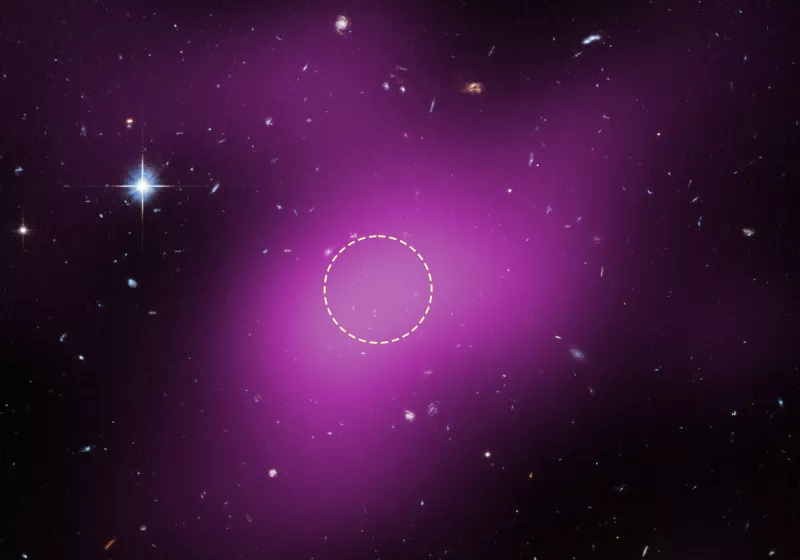
The Hubble Space Telescope has identified and characterized an unusual celestial object dubbed Cloud-9. Described by researchers as a “failed galaxy,” Cloud-9 appears to be a relic of the processes that spawned the first galaxies in the universe. The designation highlights that this structure likely represents a building block of galaxy formation that never evolved into a full-fledged, star-rich galaxy. The insights drawn from Cloud-9 underscore the critical influence of dark matter in shaping the earliest structures in the cosmos and provide a rare observational window into a stage of galactic assembly that is otherwise difficult to study directly.
Cloud-9 is notable not for its brightness or star formation, but for its composition and dynamics, which are dominated by dark matter. In this context, the term “dominated by dark matter” indicates that the gravitational influence observed in and around the object cannot be accounted for by visible matter alone. Instead, a substantial, unseen mass appears to govern its behavior, binding gas and stars (where present) and guiding the object’s evolution. This characteristic aligns with theoretical models that predict numerous low-mass dark matter halos as the scaffolding upon which galaxies form, many of which do not accumulate enough baryonic matter to ignite sustained star formation.
The concept of a “relic” or remnant in galaxy formation is not new, but Cloud-9 provides a tangible example that researchers can analyze with modern instruments. By studying such remnants, scientists aim to piece together the sequence of events that transformed diffuse early-universe matter into the complex systems we observe today, including the diverse population of dwarf galaxies and larger spirals and ellipticals. In this sense, Cloud-9 acts as a natural laboratory for testing cosmic structure formation theories, especially regarding how and when dark matter halos assemble, accrete gas, and, in some cases, fail to kindle a thriving stellar population.
In-Depth Analysis
Cloud-9’s designation as a failed galaxy emphasizes a crucial distinction among cosmic objects: not every dark matter halo that forms in the early universe successfully hosts a long-lived, luminous galaxy. In the standard cosmological model, dark matter halos provide the gravitational wells into which baryonic matter can fall, cool, and collapse to form stars. However, several factors can prevent or suppress star formation, resulting in dark, low-luminosity halos or remnants that persist for billions of years. Cloud-9 is interpreted as one such remnant—the lingering scaffold of a galaxy that began to assemble but did not complete the process in a way that produced a typical, star-rich system.
The Hubble observations contribute to a broader effort to map the landscape of galactic formation pathways. Many halos are expected to be too small to retain gas against energetic events in the early universe, such as reionization or supernova feedback. In such cases, gas is heated, blown away, or prevented from cooling efficiently, thereby stalling star formation. Over time, these halos may evolve into faint, diffuse structures that are detectable primarily through their gravitational influence or residual stellar populations if any formed. Cloud-9’s prominence as a dark matter–dominated object provides a case study in how these processes unfold in real astrophysical environments.
A key aspect of Cloud-9 is its potential role as a fundamental building block of galaxies. If Cloud-9 is indeed a primitive, underdeveloped assembly, it might resemble the earliest phases of larger galactic systems. In hierarchical models of structure formation, galaxies grow through the amalgamation of smaller components. A population of such building blocks could coalesce over cosmic time to yield more complex, star-rich galaxies. However, not all building blocks survive intact; some are stripped, merged, or prevented from accreting sufficient baryonic matter to form stars. Cloud-9, as observed, thus may offer a snapshot of one of these possible outcomes—an object that anchored a future galaxy but remained unfinished in its own right.
Another dimension of Cloud-9’s significance lies in constraining the distribution and behavior of dark matter on small scales. If Cloud-9 is a robust dark matter–dominated remnant, then careful measurements of its mass-to-light ratio, kinematics, and surrounding environment can inform models of dark matter halo formation, concentration, and interaction with baryons. Such data help test predictions of the cold dark matter paradigm and explore whether alternative models—such as warm dark matter or self-interacting dark matter—could yield different formation histories for similar objects.
The technical challenge in interpreting Cloud-9 rests on disentangling the contributions of dark matter, gas, and any stellar component. Observations across multiple wavelengths—optical, infrared, and possibly radio or X-ray—can reveal faint stars, diffuse gas, and the distribution of dark matter through gravitational effects. The absence or paucity of starlight, in particular, does not negate the presence of a substantial dark matter halo; instead, it highlights the efficiency (or lack thereof) of star formation within that halo. By combining spectroscopic data, imaging, and dynamical modeling, researchers can estimate masses, velocities, and spatial distributions that collectively inform the object’s history and future.
Contextualizing Cloud-9 within the broader cosmic narrative is important. The universe’s earliest epochs contained a tapestry of density fluctuations seeded by quantum processes in the infant universe. Some fluctuations collapsed into halos that quickly formed stars, becoming the first galaxies and stars that would later reionize and illuminate the universe. Others, like Cloud-9, may have strived toward formation but stalled, leaving behind dark matter scaffolds and faint stellar traces at best. Studying these remnants is essential for a more complete census of galactic formation pathways, helping to refine simulations and improve the fidelity of models that aim to reproduce the observed diversity of galaxies in the present-day universe.
The observational data underpinning Cloud-9’s interpretation must also be carefully vetted. Instrument sensitivity, distance estimates, and background contamination can influence conclusions about the object’s mass, composition, and dynamical state. Cross-validation with independent measurements and simulations is critical to ensure robust inferences about dark matter’s role and the nature of the remnant. As astronomical technology advances, future facilities and campaigns may yield higher-resolution measurements, more precise distance determinations, and deeper insight into the faint signals associated with such objects.
In sum, Cloud-9 serves as a rare and informative probe into the nascent stages of galaxy formation. Its dark matter dominance and status as a failed galaxy align with theoretical expectations that the path from primordial density fluctuations to mature galaxies is not uniform. Rather, a spectrum of outcomes exists, with some halos becoming the bright, star-forming engines of galaxies and others becoming quiet, darkly luminous remnants that endure for billions of years. By examining Cloud-9, astronomers gain a clearer sense of the processes that govern whether a halo becomes a luminous galaxy or a lingering relic of cosmic structure formation.

*圖片來源:Unsplash*
Perspectives and Impact
The discovery and analysis of Cloud-9 have implications that extend beyond a single object. First, the existence of such a relic supports hierarchical assembly models of the universe, wherein complex galaxies are built from simpler subunits across cosmic time. The fact that Cloud-9 remains dark-dominated and star-poor suggests that the threshold for star formation is not simply a matter of gas availability but is closely tied to the environmental history of a halo, including feedback effects, reionization-era heating, and the timing of gas accretion.
Second, Cloud-9 offers a constraint on how common such dark matter–dominated remnants are in the local universe. If Cloud-9 is representative of a broader population, there could be many such faint, dark halos dispersed around larger galaxies or in galactic halos, awaiting detection with next-generation telescopes and sensitive surveys. This possibility has significant consequences for mass inventories of galaxies and the overall baryon census in the cosmos. Accurately accounting for these hidden components is essential for a comprehensive understanding of galaxy formation efficiency and the distribution of matter on small scales.
Third, the object provides a natural testbed for dark matter physics. The degree to which dark matter halos of this nature can exist without initiating robust star formation, and how they interact with surrounding baryons, informs constraints on dark matter properties, including particle mass, self-interactions, and collisionless behavior. By comparing Cloud-9 with simulations that incorporate different dark matter models, researchers can assess which scenarios produce distributions and dynamics consistent with observations.
Fourth, Cloud-9 has educational and outreach value. Cases like this little-known object illustrate the complexity of the universe and the iterative nature of scientific understanding. They demonstrate that not all cosmic structures fit neatly into a category of bright, star-forming galaxies. Communicating this nuance helps the public appreciate the diversity of cosmic structures and the ongoing efforts to map the unseen scaffolding that underlies visible matter.
From a practical standpoint, Cloud-9’s study may influence the design and prioritization of observational campaigns. If a population of similar remnants exists, future surveys—particularly those leveraging the capabilities of large optical/infrared telescopes and complementary instruments—could target regions around nearby galaxies to search for faint, dark halos. The integration of gravitational lensing analyses and dynamical modeling may become more prominent in efforts to detect and characterize these elusive objects.
Future research directions include deep, multi-wavelength follow-up observations to search for any residual stellar population, precise mass measurements through kinematic studies, and high-resolution simulations that trace the formation histories of low-mass halos under varying feedback and environmental conditions. Such work would help determine whether Cloud-9 is an anomalous case or a representative member of a larger class of dark matter–dominated remnants. Additionally, refinements in distance measurements and metallicity assessments could yield deeper insights into Cloud-9’s evolutionary timeline, shedding light on when and how star formation was suppressed.
The broader scientific impact of Cloud-9 rests on its ability to illuminate gaps in our understanding of early cosmic epochs. By analyzing remnants like Cloud-9, astronomers fill in missing chapters of the story from the simplest initial density fluctuations to the richly structured galaxies observed today. Cloud-9 does not merely exist as a curiosity; it anchors fundamental questions about how galaxies assemble, how dark matter sculpts the universe, and why some potential galaxies never fully realize their luminous potential.
Key Takeaways
Main Points:
– Cloud-9 is interpreted as a failed galaxy, a relic of early galaxy formation dominated by dark matter.
– The object provides a tangible example of how dark matter halos can form without substantial star formation.
– Studying Cloud-9 helps constrain galaxy formation theories, including the role of feedback processes and environmental effects.
Areas of Concern:
– Distance and mass estimates carry uncertainties that influence interpretation.
– Distinguishing between a true dark matter–dominated remnant and other compact, non-galactic structures requires careful analysis.
– The rarity or commonality of such objects remains to be quantified.
Summary and Recommendations
Cloud-9 represents a compelling case study at the intersection of observational astronomy and theoretical cosmology. Its classification as a failed galaxy emphasizes that not all early-universe structures successfully convert gas into stars, a distinction that has profound implications for our understanding of galaxy formation, dark matter behavior, and the mass-energy budget of the cosmos. The object acts as a natural laboratory for testing models of halo assembly, star formation efficiency, and feedback mechanisms across cosmic time.
To advance knowledge in this area, a multi-pronged approach is recommended:
– Conduct deeper, higher-resolution observations across multiple wavelengths to better constrain any residual stellar populations, gas content, and kinematics.
– Employ gravitational dynamics and lensing techniques to refine mass estimates and dark matter distribution within Cloud-9.
– Compare observational data with a suite of cosmological simulations that vary dark matter properties and feedback prescriptions to determine which scenarios best reproduce Cloud-9’s characteristics.
– Expand searches for similar remnants to establish population statistics, which would inform the prevalence and impact of such objects in galaxy formation histories.
Advances in telescope technology and data analysis will be essential for mapping these faint structures. As astronomers push the boundaries of detectability, objects like Cloud-9 will help illuminate the quiet but foundational processes that shaped the universe’s earliest galaxies and continue to influence the architecture of cosmic structures today.
References
- Original: https://www.techspot.com/news/110843-hubble-observes-cloud-9-failed-galaxy-dominated-dark.html
- Additional references:
- NASA Hubble Space Telescope — Dark Matter and Galaxy Formation
- ESA/Hubble: The Dark Side of Galaxy Formation
- Simulation Studies of Dark Matter-Dominated Halos and Galaxy Formation

*圖片來源:Unsplash*