TLDR
• Core Points: Amazon’s Ring unveils a $5,000 solar-powered surveillance trailer for parking lots, targeting construction sites, retail centers, and outdoor events, expanding from home security to commercial use.
• Main Content: The trailer broadens Ring’s hardware footprint beyond doorbells, pitting Ring against traditional commercial security providers.
• Key Insights: Mobile, solar-powered surveillance can offer scalable security for transient sites, though it raises questions about data handling, maintenance, and long-term cost.
• Considerations: Integration with existing security systems, regulatory compliance, and operator training are essential for deployment.
• Recommended Actions: Stakeholders should assess total cost of ownership, security performance, and data policies before adoption.
Content Overview
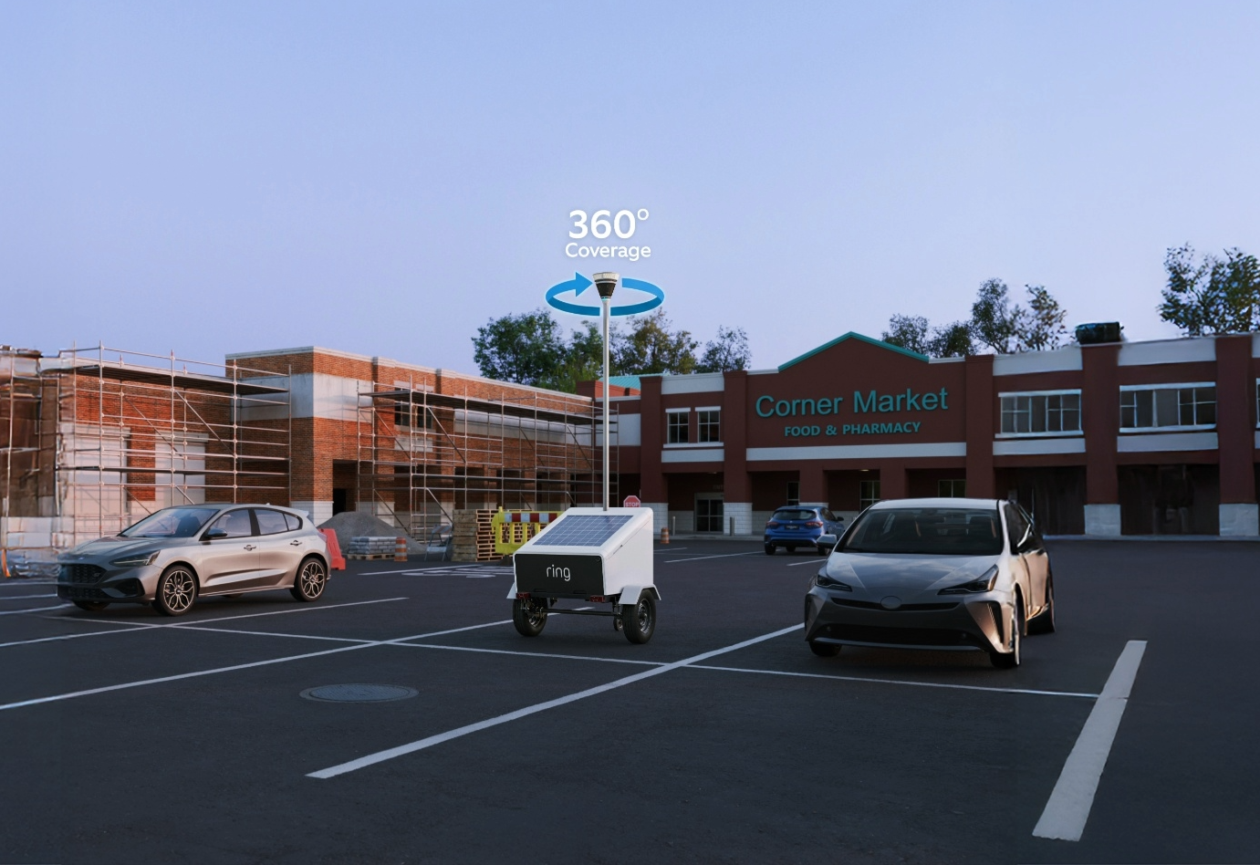
Ring, the home-security subsidiary of Amazon, has announced a bold expansion of its product line beyond its familiar doorbell cameras. The company is introducing a solar-powered surveillance trailer priced at $5,000, designed for short-term and semi-permanent deployments at construction sites, retail centers, and outdoor events. This trailer represents Ring’s attempt to bring its video security technology into commercial environments, positioning the company to compete more directly with established security providers that serve businesses and institutions.
The concept hinges on a self-contained, mobile camera system housed within a trailer that can be parked at a site, generating continual surveillance through solar power. As a solar-powered, off-grid solution, the trailer aims to reduce the need for on-site power infrastructure, enabling security to be set up quickly in locations that may lack reliable electrical hookups or where temporary security is needed for a few days or weeks. The move aligns with Ring’s broader strategy to monetize its hardware ecosystem by extending the utility of its cameras, cloud services, and alerting capabilities into commercial use cases.
For Amazon, this development reinforces the company’s broader ambition to normalize Ring’s technology beyond residential installation, creating opportunities for recurring service revenue through cloud storage, alerts, and potential professional monitoring integrations. For customers, the trailer promises a flexible security option that can be deployed where and when it is needed without committing to a permanent security installation.
The market context surrounding this product shift is marked by a growing demand for portable, scalable, and self-sustaining security solutions. Construction sites, in particular, face heightened risks from theft, unauthorized access, and safety monitoring needs. Retail centers and large outdoor events likewise require reliable coverage to deter vandalism, manage crowds, and protect assets during peak periods. Ring’s mobile trailer could fill a niche for temporary surveillance that is otherwise underserved by traditional security providers, who may require longer lead times and higher upfront costs for temporary installations.
This announcement also invites comparisons to other Ring devices and services, including its doorbell cameras, indoor and outdoor cameras, and the Ring Protect subscription ecosystem. The company has built a cohesive security platform that emphasizes real-time notifications, cloud storage, and a user-friendly app experience. By extending these capabilities to a trailer-based solution, Ring seeks to deliver consistent, scalable monitoring that can interface with a centralized security workflow, whether for a construction project’s on-site security office or a retail center’s loss prevention team.
In-Depth Analysis
The introduction of a $5,000 solar-powered surveillance trailer by Ring marks a strategic step into the commercial security market, an arena long dominated by specialized providers who tailor hardware, installation services, and monitoring to business customers. Several factors underpin this strategic move.
First, price positioning and total cost of ownership are critical considerations for potential buyers. At a listed price of $5,000, the trailer provides a compact, all-in-one solution that minimizes the need for extensive electrical infrastructure. However, buyers should assess ongoing costs, including cloud storage subscriptions, data bandwidth for continuous or periodic video transmission, and potential maintenance or component replacement over time. Ring’s business model typically relies on recurring subscription revenue through its Ring Protect ecosystems, which could translate into ongoing costs for commercial users who require extended retention and advanced analytics.
Second, deployment flexibility is a key differentiator for a mobile security solution. The solar-powered design eliminates the requirement for a readily available electrical connection, which is a practical advantage for temporary deployments at construction sites or outdoor events. The mobility also enables security teams to reposition coverage as the project scope shifts or as events unfold. Yet this flexibility comes with considerations around power management, weather tolerance, cable management for non-solar charging periods, and the physical security of the trailer itself in high-traffic environments.
Third, the integration with Ring’s existing technology stack offers both opportunities and challenges. The trailer could leverage Ring’s camera lineup, motion detection, and cloud-based alerting to deliver a unified monitoring experience. Business buyers may expect more granular controls, role-based access, and integration with their existing security information and event management (SIEM) systems, access control, or video management software. Ring may need to provide enhanced administrative features or open APIs to accommodate enterprise workflows and ensure interoperability with partner products.
Fourth, data privacy and regulatory considerations are particularly salient for commercial deployments. Businesses must adhere to local, state, and national laws governing surveillance, data retention, and privacy. The use of cameras in semi-public spaces or work sites requires transparent notice and appropriate access control. Ring should offer robust data governance options, including configurable retention windows, granular user permissions, and clear disclosures to workers and visitors. Additionally, operators need to understand where video data is stored, how long it is retained, and who can access it.
Fifth, the competitive landscape is notable. The commercial security market features established players offering portable or modular surveillance solutions, sometimes bundled with monitoring services and on-site personnel. Ring’s value proposition combines familiar consumer-grade ease of use with enterprise-friendly features, potentially appealing to smaller sites, temporary events, or organizations seeking to consolidate vendors. However, the company will need to demonstrate reliability, uptime, and support capabilities that meet enterprise expectations. Service-level agreements (SLAs), warranty terms, and field support are important factors for commercial buyers, particularly when security is a mission-critical function.
Beyond the technical and commercial considerations, the product’s positioning could influence how retailers and event organizers view on-site security investments. If Ring can deliver straightforward deployment, predictable performance, and streamlined management, it could become a preferred option for short-term security needs where traditional installations are uneconomical or impractical. The trailer could also serve as a testing ground for new features and analytics that Ring might expand to its other hardware offerings, such as improved motion analytics, license plate recognition, or people counting, depending on regulatory allowances and customer demand.
There are potential risks to consider as well. Rapid expansion into commercial spaces might invite scrutiny regarding data privacy practices, particularly if advanced analytics are employed that process personal data. Customer education will be critical to ensure users understand what is being recorded, how long footage is retained, and who has access to it. Maintenance and durability in outdoor environments pose another challenge. Solar power and weatherproofing must withstand various climates, and vandalism or wear-and-tear could affect performance over time. Ring must also ensure that its support ecosystem—ranging from installation guidance to troubleshooting—meets the expectations of business customers who may rely on the trailer for critical security coverage.

*圖片來源:Unsplash*
From a broader perspective, Ring’s foray into mobile, solar-powered surveillance reflects a trend toward adaptable, modular security solutions that can be deployed rapidly in variable environments. The model aligns with the needs of industries that require temporary or scalable protection, such as construction, retail, live events, sports venues, and disaster response scenarios. If successful, the approach could prompt further innovations in mobile security assets, including modular trailer configurations, hybrid power options, and enhanced network connectivity to support robust video transmission in remote locations.
Perspectives and Impact
Industry observers view Ring’s trailer as a natural extension of a company that has built a large, customer-facing ecosystem around home surveillance. The shift to commercial deployment signals Amazon and Ring’s willingness to test new markets with a familiar product family, potentially accelerating adoptions of connected security devices in spaces that historically relied on traditional security vendors.
For customers in construction, retail, and event sectors, the trailer could offer a faster path to on-site monitoring. Short-term projects often face cost and logistics barriers when engaging with enterprise-grade security providers, including long lead times, installation complexities, and high upfront capital expenditure. A portable, solar-powered solution could help companies balance security needs with project timelines and budget constraints. It may also enable better security hygiene by allowing standard surveillance practices to be deployed quickly during critical phases of a project, reducing the window of vulnerability that temporary setups often experience.
However, the enterprise implications are nuanced. The adoption of consumer-oriented security tech in business contexts requires careful consideration of governance, compliance, and risk management. Organizations must assess whether Ring’s data practices align with their internal policies and regulatory obligations. The interoperability of the trailer with existing security infrastructure could determine its appeal to larger businesses that operate across multiple sites and require centralized oversight.
Looking ahead, Ring’s trailer could spur innovation around on-site security workflows. For instance, facilities and event organizers might pair the trailer with mobile command centers, on-site security personnel, or temporary monitoring stations to create an integrated security continuum. The solution could also drive demand for local processing capabilities, edge analytics, or offline storage options that minimize latency and dependence on cloud connectivity in remote locations. If Ring pursues additional features such as enhanced encryption, multilingual alerting, or integration with third-party security platforms, it could further widen its appeal to risk managers and security directors.
From a societal standpoint, the proliferation of mobile surveillance assets raises debates about privacy, consent, and the extent to which public or semi-public spaces should be monitored. Stakeholders will be attentive to how data is collected, stored, used, and governed, especially in environments where workers, customers, and attendees interact with surveillance devices. Responsible deployment practices, transparent communication, and robust protections will be essential to maintaining trust as such technologies become more prevalent.
Key Takeaways
Main Points:
– Ring introduces a $5,000 solar-powered surveillance trailer aimed at commercial deployments such as construction sites, retail centers, and outdoor events.
– The solution expands Ring’s hardware footprint beyond doorbells toward mobile, scalable security for temporary or semi-permanent sites.
– Data privacy, regulatory compliance, and interoperability with existing security ecosystems will be central to successful adoption.
Areas of Concern:
– Total cost of ownership including ongoing cloud storage and monitoring services.
– Reliability, maintenance needs, and durability of mobile, outdoor equipment.
– Regulatory and privacy considerations in various jurisdictions and site contexts.
Summary and Recommendations
Ring’s new solar-powered surveillance trailer represents a strategic push into commercial security by leveraging its familiar camera ecosystem in a mobile, self-contained form factor. At a $5,000 price point, the product targets temporary and semi-permanent deployments where traditional security installations may be impractical or costly. The approach offers deployment flexibility, reduced reliance on on-site electrical infrastructure, and the potential for rapid coverage across multiple sites or events.
Prospective buyers should conduct a comprehensive evaluation that goes beyond the upfront price. Key considerations include assessing the total cost of ownership, including cloud storage, analytics capabilities, and potential monitoring services; evaluating the trailer’s durability and maintenance requirements under expected environmental conditions; and ensuring alignment with privacy laws, data retention policies, and site-specific governance standards. Enterprises should also examine integration capabilities with their existing security stack, including access control systems, SIEM platforms, and centralized monitoring workflows, as well as potential SLAs and support commitments from Ring.
If Ring can address these considerations—with clear data governance, enterprise-ready controls, robust field support, and strong interoperability—it could carve out a meaningful niche in the commercial security landscape. The trailer’s success will likely hinge on how well Ring communicates and delivers on reliability, privacy protections, and value in the context of business needs and regulatory expectations.
Future developments could see Ring expanding the trailer’s features, adding more analytics capabilities, offering different power configurations, or providing enhanced integration options for larger organizations. As mobile and modular security continues to grow, Ring’s approach may inspire other consumer-tech brands to explore similar pathways, potentially reshaping how temporary and semi-permanent surveillance is deployed in high-risk environments.
References
- Original: https://www.geekwire.com/2026/ring-around-the-parking-lot-amazons-security-tech-goes-commercial-with-a-5k-surveillance-trailer/
- [Add 2-3 relevant reference links based on article content]

*圖片來源:Unsplash*